Vietnam, Cambodia December 2023
Travel notes on a fairly classic route.
Unexpected love for Phnom Penh, exploration of unknown Phu Quoc and the Mekong Delta in one of the not-so-tourist places.
And a little bit of Doha for dessert.
My friends are well aware of my love for Southeast Asia. My journey with the region began in 2015 with Burma, followed by Thailand, Vietnam, and Laos, which I explored far and wide. I would have continued my adventures across Asia, but then Covid hit, bringing changes to my work, personal life, and the world at large. Somehow, Europe became my focus for a while, but the feeling that something was missing never left me.
This time, I decided to check Cambodia off my list. However, at the time of planning, I wasn’t entirely sure what to see beyond the iconic (and truly unmissable!) Angkor Wat. So, I decided to combine the trip with a return to familiar Saigon and the classic Phu Quoc, spicing it up with an unconventional border crossing by boat along the Mekong River and a visit to a lesser-known spot in the Mekong Delta.
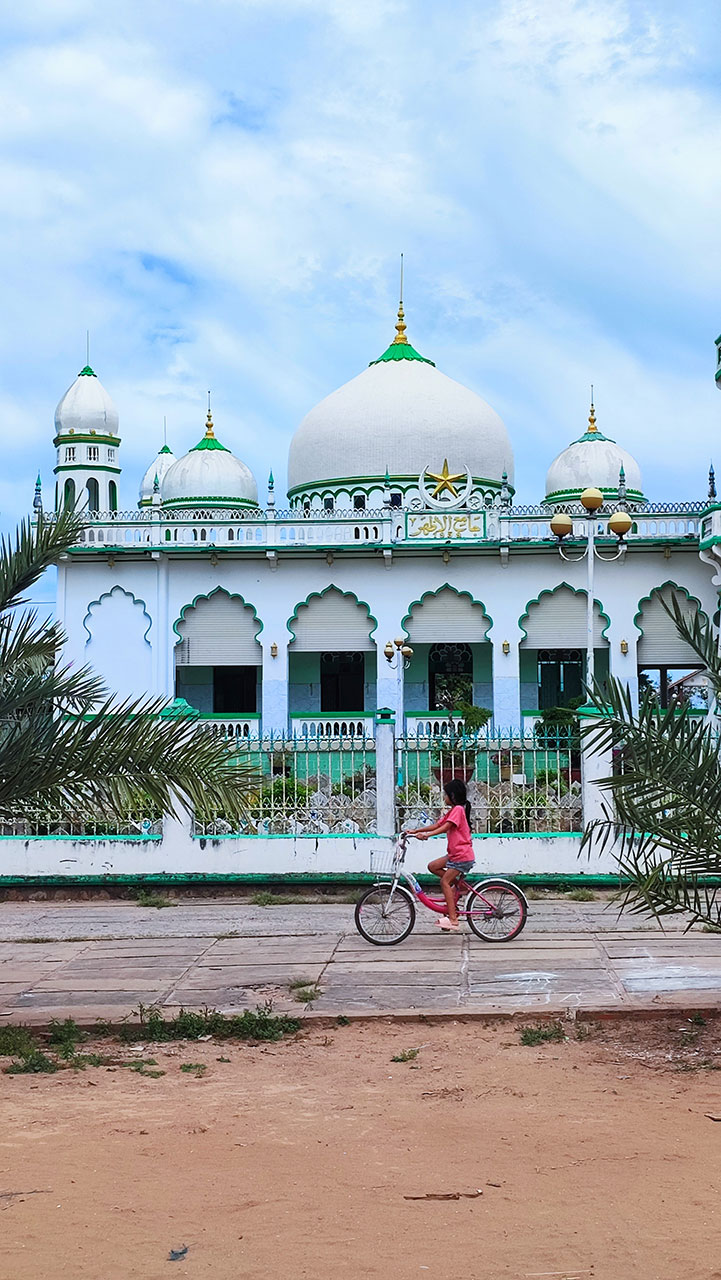
I’m not including a map this time—all the locations are easy to find online if you’re curious. In my opinion, traveling in Asia is best done by following your instincts rather than chasing popular tourist spots. Personally, I found more meaning in Phnom Penh than in Angkor Wat; more joy in a Cham village wedding than in their touristy mosques; and more charm in a quiet fishing village on a remote part of Phu Quoc than in its stunning beaches.
December 16, 2023. Doha, Hamad airport.
We flew from Helsinki to Ho Chi Minh City with Qatar Airways, with a layover in Doha. It was my first time at Hamad Airport, and I must admit, it left a lasting impression—my first vivid memory of the trip.
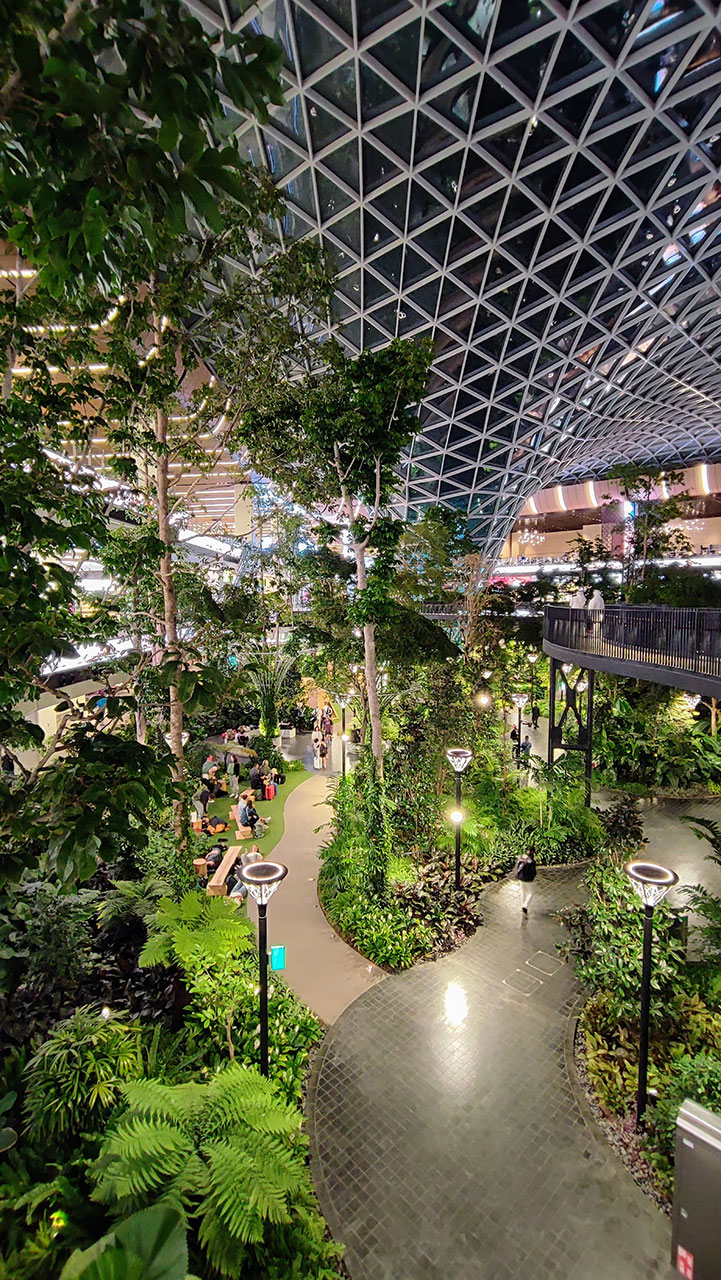
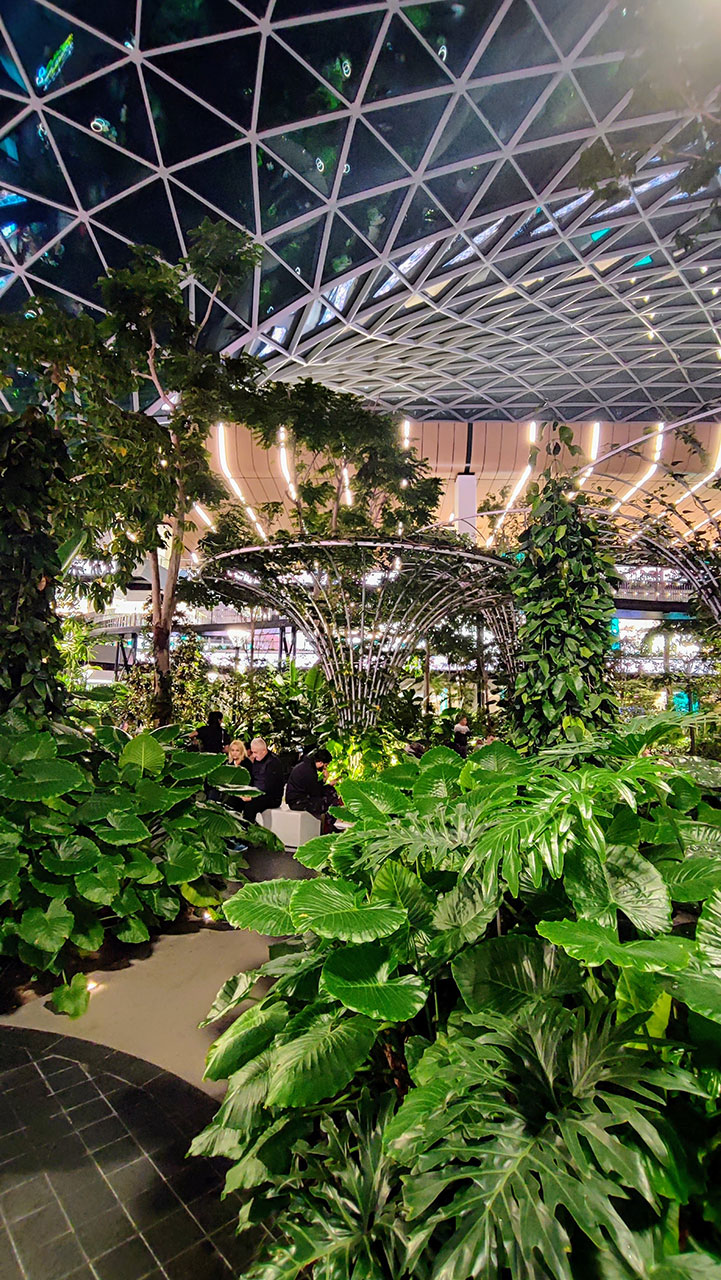
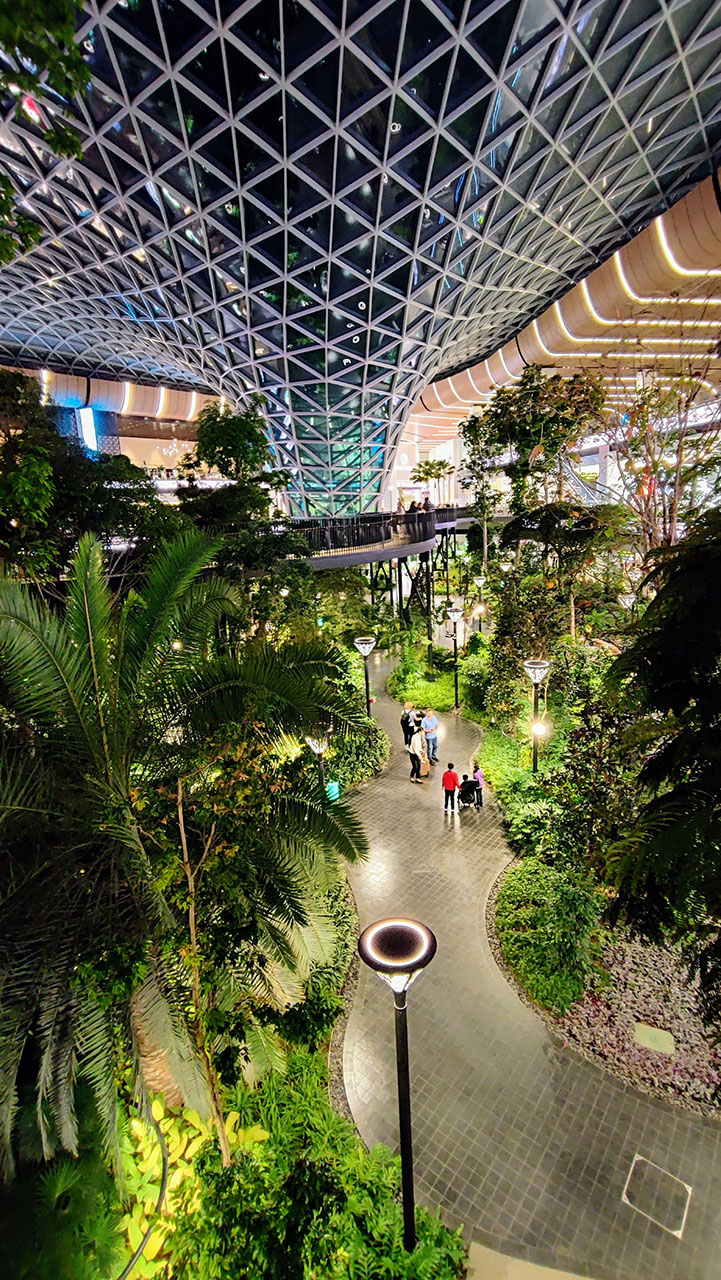
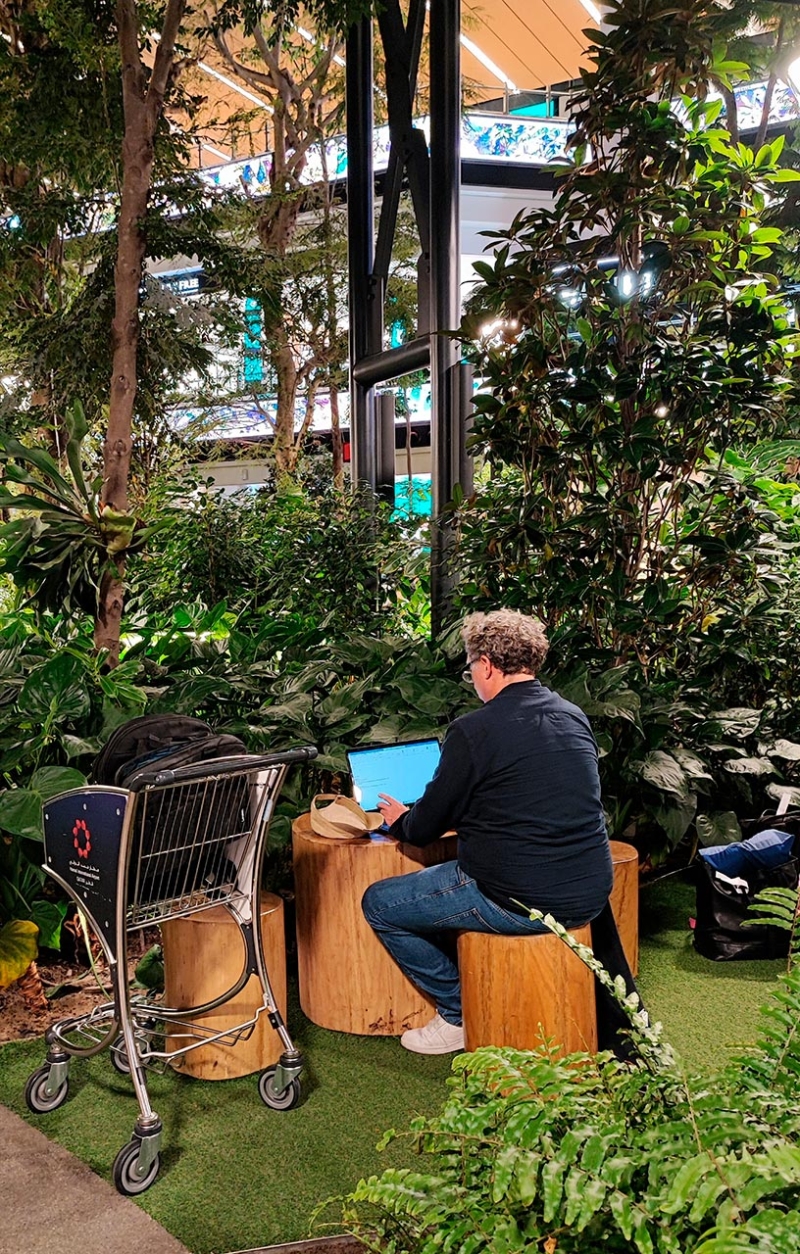
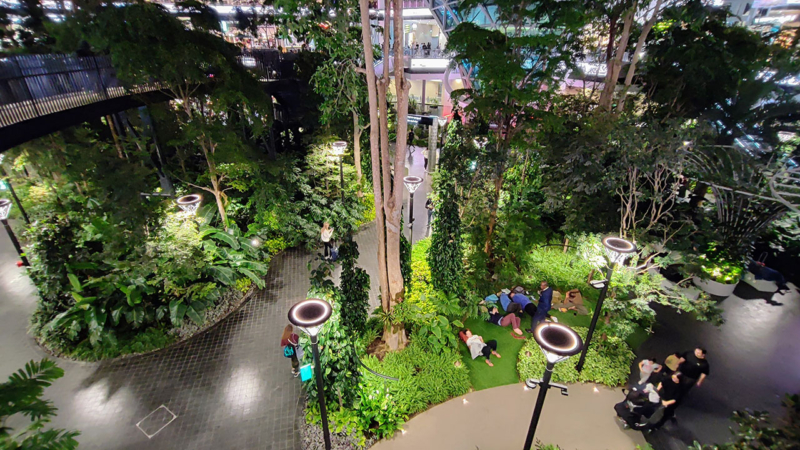
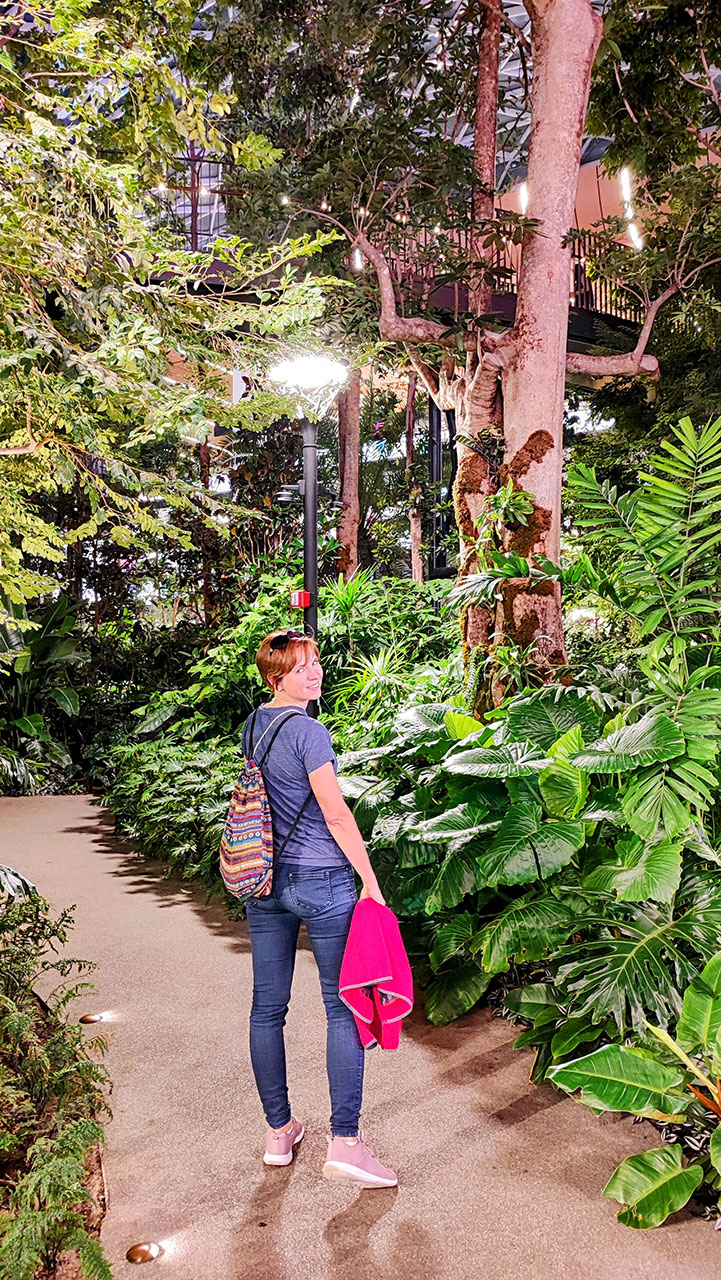
Doha Airport is absolutely mind-blowing! For the first time in my travels, I actually wished my layover had been longer. Not only are the airport halls filled with masterpieces of modern art, but there’s also a massive park—yes, a real park with real plants! During my three-hour layover, I barely had time to dash through it. Waiting at this airport feels like a break in itself. The park is filled with winding paths, benches, and tables, and you can even lie down and take a nap on the lawn if you want.
In the central lobby, there’s a striking seven-meter-tall statue of a teddy bear leaning against a table lamp. It’s the work of the legendary Urs Fischer, who is known for exploring the process of material transformation in his art—many of his pieces even self-destruct during exhibitions. But this bear, thankfully, is made of bronze. 🙂
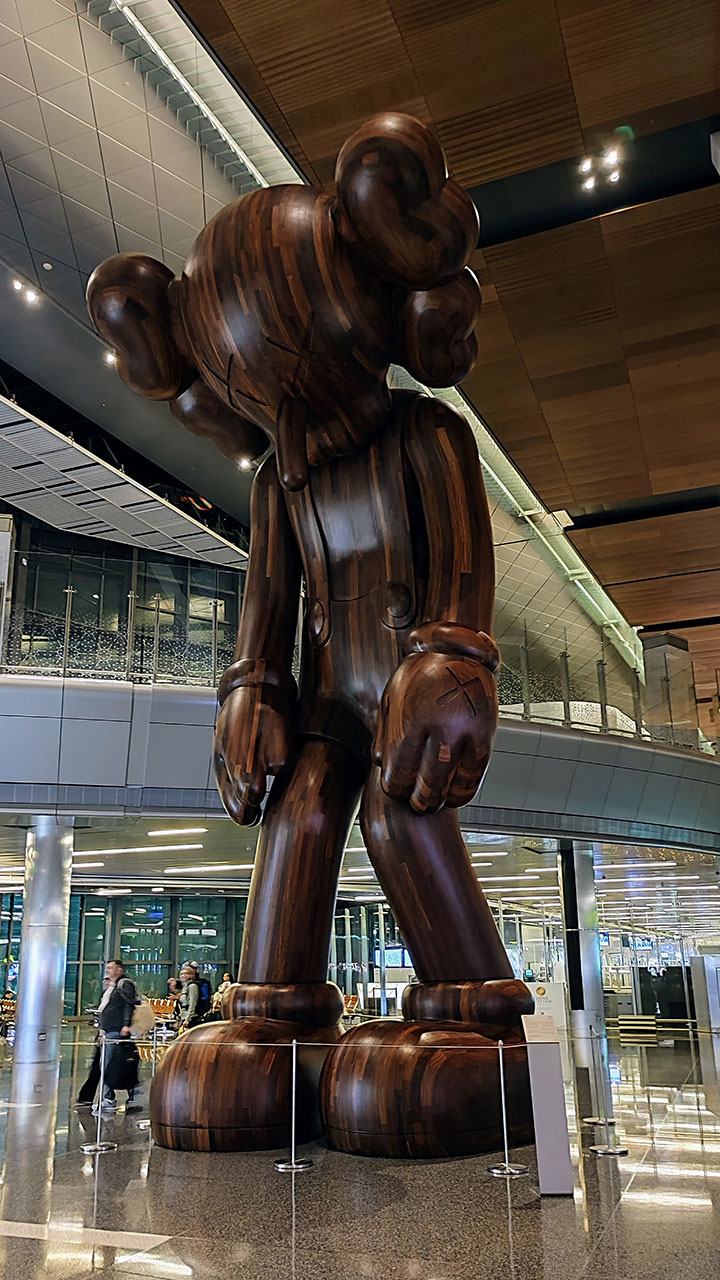
In another lobby, you’ll find Little Lies by the American sculptor Brian Donnelly, better known as KAWS—a name that has become a brand in itself. Nearby, there’s a children’s playground featuring the iconic bronze figures by American sculptor Tom Otterness.
All in all, Doha Airport is more than just a transit hub—it’s a place of relaxation, cultural enrichment, and aesthetic delight.
December 16-17, 2023. Ho Chi Minh
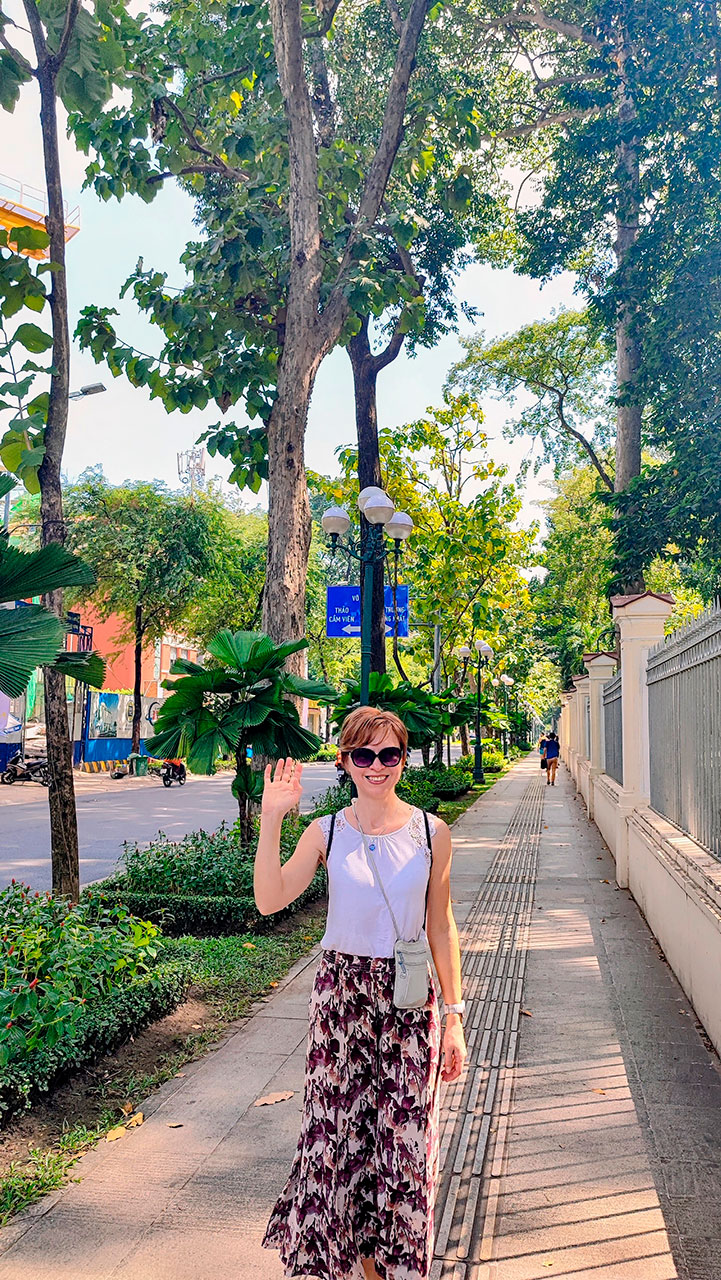
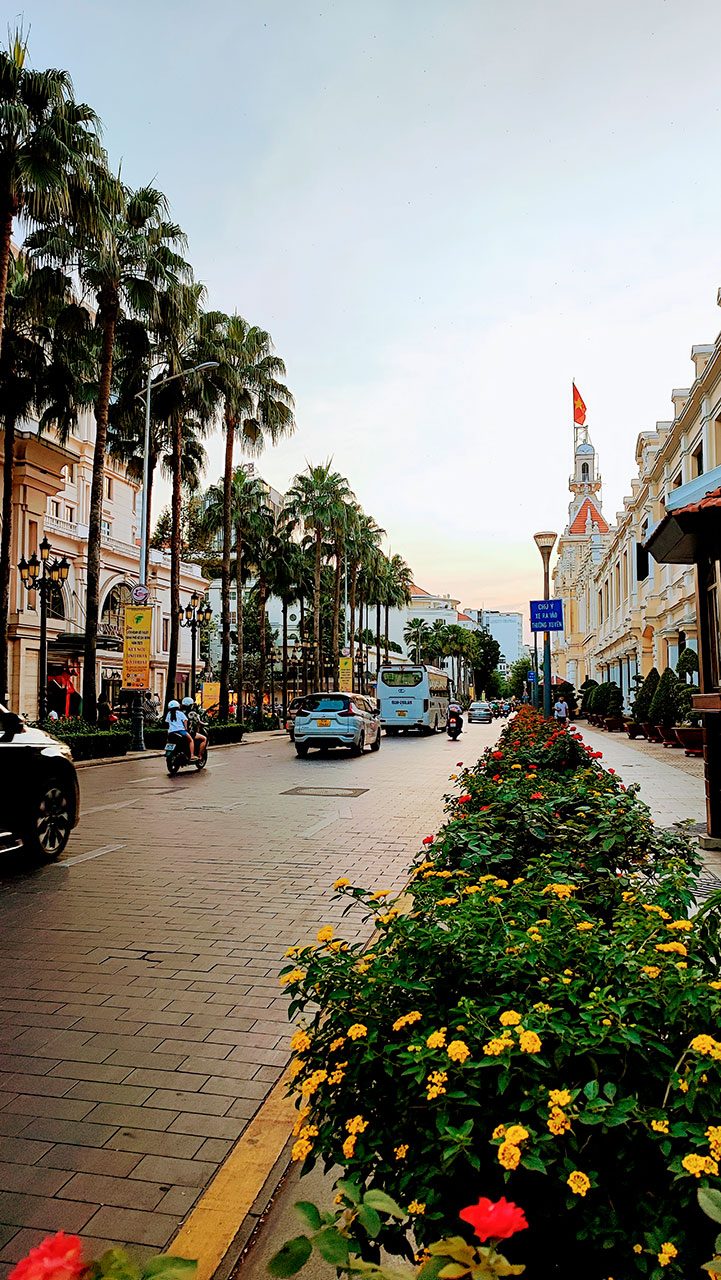
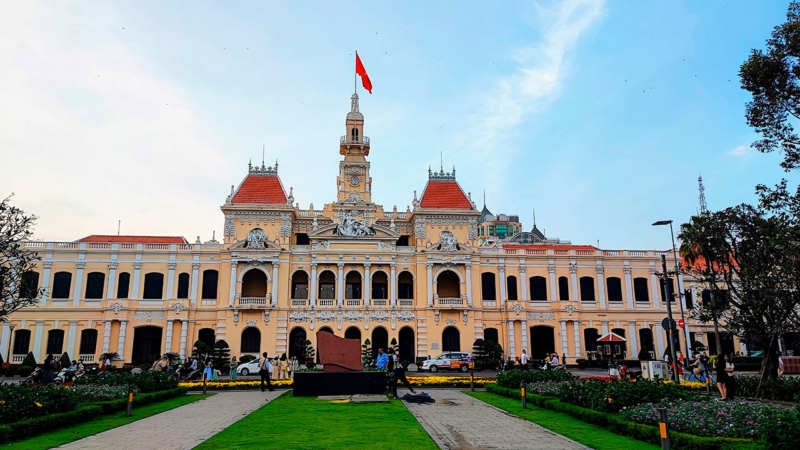
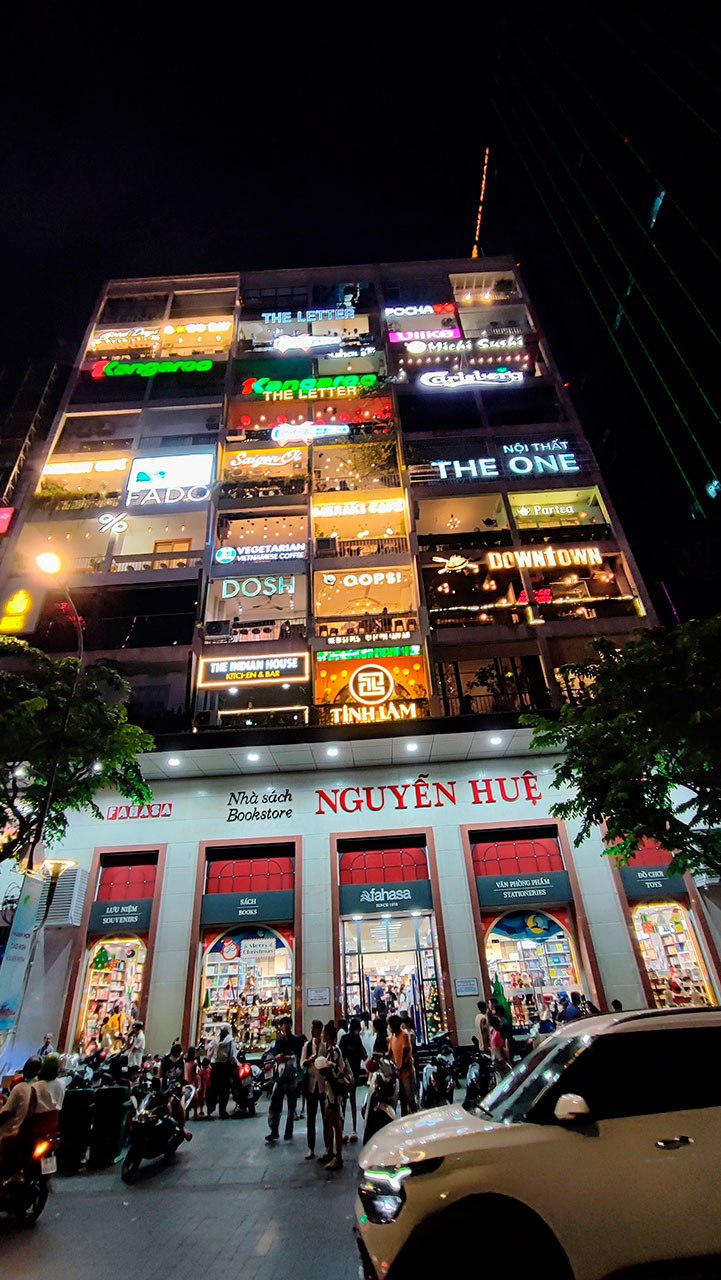
We spent the entire day wandering through the city, and I took the opportunity to revisit the memories of my first trip here in October 2016. Remarkably, Saigon has changed very little in seven years. The only noticeable differences are the increased number of scaffoldings around Notre Dame—now completely obscured and hardly worth a photograph—and the lively pre-New Year buzz that adds an extra layer of joy to the atmosphere.
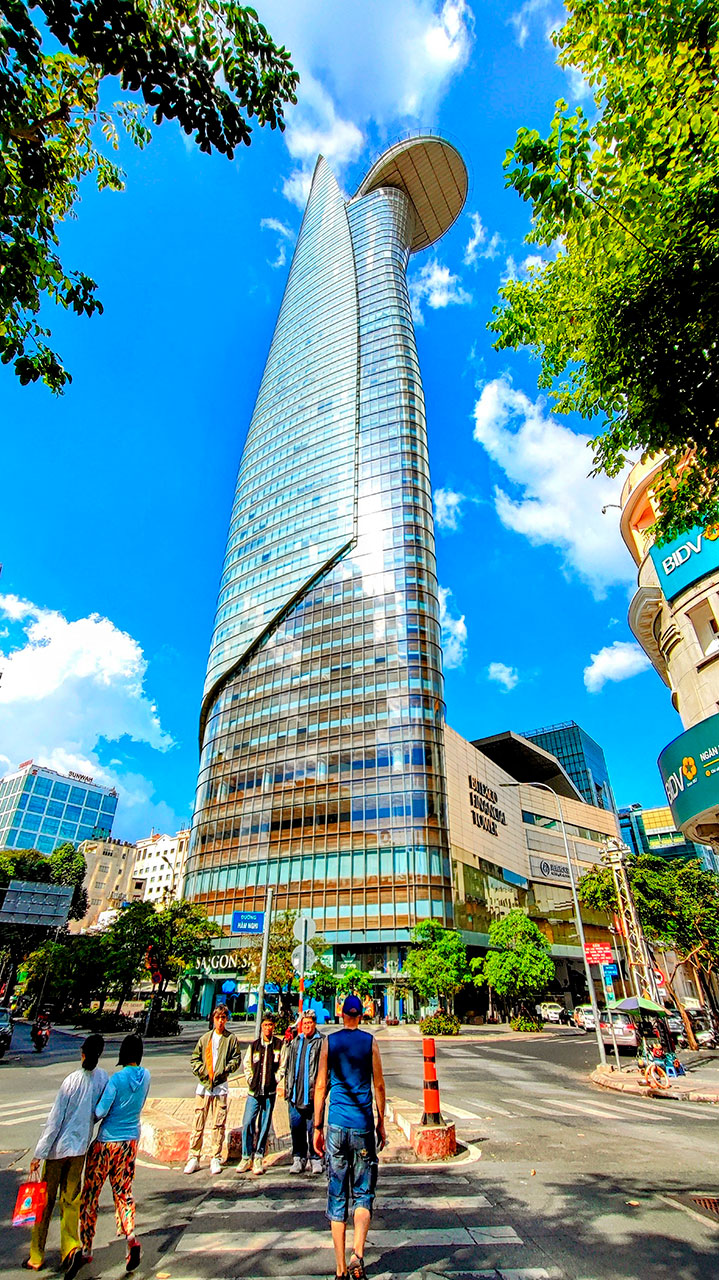
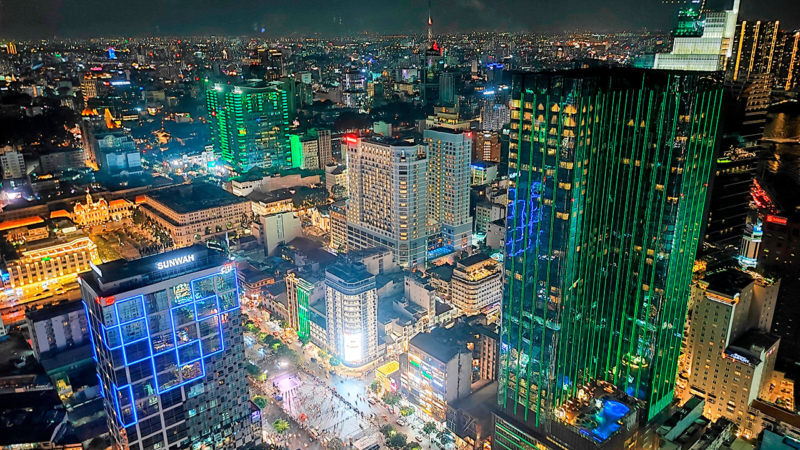
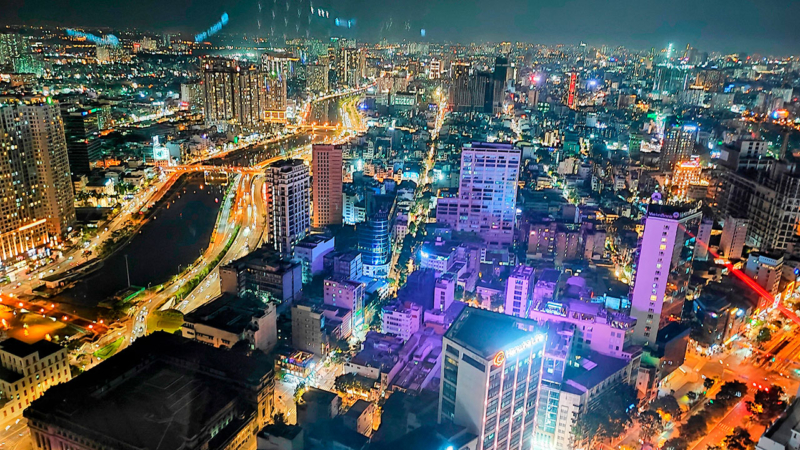
We retraced our steps from 2016: here’s the house we admired, and there’s the hotel entrance shaped like a golden peacock’s tail where we once took photos. Everything remains exactly as it was, as if the city had been patiently waiting for my return. This time, I didn’t hesitate to spend $10 to visit the observation deck on the 49th floor of the Bitexco Financial Tower. While Ho Chi Minh City is no Dubai, and Bitexco is far from the Burj Khalifa, the panoramic views of the city at night were breathtaking. The temperature, still above 30°C even after sunset, added to the experience.
After more than a day without sleep, I finally crashed under the air conditioner and slept for nearly 13 hours! But the morning brought an unexpected surprise: our evening flight to Siem Reap, originally scheduled for 18:05, had been pushed back to 20:05. This meant another short night ahead, as I had already arranged an early morning meeting with a tuk-tuk driver. So, we spent another full day in the bustling metropolis, though part of me longed to escape the chaos and retreat to quieter, more remote places.
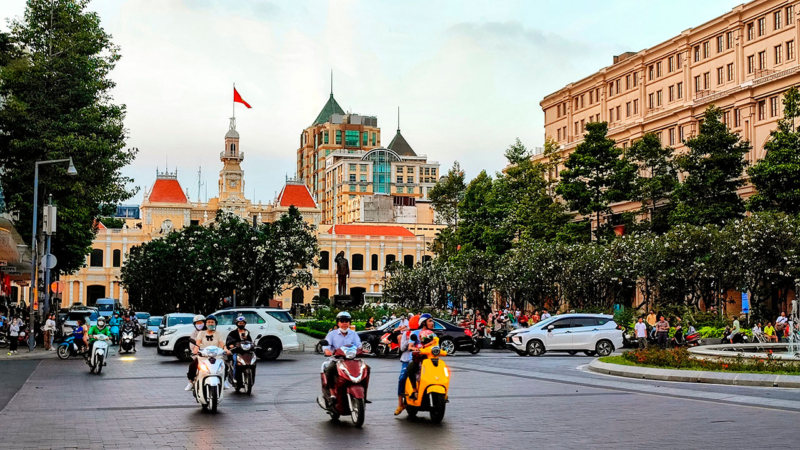
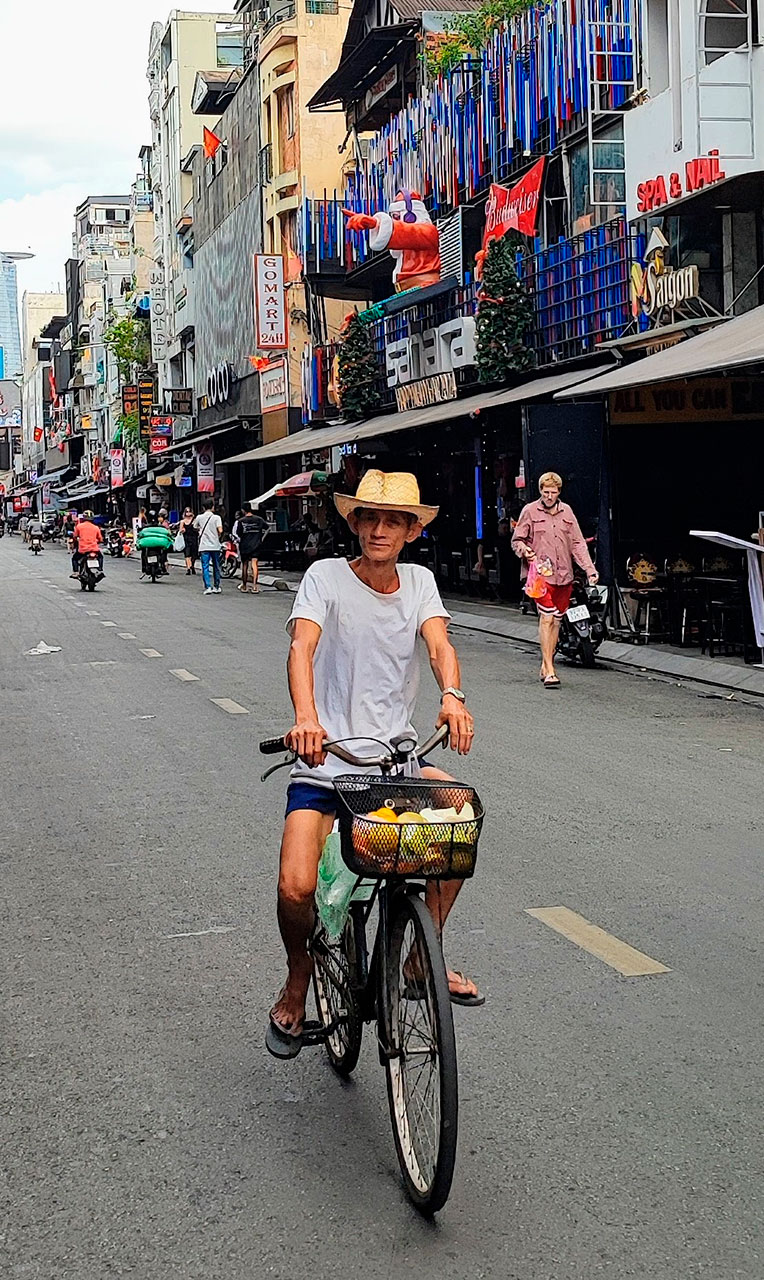
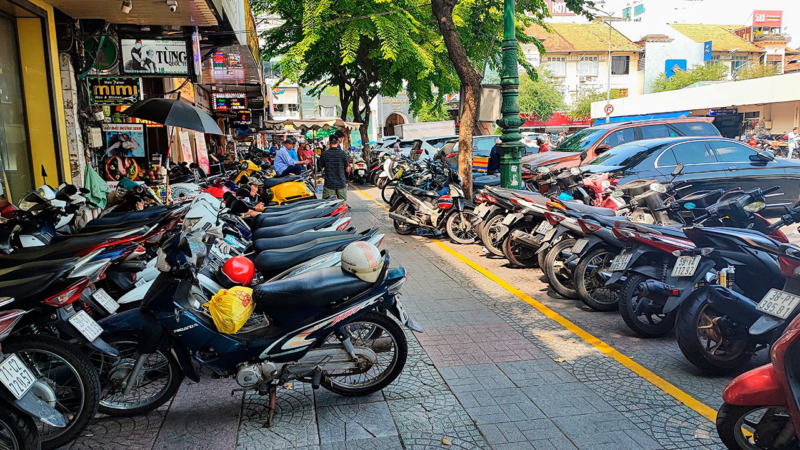
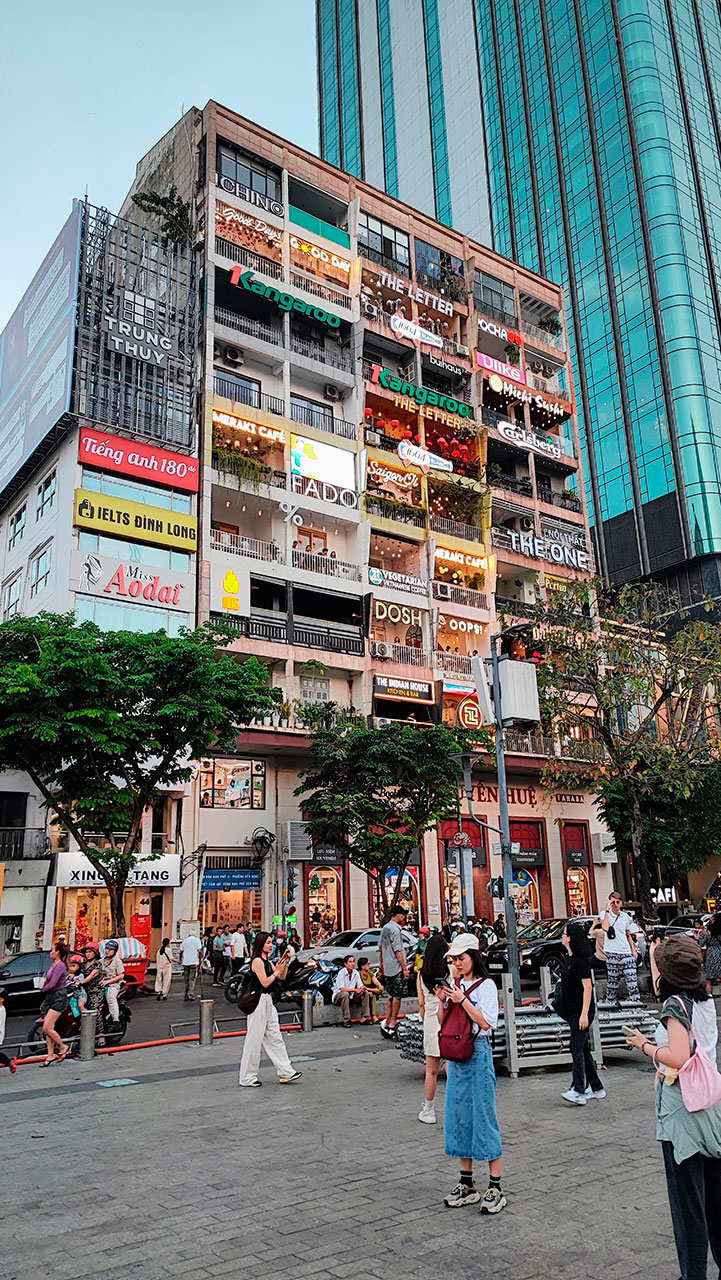
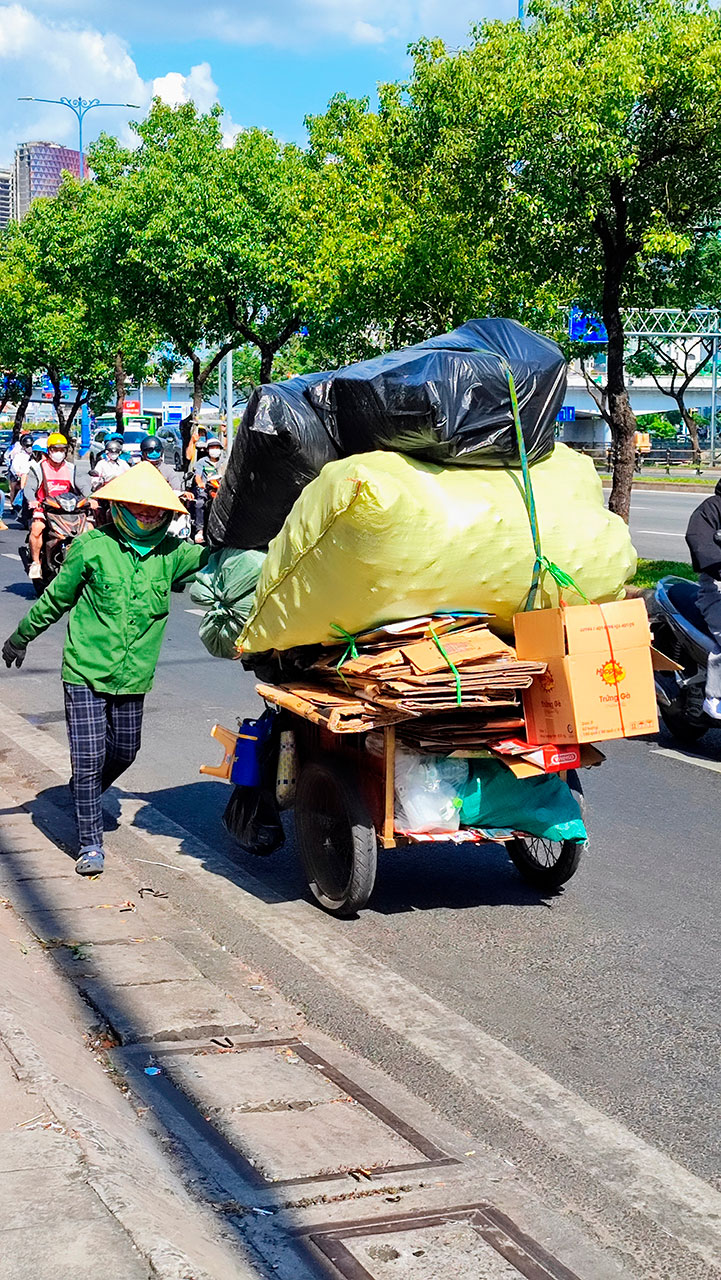
It’s time to bid farewell to Saigon! This city is truly one of a kind—a vibrant blend of towering skyscrapers and humble street vendors, endless streams of buzzing scooters, and serene, shaded parks.
Tonight, a new country awaits me! I’m filled with excitement and goosebumps at the thought. Cambodia… even the name sounds magical and enchanting.
December 18, 2023. Angkor Wat
We arrived at the newly opened airport in Siem Reap. The old one was very close to the city, which was quite convenient. From the new airport, we had to take a taxi at night, which cost us about $25. Our flight was the last one of the day, so the airport was quiet and deserted.
As of December 2023, a visa costs $30 in cash, with no change given. Passport control seemed rather unusual—eight or nine officers in uniform sat in a row, each with a window in front of them, featuring a small hole (hello, COVID) and a big sign reading “NO PHOTOS.” The process was quite bureaucratic. 8 or 9 men, in officer’s uniforms with shoulder straps, sat in a row, in front of each there was a window with a small hole (hello, covid) and big sign “no photos”. The first officer takes the passport, hands it to the second, you go to the second window, he takes the application form. You go to the third, he looks at you, puts a stamp, hands it to the fourth… And so on, in the end the last one gives you a passport with a stamp. That’s how you create jobs for eight people instead of one! Each officer sat with a serious, important expression, as if performing a highly specialized task.
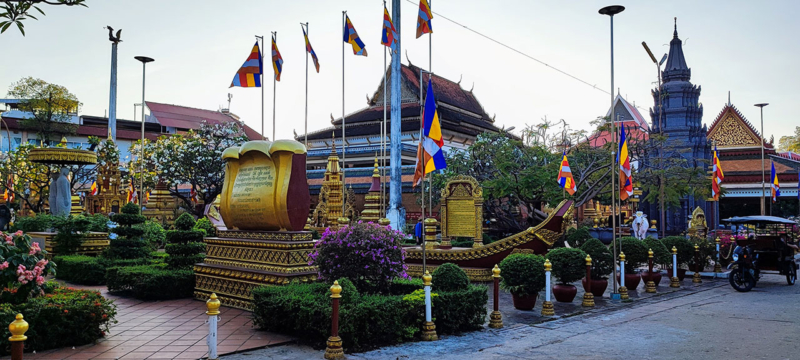
Our guesthouse was located almost in the center of Siem Reap, accessed through the courtyard of a monastery. The stay cost about $20 per night. We booked a tuk-tuk through the guesthouse host for $20 per day, with an extra $5 for a sunrise trip on the second day.
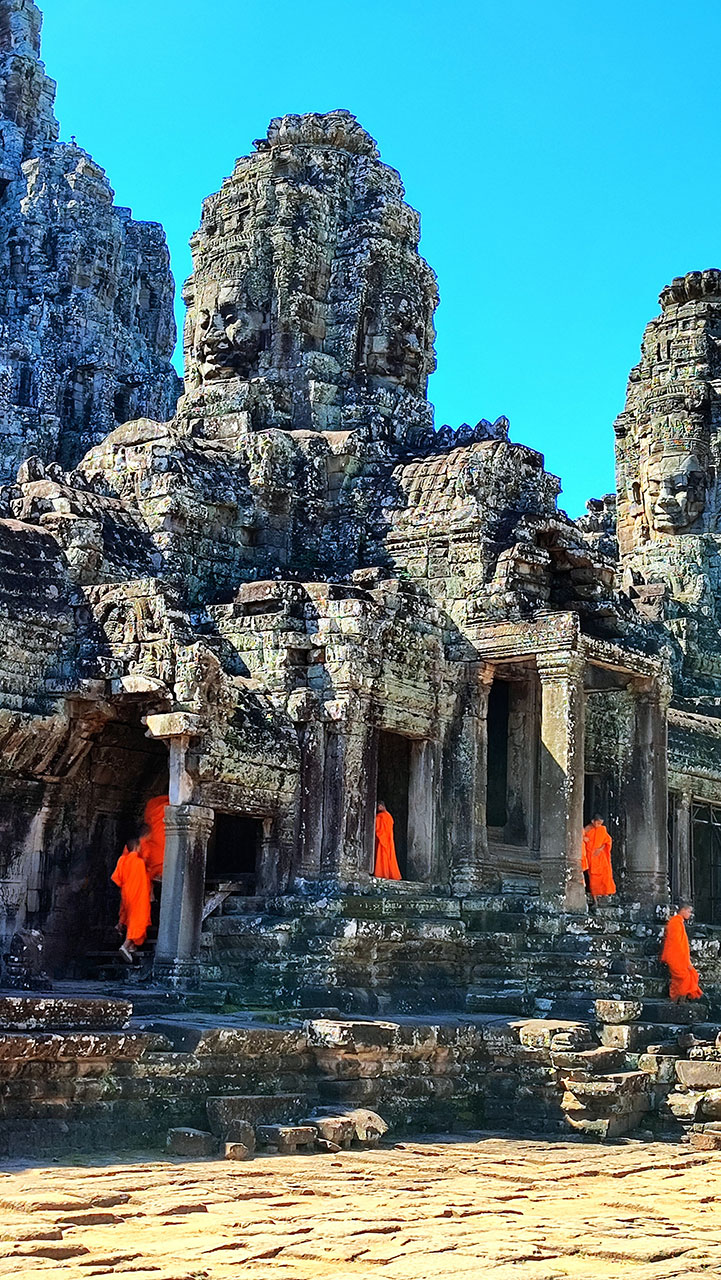
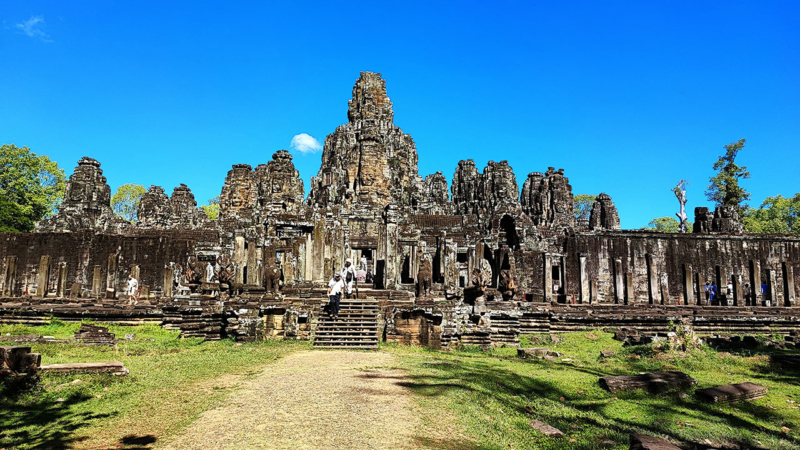
Angkor is the main attraction of Cambodia and, perhaps, all of Southeast Asia. It’s an ancient temple city and the former capital of the great Khmer Empire, which flourished between the 9th and 12th centuries.
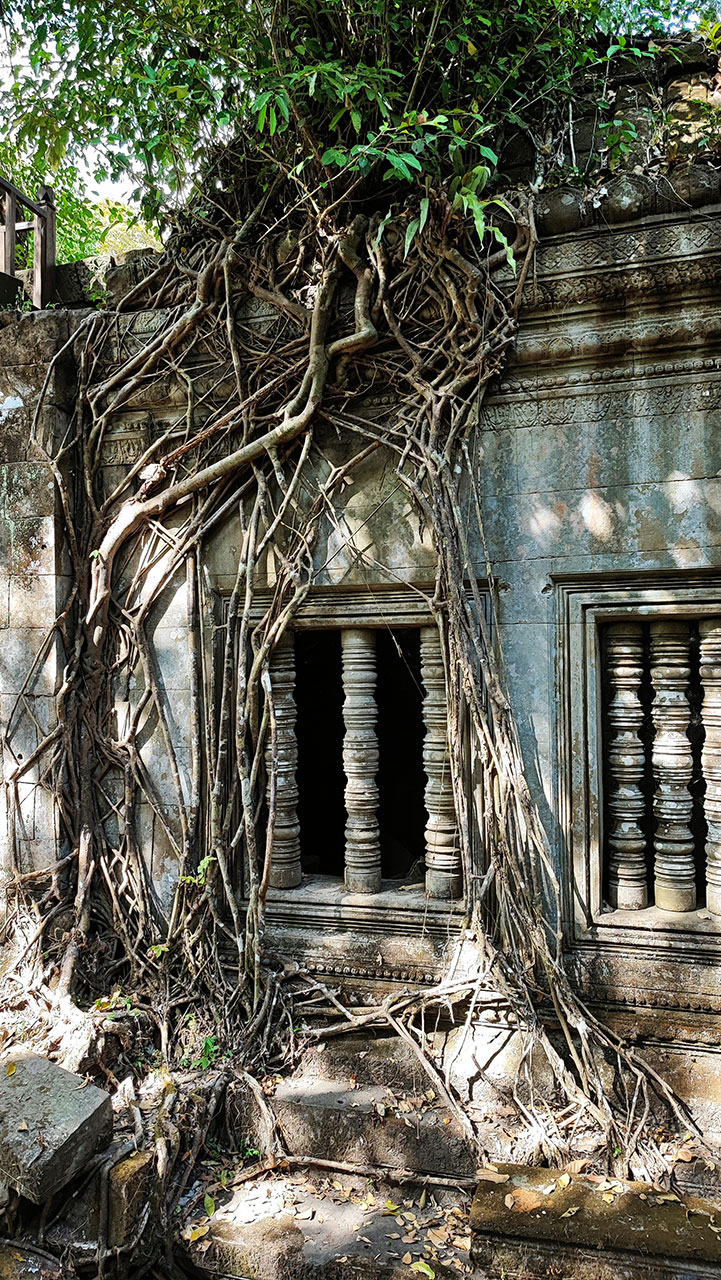
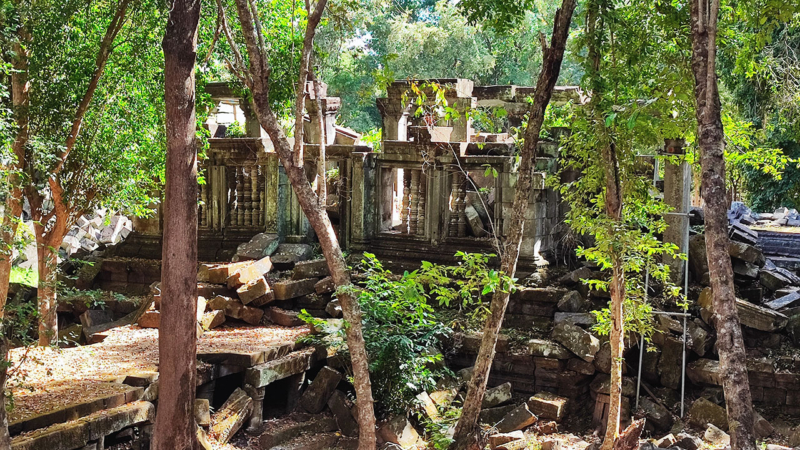
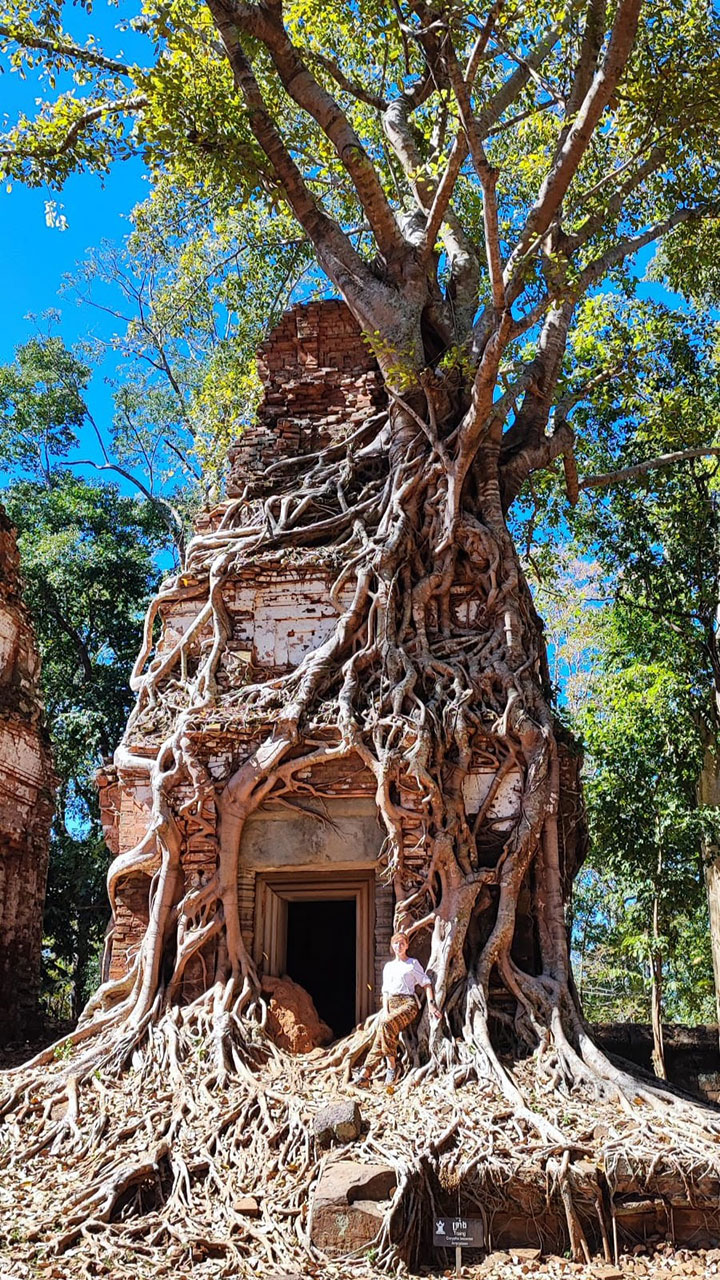
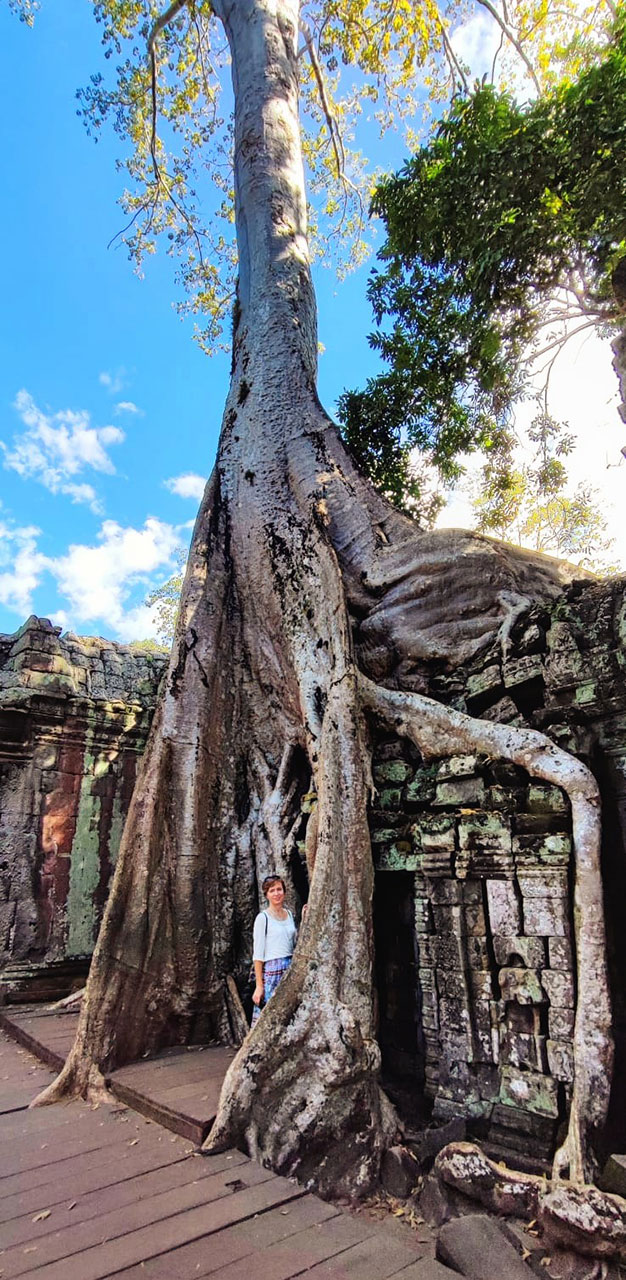
The uniqueness of Angkor lies in the fact that the jungle, which reclaimed the city after it was abandoned, helped preserve many of the temples. Angkor is a UNESCO World Heritage Site, and 90% of tourists in Cambodia come solely to see it.
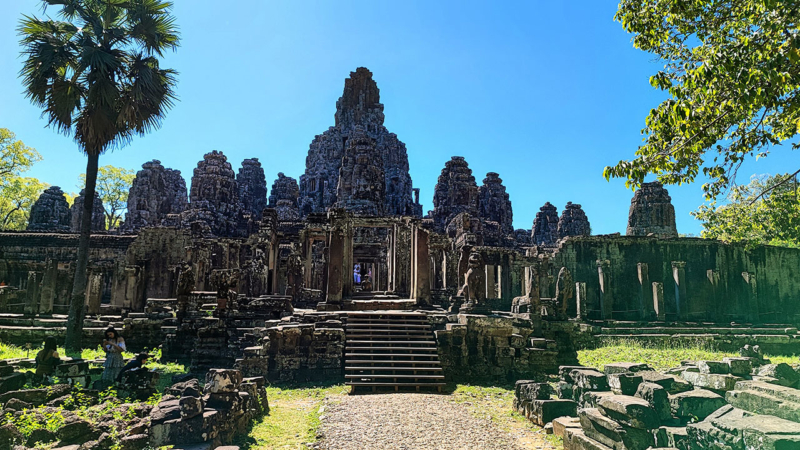
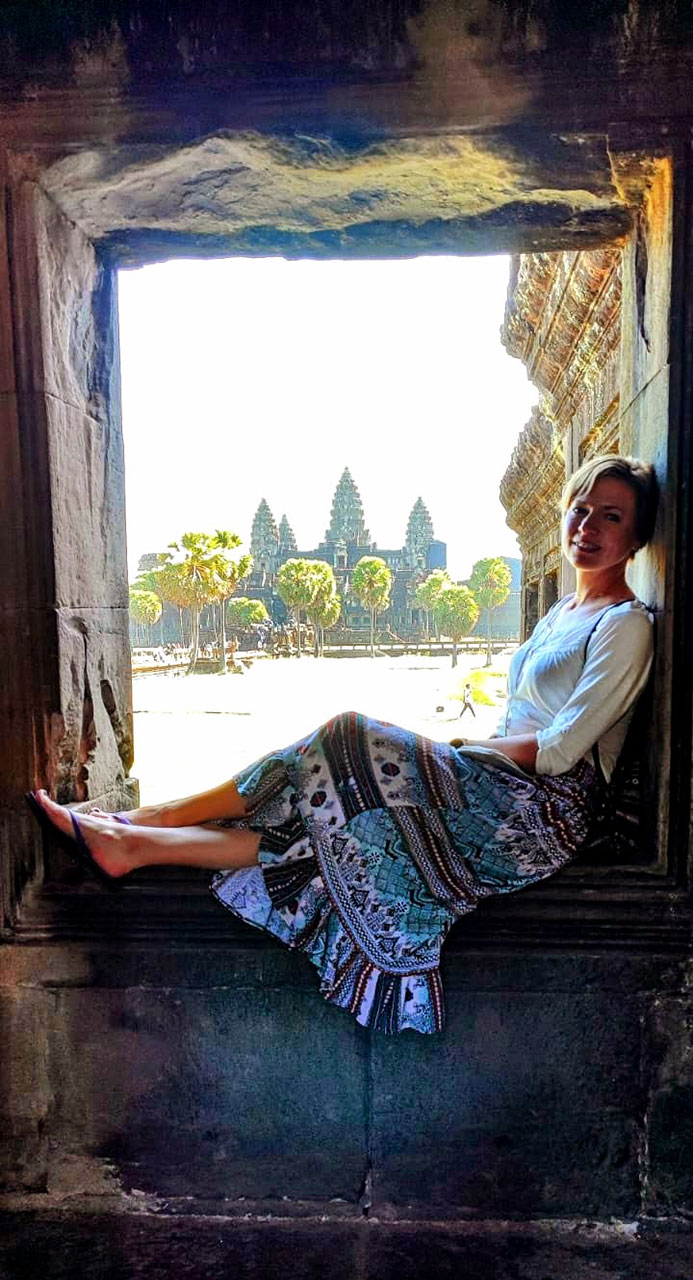
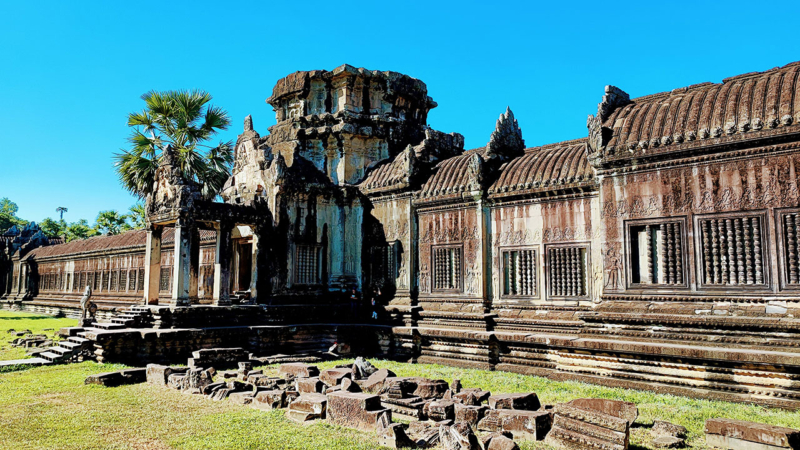
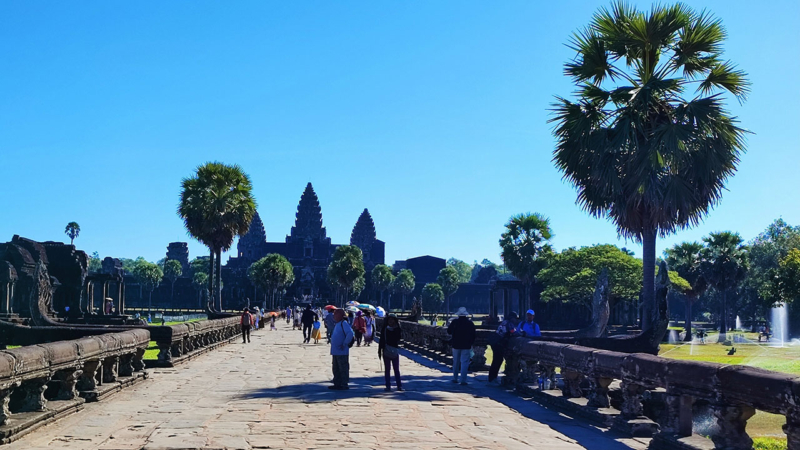
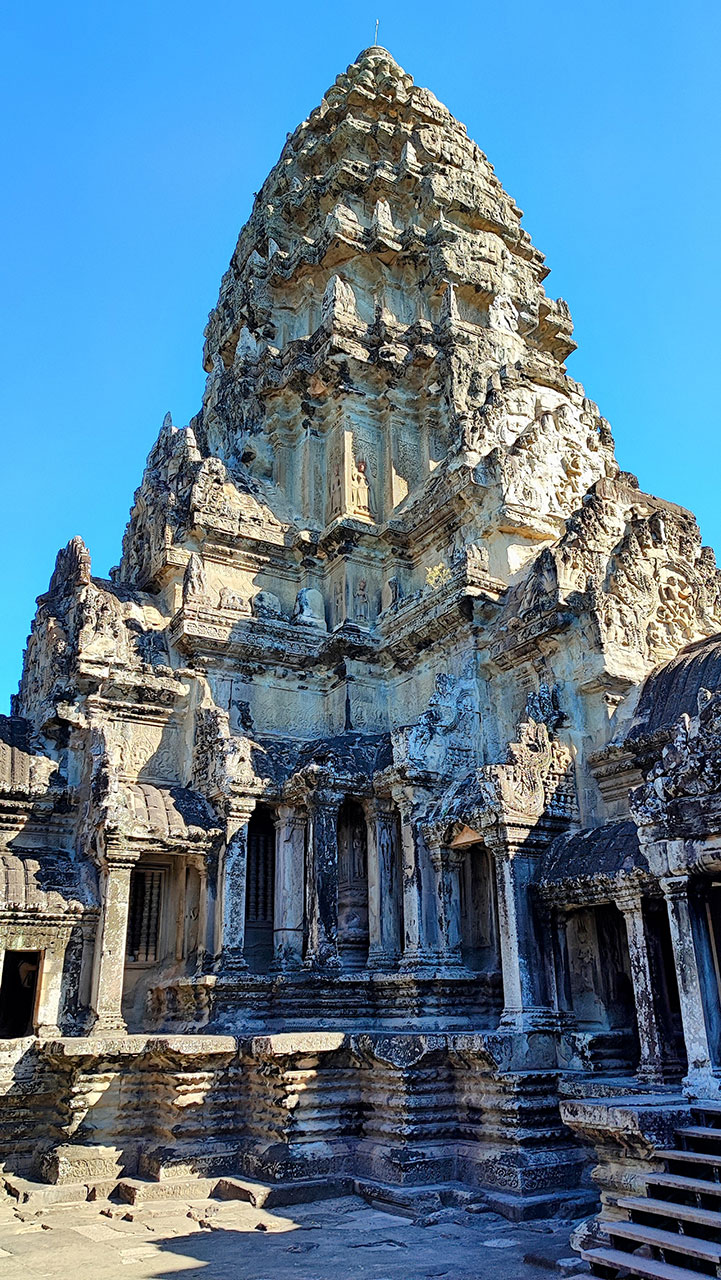
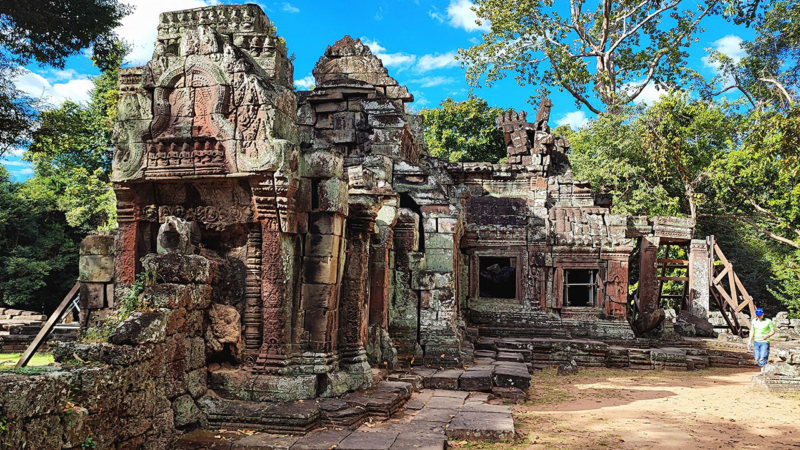
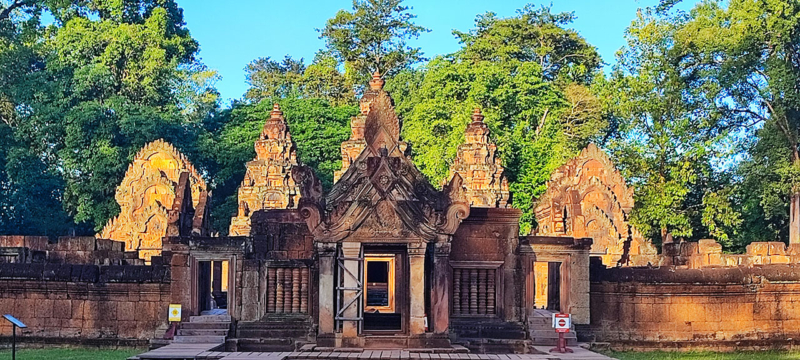
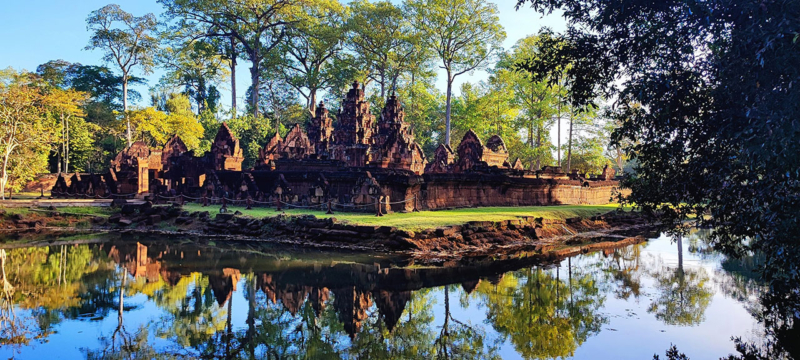
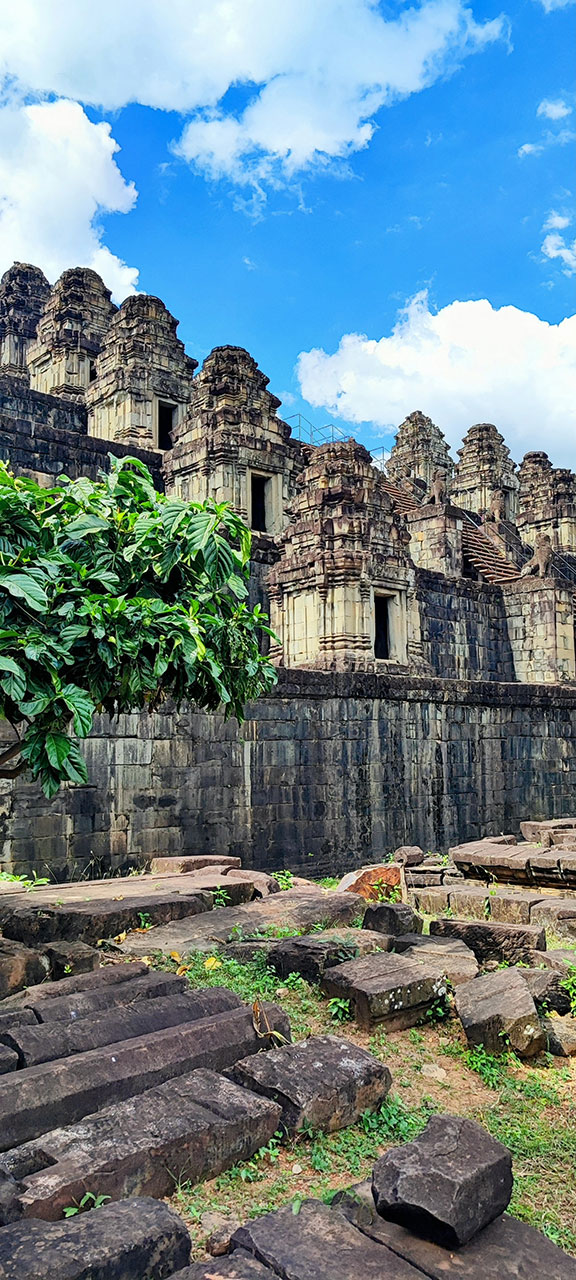
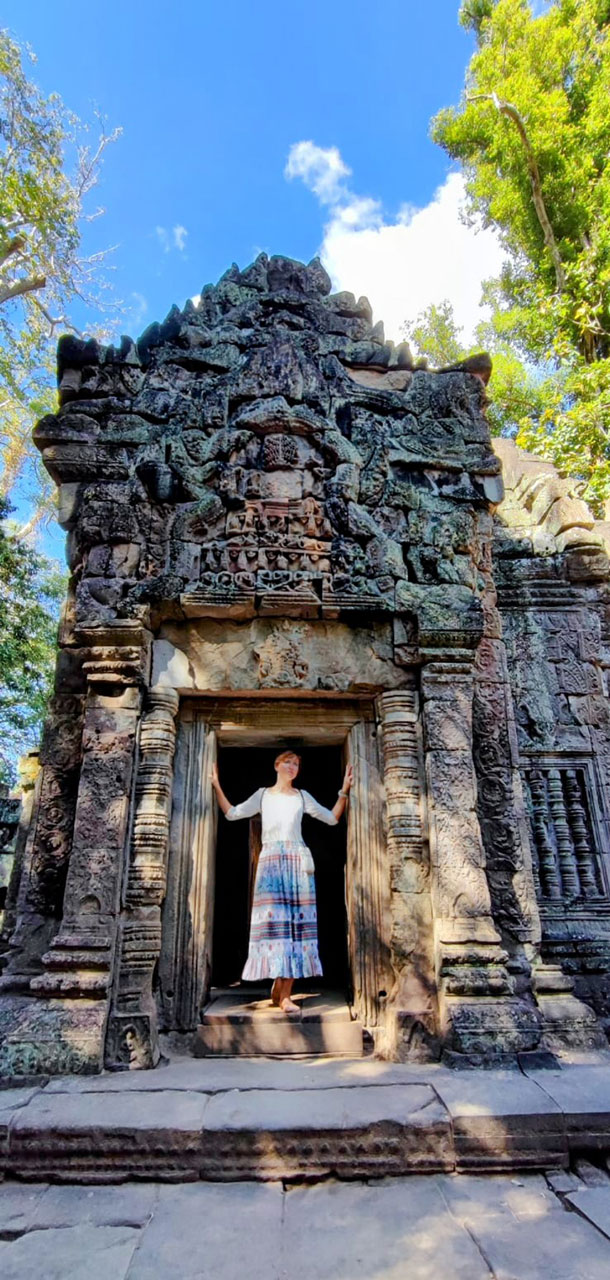
I won’t even try to describe Angkor Wat—it would be like summarizing War and Peace in a single post. The temple complex spans over 400 square kilometers, with more than 100 temples built between the 9th and 14th centuries, making it the largest religious structure in the world. In addition to temples, there are palaces and other non-religious buildings, all in varying states of preservation. Some have been freed from the jungle, while others remain partially buried.
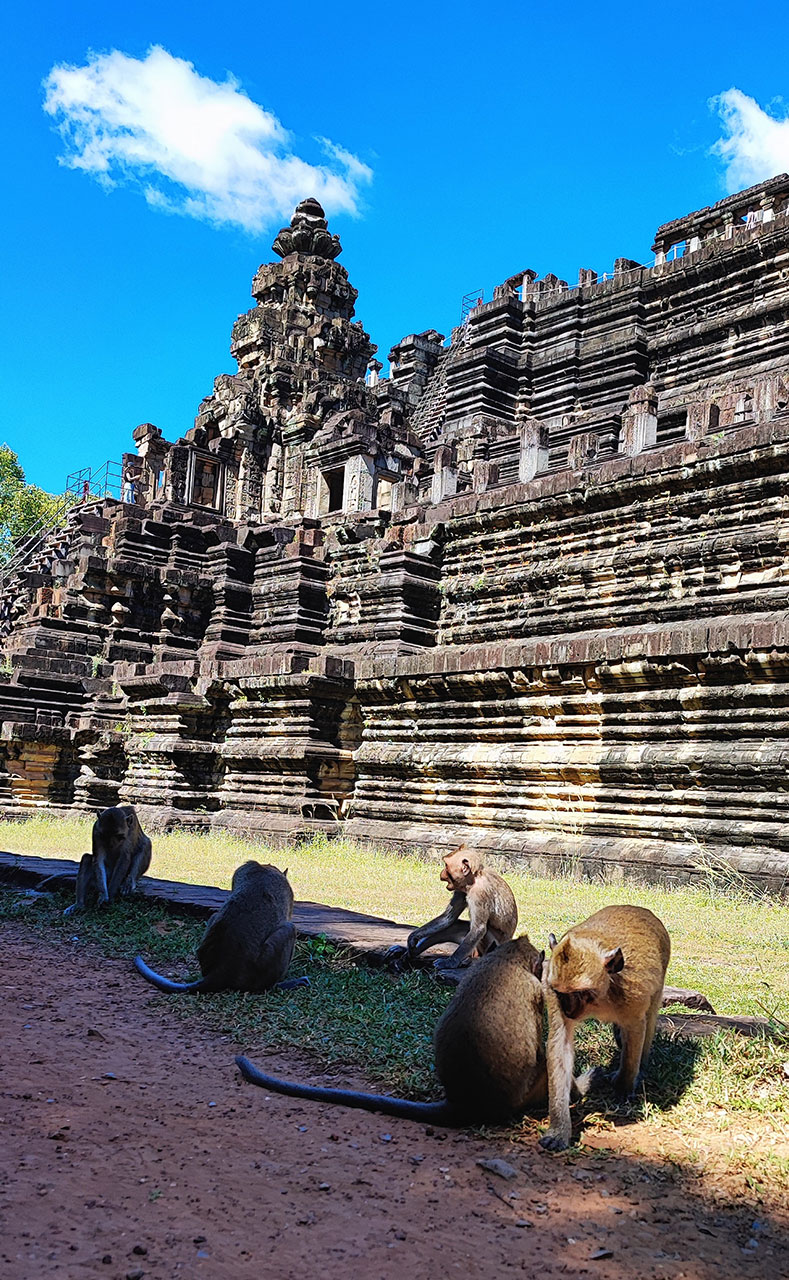
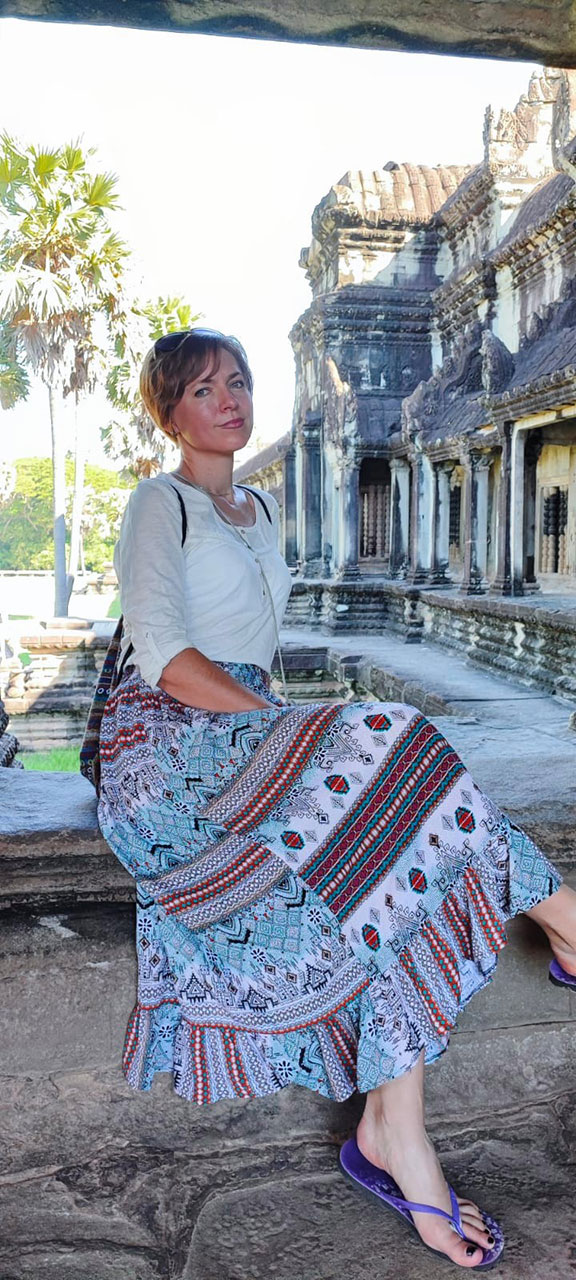
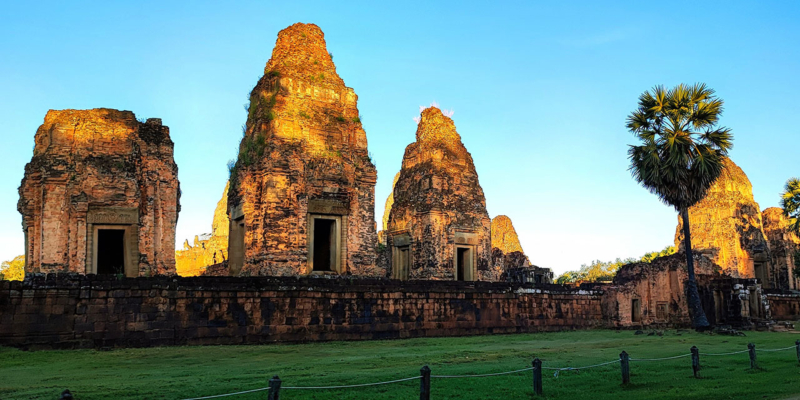
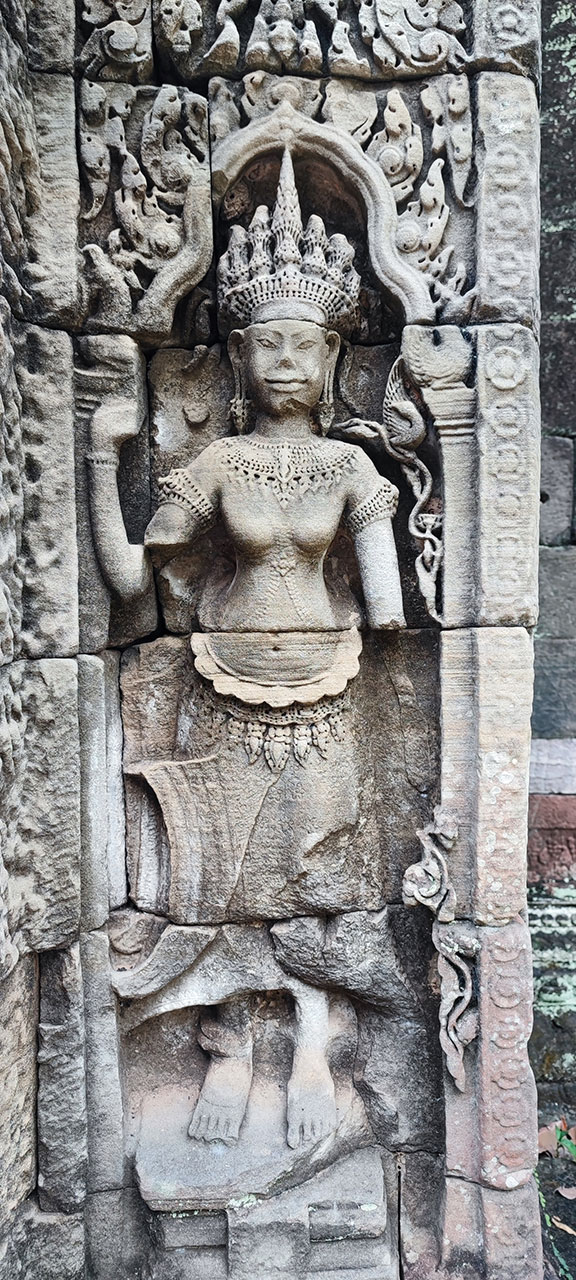
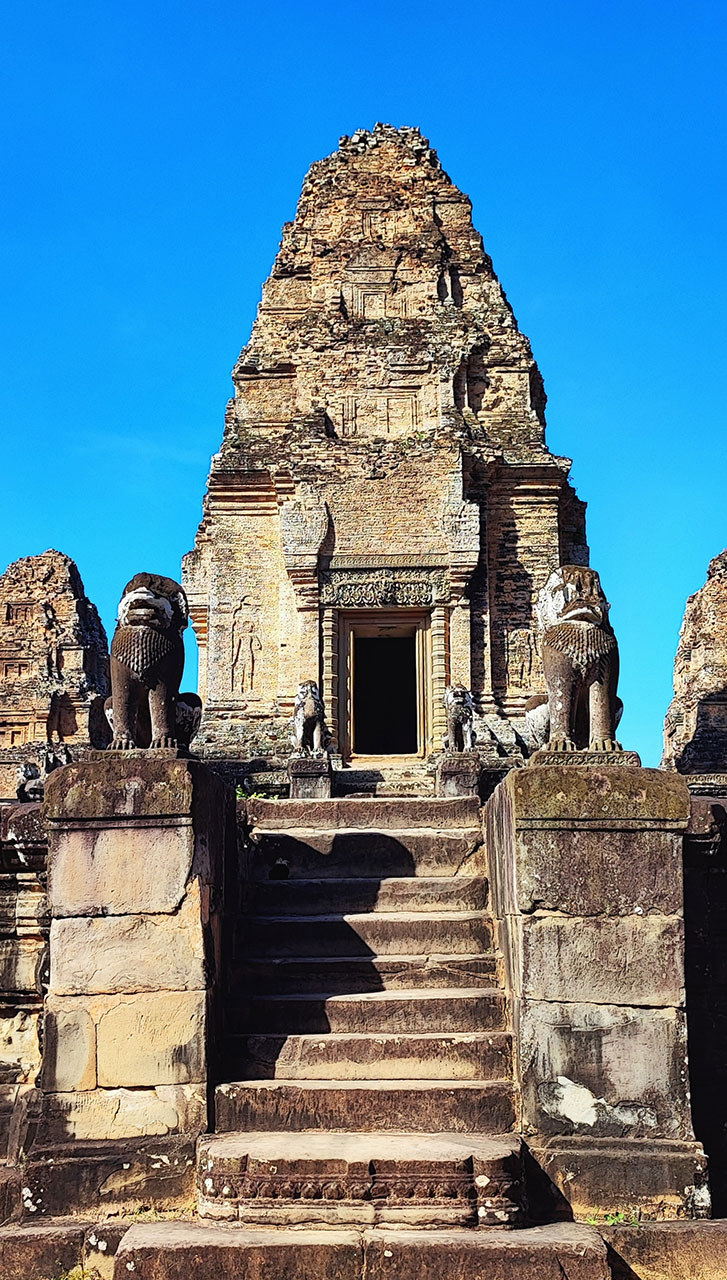
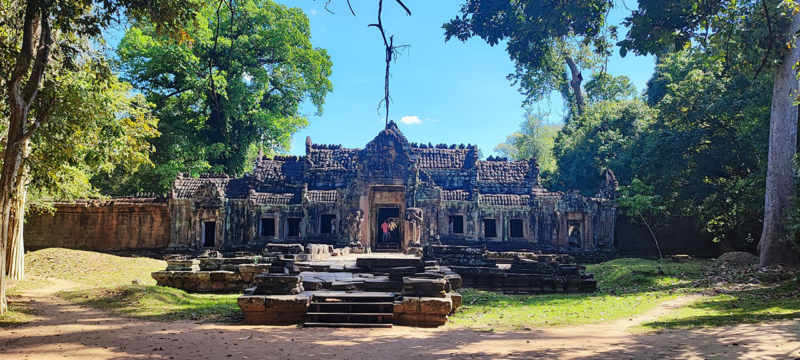
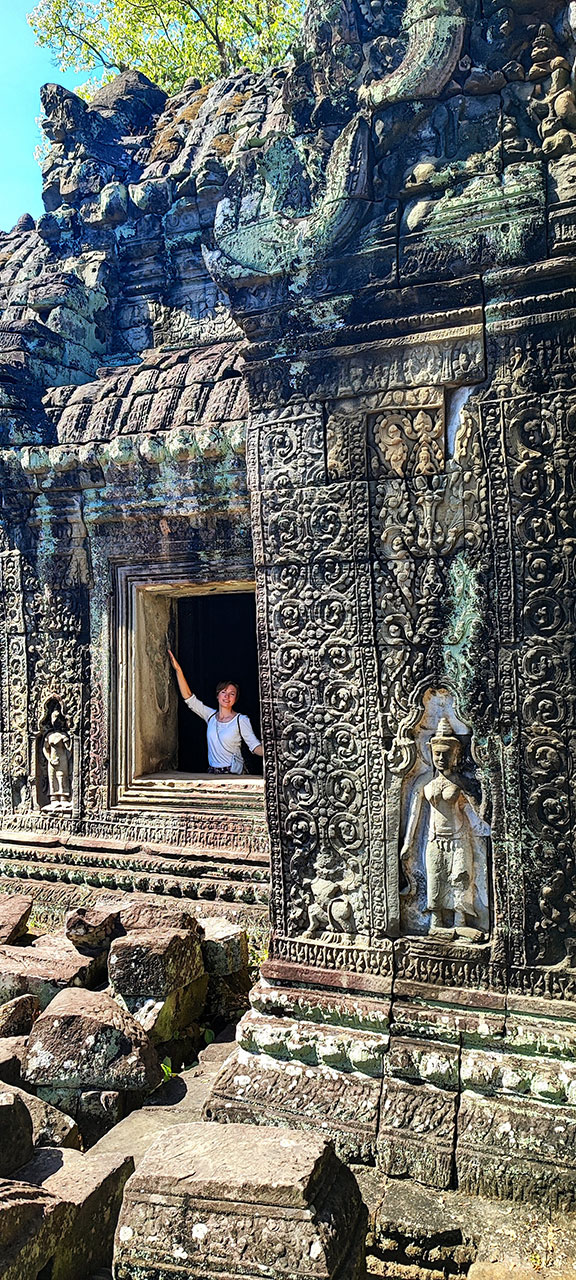
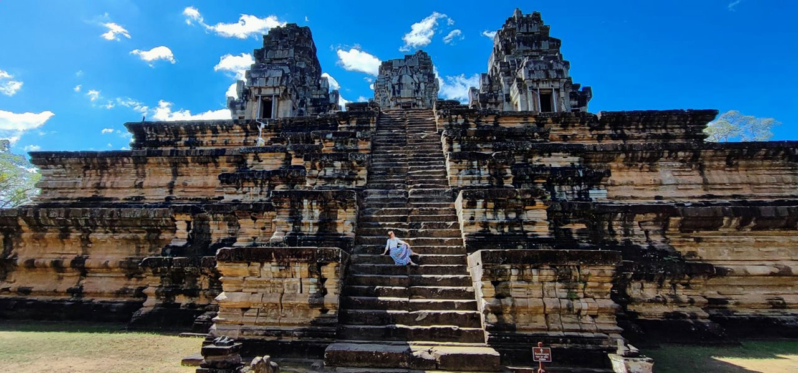
That day I only walked around the nearest 5 temples, but the step counter showed 41,000 steps, the thermometer showed +30..+35, and I ended up with blisters on my feet—even though we used a tuk-tuk to move between complexes. The best photos, of course, can be found on the Internet. I don’t understand at all why I took more than 200 pictures today? My sketches without a general plan are below in carusel.
I bought my Angkor Wat ticket online to avoid dealing with cash. Upon arrival, they quickly took my photo and issued a personal ticket on the spot. The prices (2023–2024) are:
- One-day pass: $37
- Three-day pass: $62 (includes all temples except the most remote ones, which we visited on the third day)
December 19, 2023. Angkor Wat
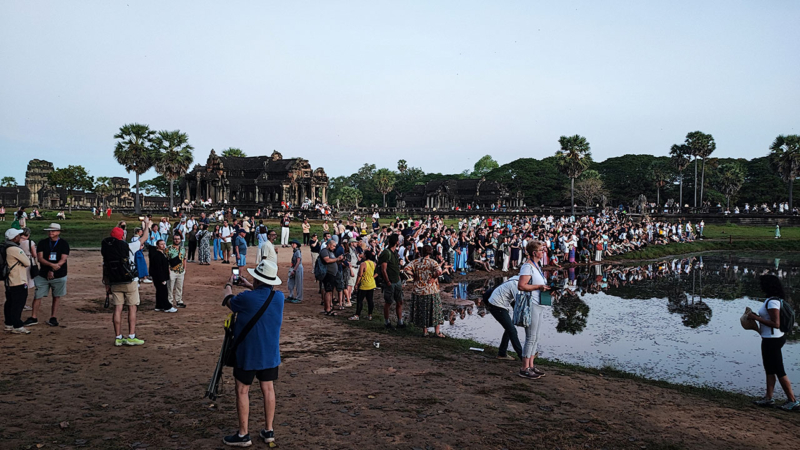
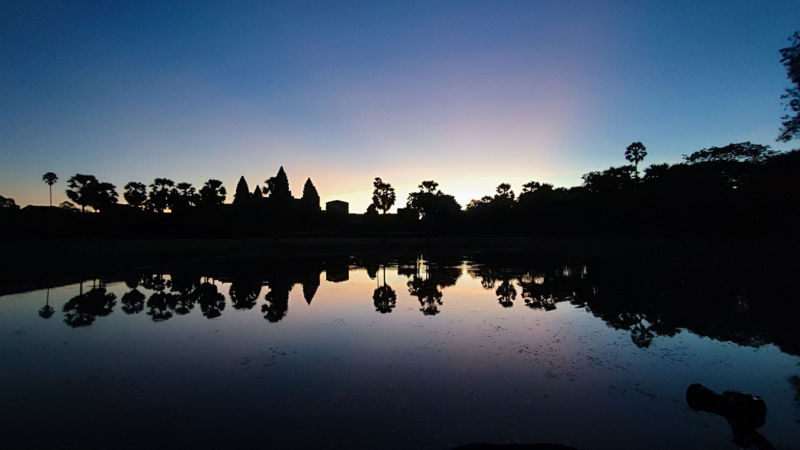
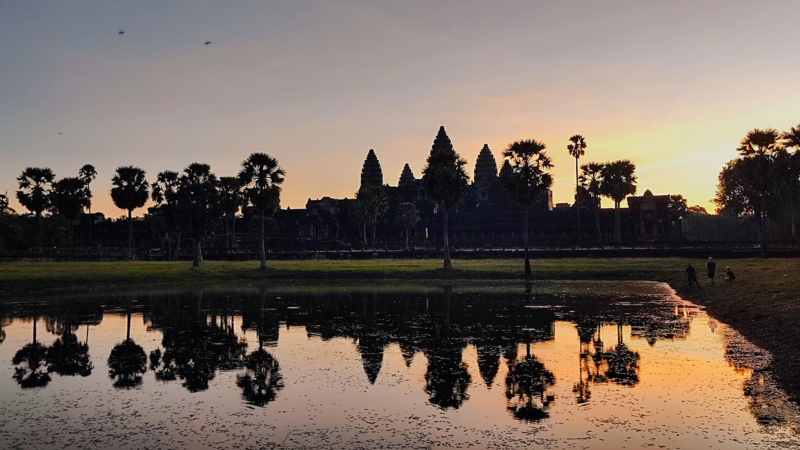
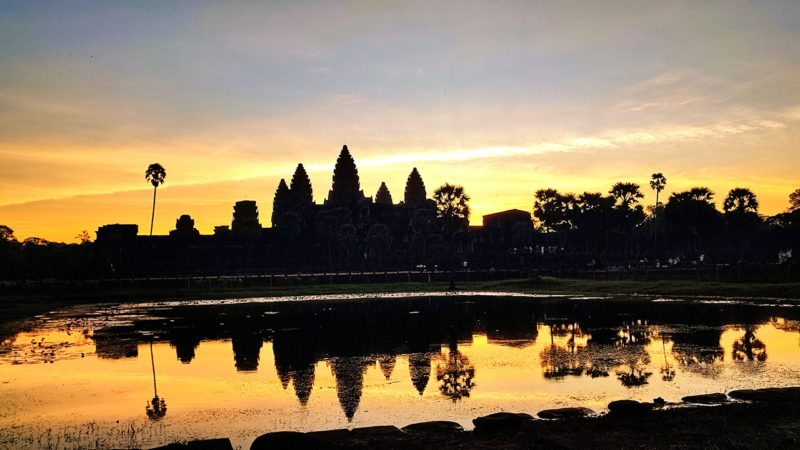
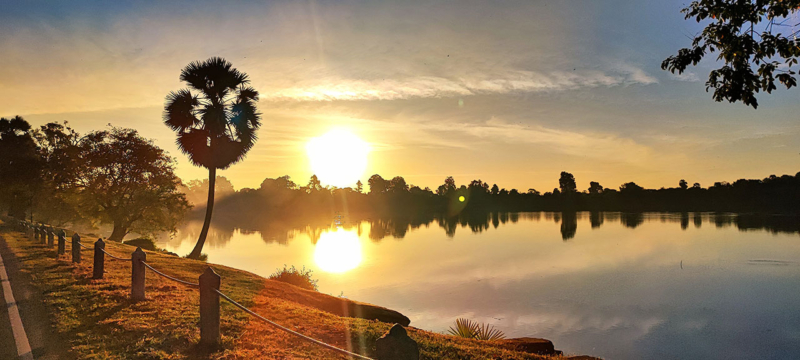
Sunrise at Angkor Wat. This is a must-see in Angkor, like Adam’s Mount in Sri Lanka or Bagan in Burma, but much more comfortable. No need to freeze your bare feet or start up the mountain at 2 a.m., but here I didn’t feel any particular thrill. The positive side is the first hour after sunrise, time of the most comfortable temperature, only +26 was on that day. And the light… The soft morning light paints the tops of the temples gold! From the jungle you can hear only the heavenly singing of birds, before the cicadas wake up and fill the air with their chirping, which in the afternoon starts to sound like a fire alarm.
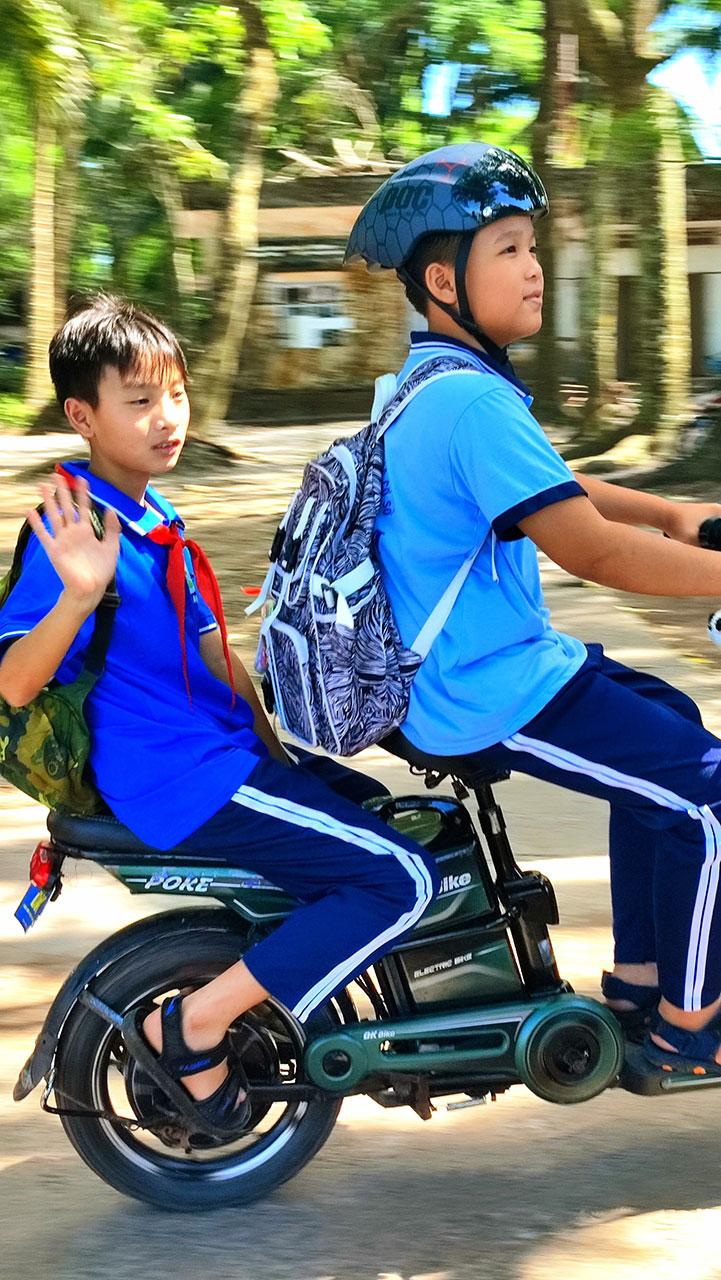
Meanwhile, Siem Reap was waking up—people cleaning streets, heading to work, herding cows. Parents taking children to school, three or four packed onto a single moped, sometimes with a baby in tow. Others ride bicycles, rusty and creaky, like my knees, and with a chain that has not seen lubrication since the time of Pol Pot. Mornings like these are why I love Asia the most! That is why at 6:30 I sent my tuk-tuk not to the hotel for breakfast and sleep, but asked him to take me for an hour or two around the neighborhood.
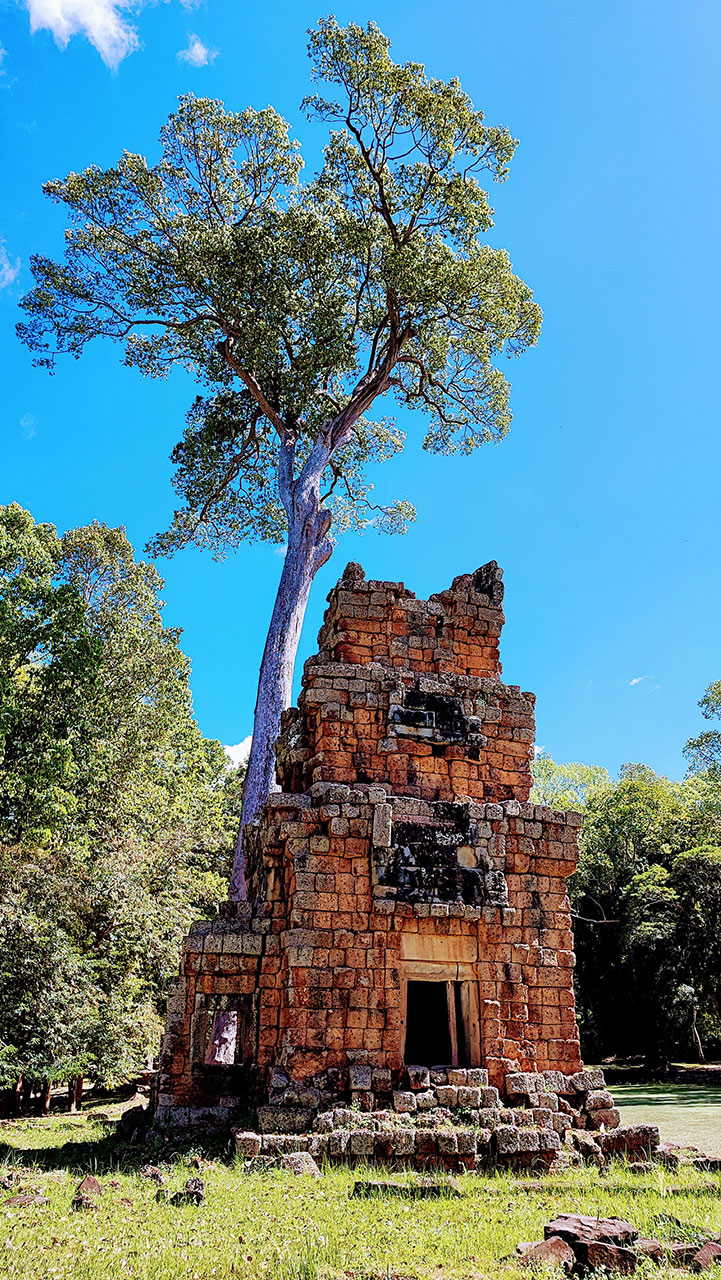
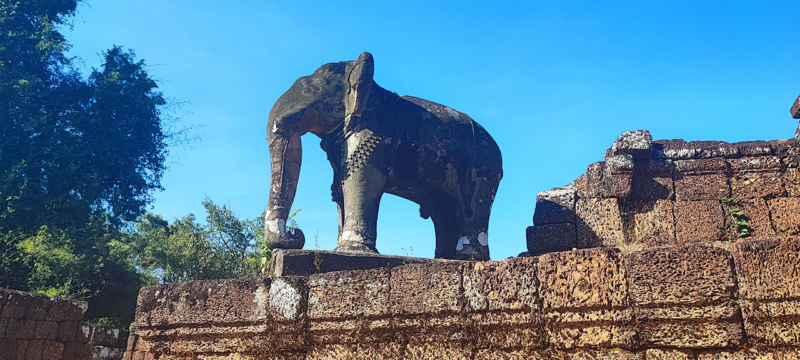
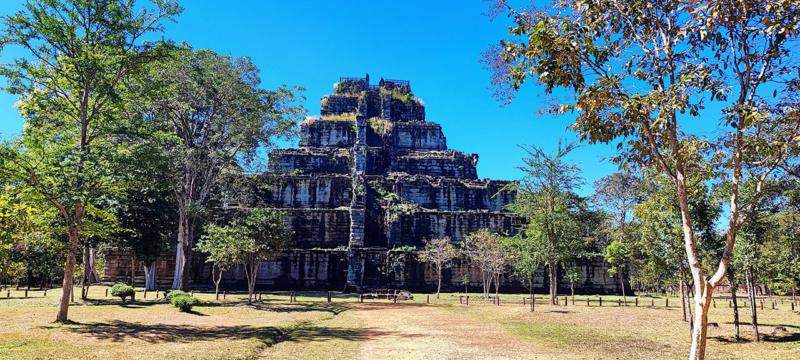
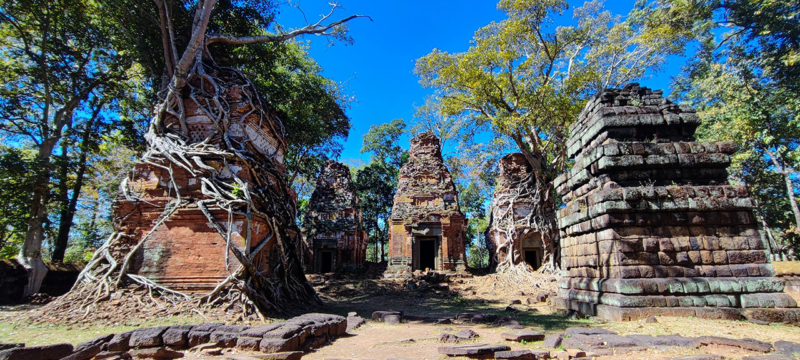
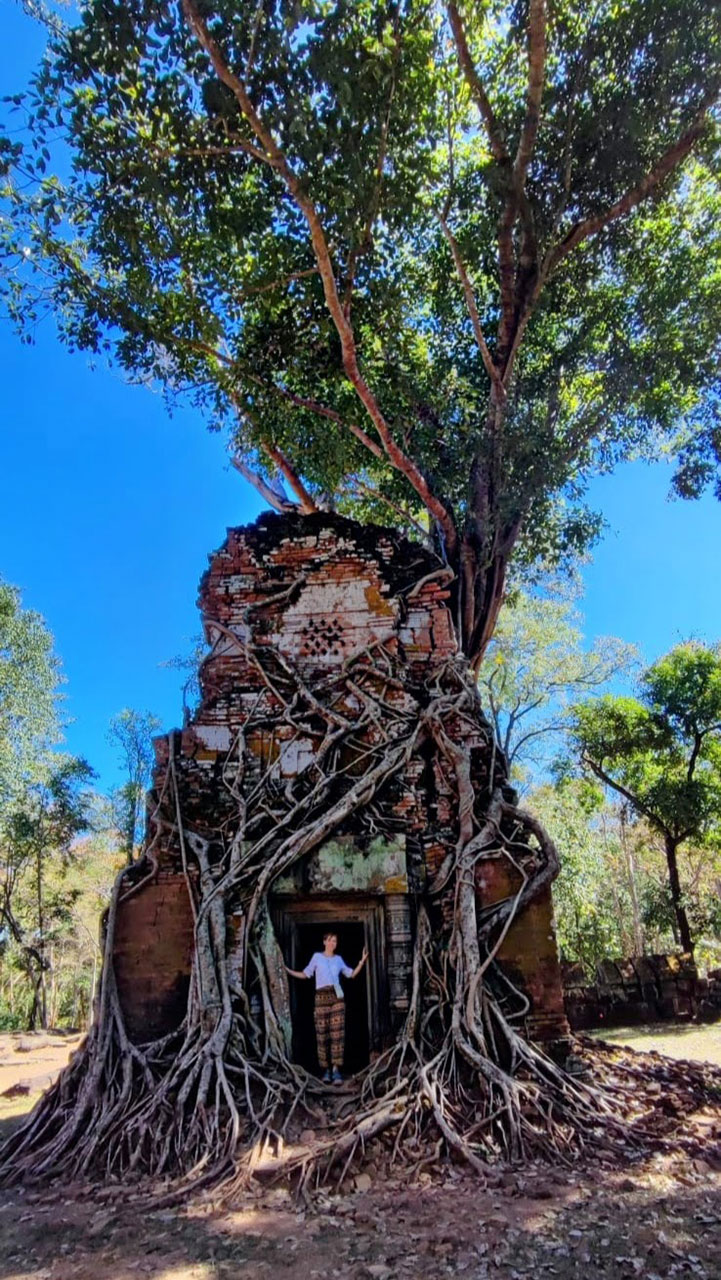
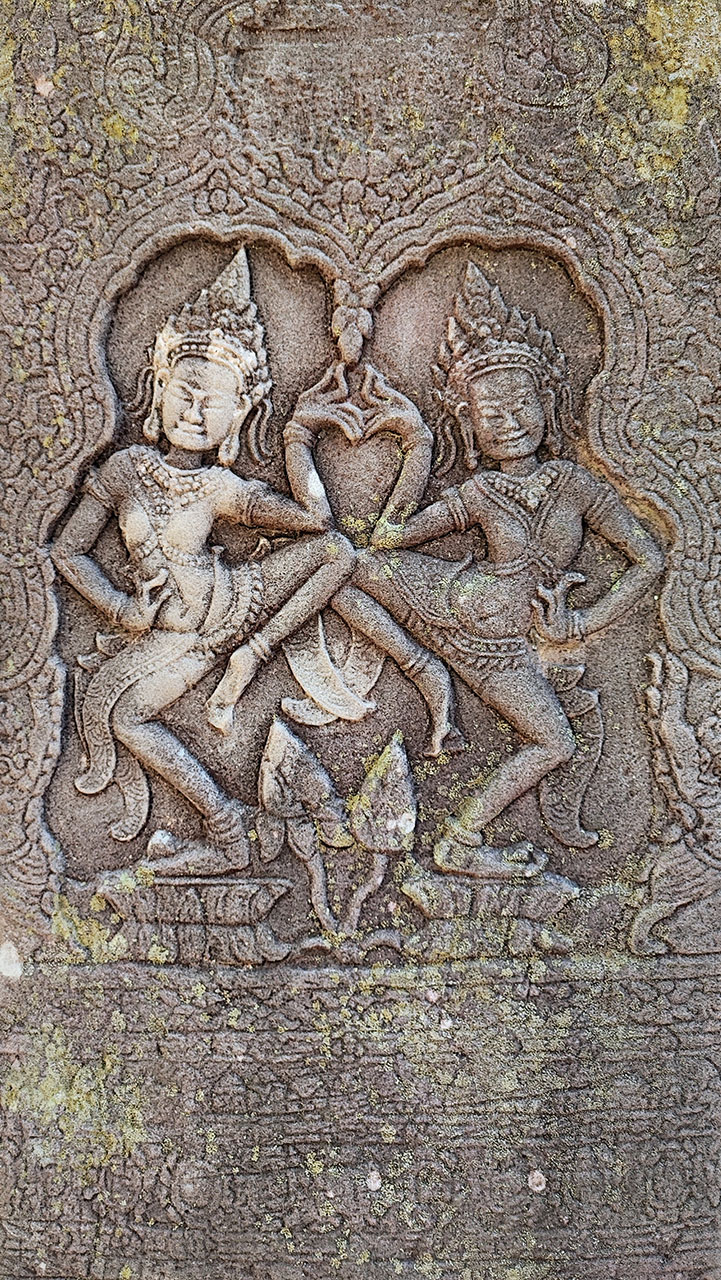
On the second day in the Angkor complex we explored distant temples 20-30 km from the city, as well as close ones, but less promoted. Some very little, like toys; and some huge structures with a corridor length of 250 meters. Temples on the island of a huge artificial lake, which was dry for more than 500 years and only a few years ago the canals were restored and the reservoir was filled. A temple in the shape of a pyramid on a 65-meter mountain in the middle of the flat relief of Angkor. Hindu and Buddhist temples. With lions and elephants. With the enlightened faces of Buddhas and dancing avatars of Shiva.
For those interested in Buddhism or Hinduism, this is a paradise. Even I, a person little familiar with the subtleties of these religions, was captivated by the intricate wall carvings. I could have stayed until sunset, but the heat was unbearable, so we headed back early. We had another long journey ahead the next day.
December 20, 2023. Phnom Kulen and distant temples
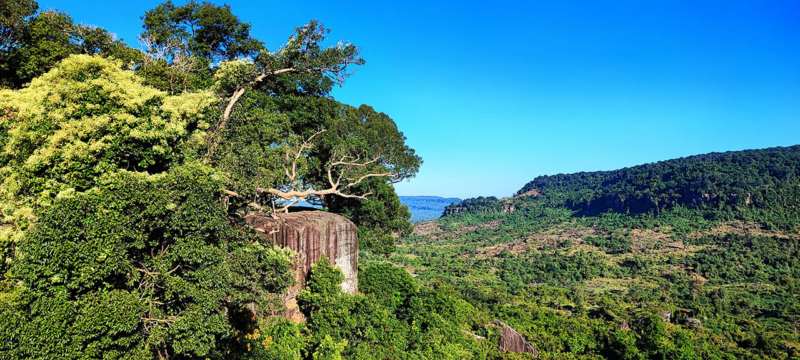
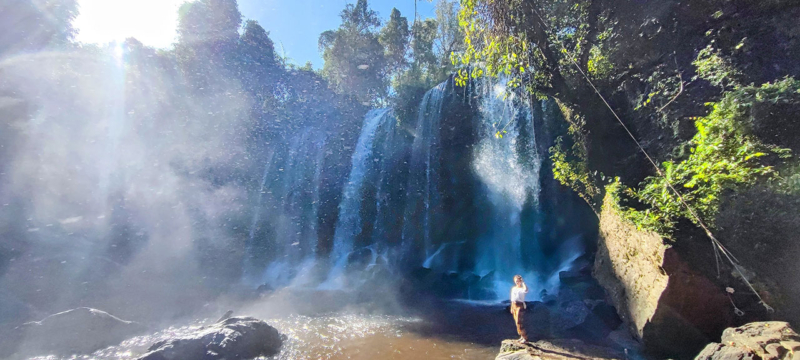
That day, we rented an air-conditioned taxi for a 250-km round trip to visit two distant temples and Phnom Kulen National Park.
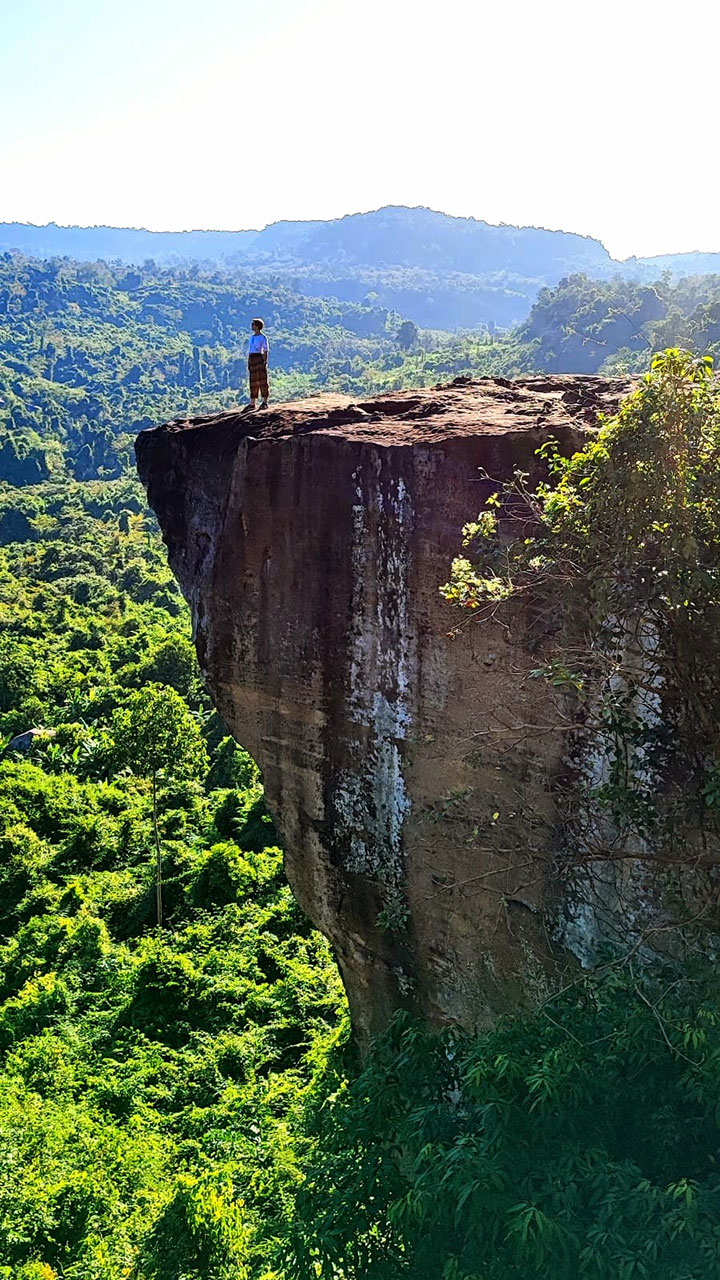
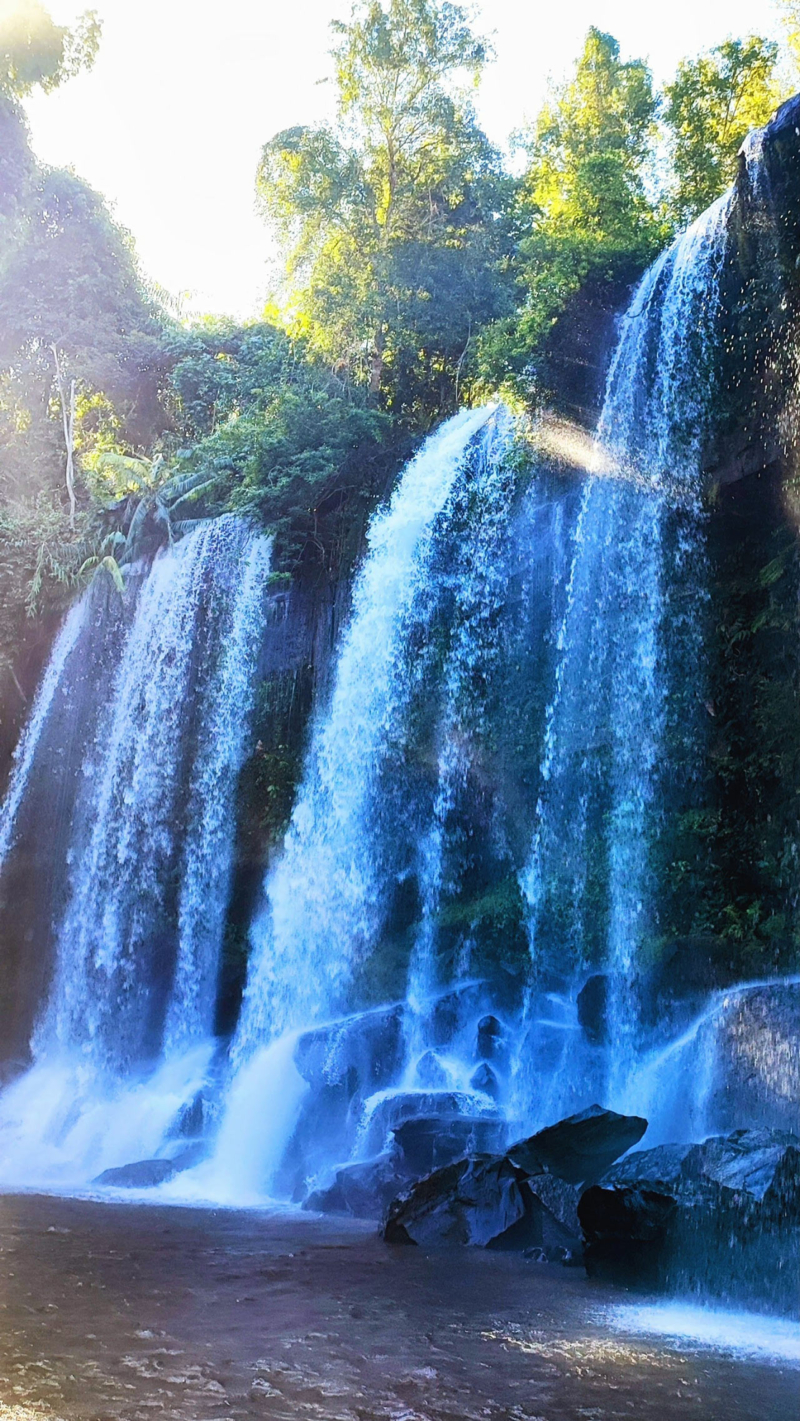
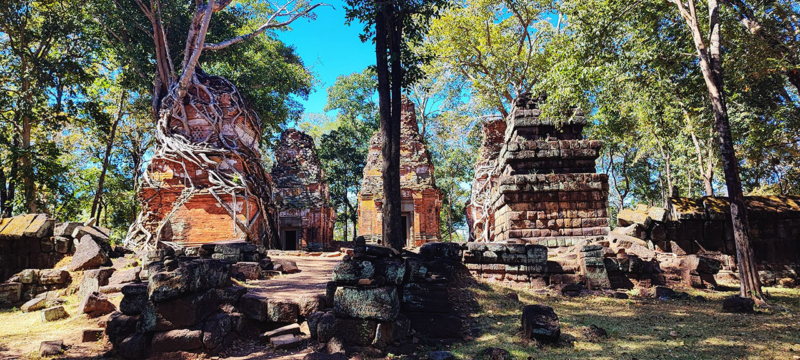
The park’s views weren’t breathtaking, but the remote temples were incredibly photogenic, hidden deep in the jungle, and we had them almost to ourselves.
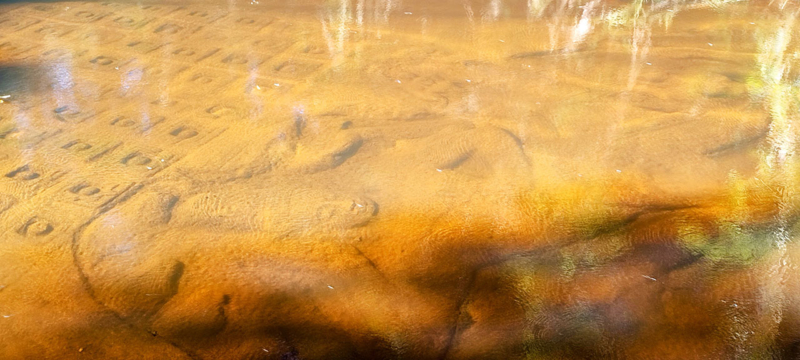
One of the last photos I took was of the famous “River of a Thousand Lingams.” Try to spot an image of Shiva carved into the riverbed, surrounded by small squares with raised centers—representing lingams (symbols of male energy). The story behind it seemed a bit contrived to me. The idea is that the lingam rises from the yoni (symbolizing female energy), signifying the creation and balance of the universe. I couldn’t quite grasp why the yoni was square—but perhaps someone had an overactive imagination when interpreting the carvings. Most likely, the author meant something else.
General impression of Siem Reap
So, I’ll start with the most unexpected thing for me—Cambodia turned out to be surprisingly expensive for a tourist. To be precise, I’m talking only about Siem Reap. This small province attracts 95% of the country’s total tourist flow. The province has a population of about one million, while the city of Siem Reap itself has fewer than 200,000 inhabitants.
There are hotels for every budget. I stayed in a six-room guesthouse located in the city center, tucked away in the backyard of a Buddhist monastery and very close to the royal palace. The place was gorgeous and peaceful. I didn’t even use the small pool during my three-day stay—after spending eight hours under the scorching heat, all I wanted was a shower and to lie down under the air conditioner. By the time I had cooled off, there was neither the time nor the desire for a swim.
The cost was 100 euros for four nights, but for the exceptional service I received, I left the owner a $50 tip. This was my only luxury in Siem Reap. Every time a guest arrived, Mr. Heng greeted them with a chilled terry towel to wipe their hands, face, and neck, along with a plate of freshly peeled fruit and a cold drink—regardless of the time, whether it was 6 AM or midnight. He also arranged all the tickets, transport, and laundry. I had planned to handle everything on my own, but whenever I mentioned, for example, wanting to visit a nature reserve the next day, his response was always the same: “Eat your mango, relax, your car will be here at 6:30.” And sure enough, at 6:30, not only was the car ready, but there was also coffee, candy for the road, a cooler stocked with cold water for the entire day, and pre-purchased tickets.
Just a month and a half before my trip, a new airport opened in Siem Reap. For me, this was highly inconvenient. Previously, the airport was only 10 km from the city; now, it’s over 50 km away.
Our expenses (in USD) for 3 days
- Visa on arrival: $30 per pers.
- Taxi from the airport: $25
- Angkor Wat pass (3 days): $62 (includes a photo and multiple checks) per pers.
- National park ticket: $20 per pers.
- Ticket to distant temple complexes: $15 per pers. per temple
- Tuk-tuk for a full day: $20 + $5 extra for a 4:30 AM departure
- Taxi for a long trip: $120 for the whole day
And just like that, $600 vanished in three days.
Of course, you also need to eat—and in this heat, staying hydrated is crucial. If not with cold beer, then at least with juice or soda. One might assume that in a poor country, food and drink would be cheap, but not for tourists on the well-trodden tourist trail!
On the first morning, our host sent us to have a “European-style” breakfast. There was a bakery next to a culinary school, where, according to him, our money would go toward subsidizing the education of underprivileged students. I hadn’t paid $8 for a coffee and a croissant in a long time! And that wasn’t even enough to get through the day. I had to buy a “morning burger”—a croissant with cheese and a fried egg inside—for another $7. So, in the end, our meager breakfast for two cost over $30.
The same went for groceries. At one point, I thought about stocking up on sandwiches, as is customary for hikes in Europe, but after a visit to the store, I abandoned the idea. Cheese and sausage were twice as expensive as in Finland, comparable to Swiss prices. The locals don’t eat those products—everything is priced for foreigners, ensuring that tourists don’t have to carry their money back home.
Cambodia’s food culture is also very different from Vietnam’s. In Vietnam, locals fill the small street eateries on every corner. Here, instead of eateries, I saw many shops selling pre-packaged sauces and ready-made ingredients. But places with actual seating and cutlery were scarce.
Every time I asked a driver to take me to a local eatery, I got the same response: “You can’t eat there.” Finally, on the last day, I told my driver I would pay extra if he stopped where I wanted. That’s how we ended up having a wonderful lunch for just $4—for all three of us. By the time I figured out how to navigate local eateries, it was time to pack for the trip home.
I didn’t exchange any money. The US dollar is widely accepted alongside the Cambodian riel. Even in remote villages, prices are often quoted in dollars, and you can receive change in both riel and dollars.
Unlike in Burma or Laos, where tourist attractions are often functioning temples, the temples in Siem Reap are primarily historical sites—more museums than places of worship. Monks are rarely seen. I remember in Luang Prabang, hundreds of monks would walk the streets before dawn, and just as many locals would come out to offer them food.
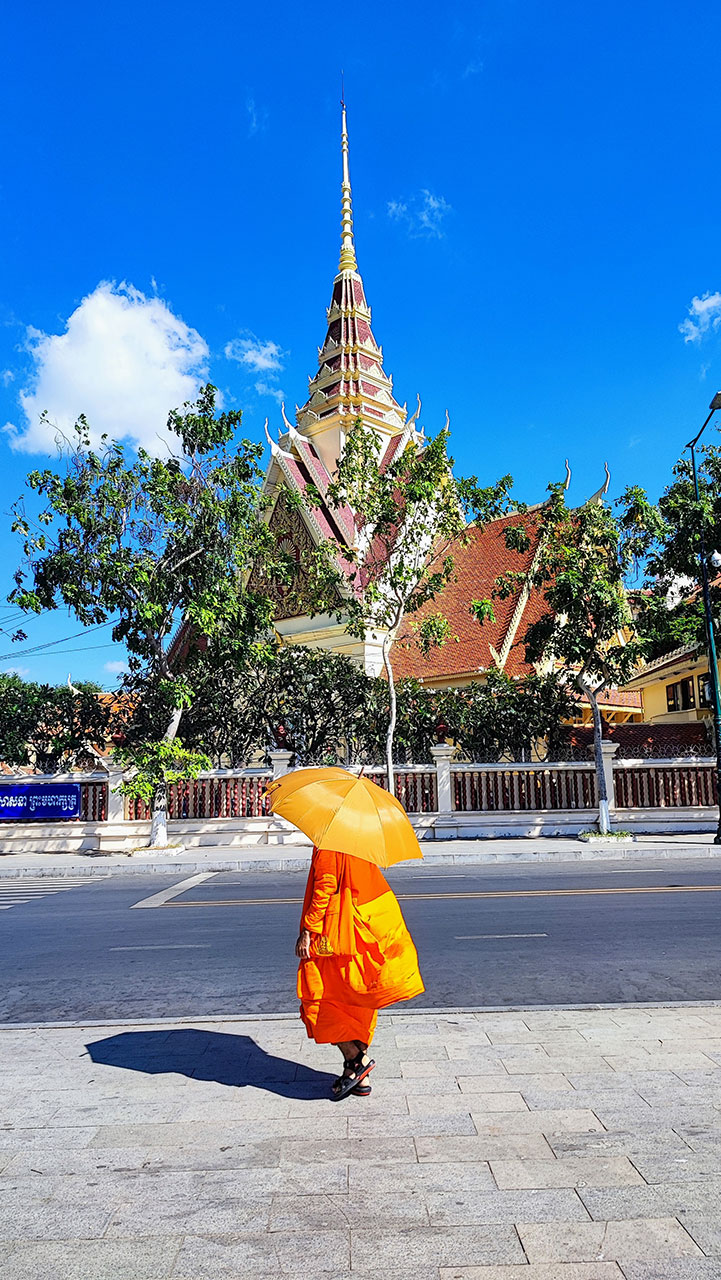
Here, at sunrise, monks were being dropped off from tuk-tuks, sitting on benches in temple courtyards, swiping through their phones. In the evenings, they would eat takeout from street vendors at those same benches. On the way to Phnom Penh, our bus stopped for a break, and I saw monks ordering food from a menu at a roadside café. Their presence here is minimal compared to Laos or especially Burma.
On our last day, our driver shared a bit of history. During Pol Pot’s regime, all religions were banned, monasteries were closed, and many were destroyed. Buddhism, like all other religions, was considered “the opium of the people.” After the regime fell, there was a revival, but monastic life never fully regained popularity.
Our taxi driver told us how he had spent four years in a Buddhist monastery, then two years in a Hindu one, and later attended a Muslim school. His reason? After finishing school, he had no money to move to the city to study, no language skills to work in tourism, and no desire to return to village life. According to him, most child monks today are either orphans or come from extremely poor families—often raised by single mothers.
Our driver was 42 years old. He told me the story of how his parents got married. At the time, war was raging, and all men were drafted into the army at 18. But before leaving, they were required to marry—anyone. The morning after the wedding, they had to report for duty. When his father returned to the village three months later on his first leave, he barely remembered who he had spent his wedding night with. They had to get acquainted all over again. But that was normal, and in the end, they stayed together for life.
He spoke about the dream many Cambodians share: going to Thailand for work. With its growing economy, Thailand attracts many migrant workers from neighboring countries, and a construction worker there can earn over $1,000 a month—an unimaginable sum for most people here. But leaving Cambodia requires an expensive exit permit, something that 95% of the population simply cannot afford.
For years, he worked as a hotel cleaner, learning English by chatting with tourists. He saved $2,000 to buy a guide’s license and even took out a loan to buy a car. Then COVID hit—no tourists, no income, and the bank repossessed his car. He eventually had to move his family from the village so that his son could attend a good English-language school, which costs $800 per year. Now, all four of them live in a single room, and he borrows a friend’s car to earn what little he can from tourists.
He also talked a lot about politics—about corruption, the king (who, as he put it, you can’t criticize out loud, but everyone whispers about), and Cambodia’s history. In his view, all the country’s misfortunes, dating back to ancient times, can be blamed on… Vietnamese women. According to him, every Cambodian king who married a Vietnamese woman lost land, and even Angkor was abandoned because of them. Ironically, he admitted he had never actually seen a Vietnamese woman in his life but had heard they were of “unearthly beauty.” When he found out we were heading back to Vietnam, he was envious. “If I were rich,” he said, “I’d bring home a Vietnamese mistress.” I reminded him that he had just said all evil comes from them. He shrugged. “I don’t care if the world ends—if I have a mistress like that.” These, at least, are the fantasies of one local man.
Almost everyone here speaks and understands at least some English, but the pronunciation is… challenging. Yesterday, our driver kept talking about “kasyunya.” “Kasyunya is for export,” he said. “Farmers grow kasyunya.” He even asked if I liked kasyunya. I nodded and smiled at everything he said, not wanting to seem rude. Then he pointed to a tree, and it finally clicked—it wasn’t “kasyunya,” but “cashew nut,” damn it.
The locals don’t seem to drink much. When they do, it’s usually beer. I also didn’t see many smokers, nor the telltale red-stained mouths from chewing betel nut. Our guide said that people do drink, smoke, and chew betel—but mostly in remote villages, not in the ones along the main roads. Drugs, on the other hand, seem to be a different story. While the laws are strict, it’s apparently not uncommon for people to grow a little marijuana for personal use. Opium and synthetic drugs are becoming more accessible, mostly due to a steady flow from Laos and Burma, where the ongoing unrest leaves little time for drug enforcement. Still, in Siem Reap, I didn’t see a single drunk or stoned person.
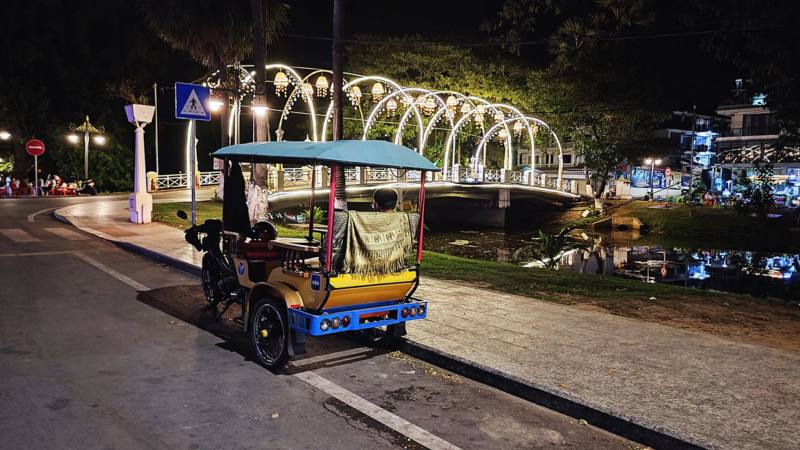
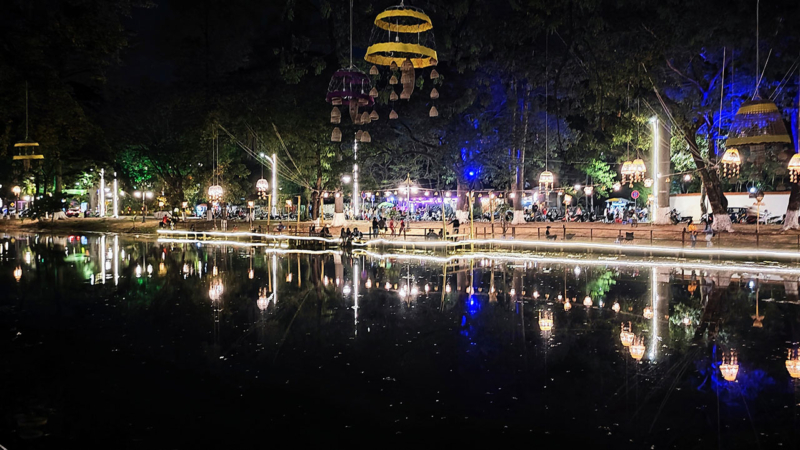
In the evenings, the embankment and parks come alive. People play badminton and a local game where they kick a large, heavy shuttlecock with their feet. Others gather in large groups, dancing in synchronized movements.
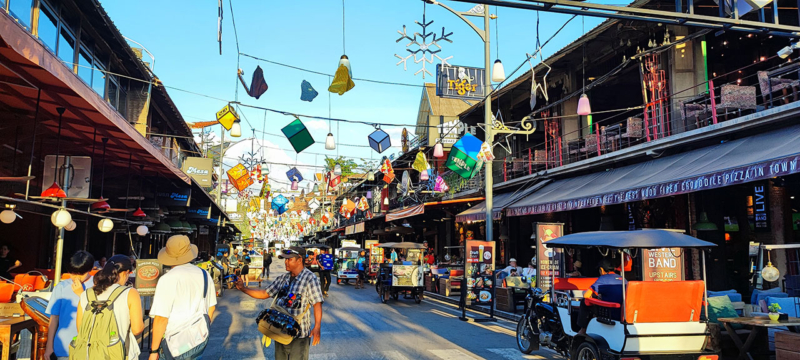
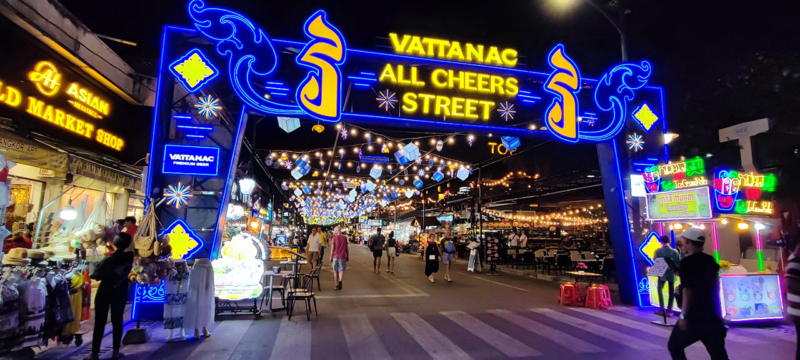
In the heart of Siem Reap, dazzling Christmas lights decorate the streets. There are entire areas dedicated to tourists—where, for $10, you can get cocktails or enjoy cuisines from all over the world. These streets are packed with foreigners, but not a single local.
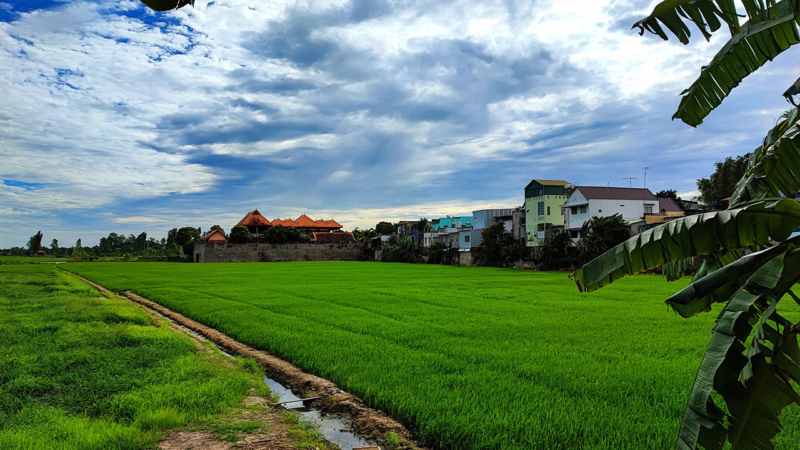
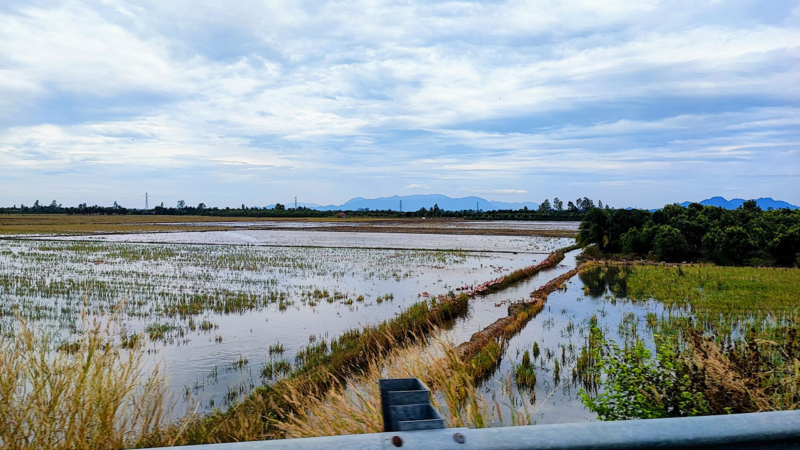
I’m writing these impressions from a bus, on the long journey from Siem Reap to Phnom Penh. As we get closer to the capital, I notice more good cars, better houses, even the dogs look healthier and better fed. I can only hope the prices are more reasonable, too. Here and there, ornate monastery roofs begin to appear, a sign that religious life is more vibrant in this part of the country. The fields surrounding us are either flooded for planting or already sprouting young rice. In this fertile Mekong Valley, rice is harvested twice a year.
December 21, 2023. Phnom Penh
I guess I’ve fallen in love!
This isn’t the first time the internet has called a place boring, only for me to arrive and feel an absolute resonance—like I’m on the same wavelength with it. Phnom Penh!
Once upon a time, before my first trip to Asia, I imagined it to look exactly like this. For some reason, Southeast Asia was always associated with the word Saigon in my mind. Eventually, I found myself in Saigon, but in reality, it was nothing like I had imagined. And besides, it has long been Ho Chi Minh City, not Saigon. My Asian dream of the mysterious Saigon from my fantasies hovered somewhere nearby, waiting to come true… and today, it finally has.
We arrived comfortably in Phnom Penh on a morning bus. After dropping off my things at the hotel, I went straight to the pier to buy a boat ticket to Vietnam’s Chau Doc for the following morning. But by the time I reached the ticket office, I realized I wasn’t ready to leave Phnom Penh so soon. So, instead of a morning ticket, I bought one for the afternoon. If I hadn’t already prepaid for a program on the Vietnamese side, I would have stayed in Phnom Penh for a few more days—at least long enough to explore beyond the city center.
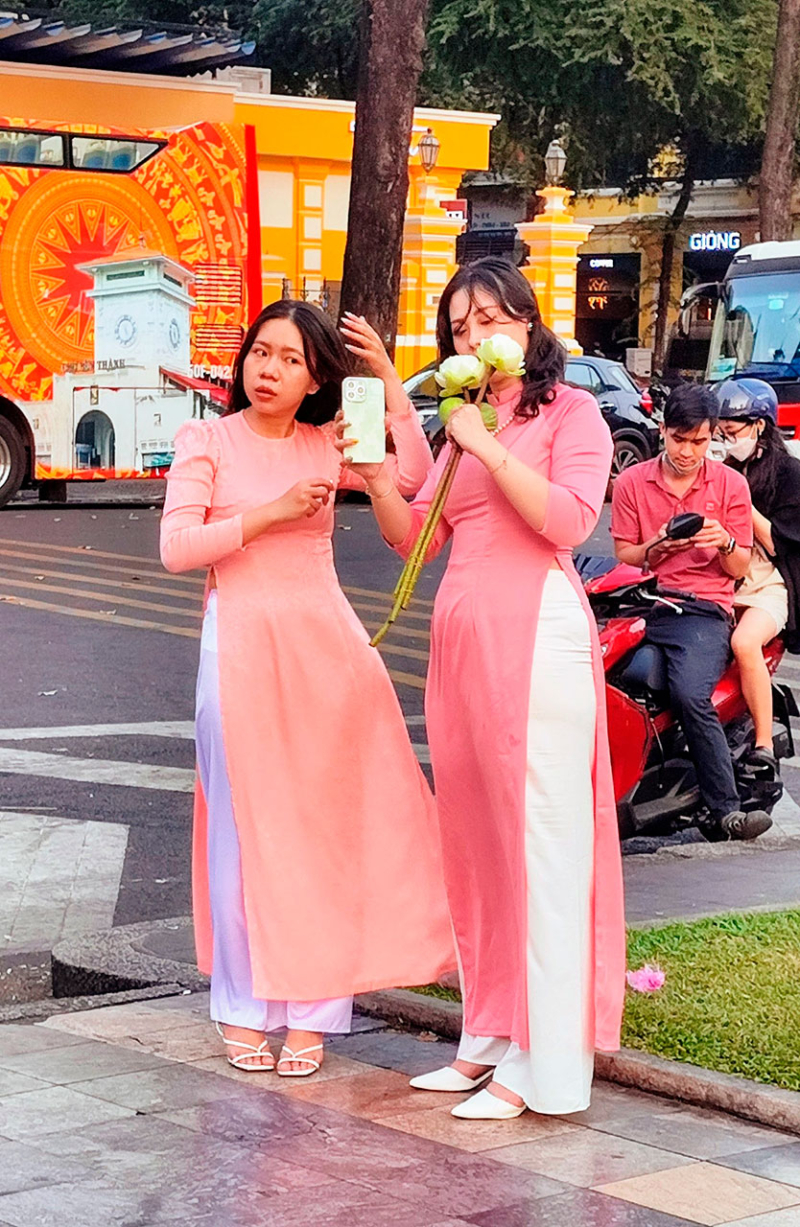
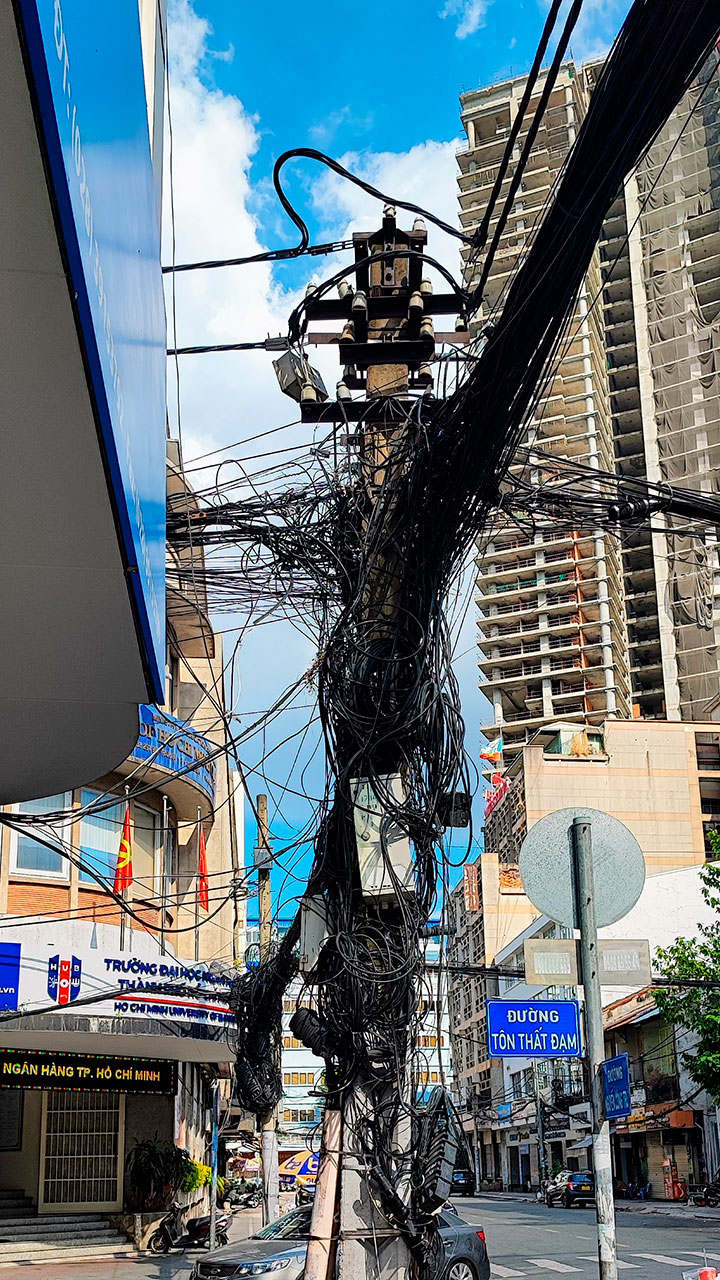
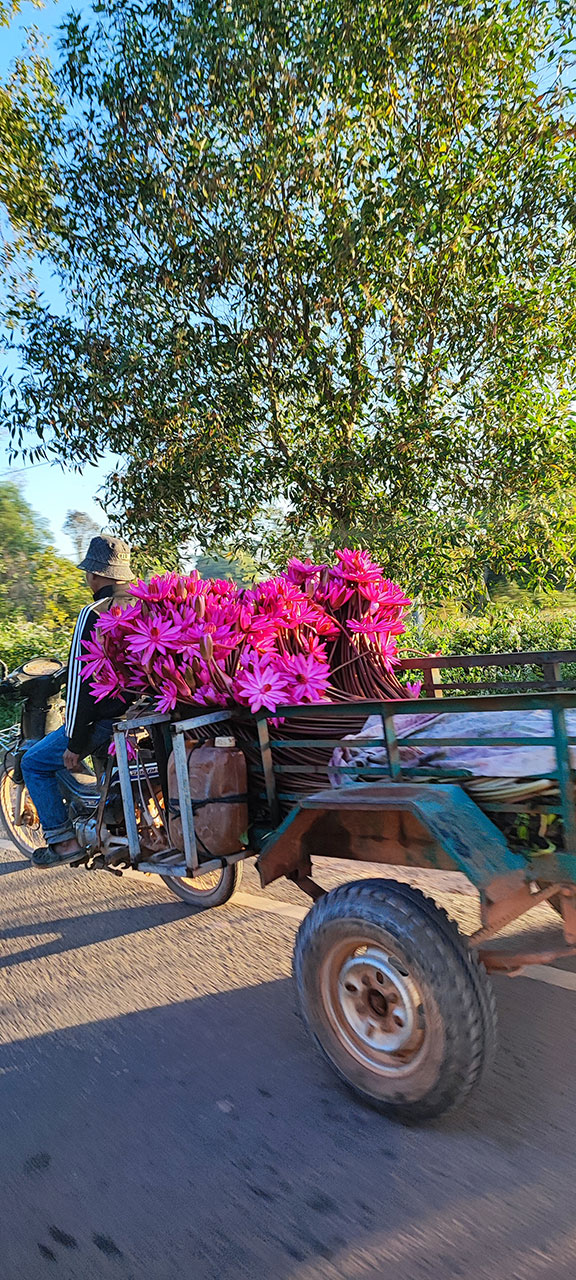
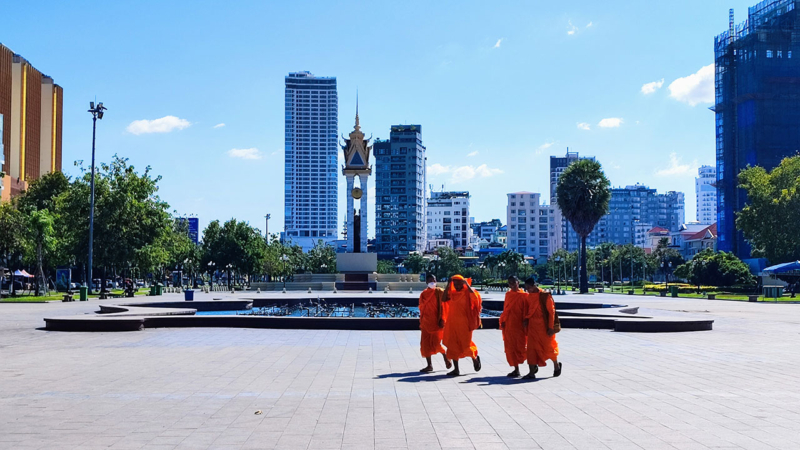
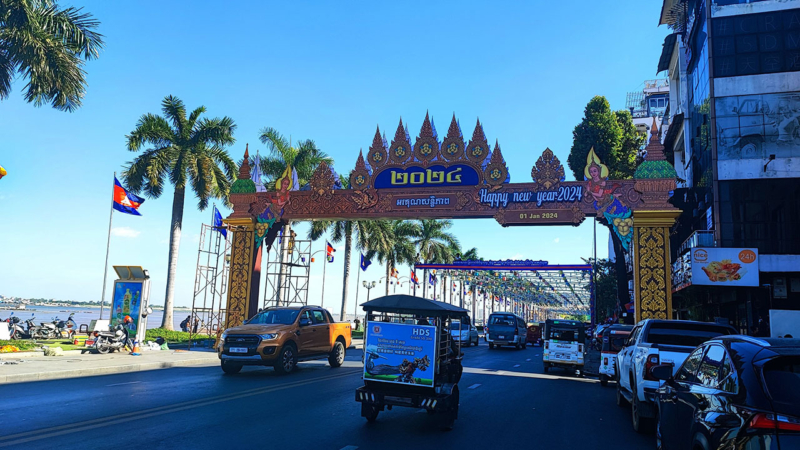
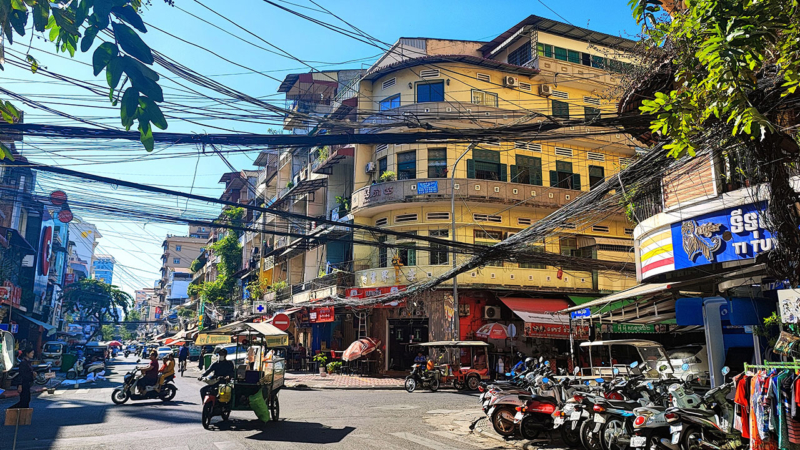
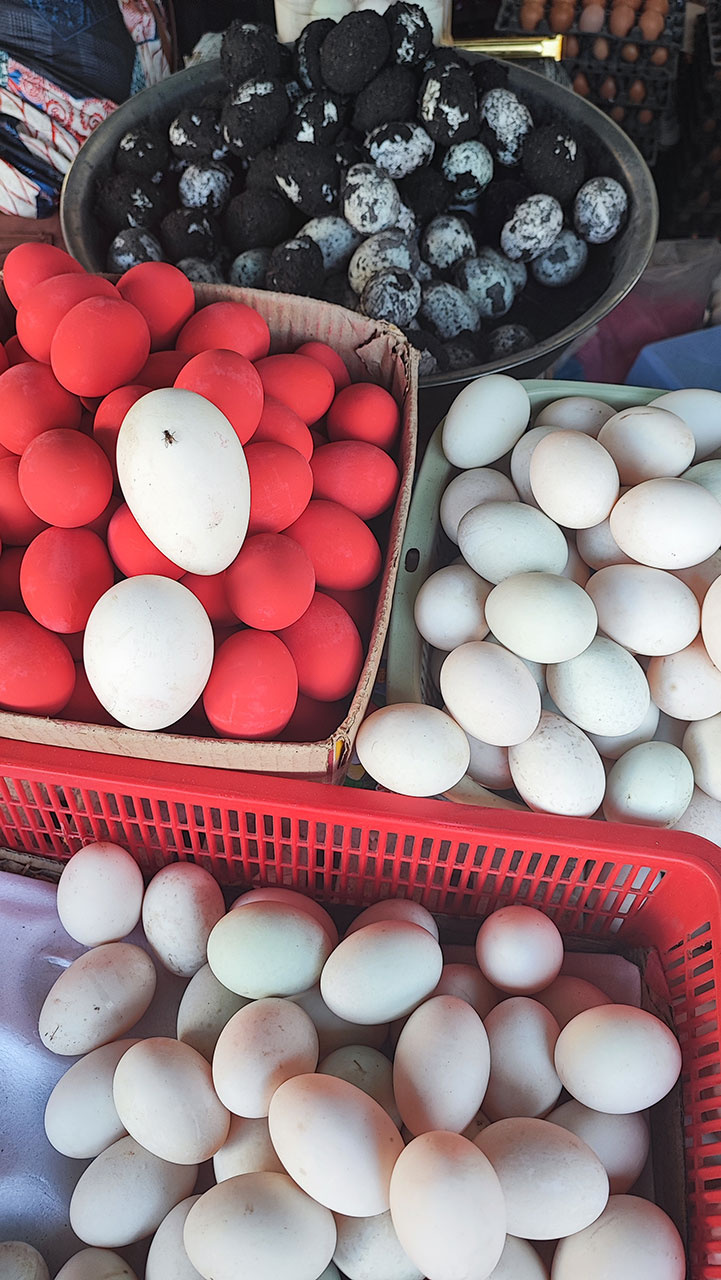
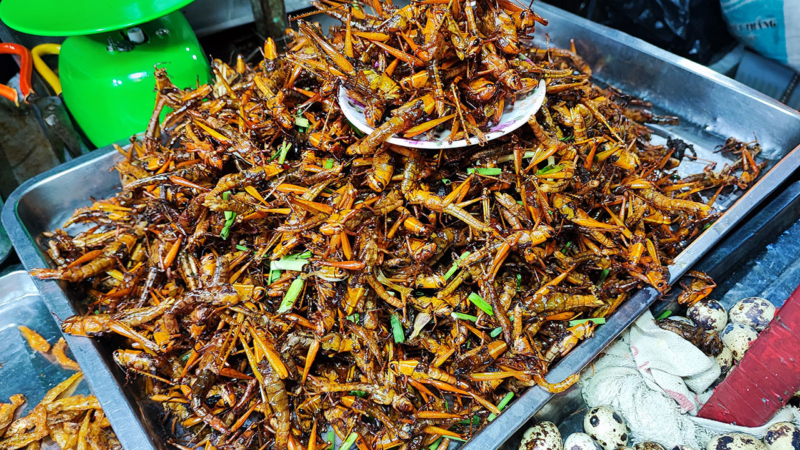
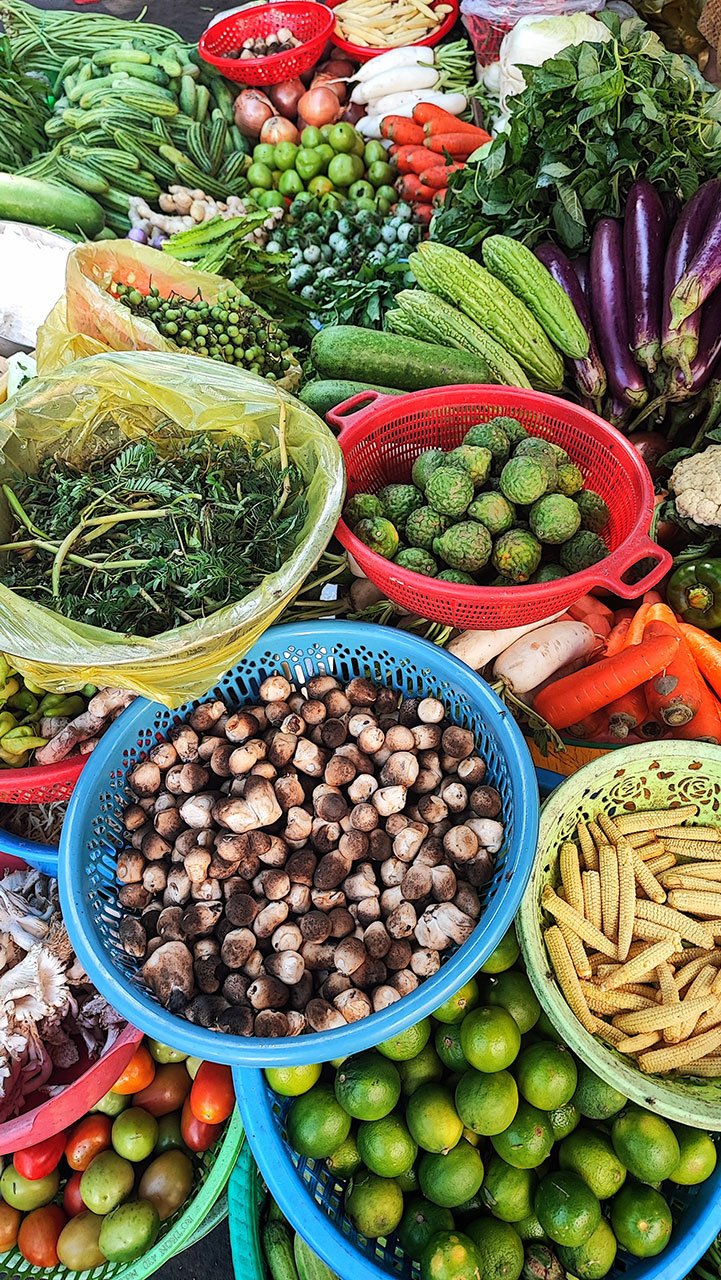
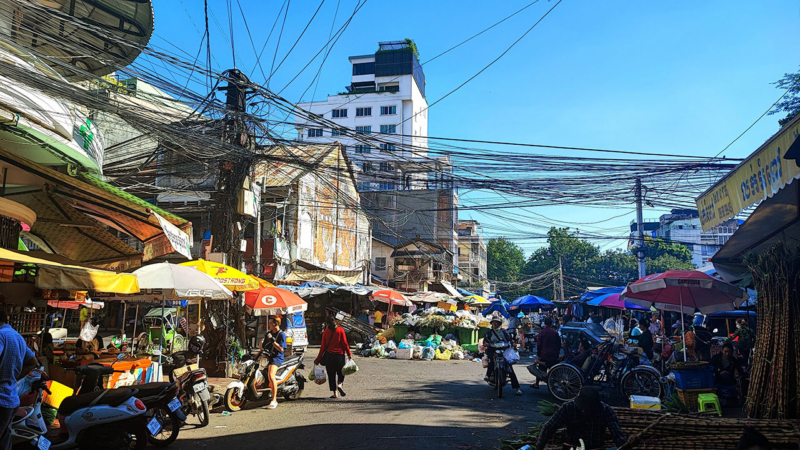
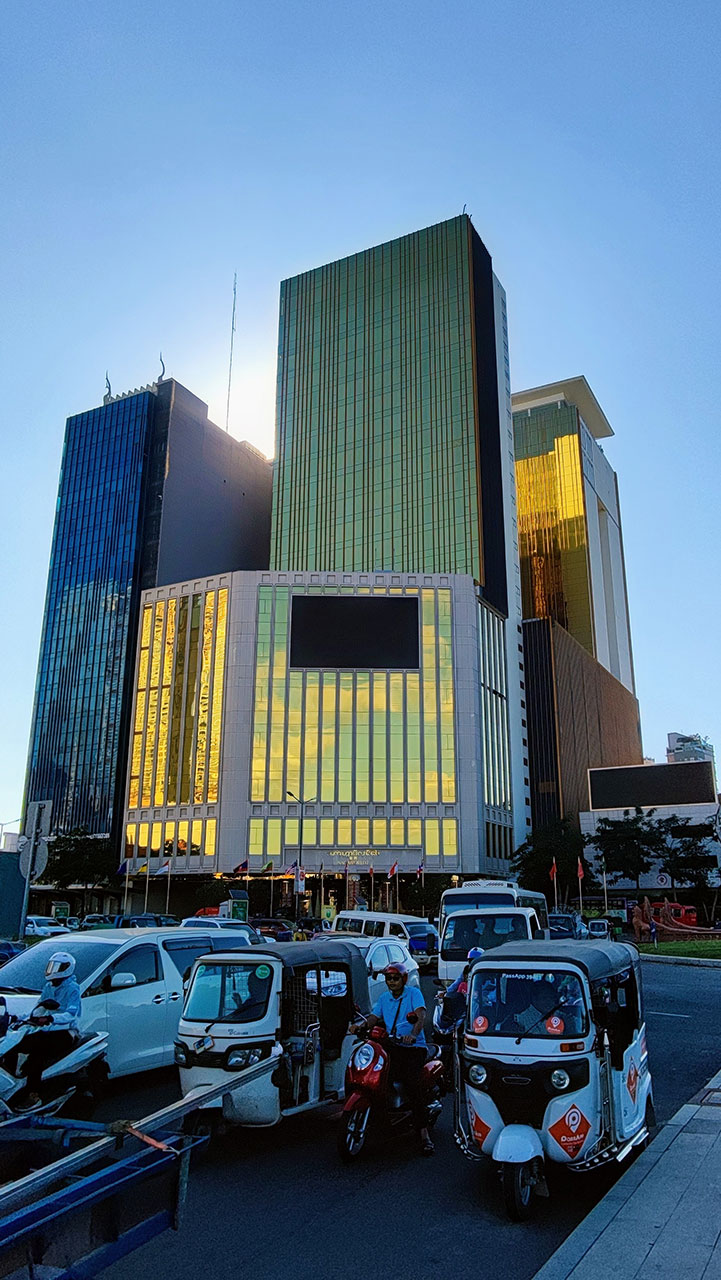
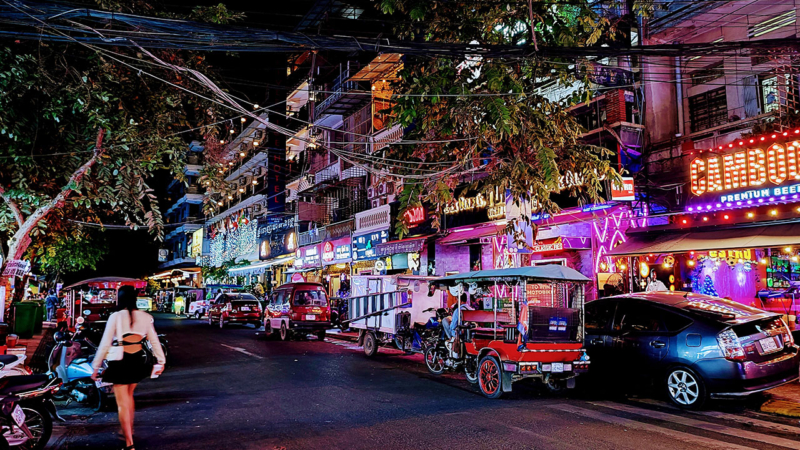
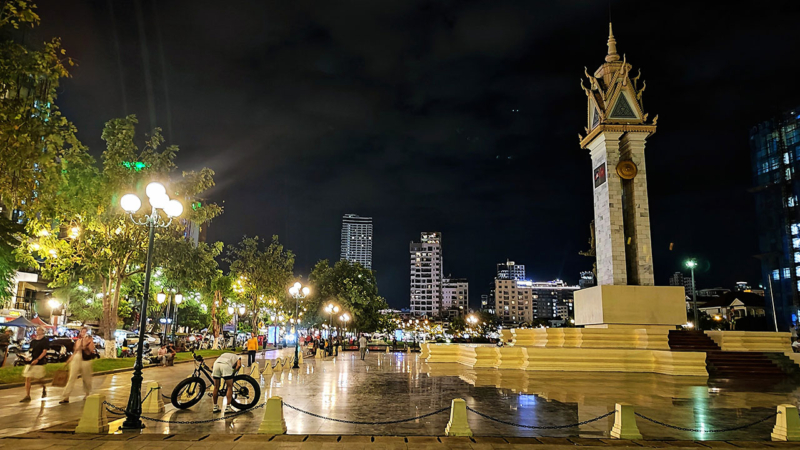
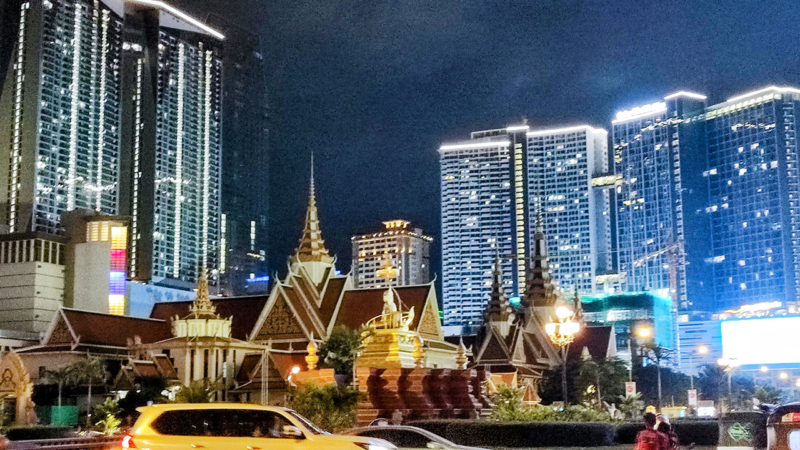
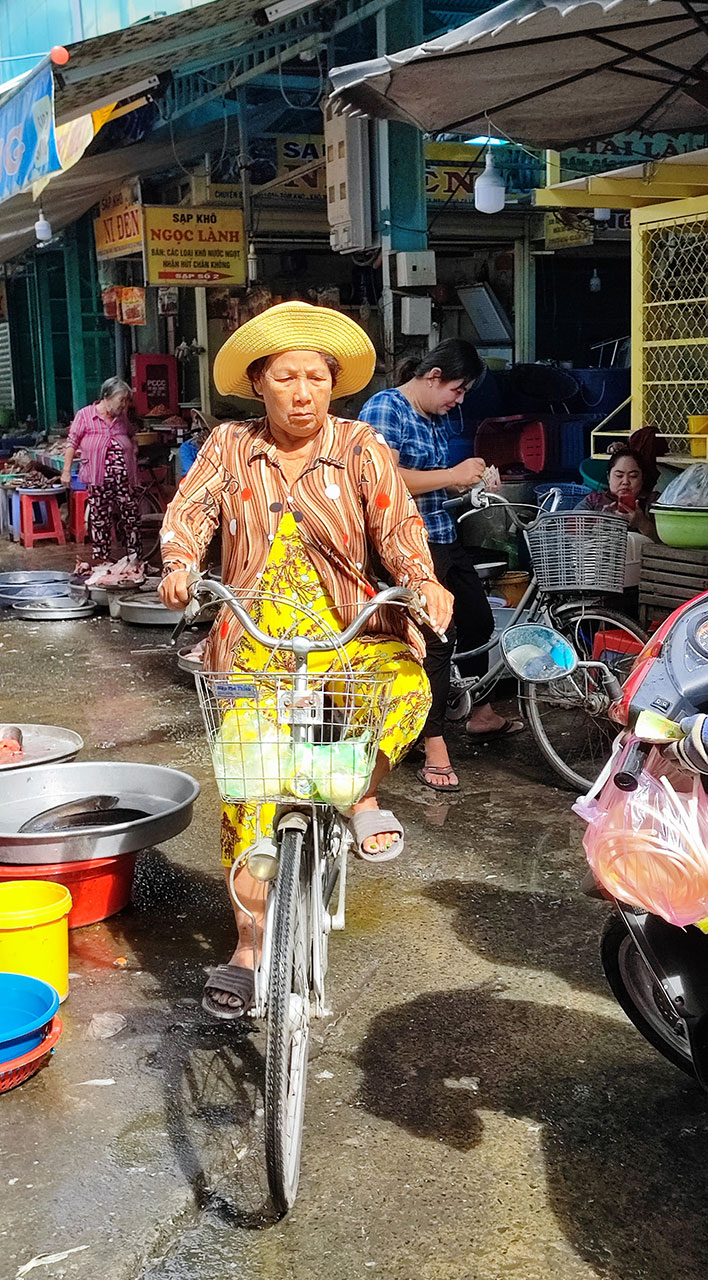
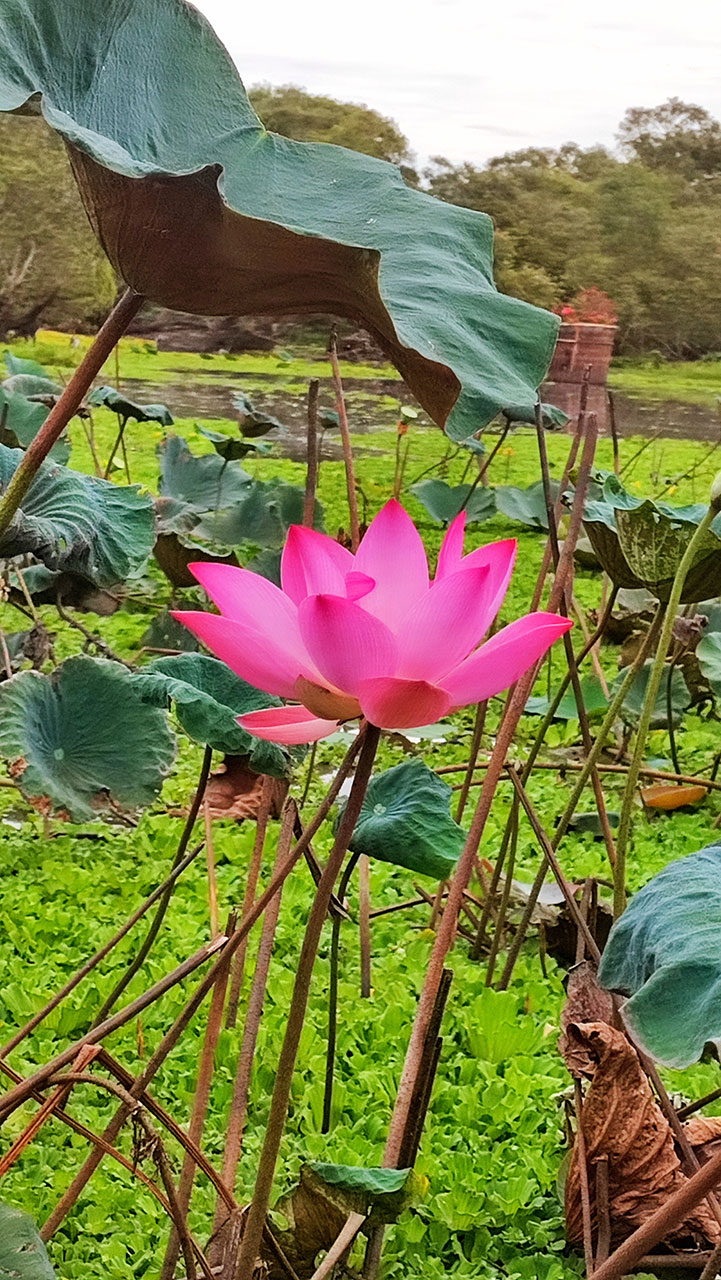
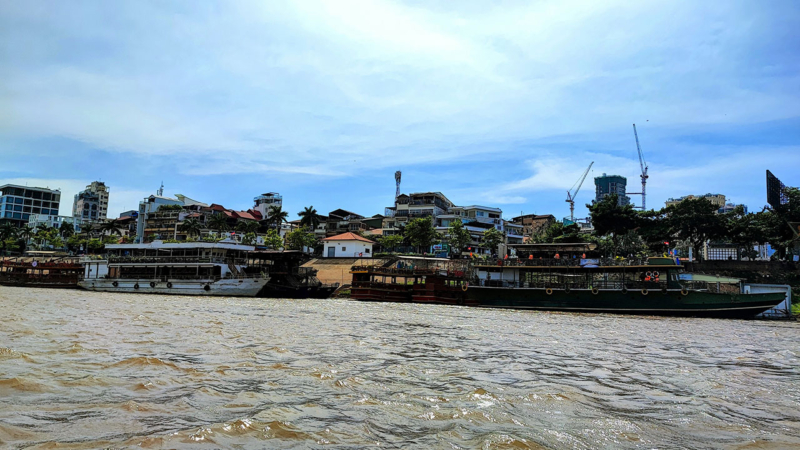
There is everything here! Narrow streets buzzing with thousands of tuk-tuks and tangled electrical wires hanging like jungle vines. Grand avenues with wide boulevards, pedestrian zones, and sleek modern skyscrapers. And, of course, the vast Mekong River, filled with boats and ferries. At the bazaar, vendors selling delicate lotus flowers stand next to women cutting up pungent fish. Stalls of sweet mangoes and pineapples sit beside trays of dried grasshoppers and grilled frogs. I feel so cozy and happy here. Even a tuk-tuk driver stopped nearby—not to offer me a ride, but simply to say, You look so happy!
December 22, 2023, Phnom Penh and to Vietman by boat
I’ve decided that if I live to retire, the first thing I’ll do is come here for a month. I want to enjoy this place slowly, savoring it like a box of assorted chocolates—choosing one each day, anticipating the unique flavor inside.
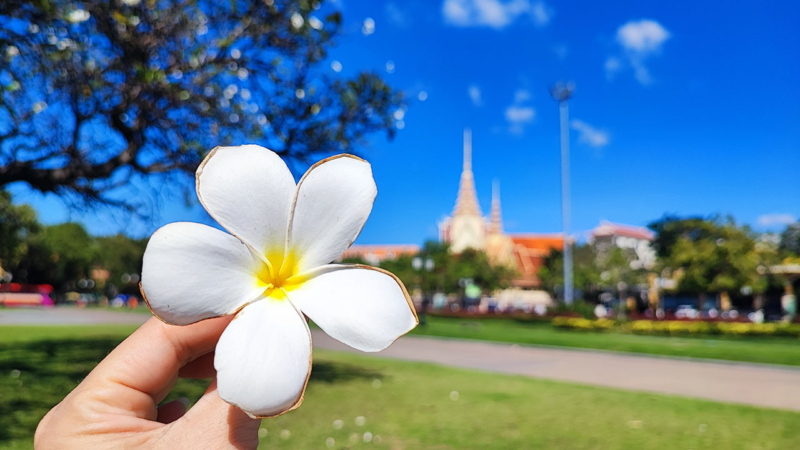
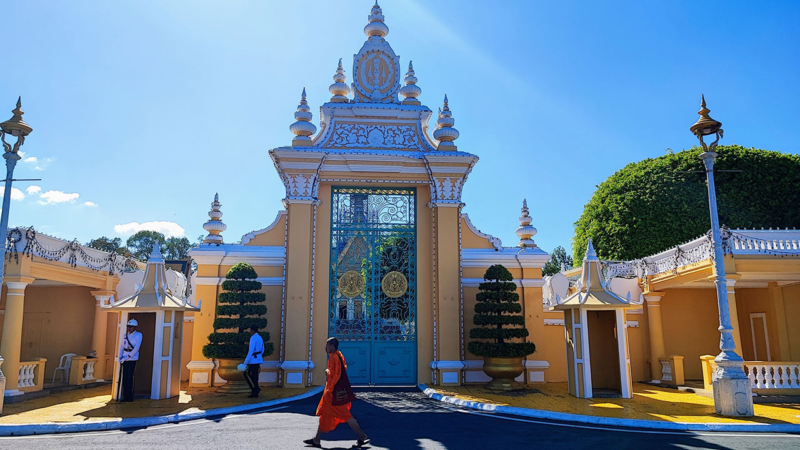
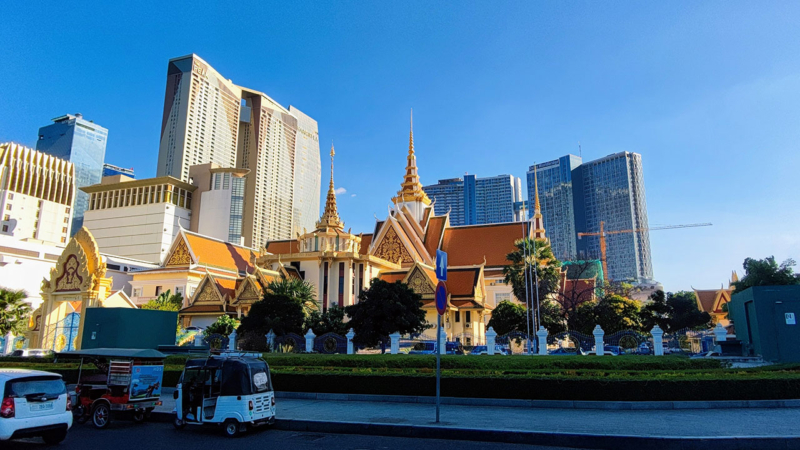
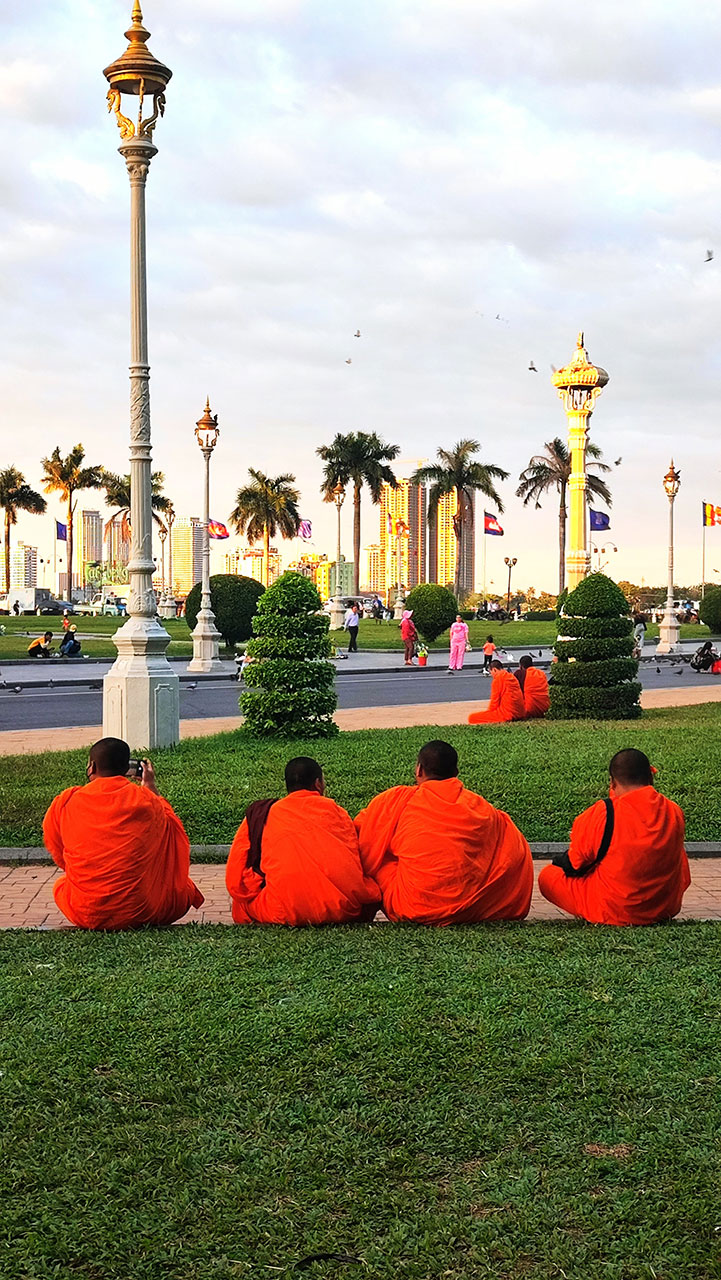
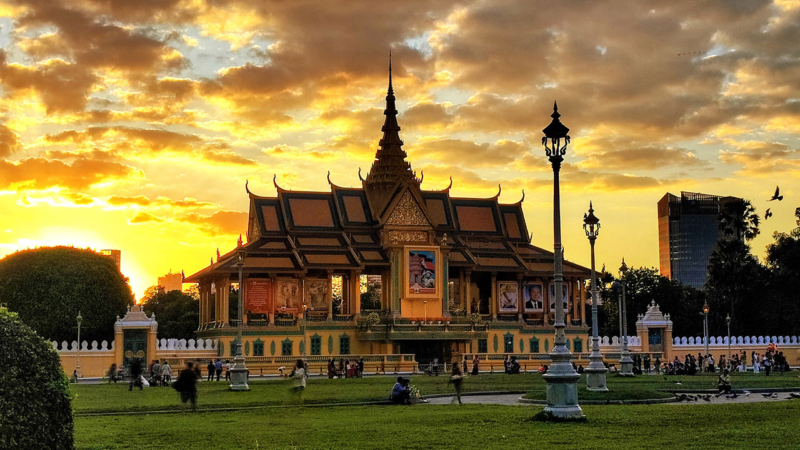
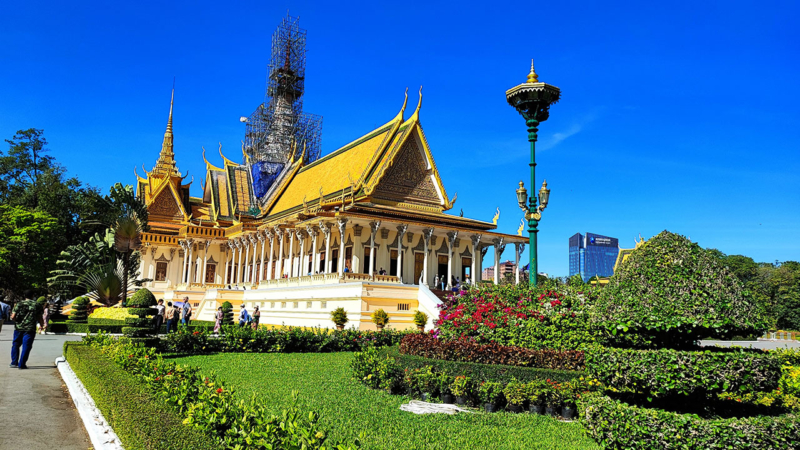
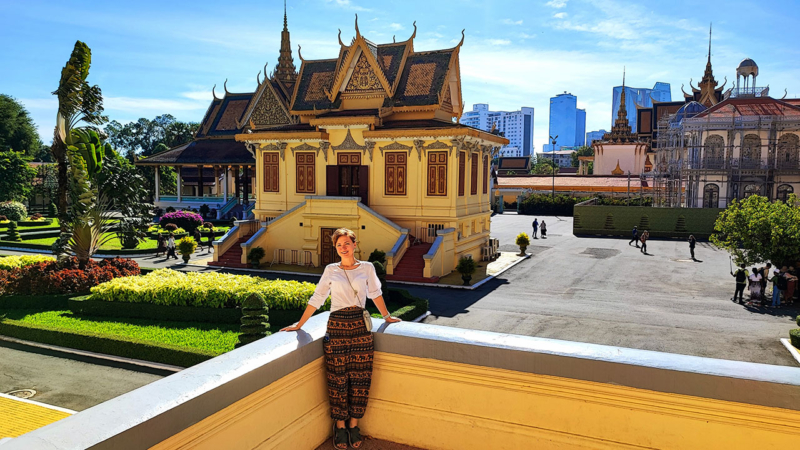
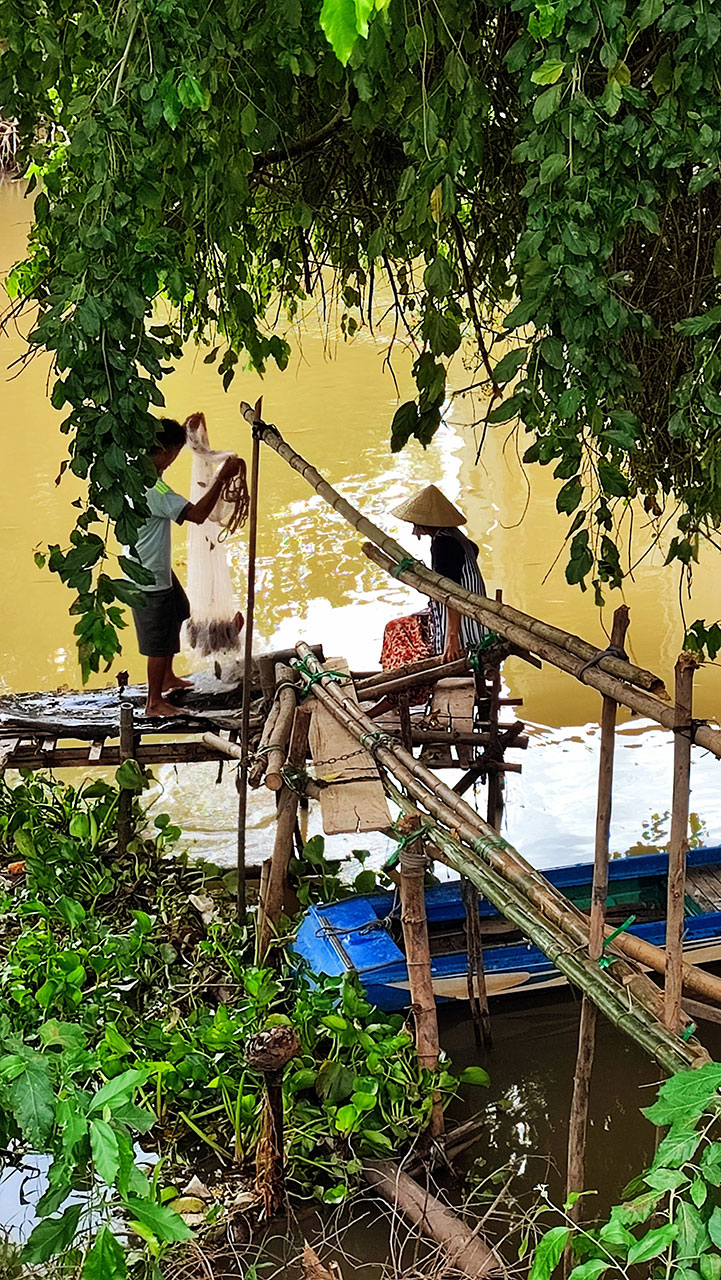
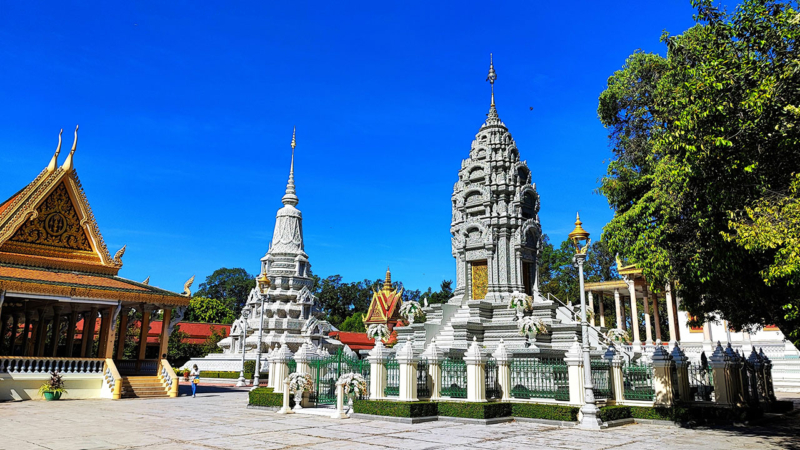
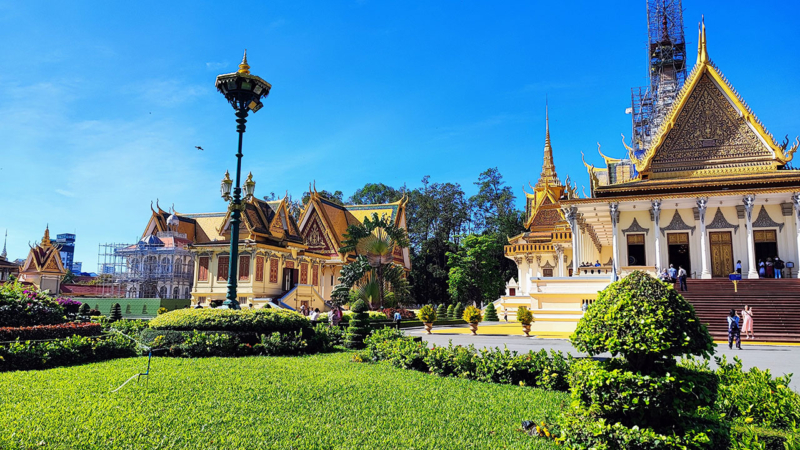
I spent my extra half-day visiting the Royal Palace, and it was magnificent! A stunning collection of royal treasures. You can’t take pictures of the precious stones, gold, or diamonds—otherwise, my phone’s memory would have run out in minutes. Afterward, I spent two hours just lying on the lawn by the riverside, waiting for my boat. I watched fishermen haul their catch from the brown waters of the Mekong, breathing in the sweet aroma of plumeria.
The speedboat journey from Phnom Penh to Chau Doc took about five hours, including border controls. Twice, we had to disembark onto the shore, where stern-looking officers scanned our passports a hundred times and stamped them five times over. Cambodian customs had an unusual procedure—they took our photos and fingerprints. Strangely, there was nothing like that upon entering the country; they simply collected $30.
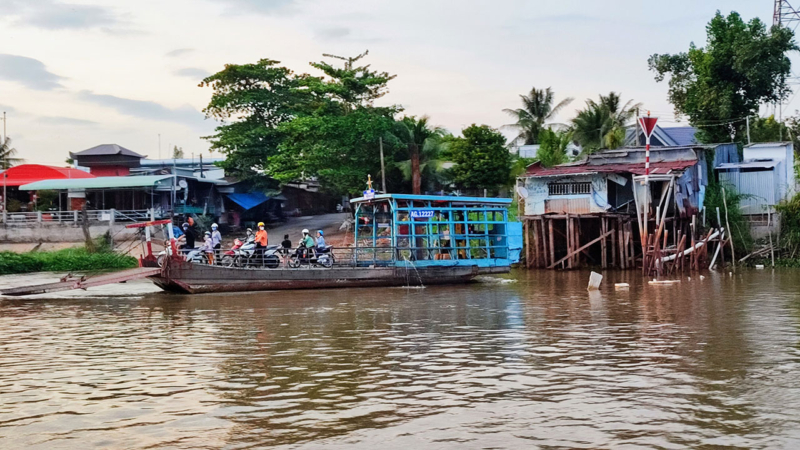
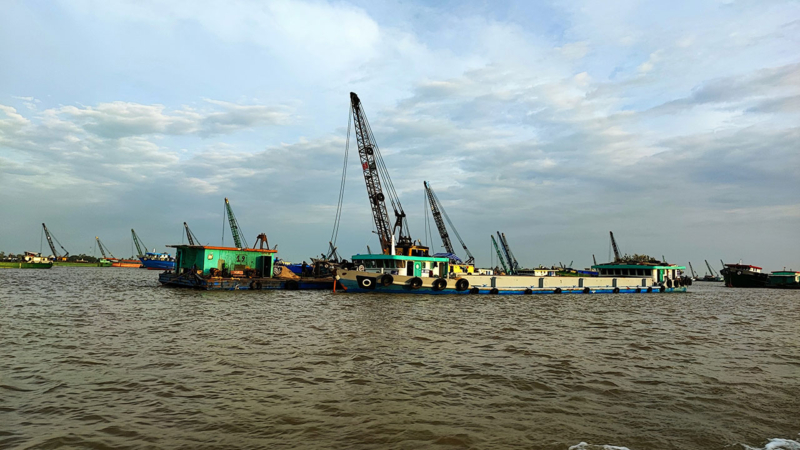
Even without border control, the border itself is visible from the water. The Mekong is truly an artery, bringing life to Cambodia and Vietnam’s southern provinces. Barges, high-speed passenger boats, cruise ships, and fishing vessels of every size—some enormous, some mere rowboats—share the river with bizarre machines dredging sand from the riverbed. It all moves at its own unhurried rhythm. But as soon as you cross into Vietnam, everything changes. The number of boats multiplies, and the pace picks up dramatically! The equipment is newer and more powerful, and the quiet banana plantations along the Cambodian shore give way to glittering rooftops and factory chimneys puffing smoke. Vietnam, without a doubt, is far more industrialized.
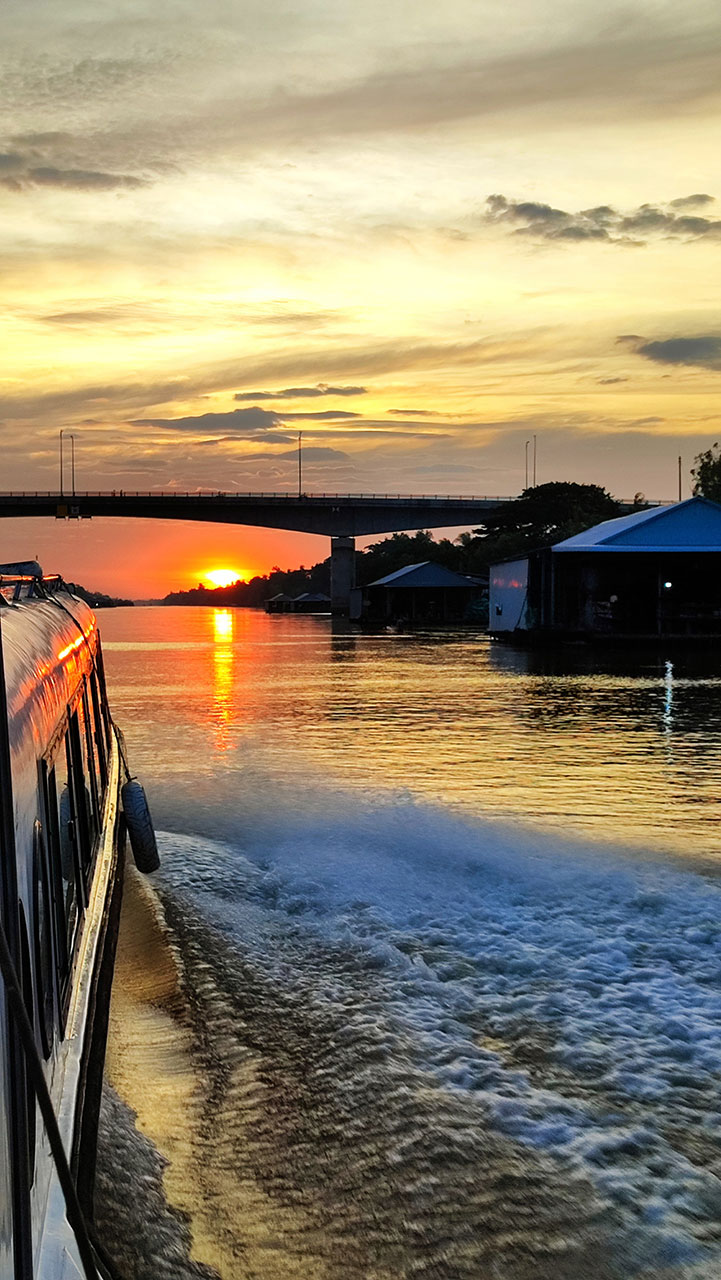
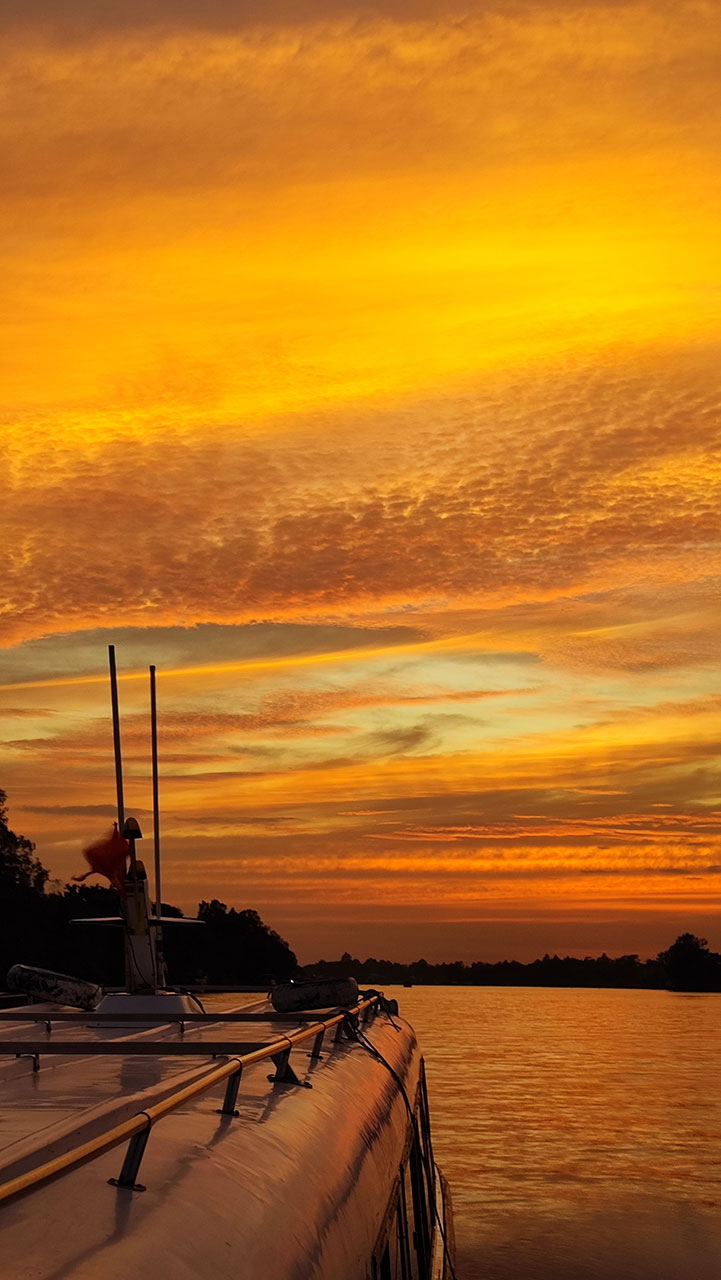
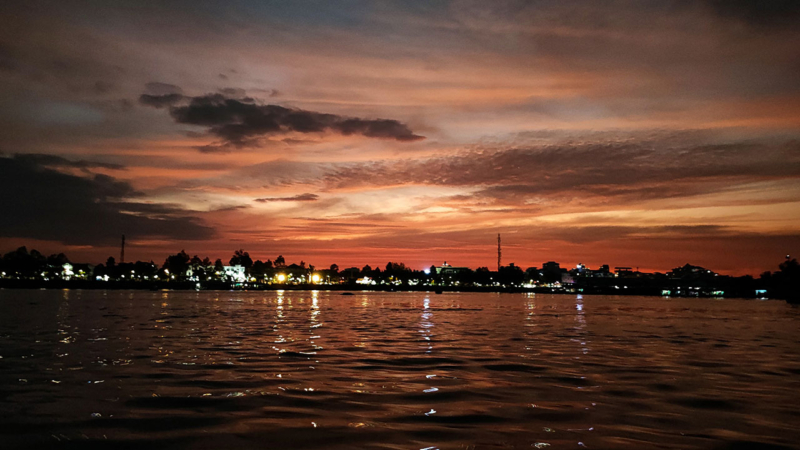
We arrived in Chau Doc at sunset. Oh, how lucky I am with sunsets!
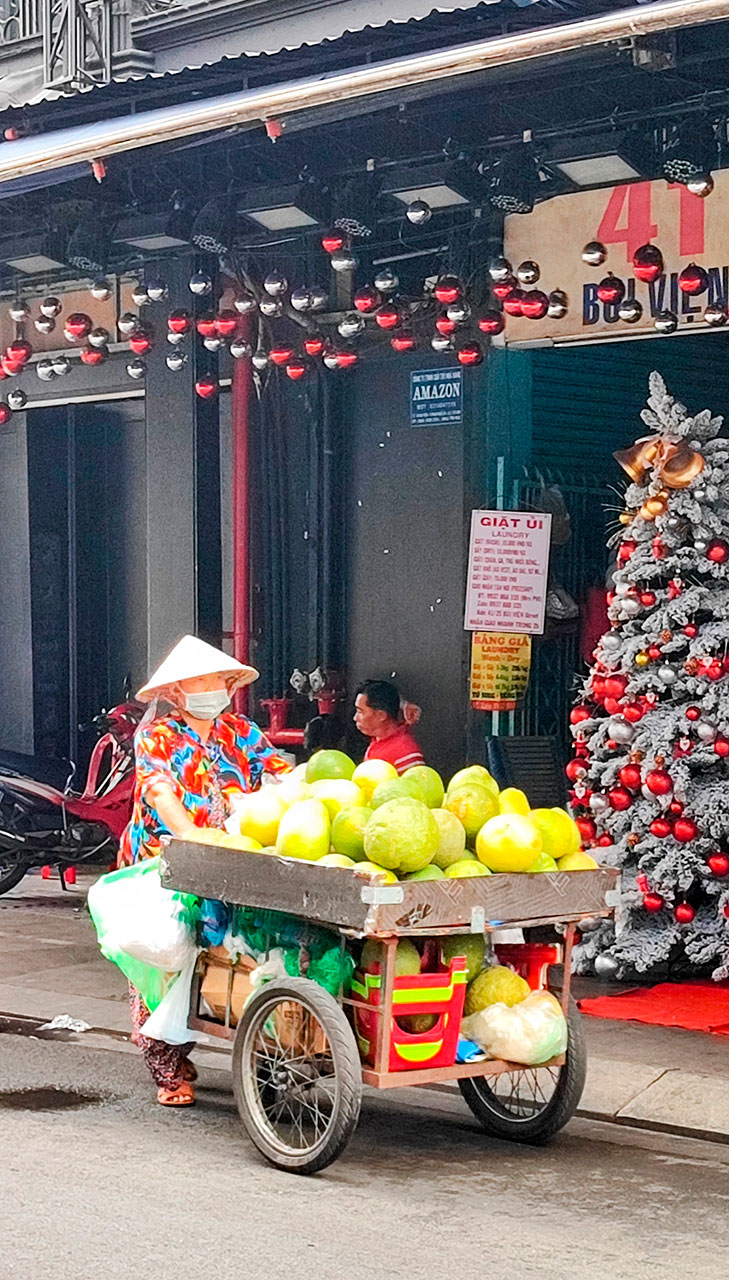
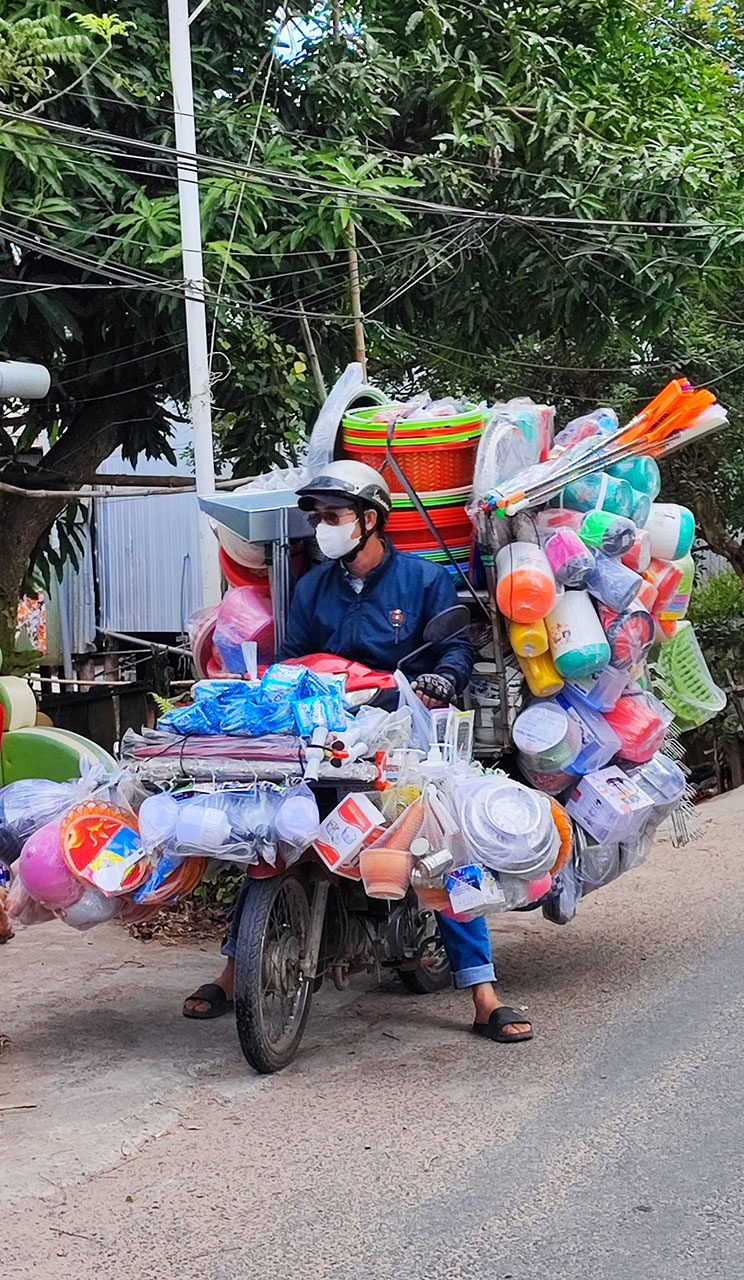
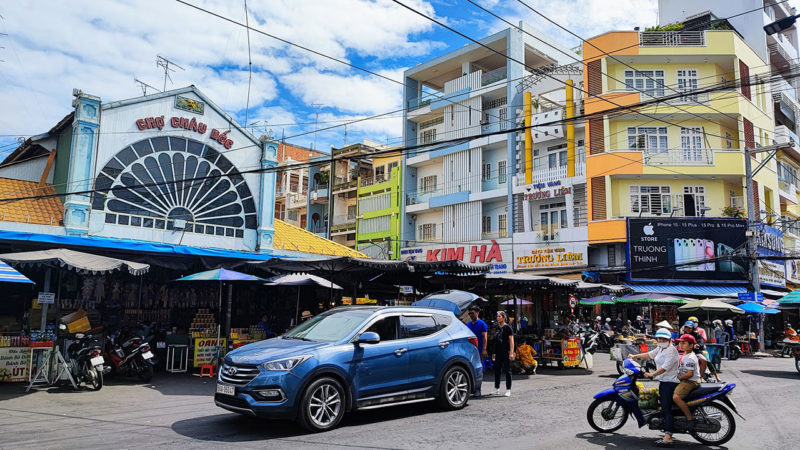
My first impression of the town? Not great. The tuk-tuks have disappeared, replaced by mopeds darting around at high speed. The charming cafes and restaurants are gone; now, only street food is available, served on tiny tables where you have to sit on miniature plastic stools. The familiar dollar prices have vanished, replaced by long strings of zeros that play tricks on my brain. A bowl of soup costs 40,000—my instinct says, That’s expensive! Then I recalculate and realize it’s only $1.50… but the sheer number of zeros is unsettling.
And then, the biggest shock—nobody, absolutely no one, speaks English.
December 23, 2023. Mecong Delta: Chau Doc
In the morning, everything fell into place! This is not a tourist town at all. If there are any foreigners here, it’s only for a visa run or as a stopover between Phnom Penh and Phu Quoc—most likely because they were reluctant to spend extra on a flight. But wow, it turns out this is exactly the kind of place I needed. I’m in my element!
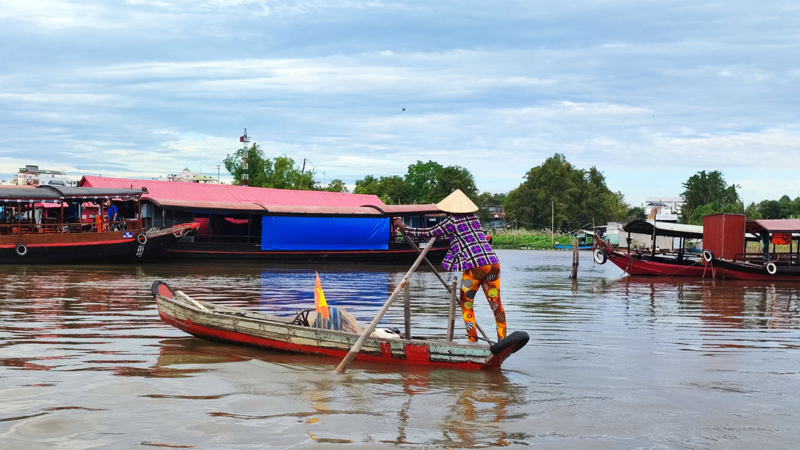
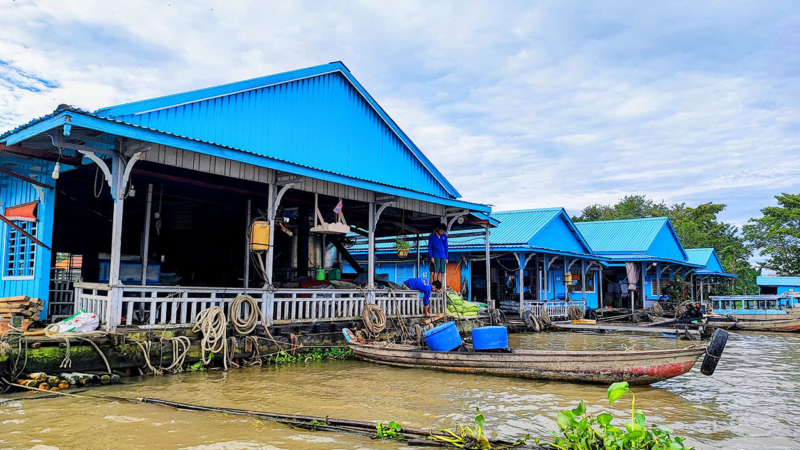
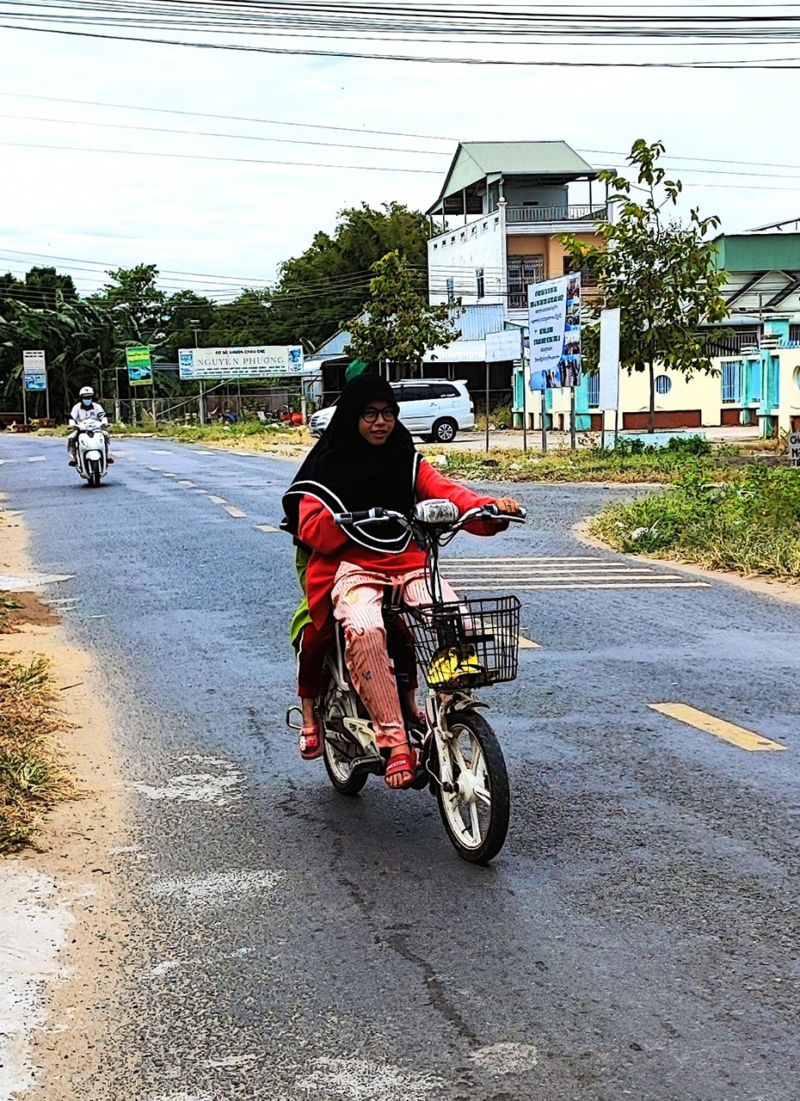
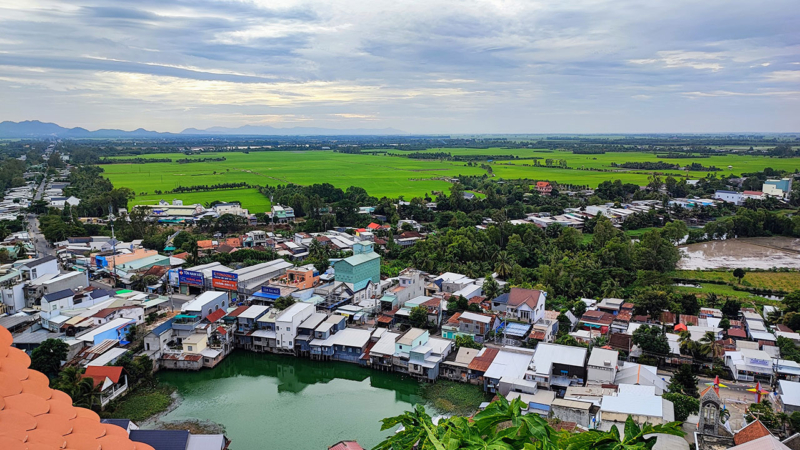
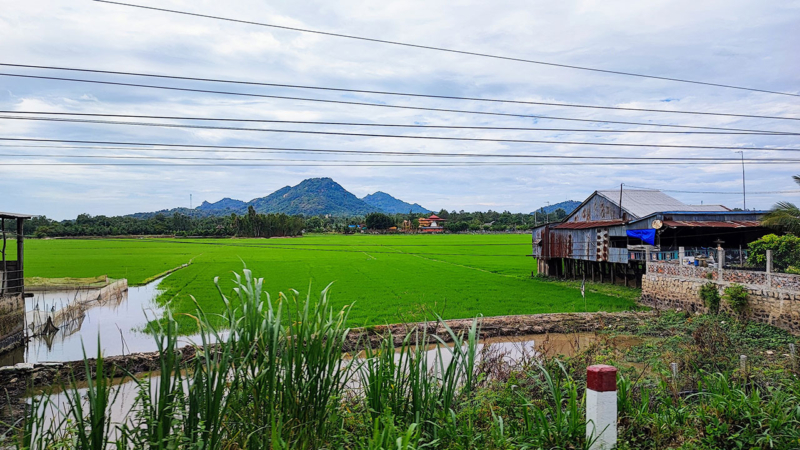
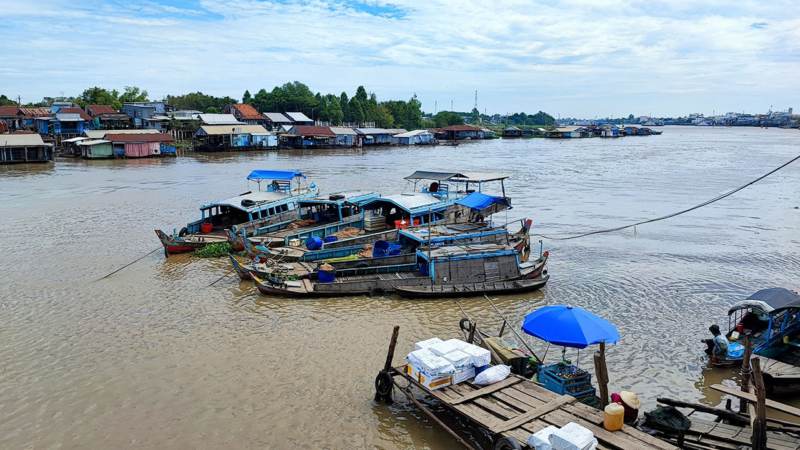
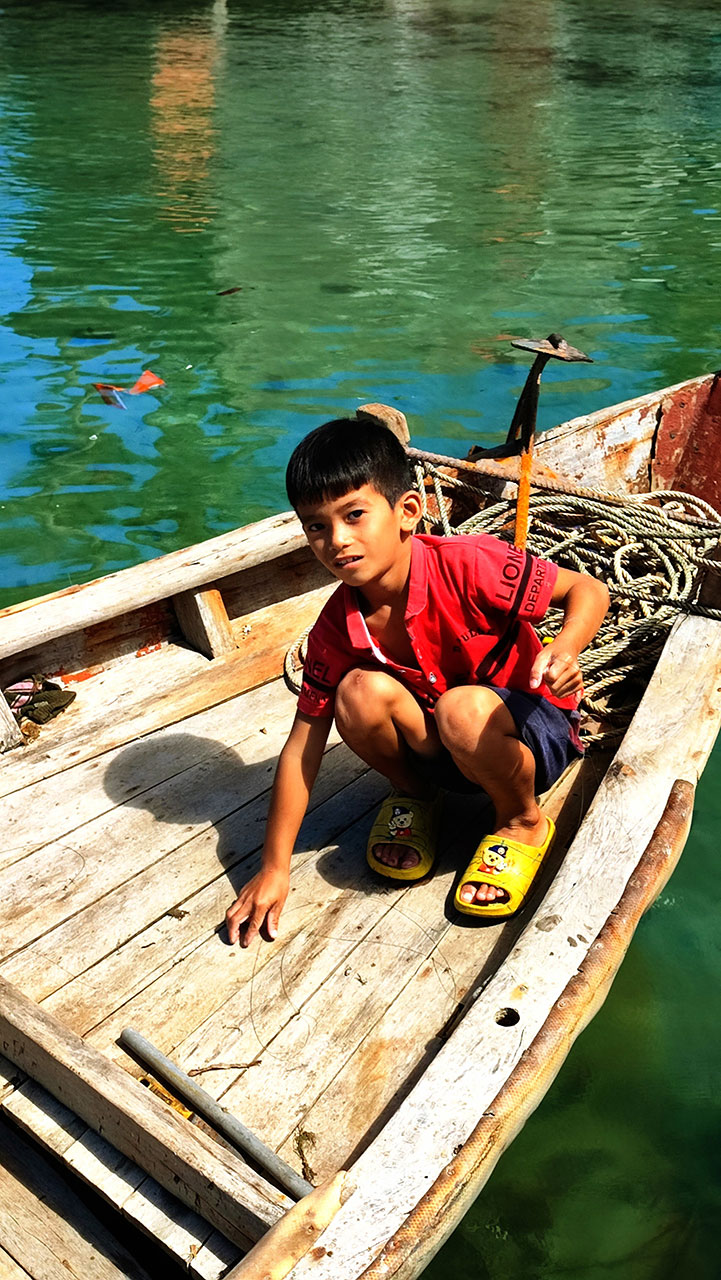
Right away in the morning, a boy was waiting for me at the hotel reception. We had previously arranged an individual two-hour tour along the river, through the floating village, and to a Cham village—a national minority community practicing Islam (with a local twist) and living separately on the other bank of the river. Many tours from Saigon take visitors to the Mekong Delta, but they all head south, closer to Ho Chi Minh City. We, however, had reached the farthest point, where the Mekong just begins to spread into its nine branches. This place is so non-touristic that people passing by shamelessly stare, wave, and call out, Hello!
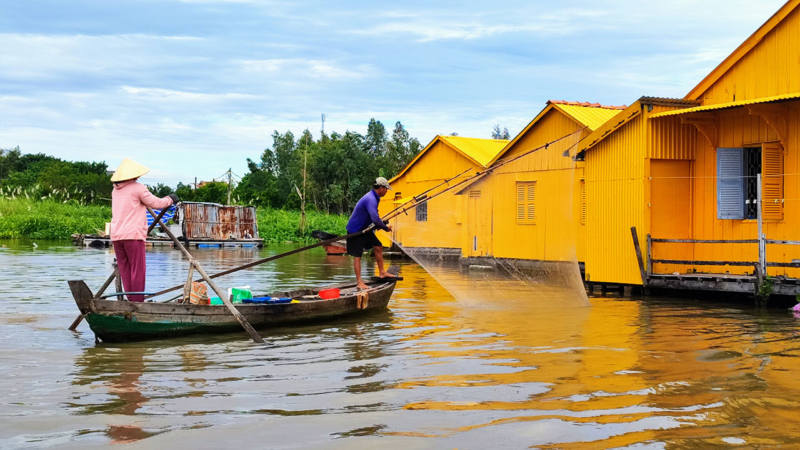
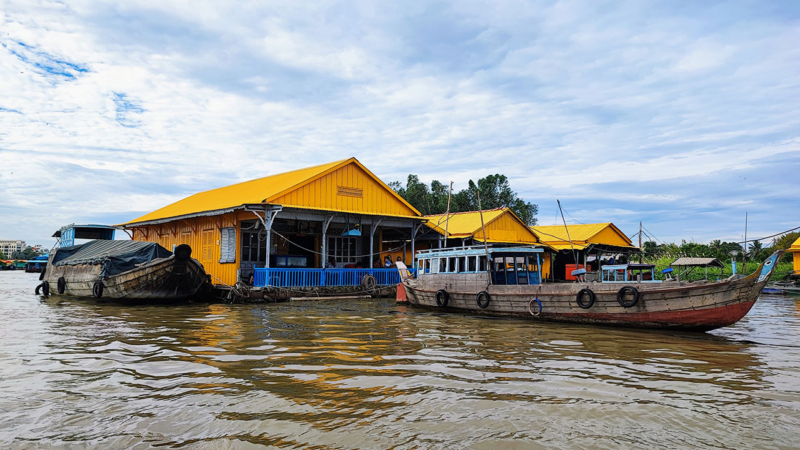
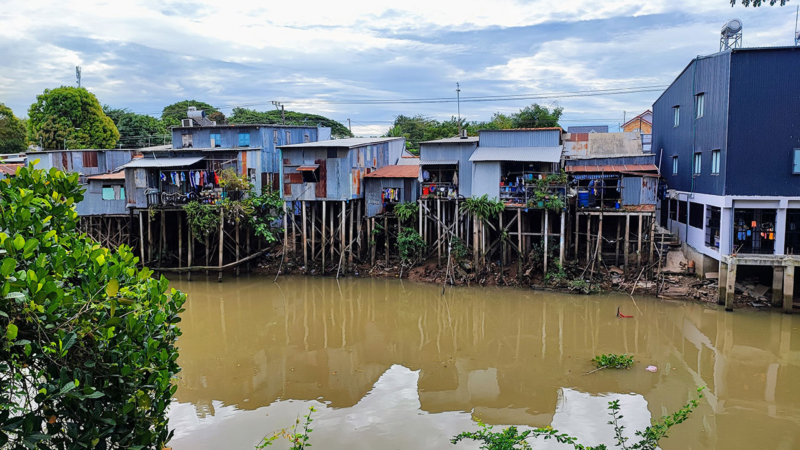
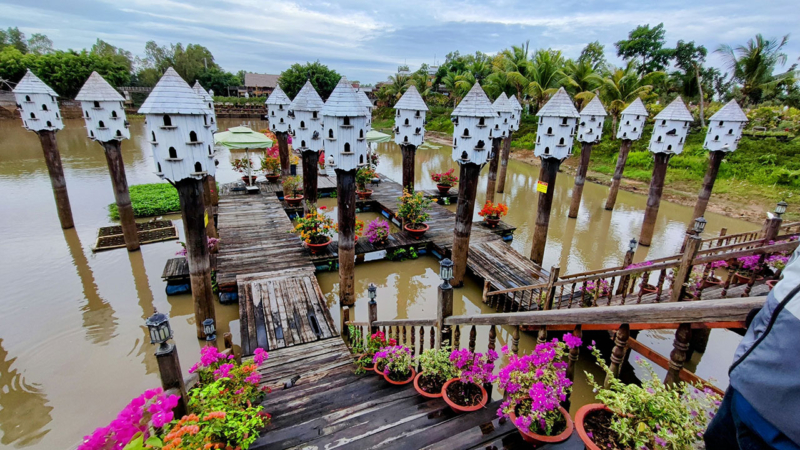
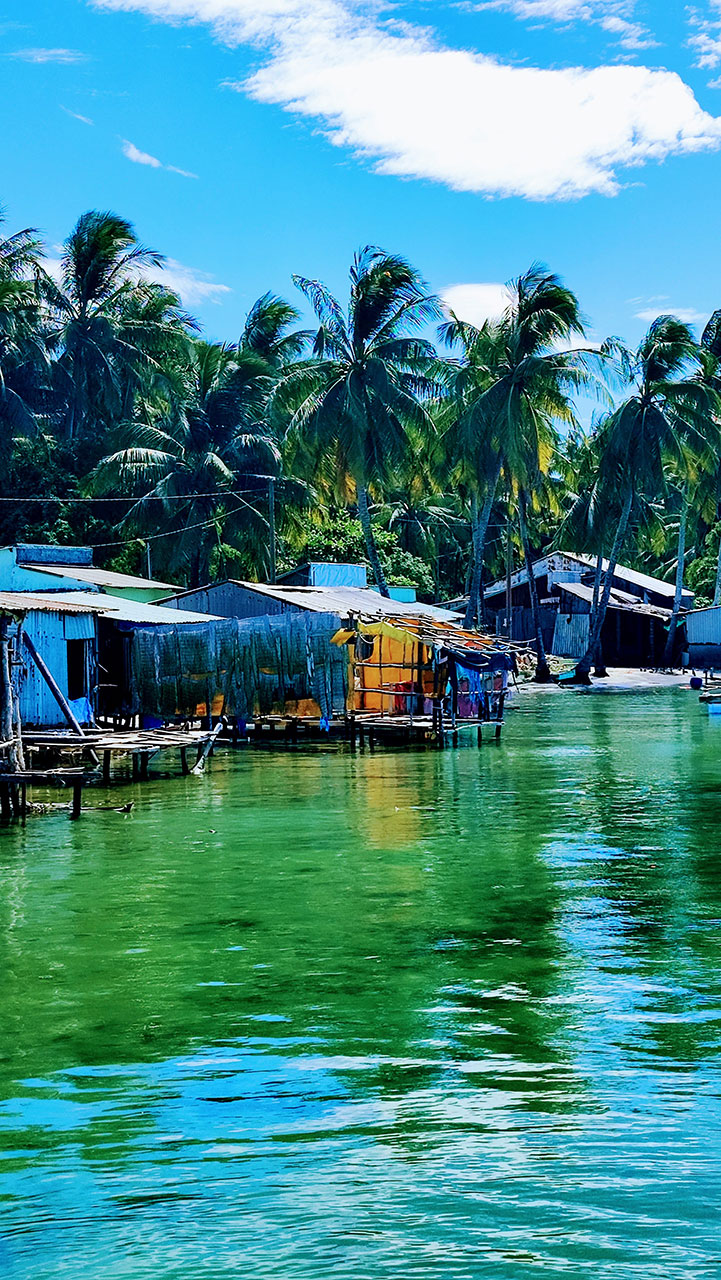
When I was reading about Chau Doc in advance, I came across mentions of colorful houses on the water. And yes, it’s true—each floating street has houses painted in a specific color. But there’s no romance in this. According to my guide, the government funded these repairs to make the area look more appealing to the occasional tourist, and the color scheme was purely for aesthetics. Otherwise, life here goes on as usual—practical, not picturesque.
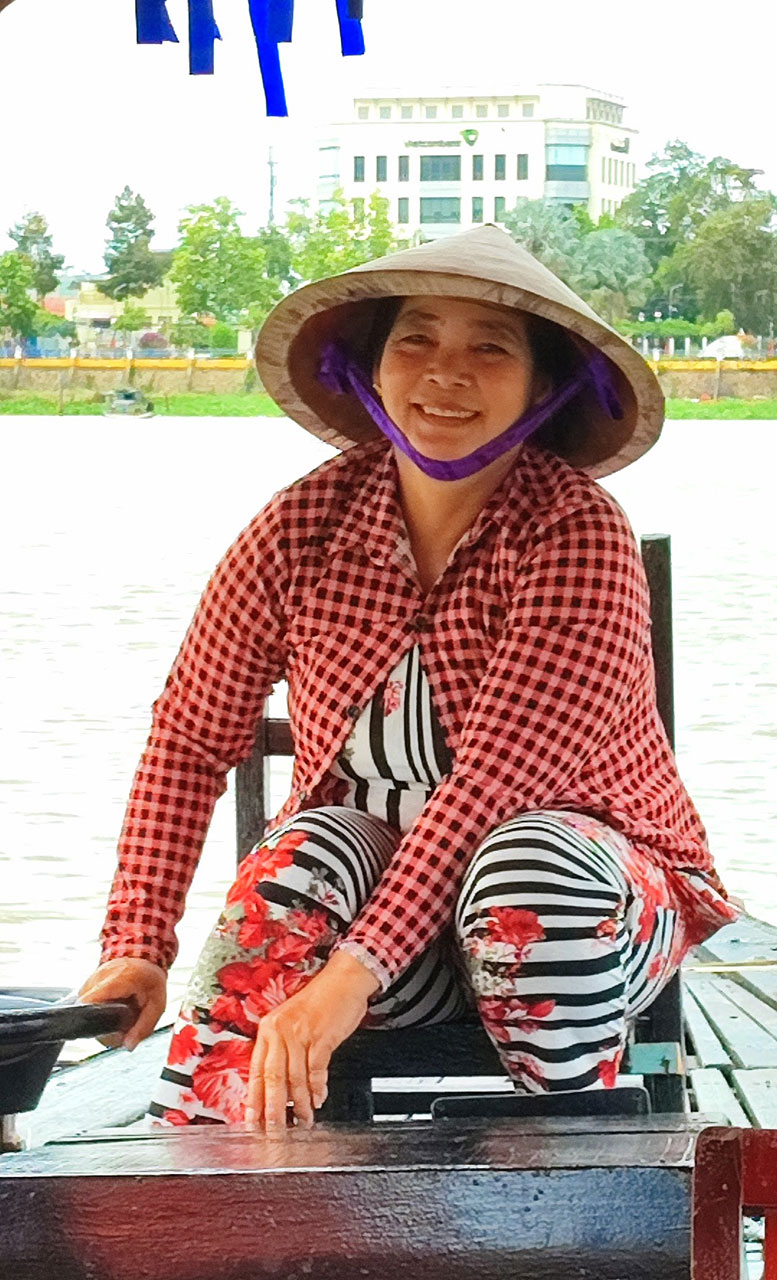
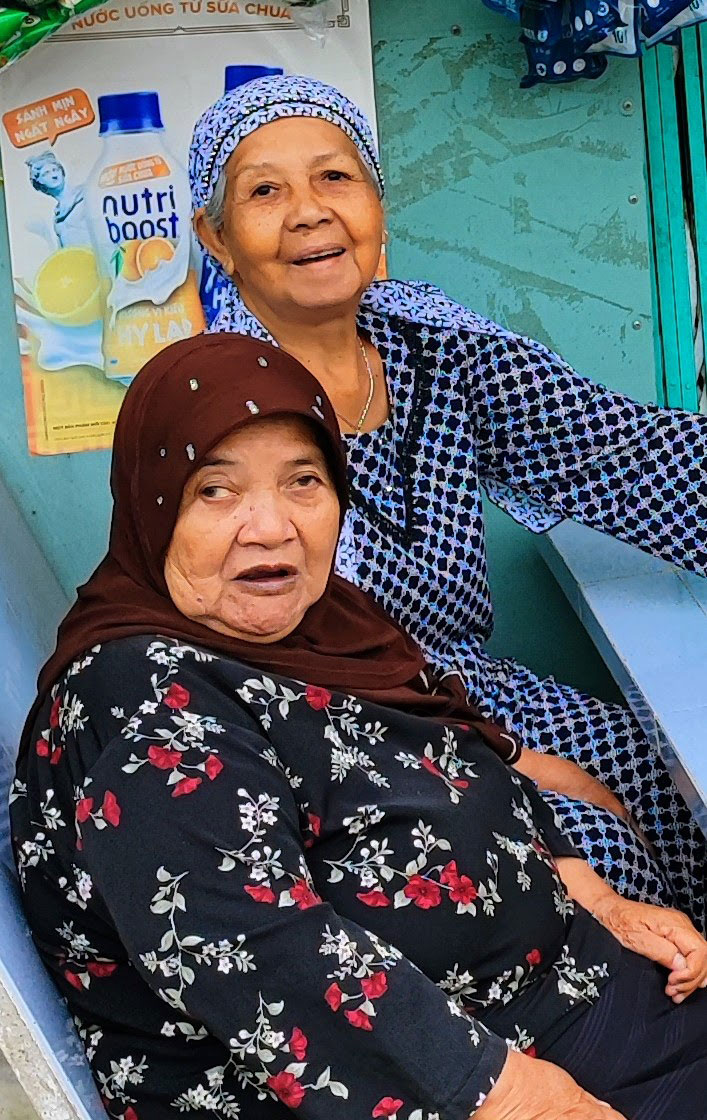
I truly love Asia. I love experiencing the daily lives of locals. But most of all, I love their faces—so open, friendly, and full of light!
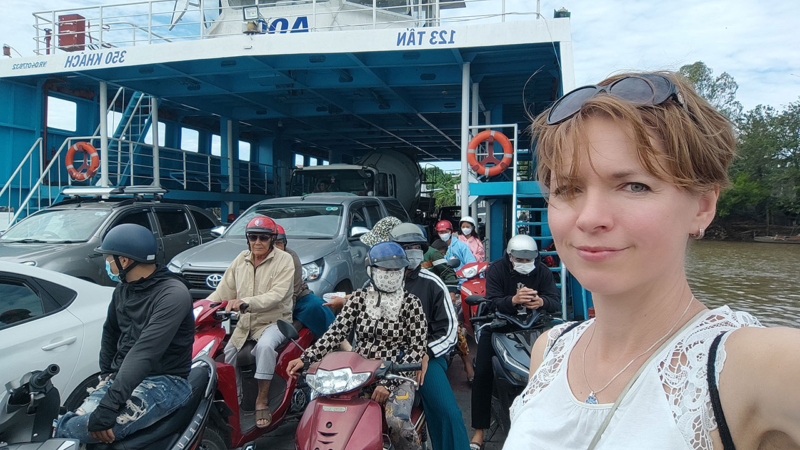
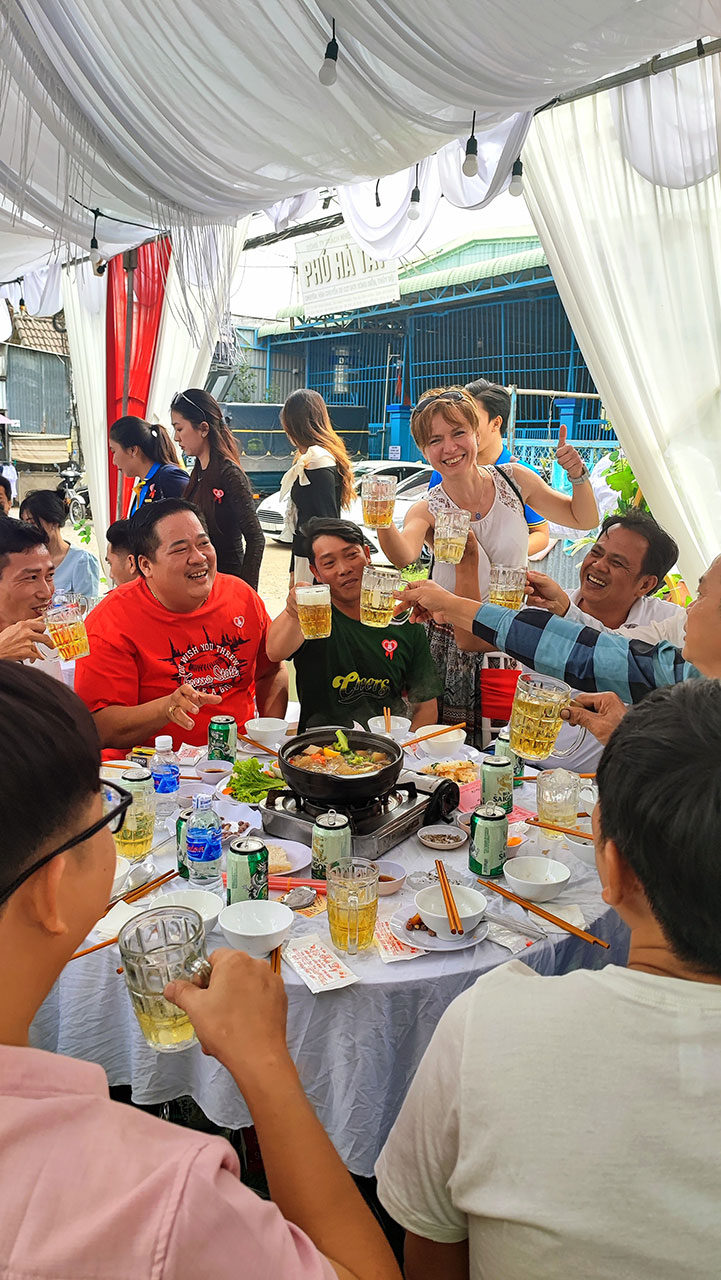
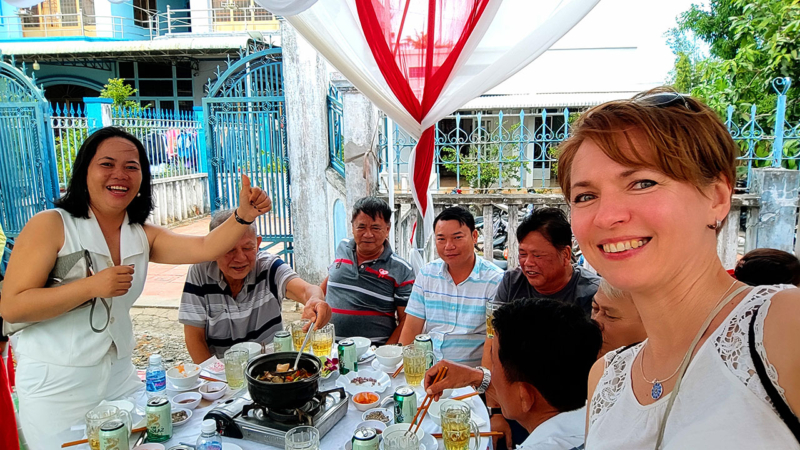
After the tour, I let my guide go and sent the weaker part of my team back to the hotel to rest. Meanwhile, I checked Google Maps for a way to reach the Cham village by public transport. There was a ferry, and that meant real adventure! I always seem to find my way to local celebrations. In Burma, I once had lunch in a Buddhist monastery during a boy’s ordination as a monk. In Laos, I attended a wake—just for the food. Today, I became the star of a wedding.
After crossing the river by ferry, I set off in search of Cham mosques, which the internet had praised so highly. Suddenly, I heard music, laughter, and celebration. A festival, perhaps? Naturally, I followed the sound and found myself at a huge gathering—at least 200 people. I started filming. Well, that was my first mistake.
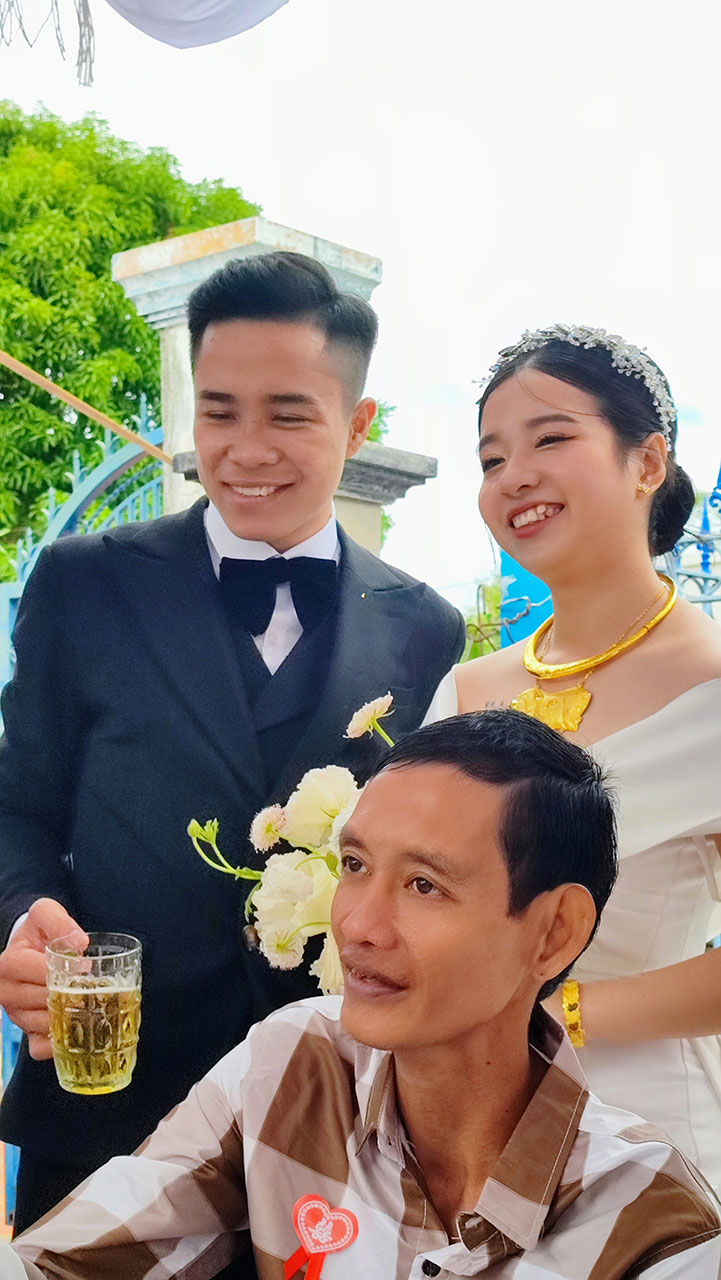
As soon as the tipsy guests noticed me (it was about one in the afternoon), they rushed over. Here, people love taking pictures of white travelers, and the braver ones will ask for a selfie. I had to oblige. Then came the toasts—I couldn’t refuse a drink to the health of the newlyweds. Next thing I knew, I was invited to the table. Then another. Then another…
They fed me pork offal and fried local fish. Beer was the drink of choice—served in glasses filled to the brim with ice, with beer poured in little by little. Eventually, the newlyweds made their grand entrance. I expected to be kicked out as an impostor, but no! They even clinked glasses with me—beer mugs, of course, not champagne flutes.
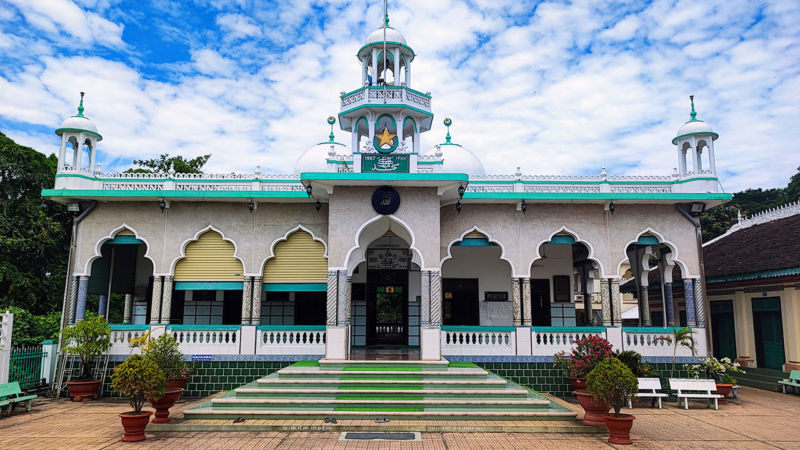
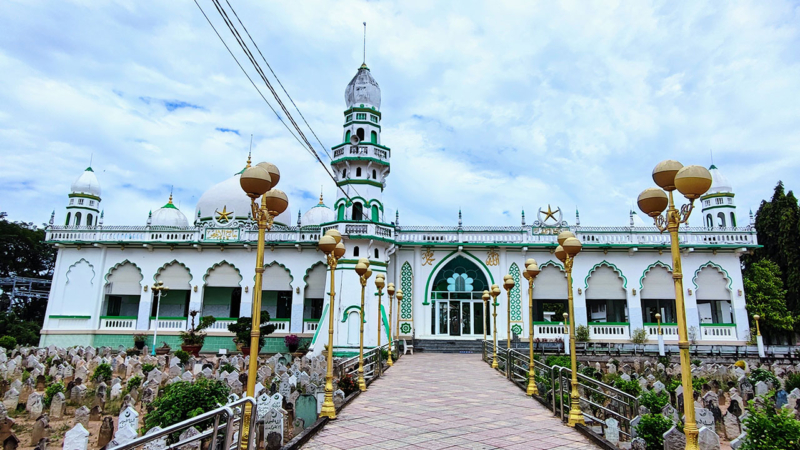
An hour later, I managed to slip away and finally visit the mosques. They were indeed unusual—grand and ornate, standing in sharp contrast to the simple surroundings of the village. To avoid passing through the wedding again, I took a detour through vegetable gardens and backyards on my way back to the ferry.
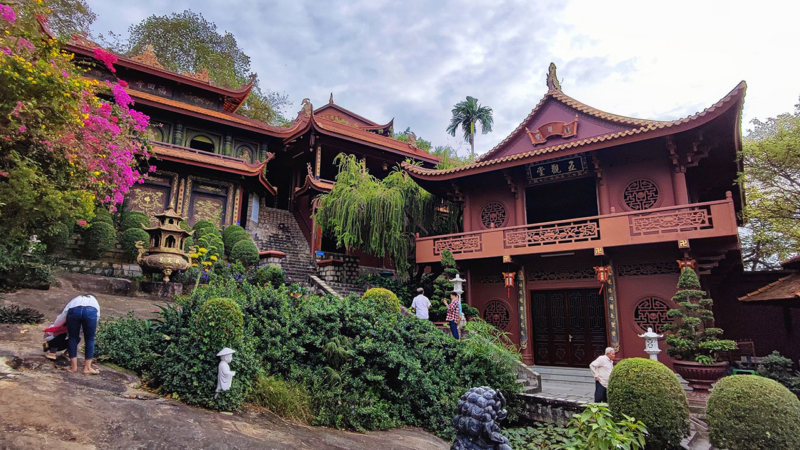
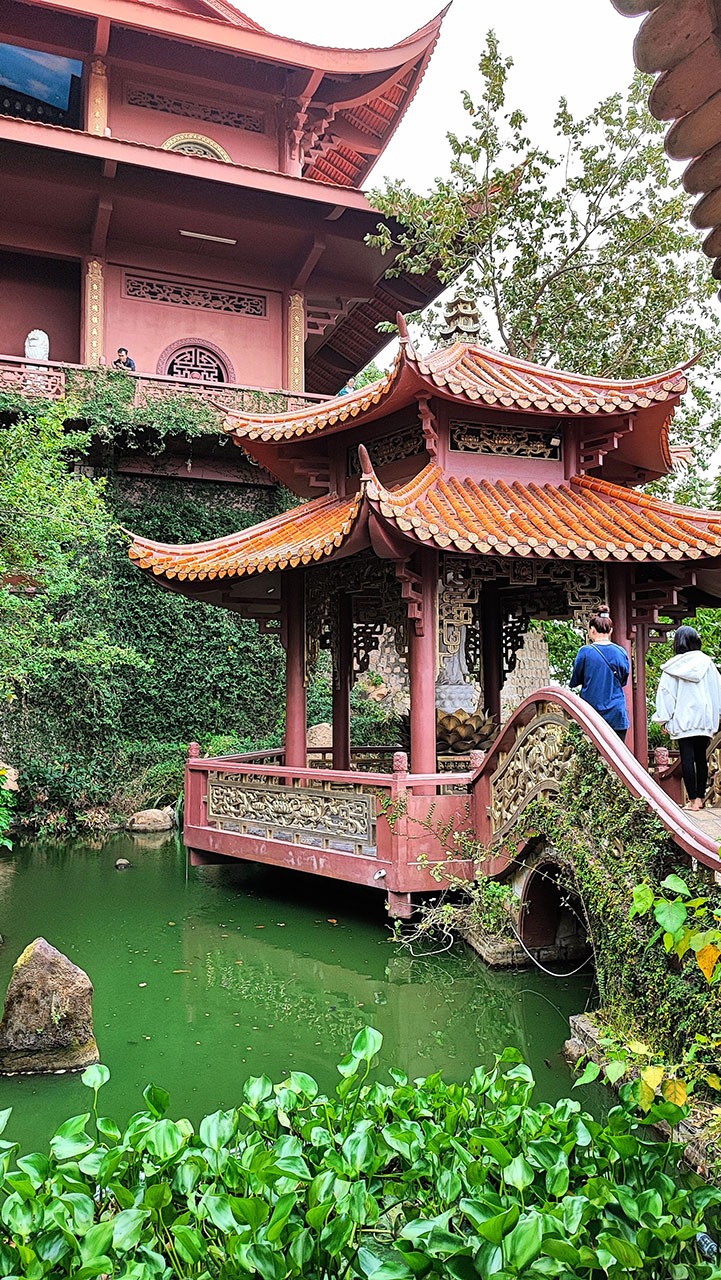
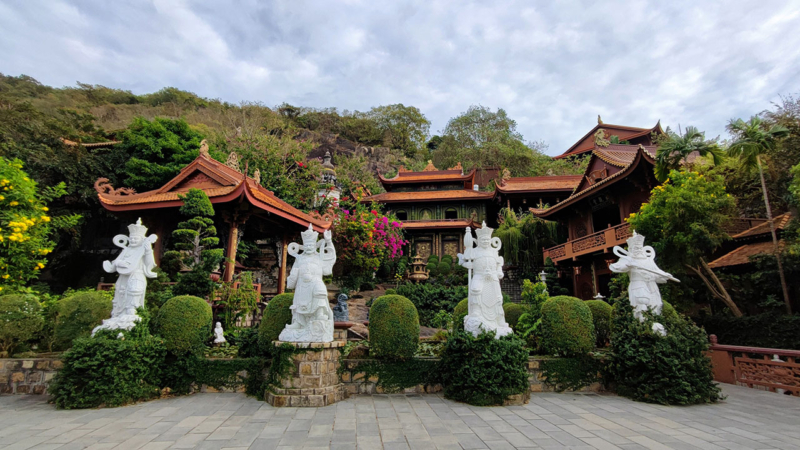
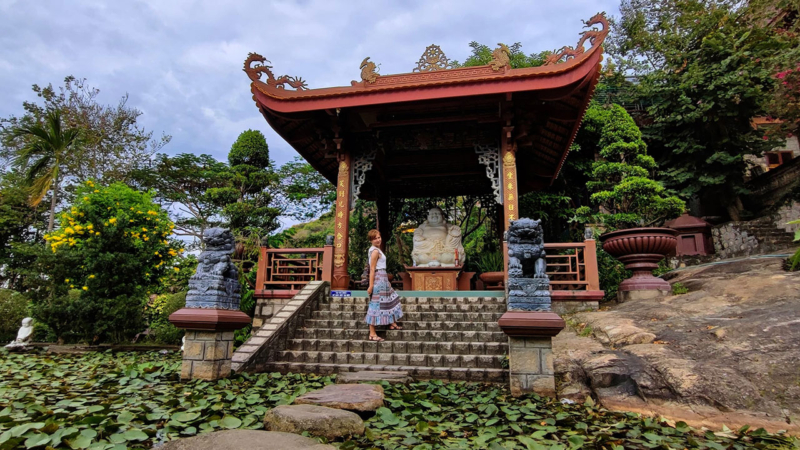
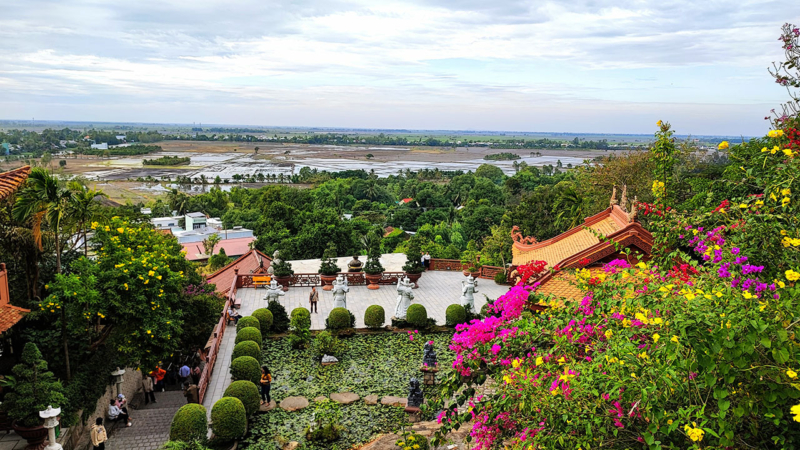
In the evening, we took a motorbike taxi to watch the sunset from a mountain. This mountain is considered sacred—a monastery was founded in its caves centuries ago, and now they’ve built a beautiful religious complex around it. Honestly, it reminded me of the Orthodox Pechora Monasteries.
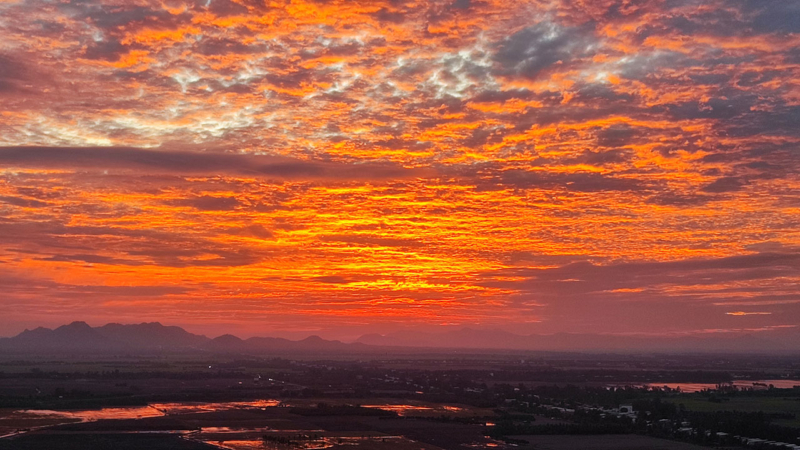
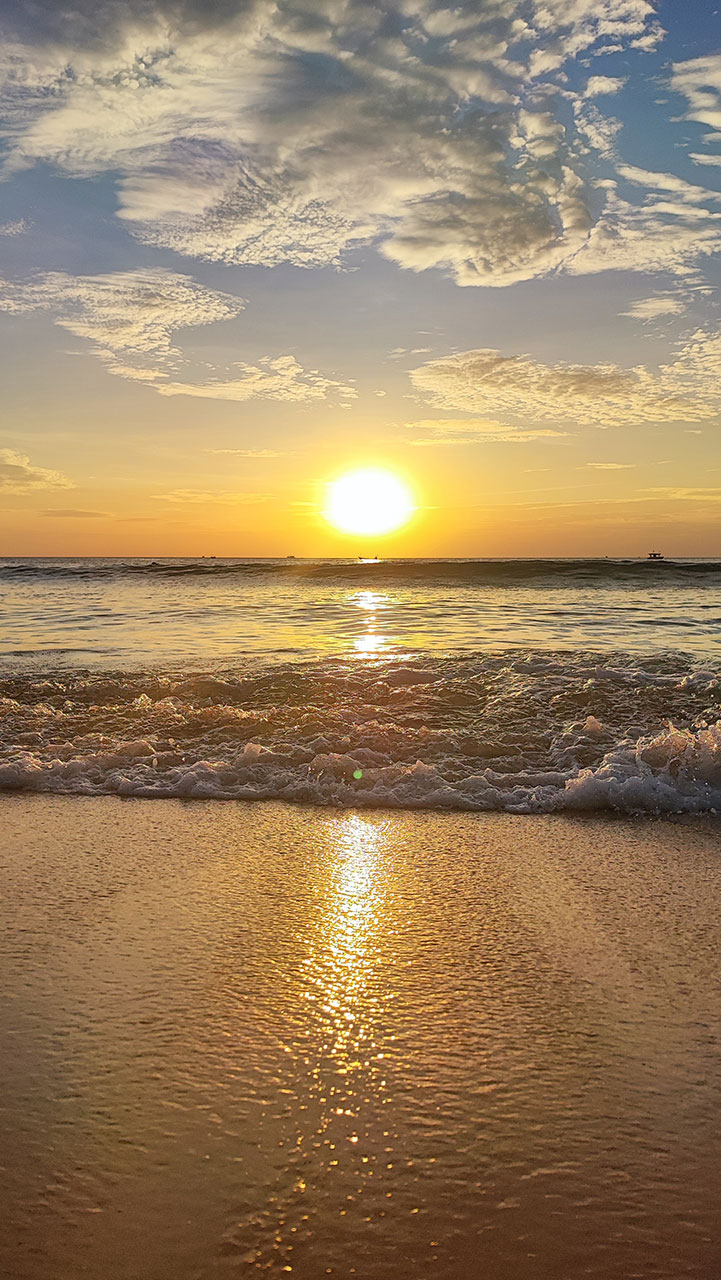
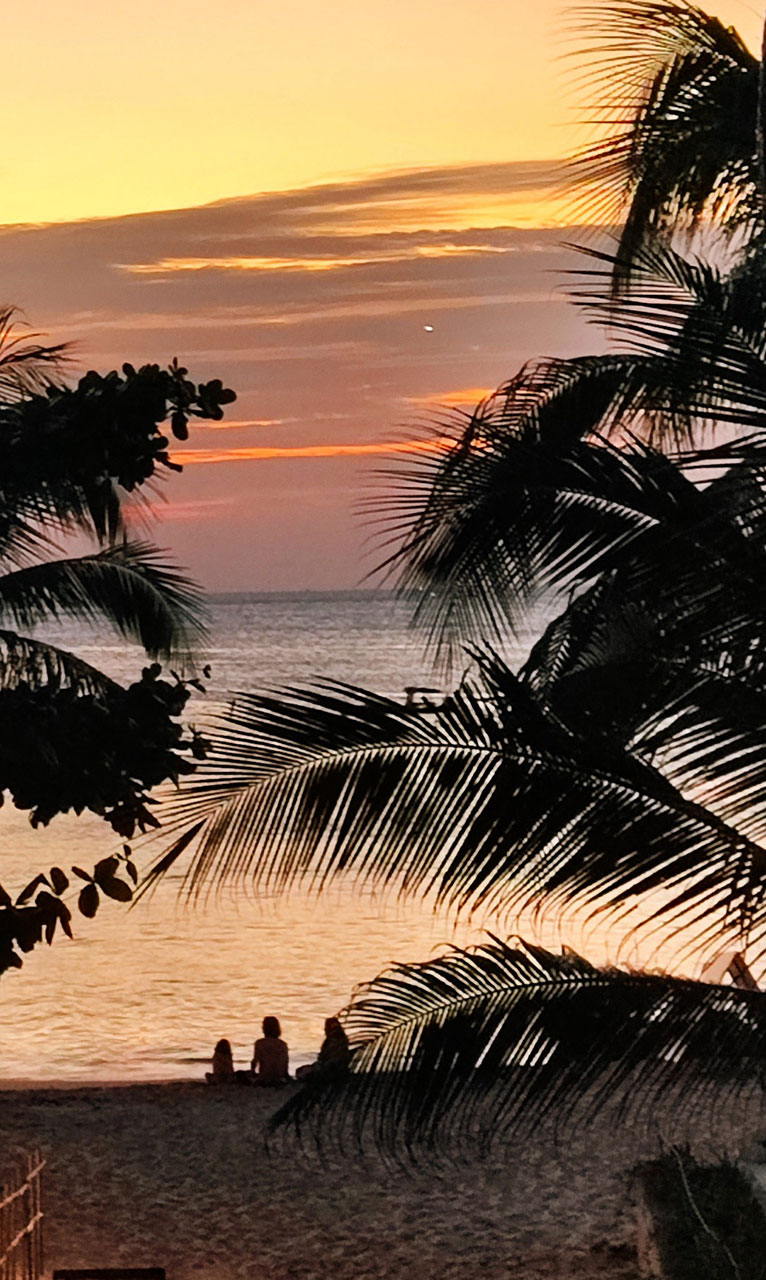
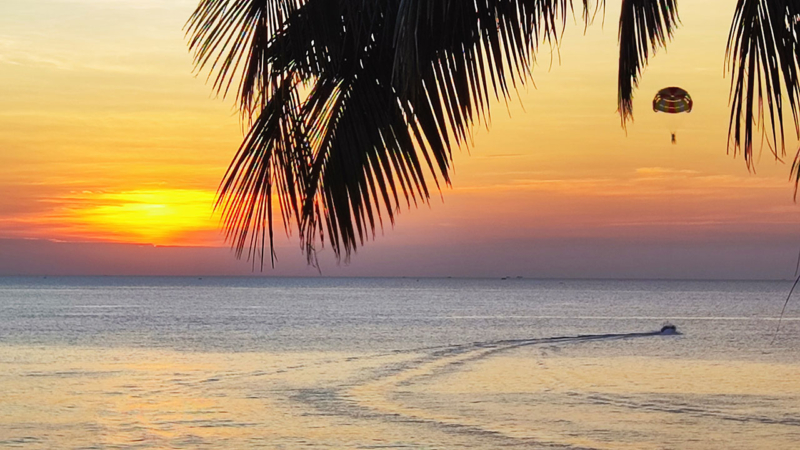
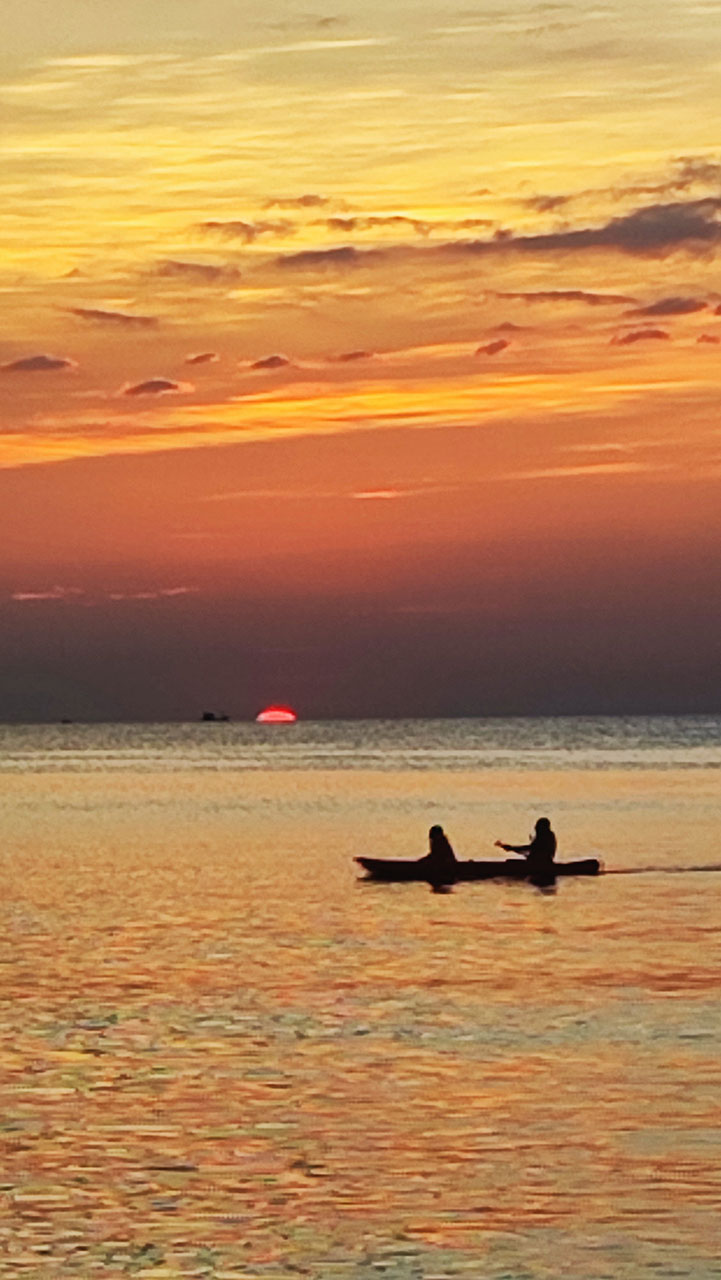
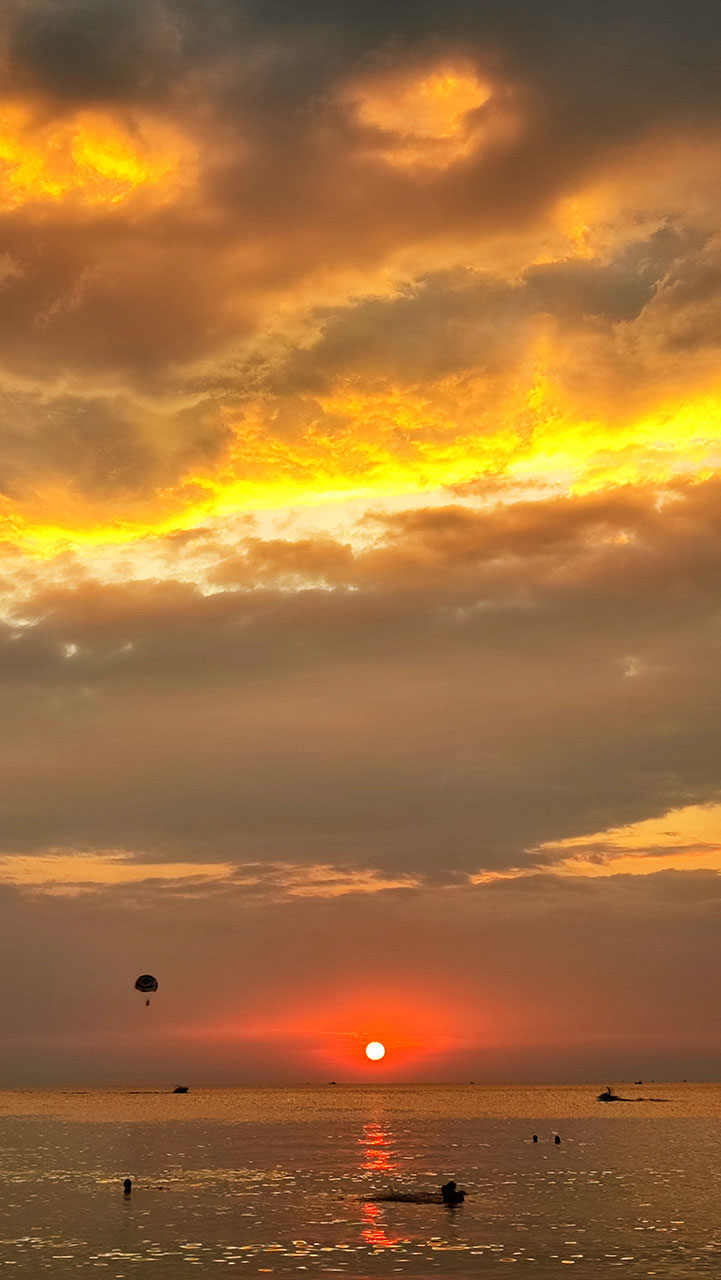
Today was the first day with comfortable weather—no higher than 30°C, with wind and cloud cover. I was sure I wouldn’t get a good sunset. But my motorbike driver insisted it would be tip-top. And he was right! One of the most breathtaking sunsets I’ve ever seen.
December 24, 2023 Tra Su neturel reserve, by bus and ferry to Phu Quoc
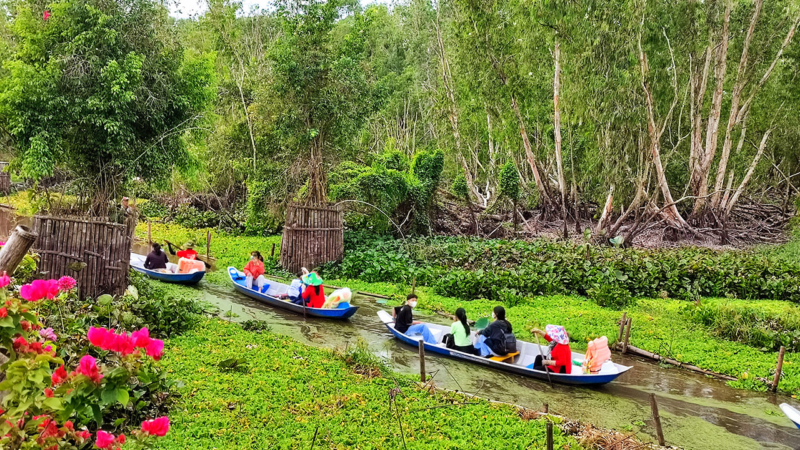
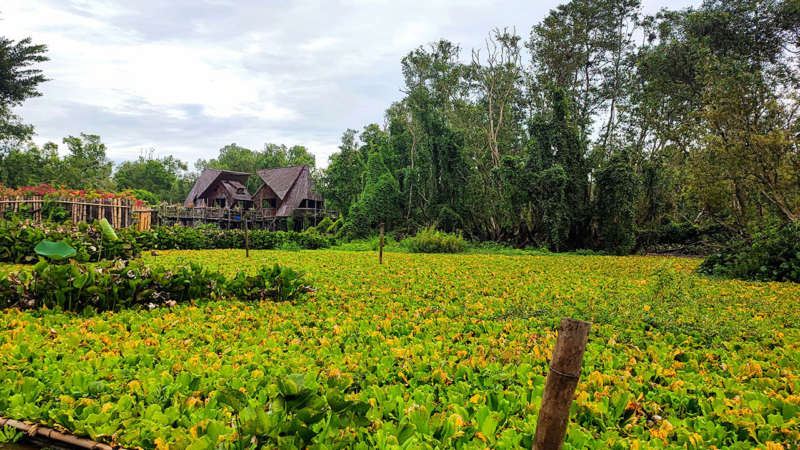
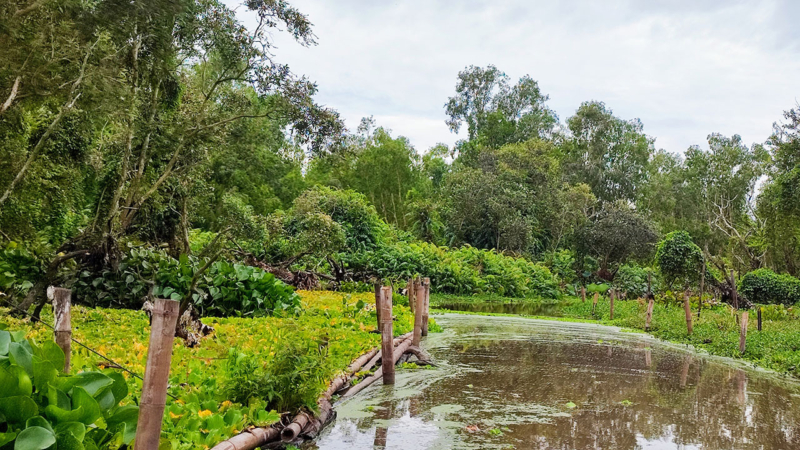
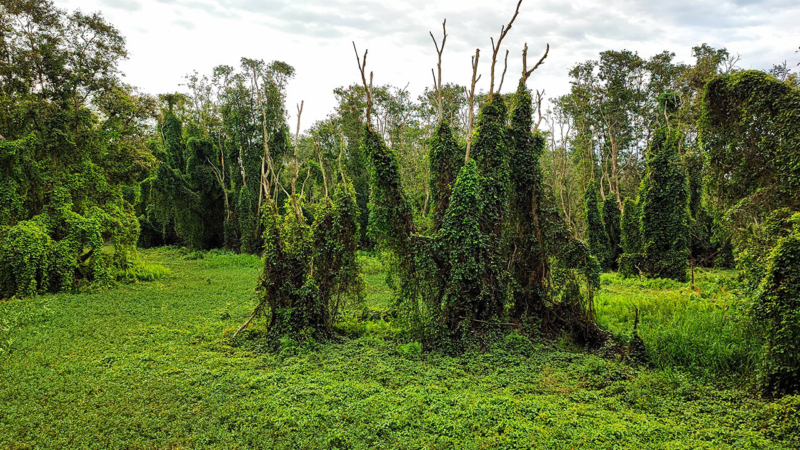
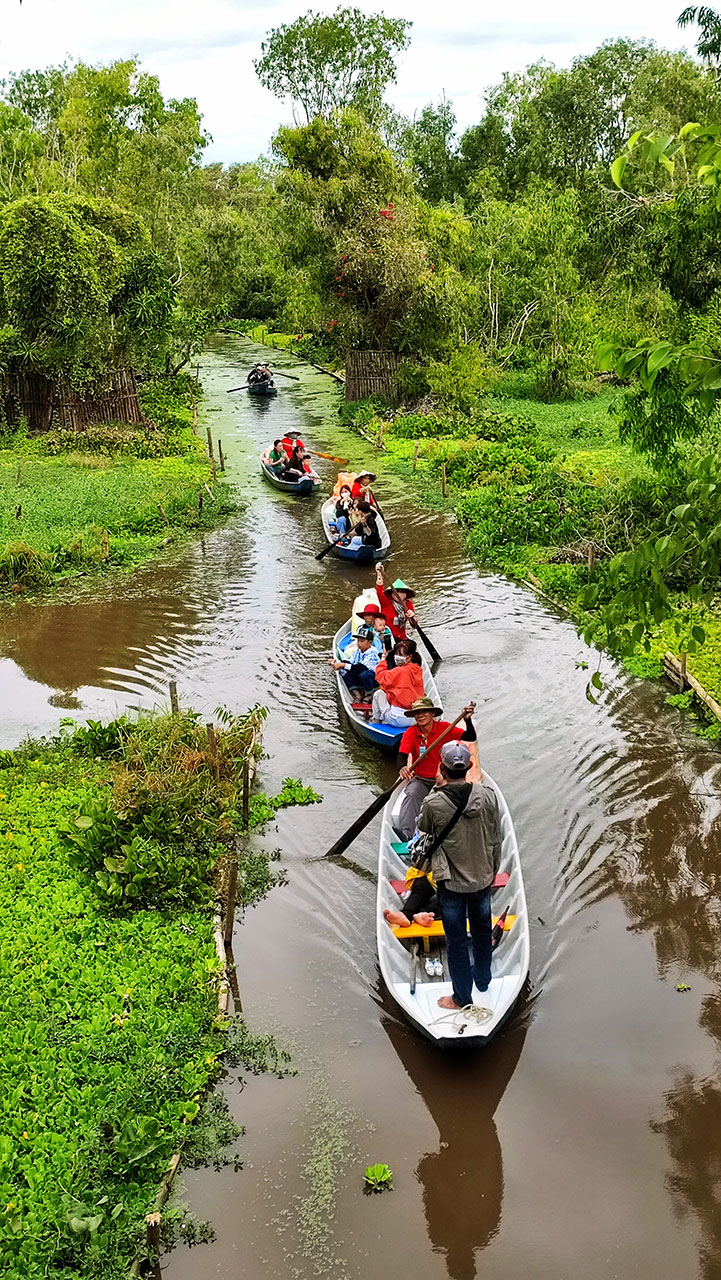
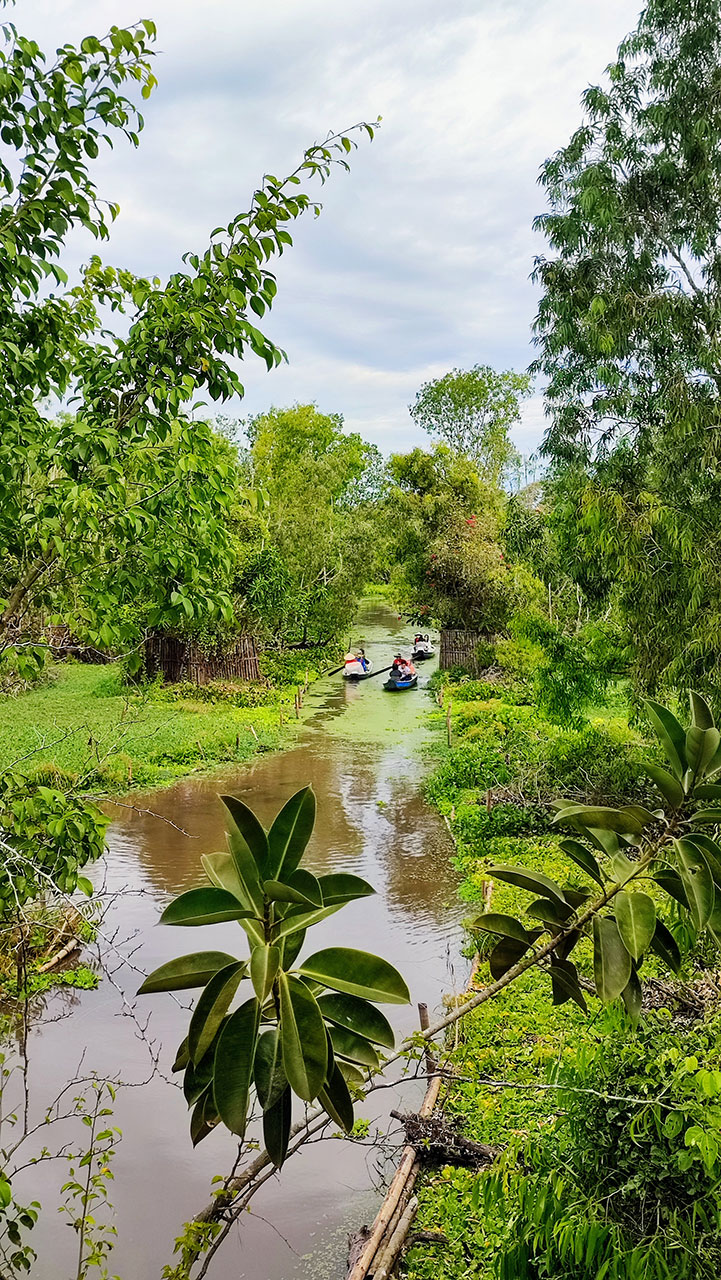
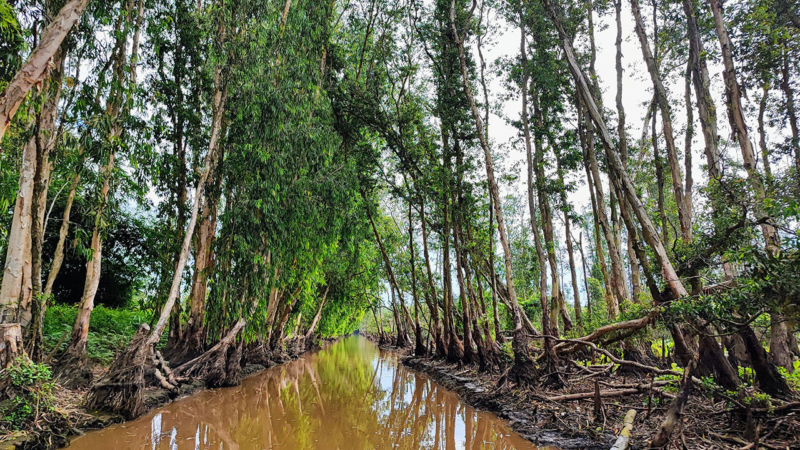
The next morning, I had to wake up early. I wanted to be the first visitor to the Tra Su Nature Reserve—Chau Doc’s only real tourist attraction (and even then, mostly for locals). Tra Su is a flooded forest, but unlike the mangrove swamps common in the tropics, its trees are cajuput.
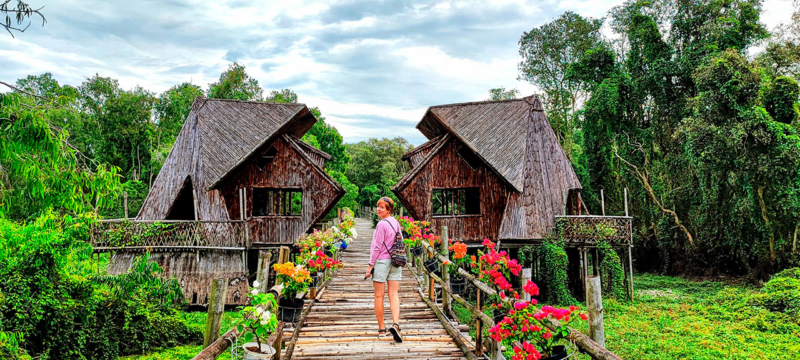
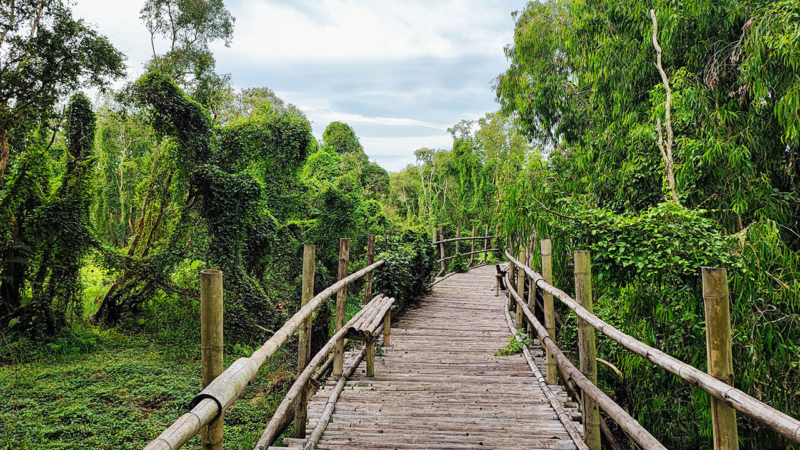
At first, you don’t even realize you’re surrounded by water. A vast, endless carpet of bright green stretches in every direction. In reality, this carpet is a thick layer of aquatic plants covering the water’s surface. The reserve itself is massive, though only a small section is accessible to visitors. A few water routes have been cleared for boats, and a 2.5 km bamboo walkway has been built. Guidebooks call it a bridge, but when you walk on it, you don’t even feel the water below!
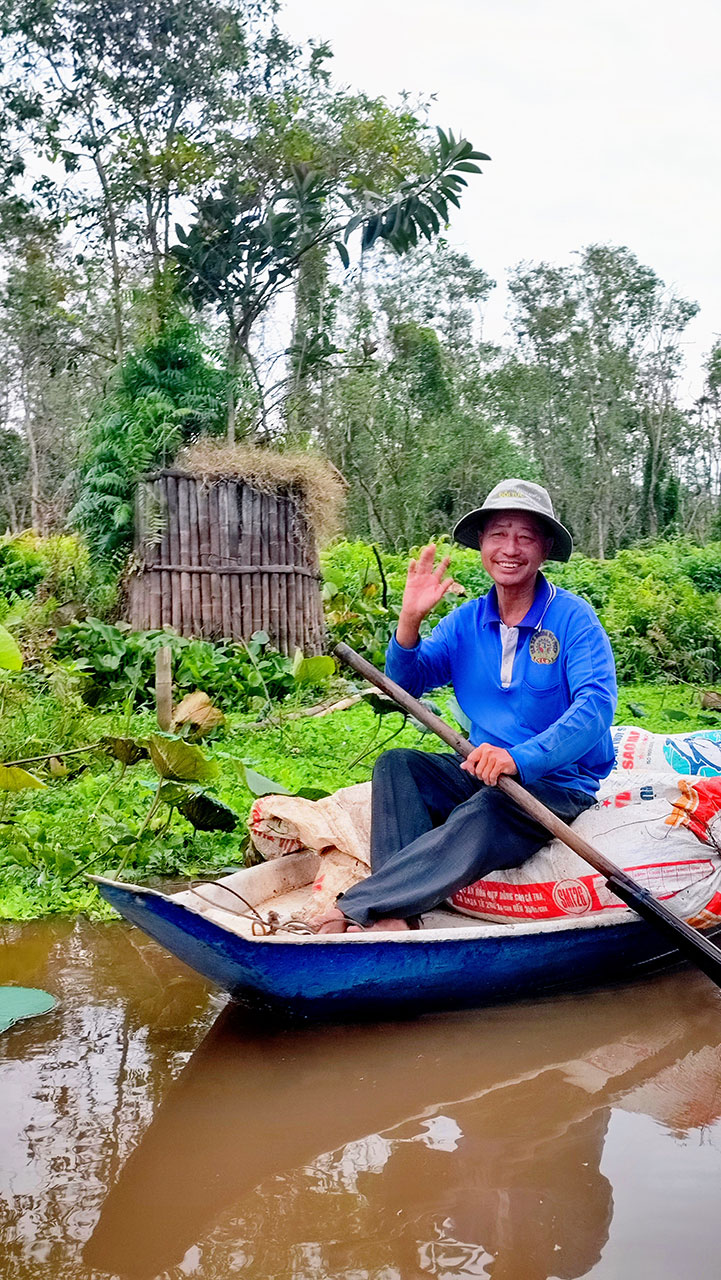
I had hurried to arrive early in hopes of seeing the birds. And wow, I was not disappointed. Not hundreds, but thousands of them—chirping, calling, soaring. My boat was the first of the morning, and as I glided through the reserve, I was the one who woke them, sending them into the sky.
This was the most unique and beautiful natural wonder of my trip.
Back in Phnom Penh, I received a message from my pre-booked guesthouse on Phu Quoc: Due to strong winds, all passenger boats to the island have been suspended until further notice. The very same wind that had been keeping me cool since Phnom Penh was now preventing me from reaching my next destination. But I still had three days. Surely, the weather would improve.
It didn’t.
To reach Tra Su, we had taken a motorbike taxi, avoiding highways in favor of village paths, wooden bridges, and rice fields. Along the way, our drivers mentioned that the passenger ferry suspension wasn’t necessarily a dead end. Cargo ferries—slow, but reliable—still made the journey to Phu Quoc. You just had to go to the port and negotiate.
With that in mind, we decided to leave Chau Doc as soon as possible and head toward the coast, to Ha Tien—the city with ferry connections to Phu Quoc. The only direct bus ran in the morning, but locals told me that a bus from Ho Chi Minh City passed through sometime between 1:00 and 3:00 PM. Its stop? The post office. So, we went to the post office and waited.
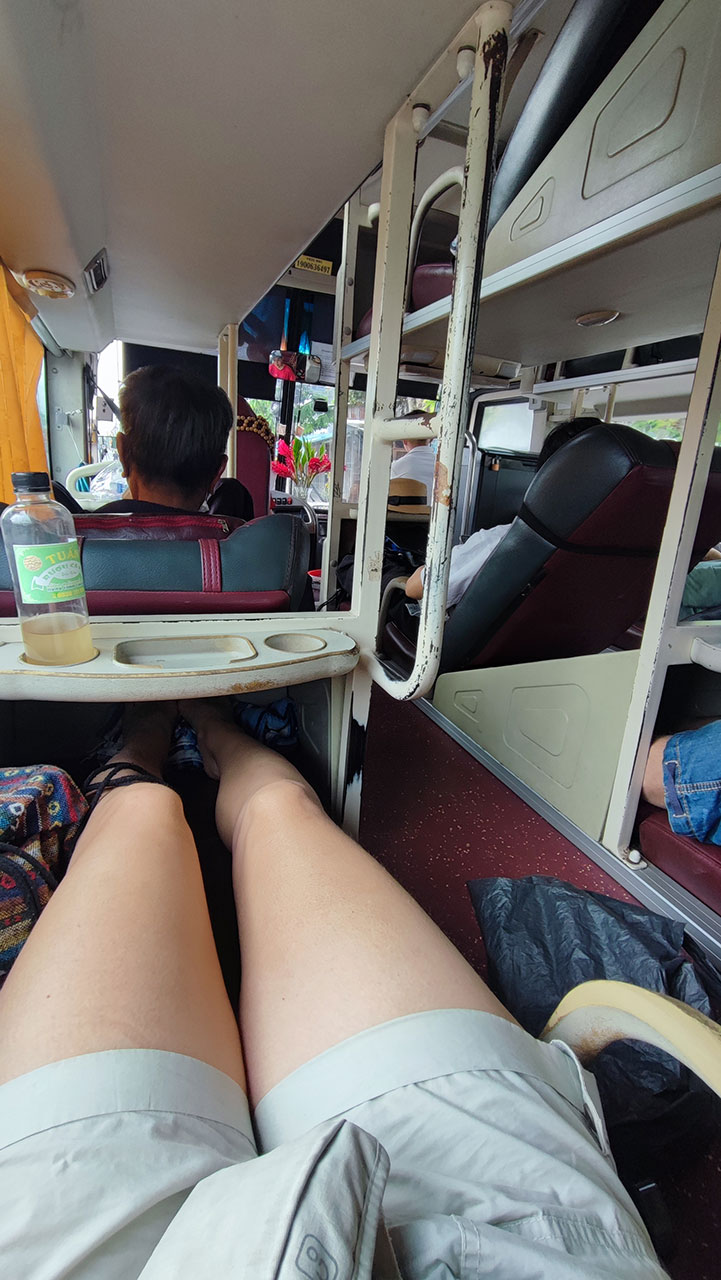
Vietnamese sleeper buses are the greatest invention of mankind! There’s no more comfortable mode of transport. You can stretch out under a blanket or sit up and watch the scenery. You can gaze out the window or scroll on your phone with free Wi-Fi.
Upon arriving in Ha Tien, a motorbike taxi driver instantly understood when I said Phu Quoc. The next ferry leaves in 15 minutes! He whisked us to the port in two minutes, handled all the negotiations, and got us on board—for just two dollars. Everything had worked out perfectly. I would be on Phu Quoc a full day earlier than planned.
A quick message to my guesthouse—an instant reply: Very good, we are waiting for you!
There was only one downside to this trip. If a passenger speedboat takes just one hour, my cargo ferry took four! And it wasn’t a smooth ride—it rocked violently and reeked the entire way.
Now, I’m under a palm tree, and it seems… I have no idea what to do for the next three days.
December 25, 2023. Phu Quock: Long Beach
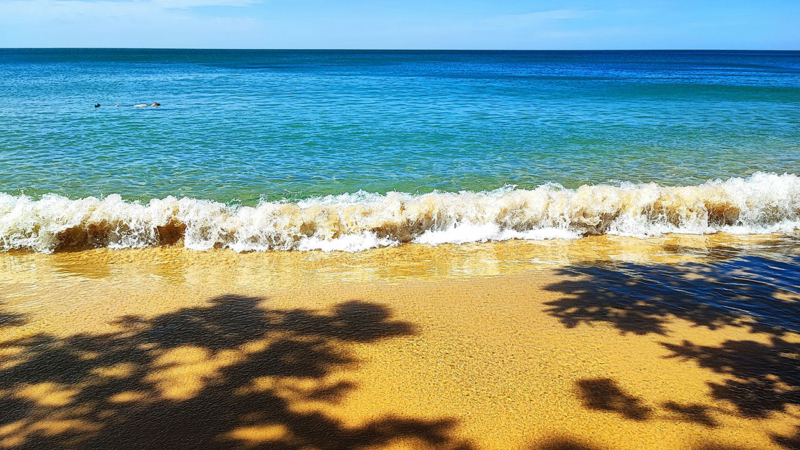
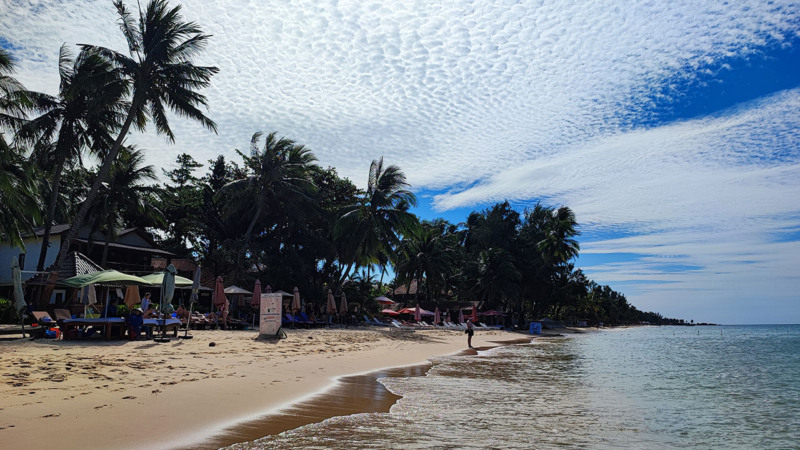
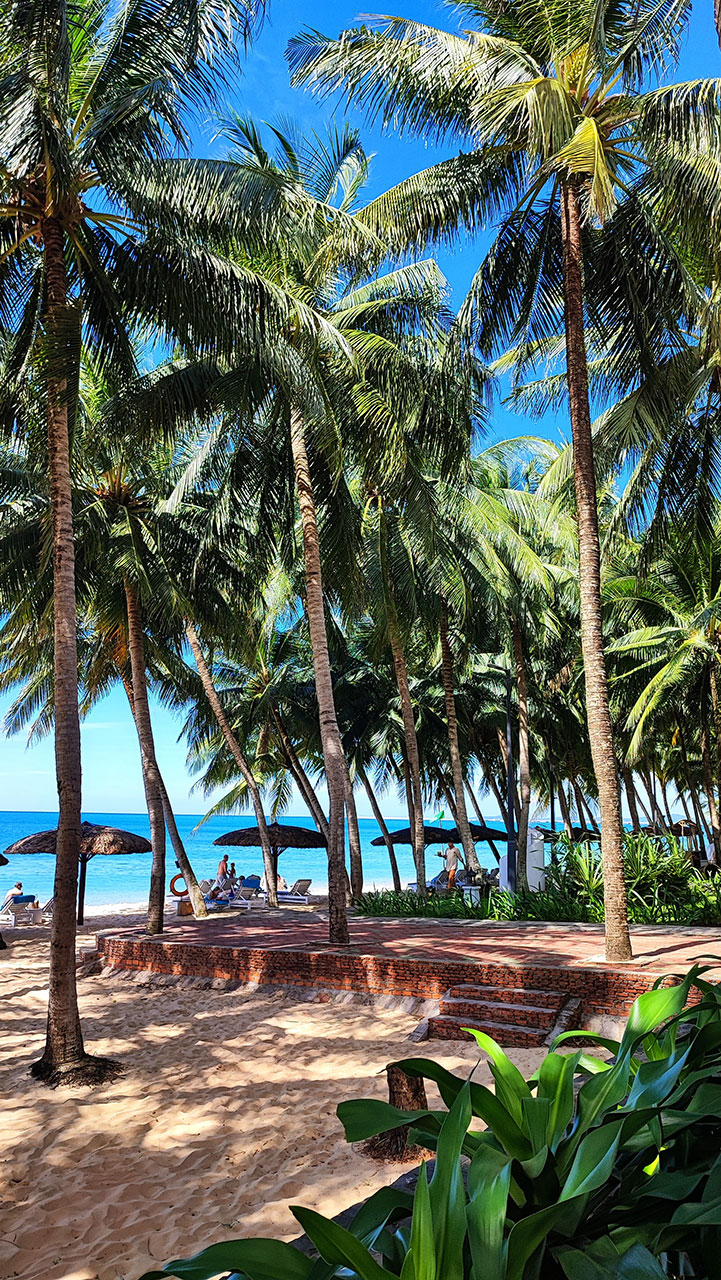
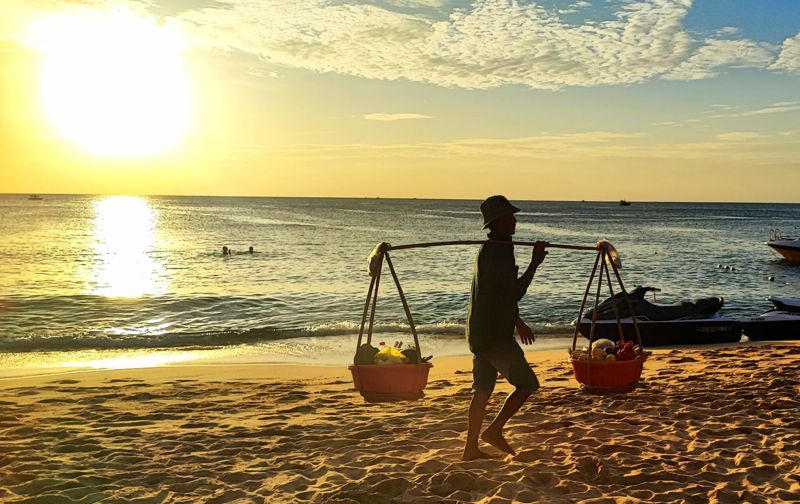
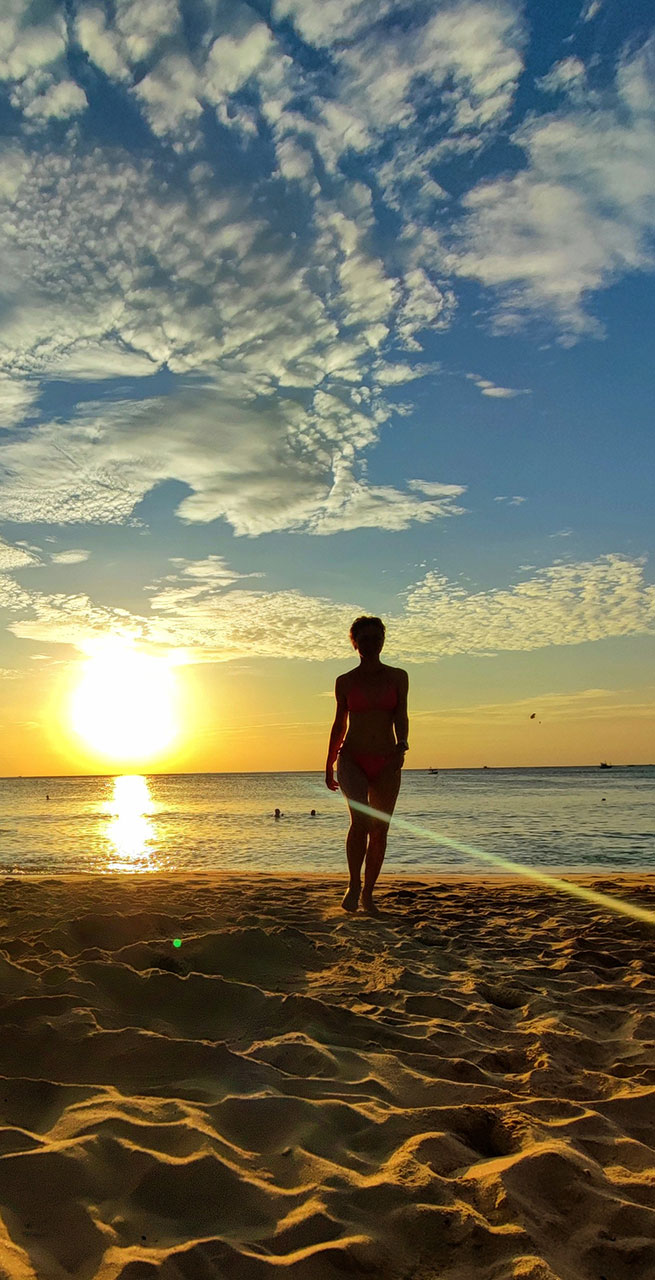
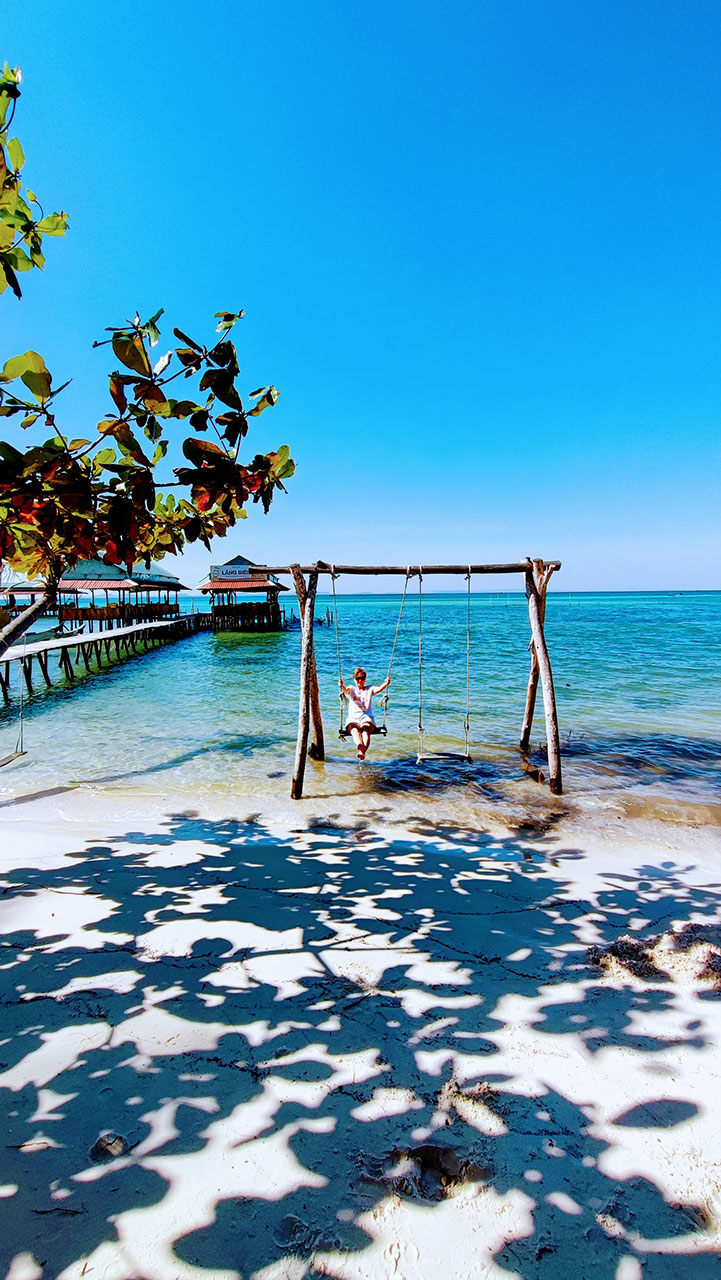
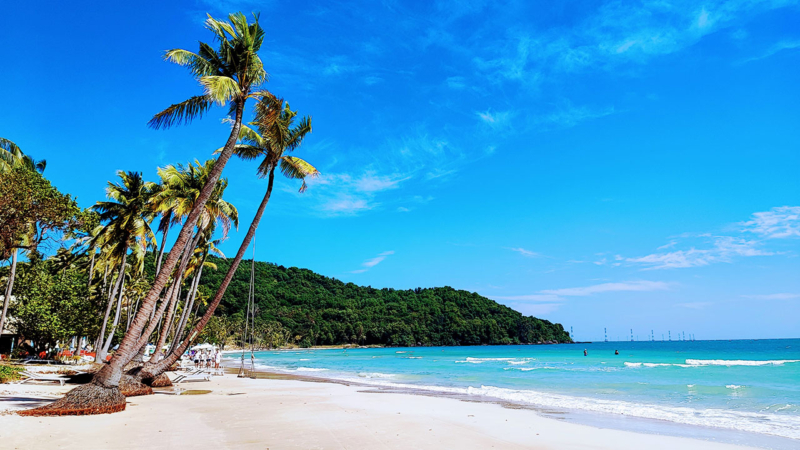
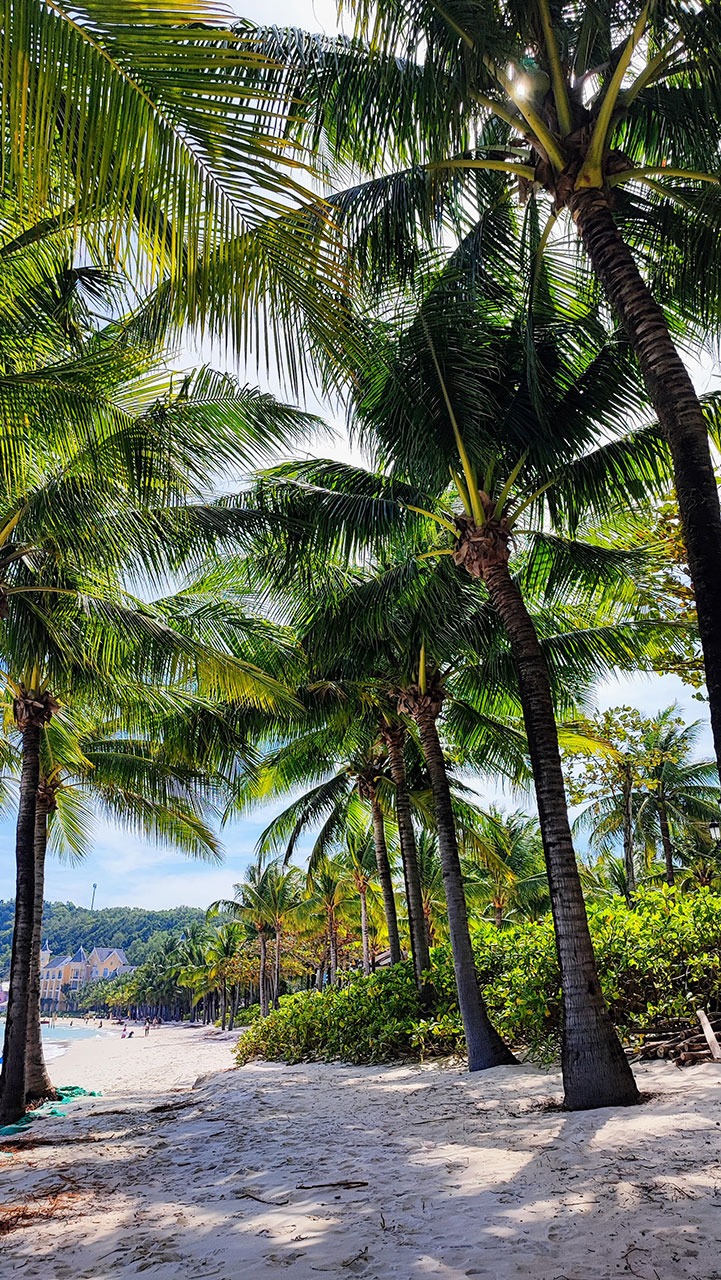
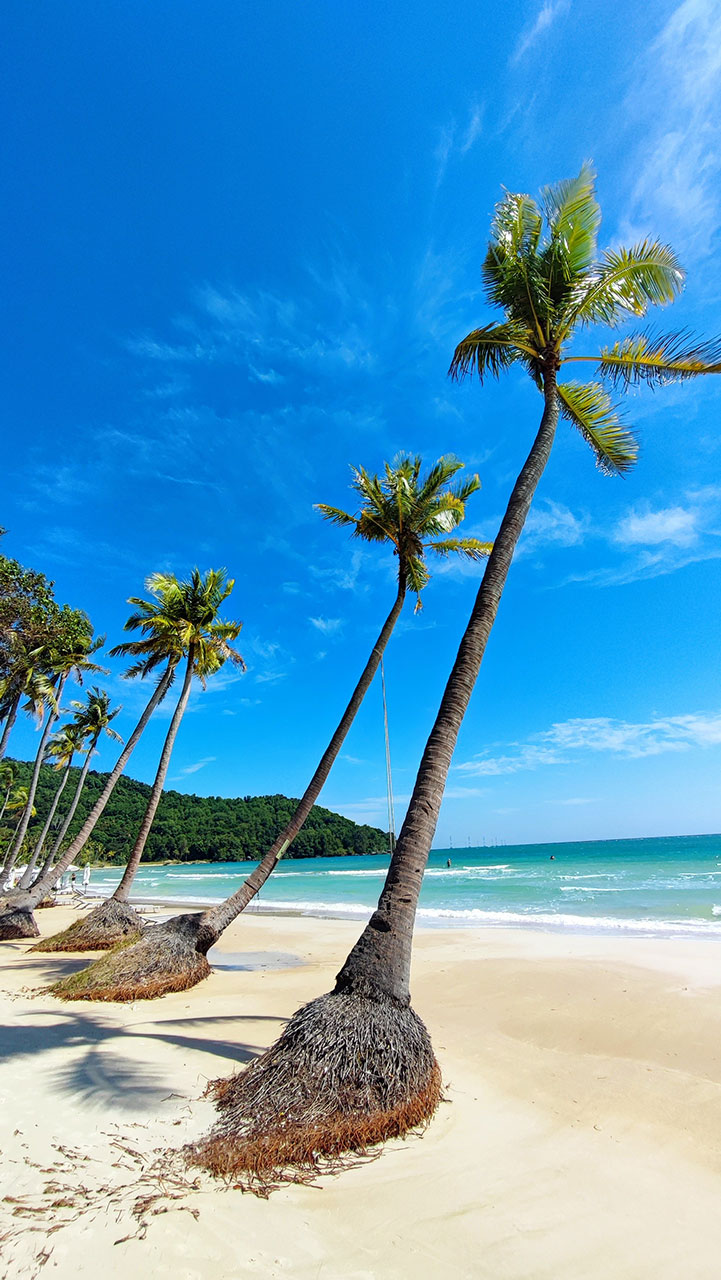
For four nights on Phu Quoc, I chose an inexpensive guesthouse on the most popular beach on the island. Long Beach is about 20 km long, very beautiful with white sand and clean water. What can I say… The sun is hot, the sea is warm, the sand is soft. Otherwise, if I don’t put geotags, it is difficult to understand what country I am in. All the beach and tourist places are more or less the same. People swim, sit, lie, eat, drink. I swam with them, sat, lay, ate, and drank. It was almost noon. I repeated everything in a circle again. I got bored. I barely made it to sunset.
I even regretted that yesterday I found an option to get to the island, and wouldn’t it have been more interesting to swing across the border to Kampot instead, but I’m already here. Why not rent scooters and try to find some local gems, if, of course, there are any in this tourist reservation.
December 26, 2023. Phu Quoc: north
Scooter ride around the northern part of the island led us to three fascinating locations.
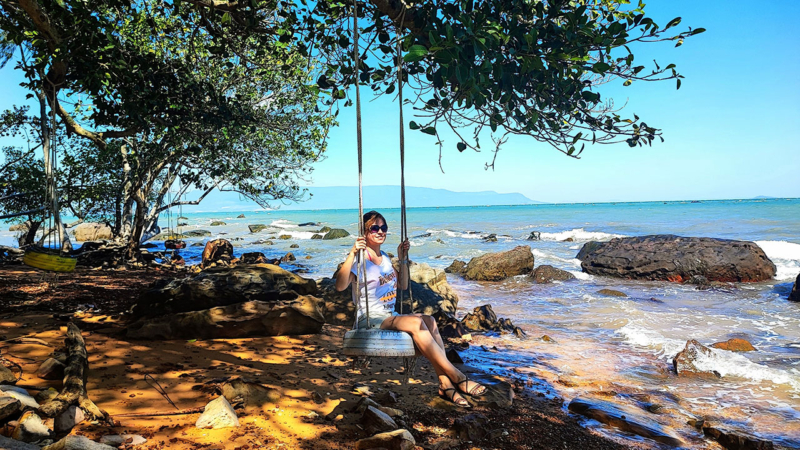
Topping my list is a fishing village. Google Maps on Phu Quoc is, if not entirely useless, then at least far from relity. Trying to navigate the map while riding a scooter proved challenging. Our initial plan was to reach the cape and catch a glimpse of Cambodia’s coastline. The map indicated that the winding road would end a couple of kilometers before the cape, turning into sand and gravel. However, we soon realized we were still on a well-paved road, at least five kilometers beyond the marked endpoint. Curious, we decided to investigate and discovered that this unmarked road had taken us far from our intended destination.
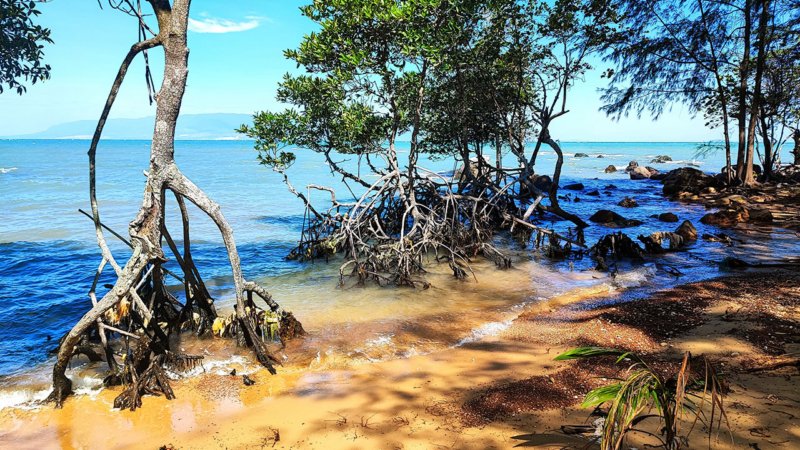
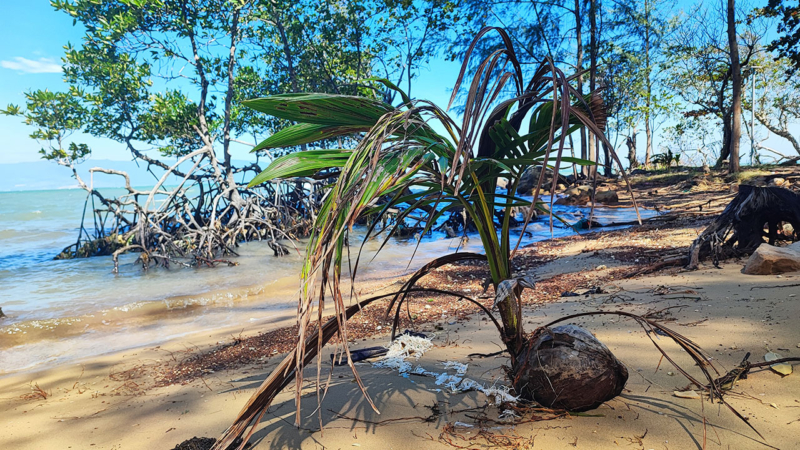
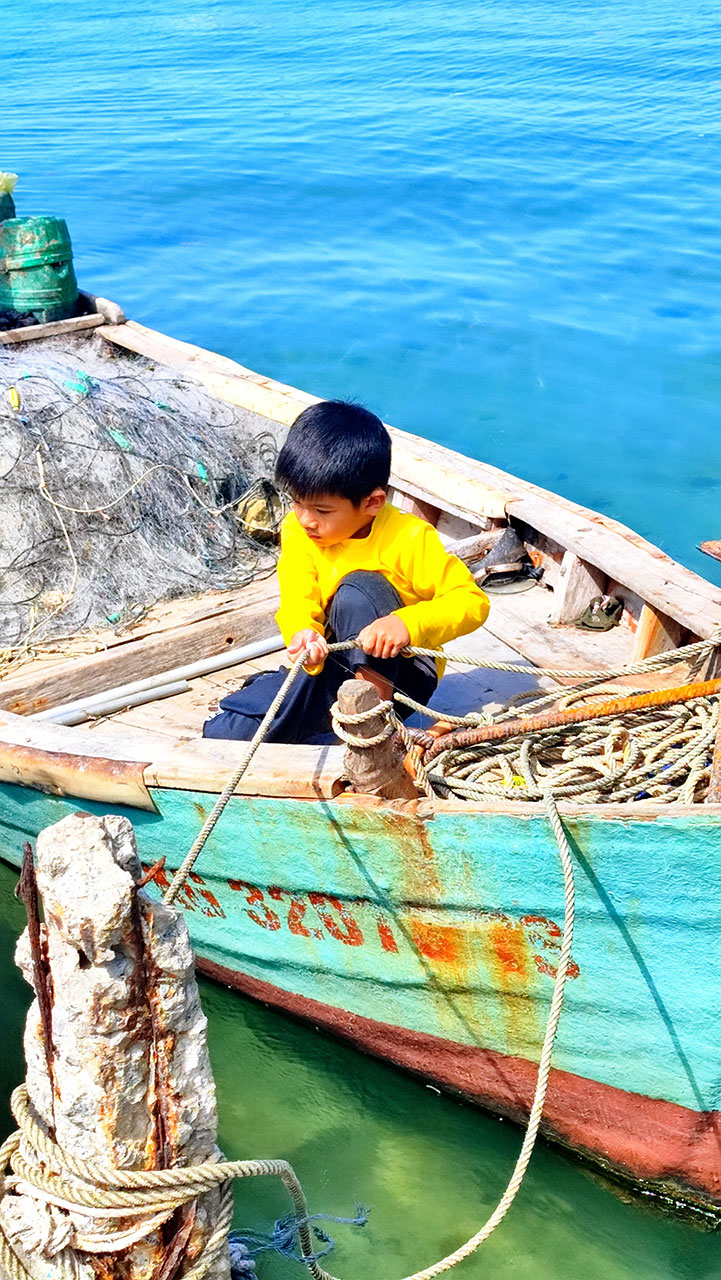
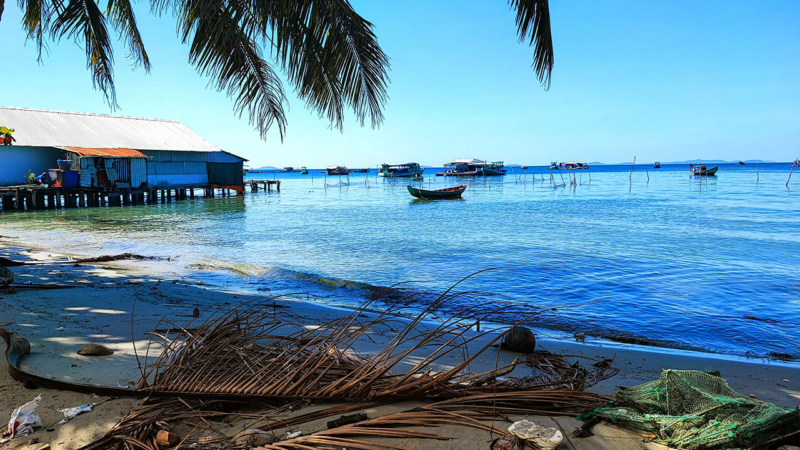
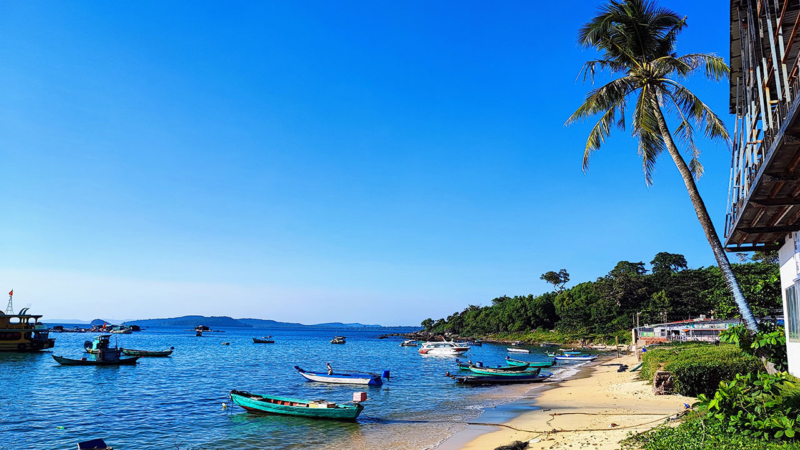
Instead, we found ourselves in an authentic, non-touristy, and impoverished village. The scene was striking: mountains of garbage tangled in endless mangrove roots, scrawny and sickly dogs roaming about, dirty boats bobbing in the water, children poking at starfish with sticks on the pier, and hammocks strung with frail old men swaying above the village’s single path-street. And, of course, there was the inevitable smell—no, the stench—that seems to define every fishing village. Yet, all this was offset by the warm smiles and hospitality of the locals, who invited us into their homes (if you could call them that—more like awnings), offered us dried sea creatures to try, and shared their strikingly beautiful surroundings. All in all, I’d rate the village a solid 5 out of 5!
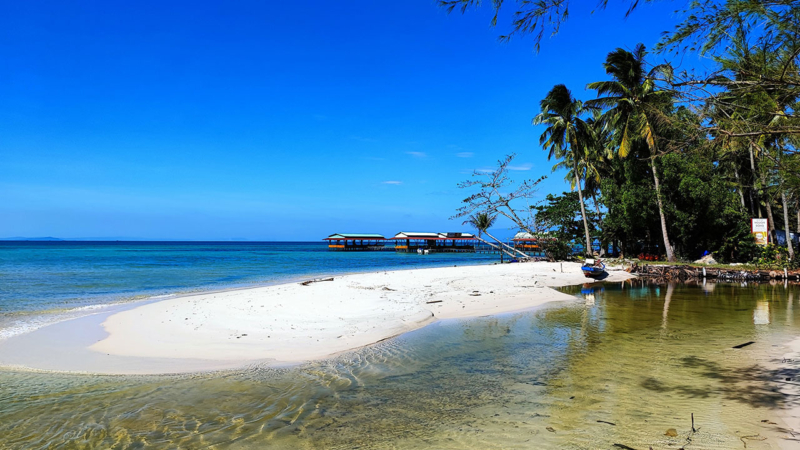
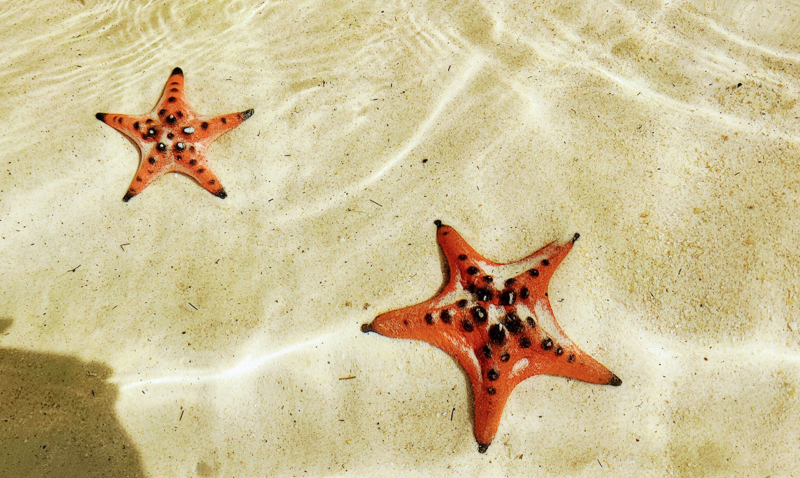
In second place is the beach with starfish. Hundreds of them—no, thousands!—dot the shoreline. It was a completely new experience for me, and utterly mesmerizing. The beach itself is stunning, with its unique, flour-like white sand so fine it feels like powder. However, watching people torment these poor starfish was heartbreaking. I wanted to gather them all and release them far out into the sea. In the end, I didn’t touch a single one, deciding to make my small contribution to protecting the local wildlife. For that reason, the starfish beach gets a 4 out of 5.
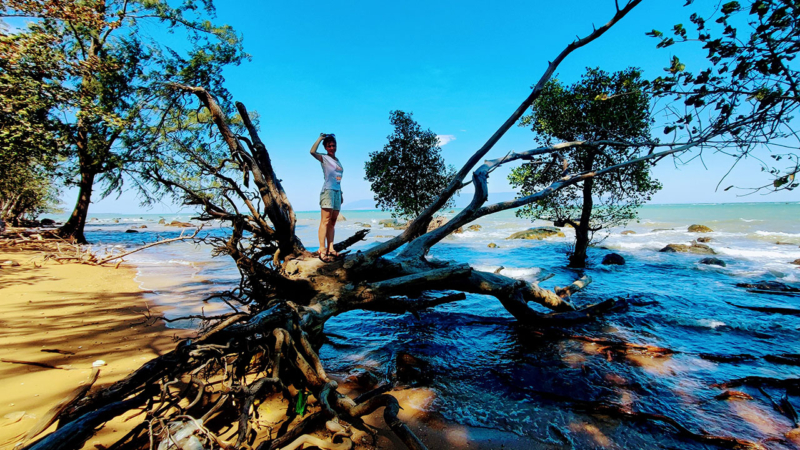
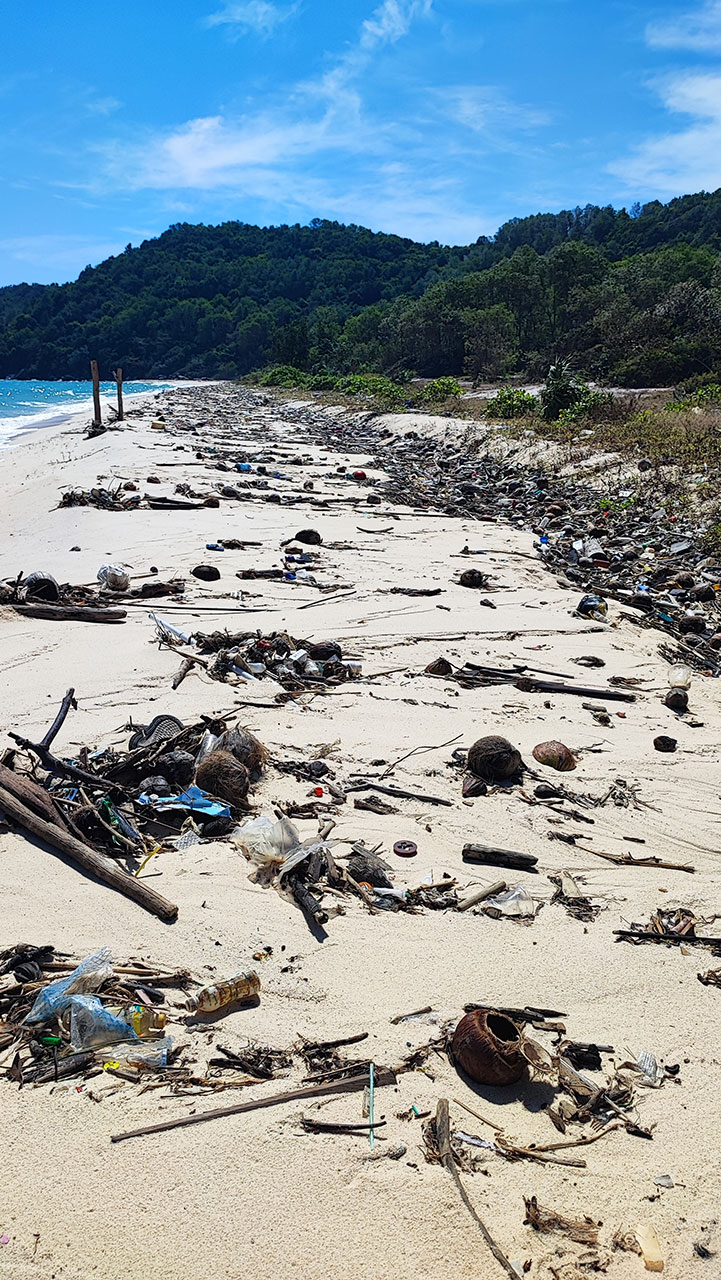
The third location is a tiny island surrounded by mangroves, offering breathtaking views. It took us about 15 minutes to walk around the entire island. A 150-meter-long wooden bridge connects it to the mainland, but it’s in terrible condition—completely rotten and collapsed in the middle. Most tourists who arrived at the same time as us turned back, but we decided to press on, wading waist-deep in water to reach the island. The effort was worth it, as one of the island’s few geocaches was hidden there. This island would have earned a perfect score, but the overwhelming amount of garbage washed ashore and trapped in the mangroves ruined the experience. Sadly, it only gets a 3 out of 5.
We also passed several beaches of varying rockiness, but none were as suitable for swimming as our home base, Long Beach.
Tomorrow, we’re heading to the southern part of the island in search of paradise. With scooter rentals costing just $5 a day and barely using any gas, it’s an adventure we can’t pass up.
December 27, 2023. Phu Quoc: south
It is true that the most beautiful beaches are in the South-East, as the Internet says! And there are very few people here. Paradise? NO! Because of the huge amount of garbage. It is simply incredible! It is not tourists or even locals who are shitting on themselves, although I must admit, they are not the cleanest people … It is just that the surf brings here everything that falls into the sea from the mainland, as well as from fishing vessels and boats. During the day, the coastline is perfectly clean for several meters. But the border to which the sea rises at night is a wide line of trash.
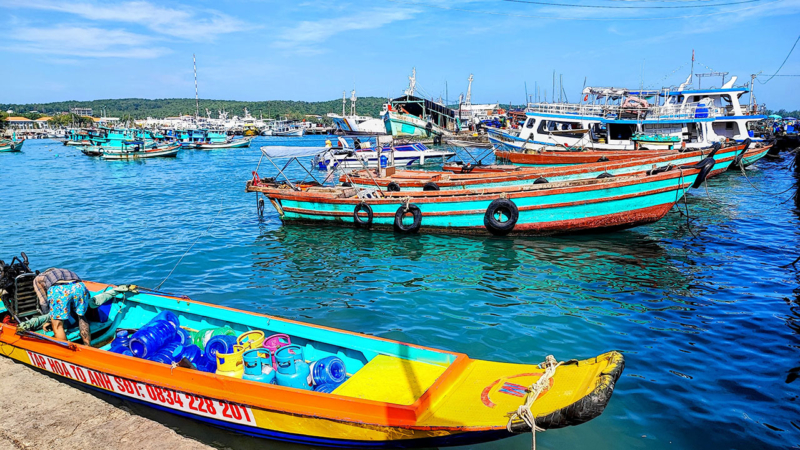
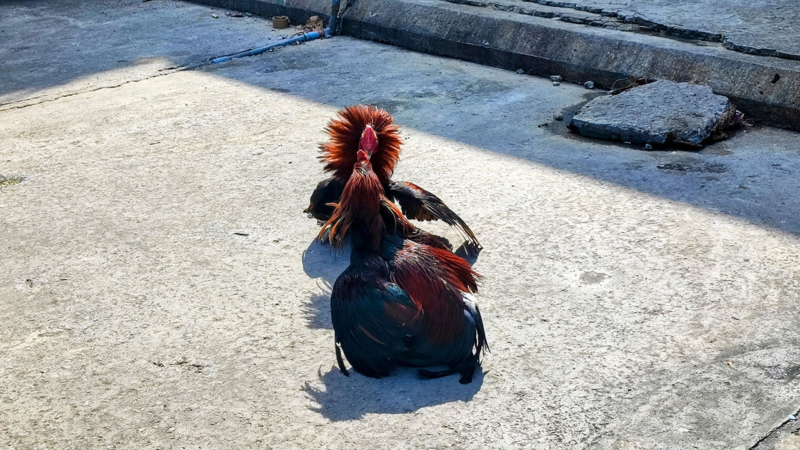
Well, after the beaches, I did not deny myself the pleasure of visiting another stinking fishing village, with hundreds of boats on the pier and fishermen entertaining themselves with cockfights.
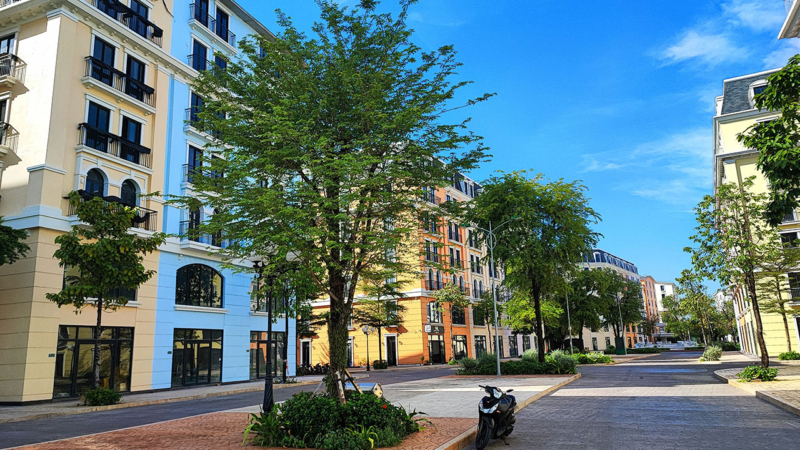
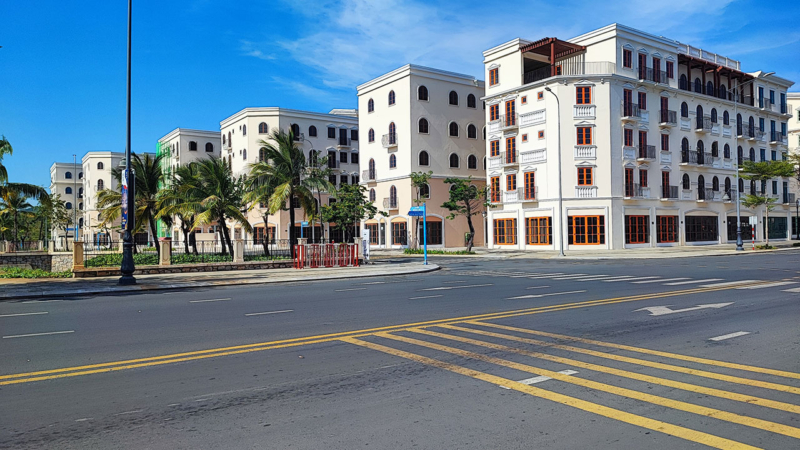
Driving around the island, we came across several ghost towns. This deserted luxury in contrast to the noisy poor villages caused unpleasant feelings. Almost fear. Huge newly built cities with hundreds of houses with parks, fountains, and avenues are absolutely empty. As if aliens had arrived and stolen all the inhabitants at once.
On Phu Quoc there are also water parks and a cable car that goes through 3 islands. But for some reason I don’t want such entertainment at all. Therefore, I will have to go and explore these strange ghost towns on the last day.
December 28, 2023. Vinpearl Safari Zoo and very scary Phu Quoc
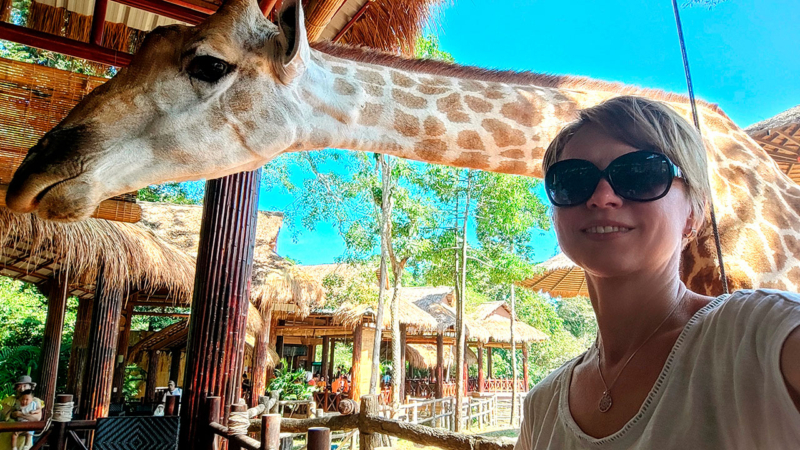
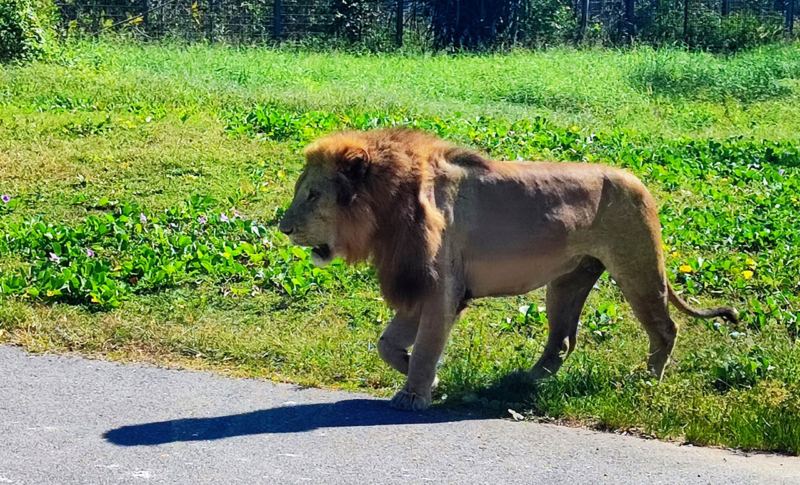
If you’re ever bored on the beach like I was, I highly recommend visiting the zoo on Phu Quoc. This isn’t a typical zoo—it’s even called Vinpearl SAFARI, and it’s truly unique.
The animals aren’t confined to cages; instead, they roam freely in large, fenced enclosures while visitors ride through on a bus along a winding path. The animals seem to enjoy their spacious environment, complete with streams, ponds, and plenty of room to move. Meanwhile, visitors stay comfortable in air-conditioned buses.
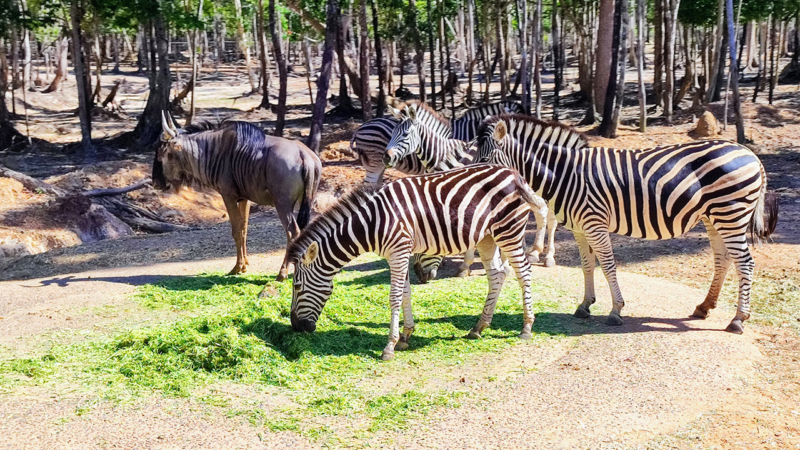
You’ll see lions, tigers, rhinos, and bears up close—sometimes just an arm’s length away. Some animals are busy with their own activities: zebras nursing their young, rhinos sparring, lions lounging on tree branches, and Amur tigers drinking from streams. The bird enclosure is equally impressive, standing at least 20 meters high and filled with trees, flowers, bridges, and ponds. It’s so well-designed that you barely notice the netting
.
The highlight for me was the interactive areas where you can feed elephants, lemurs, and giraffes. There’s also a charming petting zoo for children with goats and lambs. I ended up spending half a day here, which surprised me.
As for other attractions on the island, I wasn’t particularly impressed. There’s an amusement park, a cable car connecting three islands to a water park, pearl and fish farms, a coconut prison, and other tourist spots. However, what caught my attention during my three-day scooter rides were the eerily empty, modern neighborhoods—ghost towns that were beautiful yet lifeless.
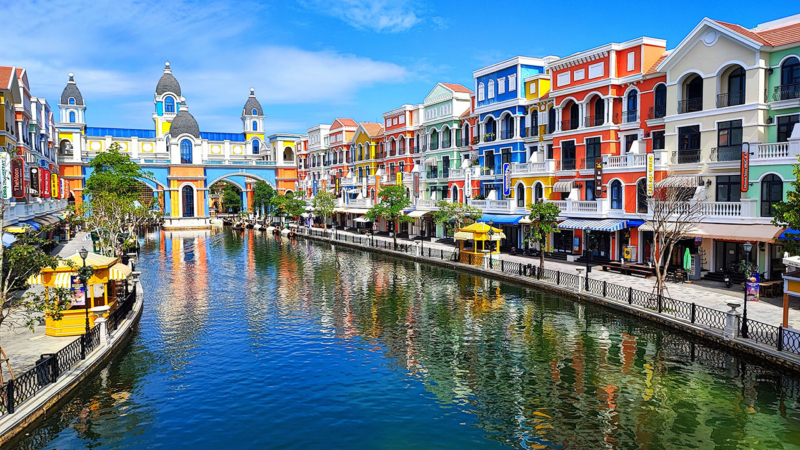
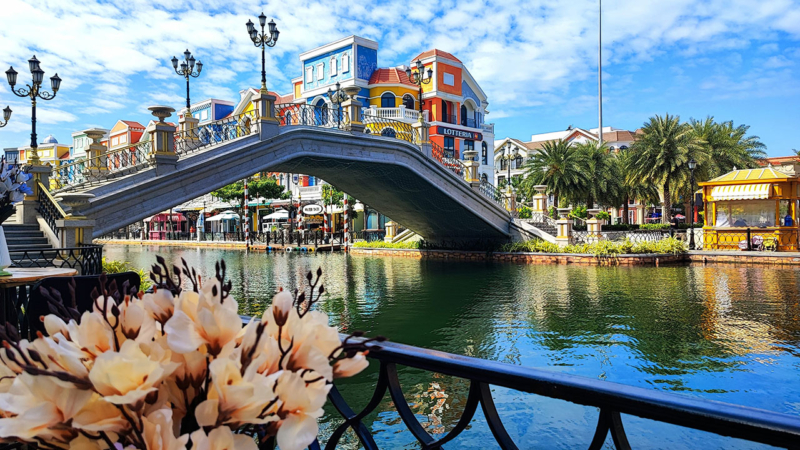
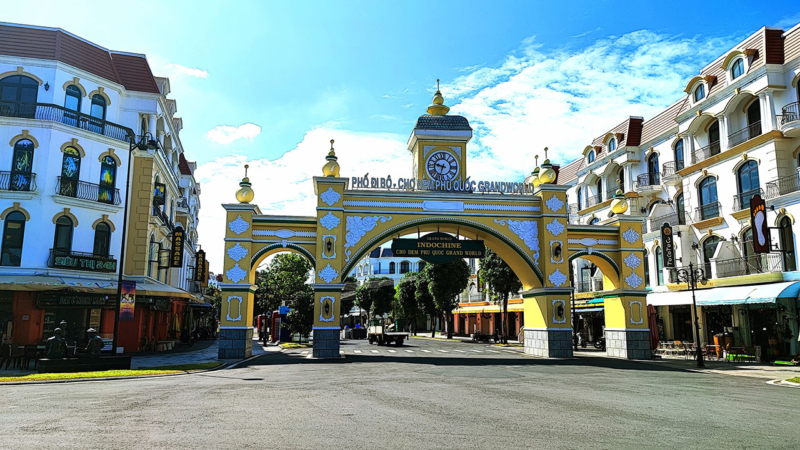
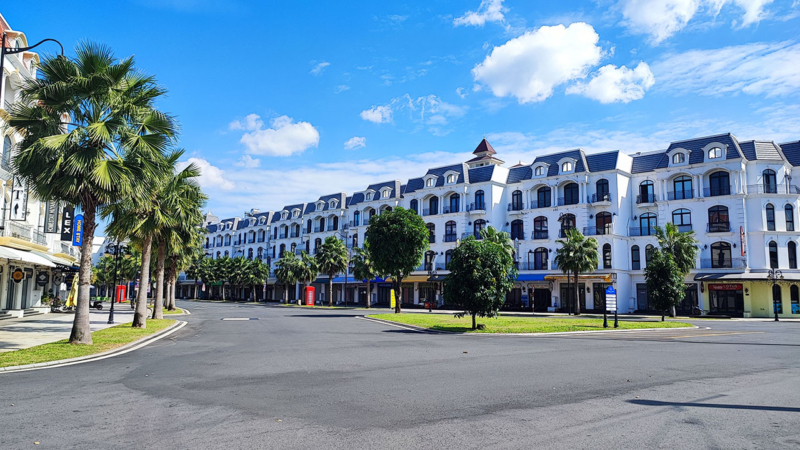
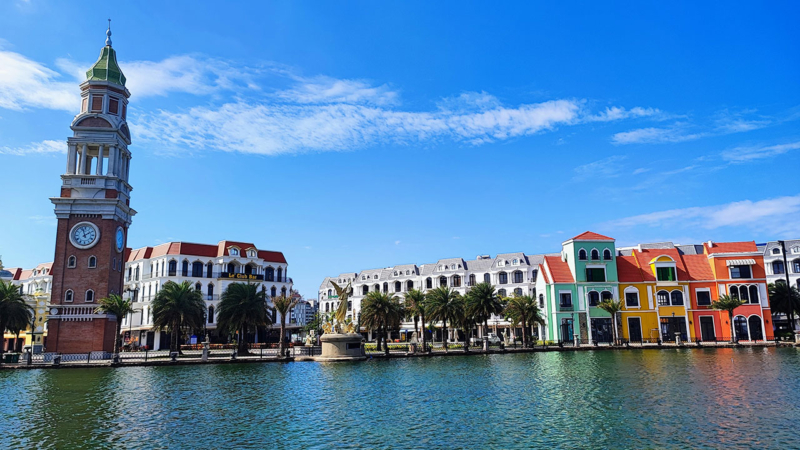
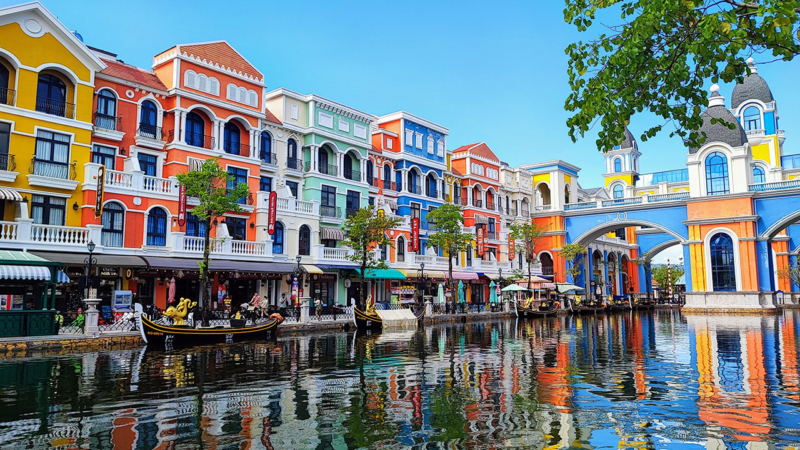
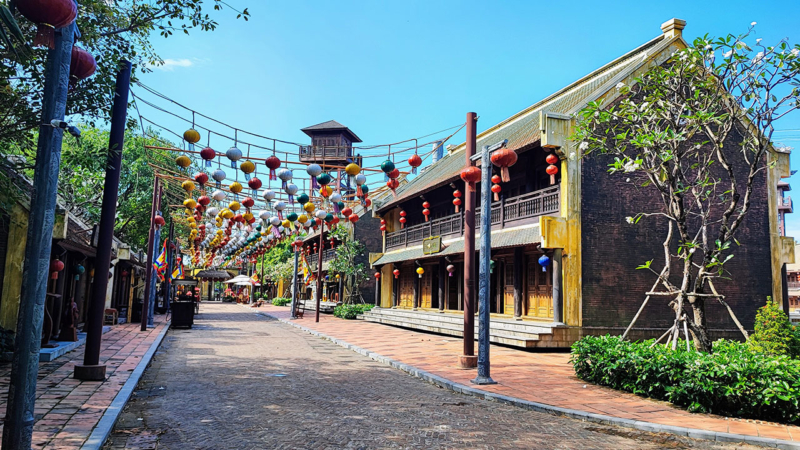
I’ll share just three photos from the zoo to show how close you can get to the animals. The rest of my photos are of two deserted developments: Grand World and Mediterranean City, located in the south and north of the island.
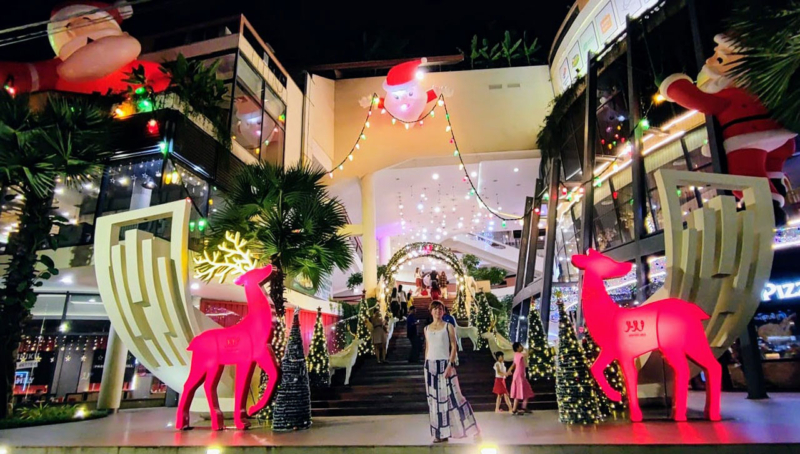
I’m a fan of abandoned places with a sense of history—Pripyat (Chernobyl), the apocalyptic water park in central Vietnam, or the earthquake-evacuated towns of Italy. These places have soul, history, and a haunting past. In contrast, Phu Quoc’s ghost towns feel surreal. Everything is new, well-maintained, and even festive, with Christmas lights, trimmed bushes, and gondolas waiting at piers. Yet, there’s no past, no present population, and seemingly no future.
About 80% of the buildings are empty, despite having signs in the windows. Some shops have displays or café tables set up, but only about 10% are actually open. The staff, with no customers to serve, sit around chatting or smoking, only springing to life when a rare tourist appears, as if they themselves cannot believe that they are seeing a living person.
The post-apocalyptic vibe is heightened by cheerful Christmas music playing over the Venetian-style canals. It feels as though aliens abducted everyone, or I’ve stumbled into a parallel world where people are invisible. I’ve heard that in the evenings, the place comes alive with dazzling lights, music fountains, and even a Venetian festival with masked performers. That would be total trash!
Even during the day, I felt scared. I’ve been to Pripyat, but this felt even scarier—more artificial and unsettling.
I don’t know what it is. A fundamental miscalculation of marketers or simply insufficient advertising of this particular Phu Quoc, but in any case, it’s a failure. How much did they spend to build it? And all this is next to the shacks of the locals. If I had my way, I would give all this housing to the locals. They would most likely immediately turn these neighborhoods into traditional shabby asian style homes, with tents and tables on wide avenues and a swarm of mopeds instead of electric buses. Tourists would definitely come to these living streets.
December 29-30, 2023. Doha
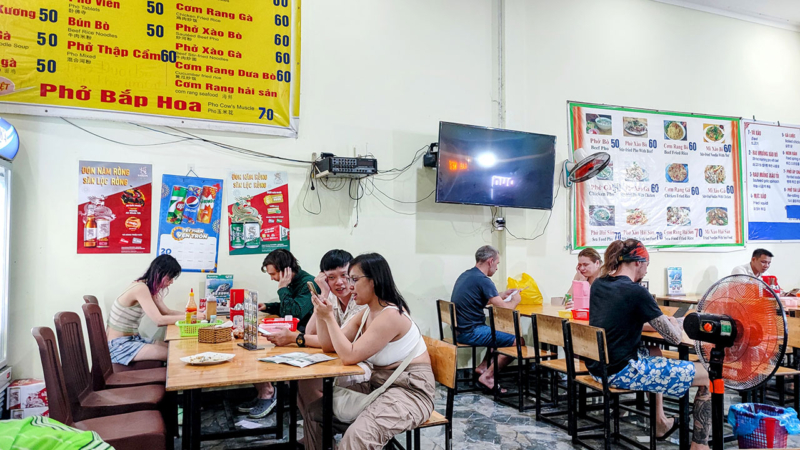
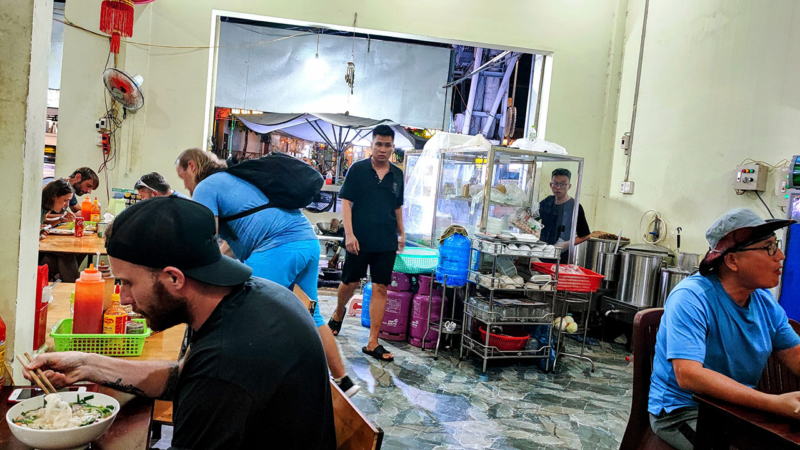
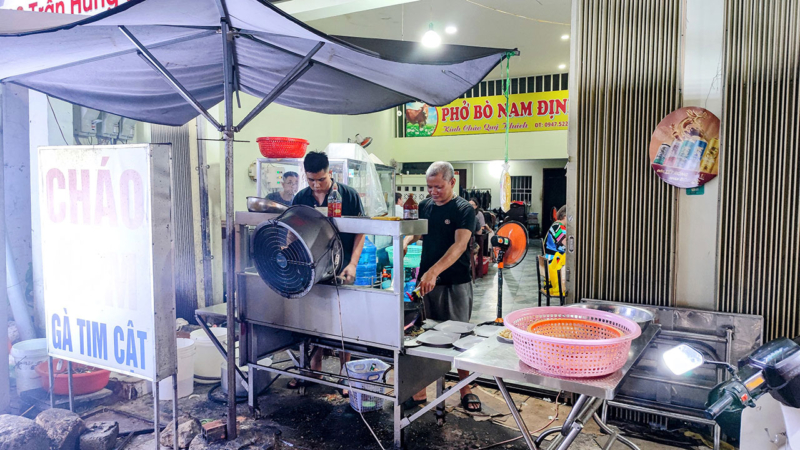
Before leaving Phu Quoc, we had lunch at the best eatery serving local food on the island. We stumbled upon it by accident—or rather, by the enticing smell. This time, I’m writing a blog without links, but I simply can’t help but recommend this place: Phở Hòa, located at 128 Trần Hưng Đạo, Dương Đông, Phú Quốc, Kiên Giang.
On the last day, we met some foreigners who came here specifically to eat from the other end of the island, because this is a legendary eatery that the entire local Internet is whispering about. These guys (a Russian girl and an Australian guy) live in one of the “dead quarters”, we visited the day before. They told, that the monthly rent for a condo is $500, with a pool, gym and cleaning service. The sea is 150 m away and they have a view of the sunset from the balcony. They rent a scooter for $100 per month. Taking into account food at $4-5 for two with beer and cola, you can live like a king for a month for $1,000 for two.
The flight from Phu Quoc to Ho Chi Minh City takes only an hour. We stayed overnight at one of the guesthouses closest to the airport and walked to the terminal early the next morning for our flight to Doha. By 6 a.m., Saigon Airport was already packed. I was glad we had gotten up at 4:30 a.m. and arrived early. It took us 1.5 hours to check in our luggage and go through customs. The airport was crowded, stuffy, and chaotic, with screaming children and a general sense of mayhem. It was the first time I’d ever seen someone faint.
The flight itself, however, was great. Qatar Airways may not be a 5-star airline, but it’s comfortable, spacious, and the food is delicious.
Since our luggage was checked through to Helsinki and I had an 18-hour layover in Doha, I had packed a modest set of clothes to wear—covering my shoulders and knees—as I didn’t want to lug around extra baggage. Little did I know, this decision would lead to an epic fail. Just as I was about to enjoy some noodles in soy sauce, washed down with red wine and black coffee, the guy in front of me reclined his seat, sending everything sliding onto my lap. Within seconds, I was sitting in a brown puddle of wine, coffee, and spices. With no change of clothes, I spent the rest of the evening and the flight to Helsinki smelling like a mix of fermented sauce, alcohol and coffee.
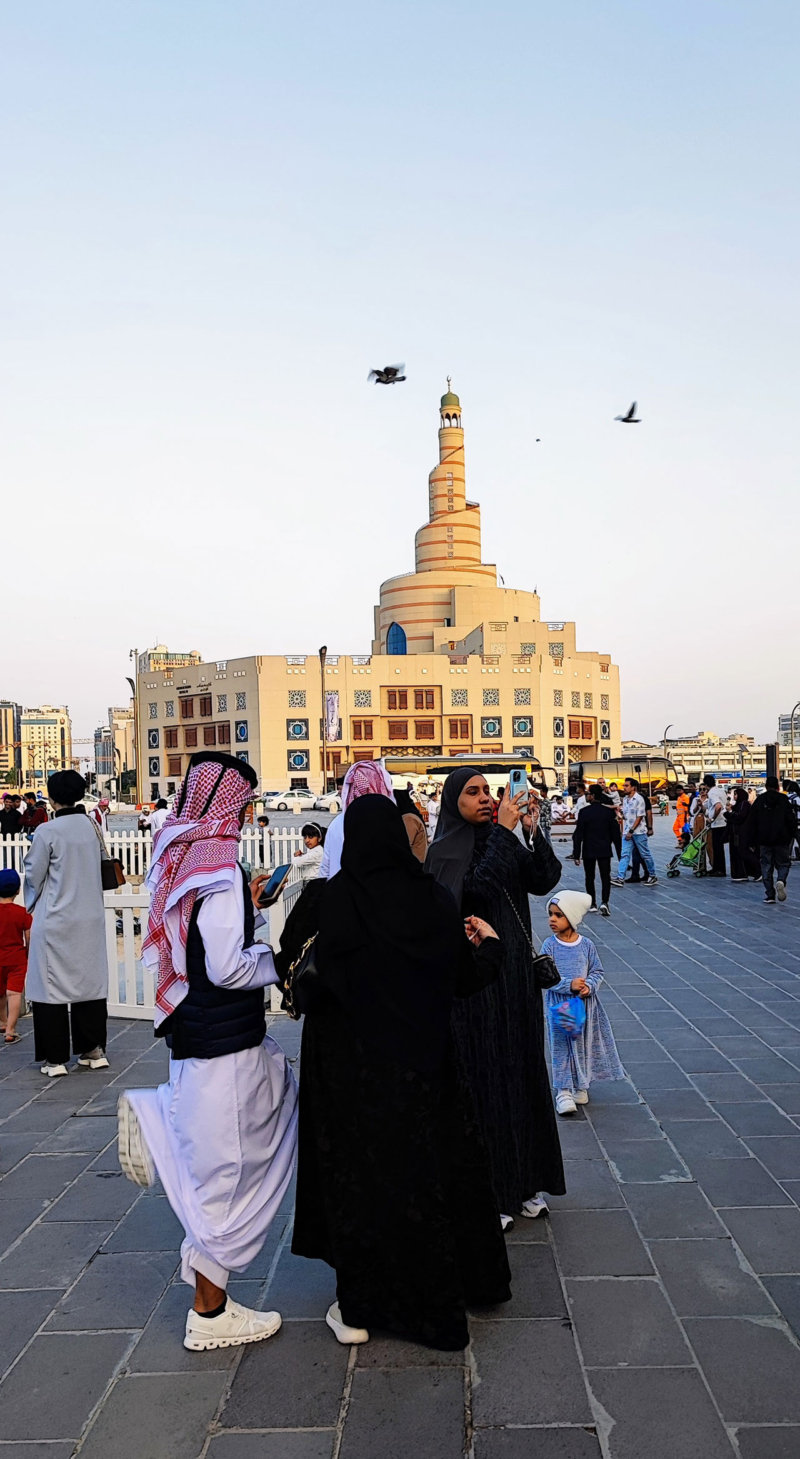
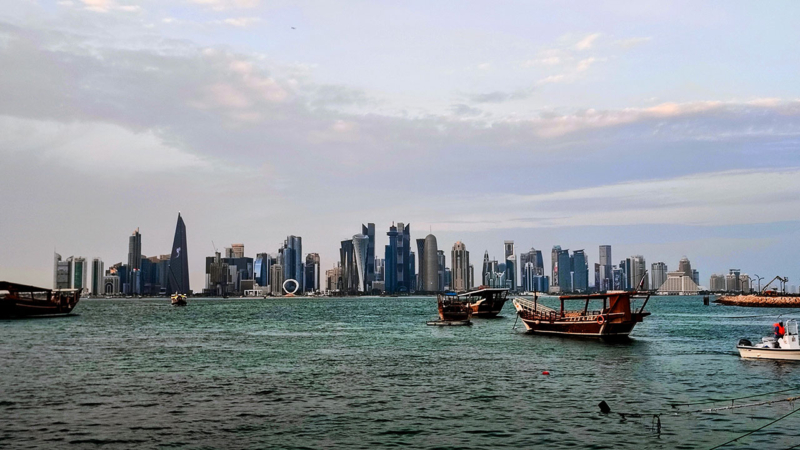
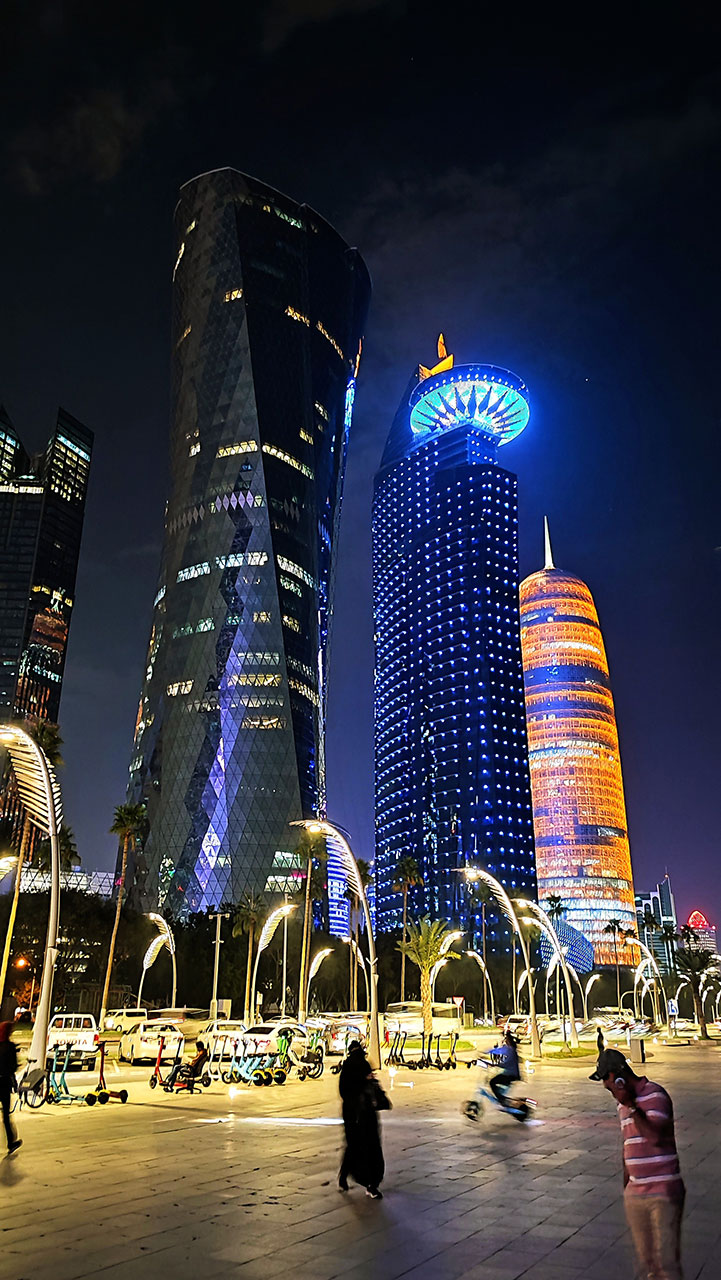
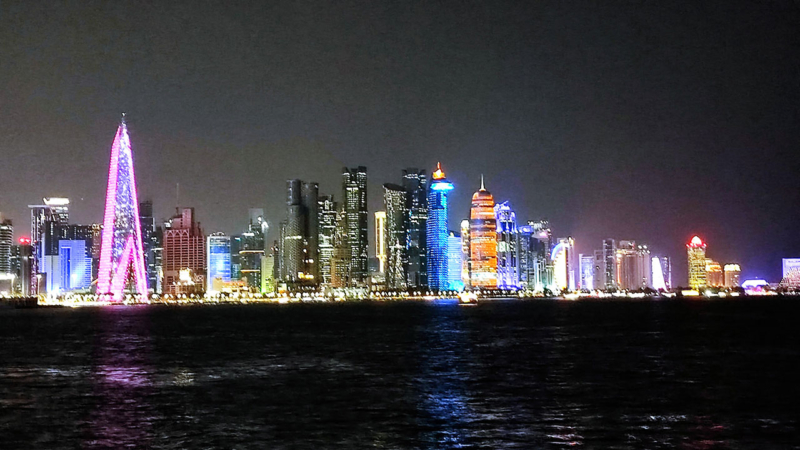
Doha didn’t impress me at all. The city just wasn’t to my taste—or maybe I didn’t have enough time to explore it properly. The only thing I found noteworthy was Hamad Airport, which I had mentioned earlier in my trip, and the pleasant weather: +26°C during the day and +20°C at night. After the hot, humid, and sweaty days in Vietnam, it was a welcome change.
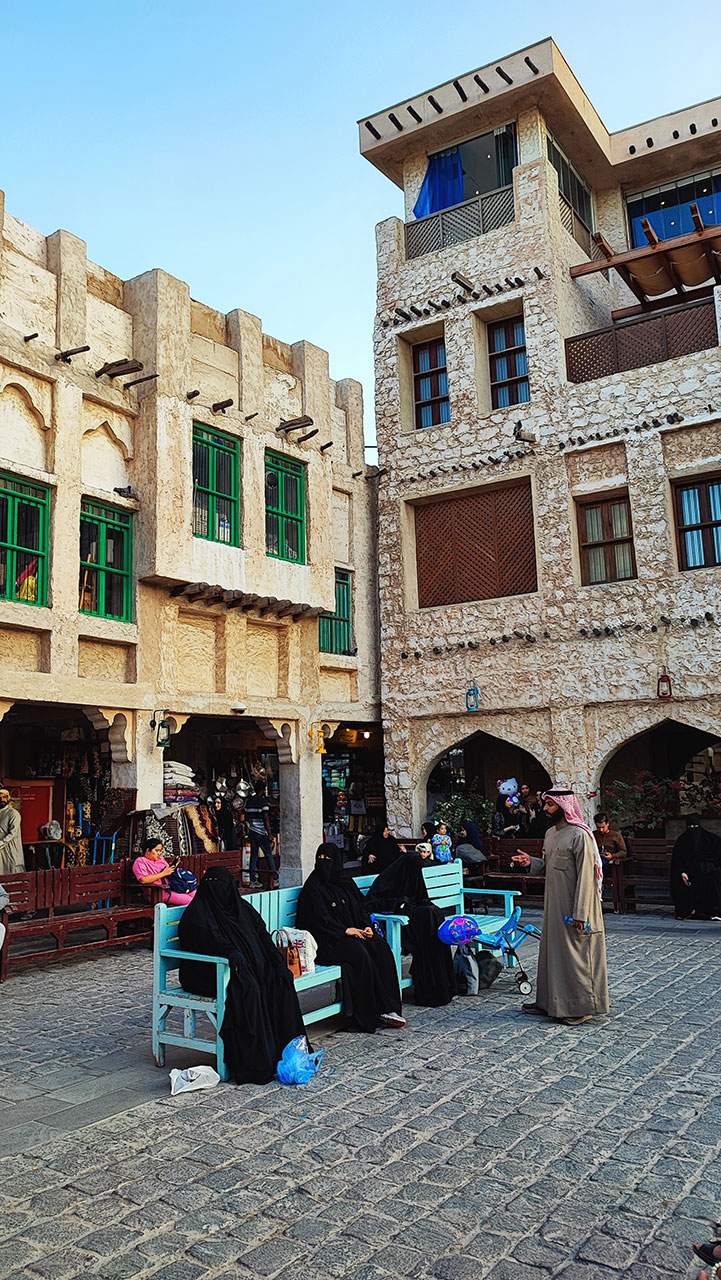
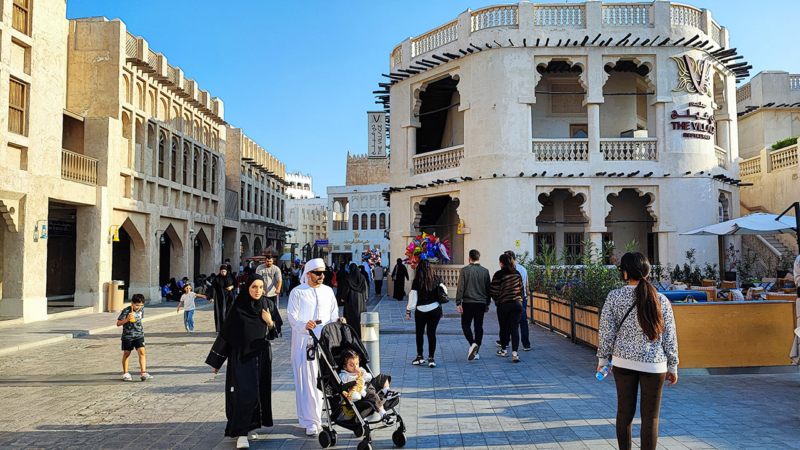
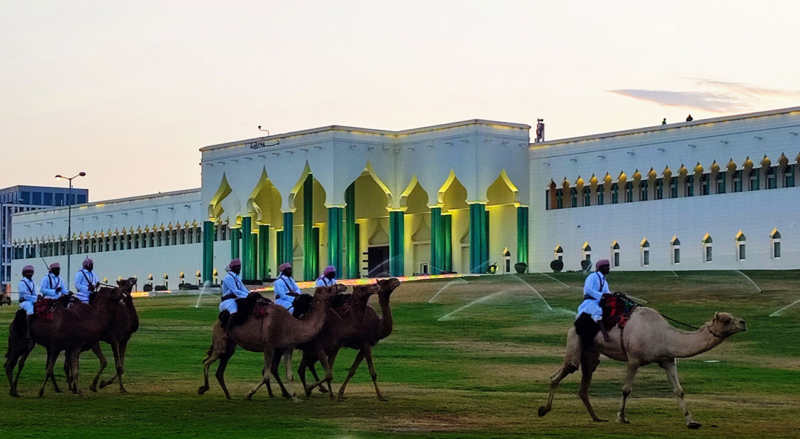
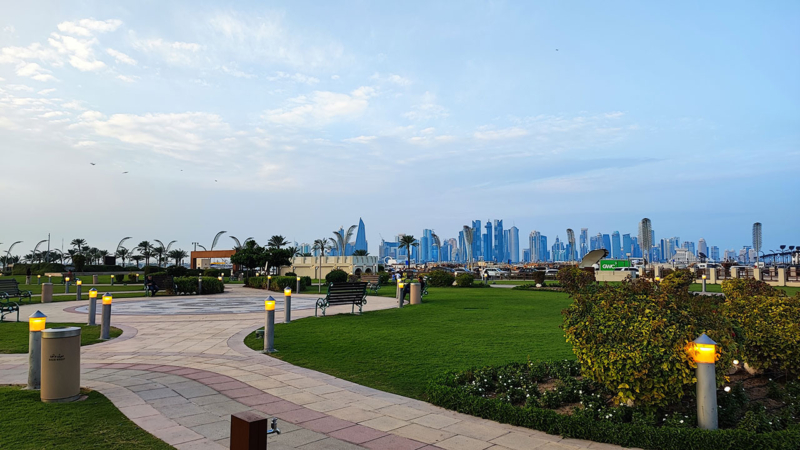
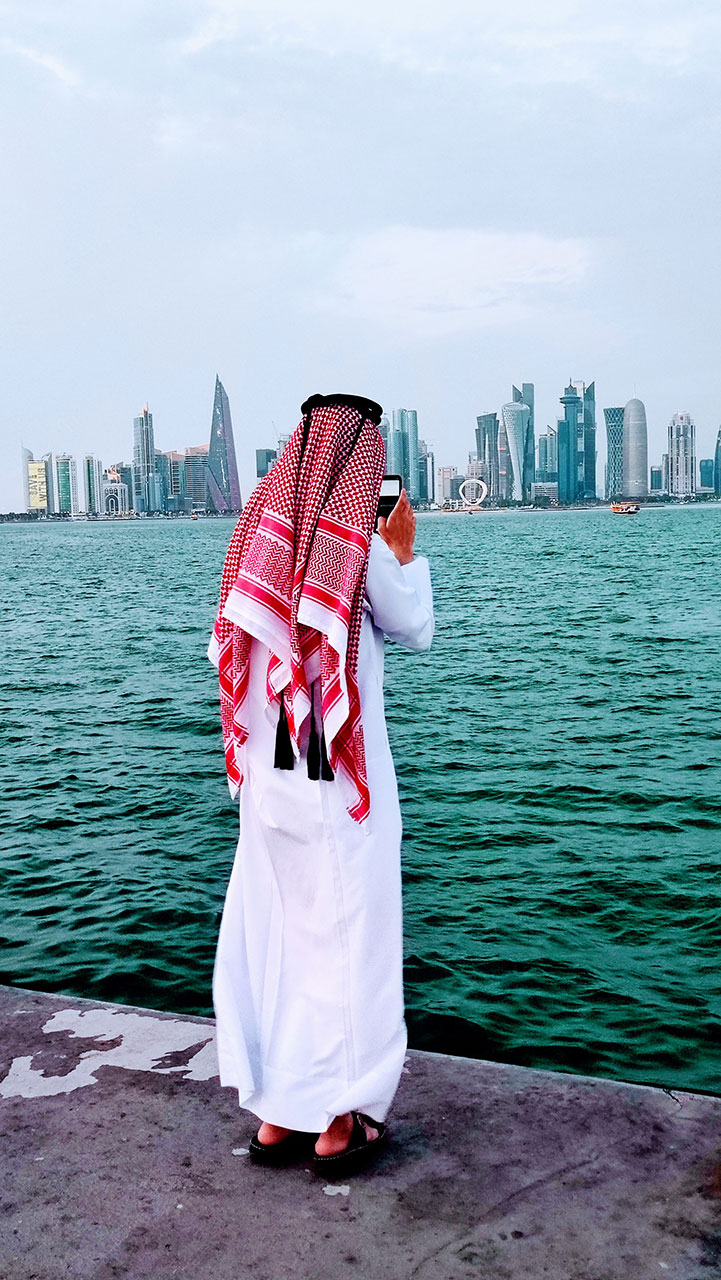
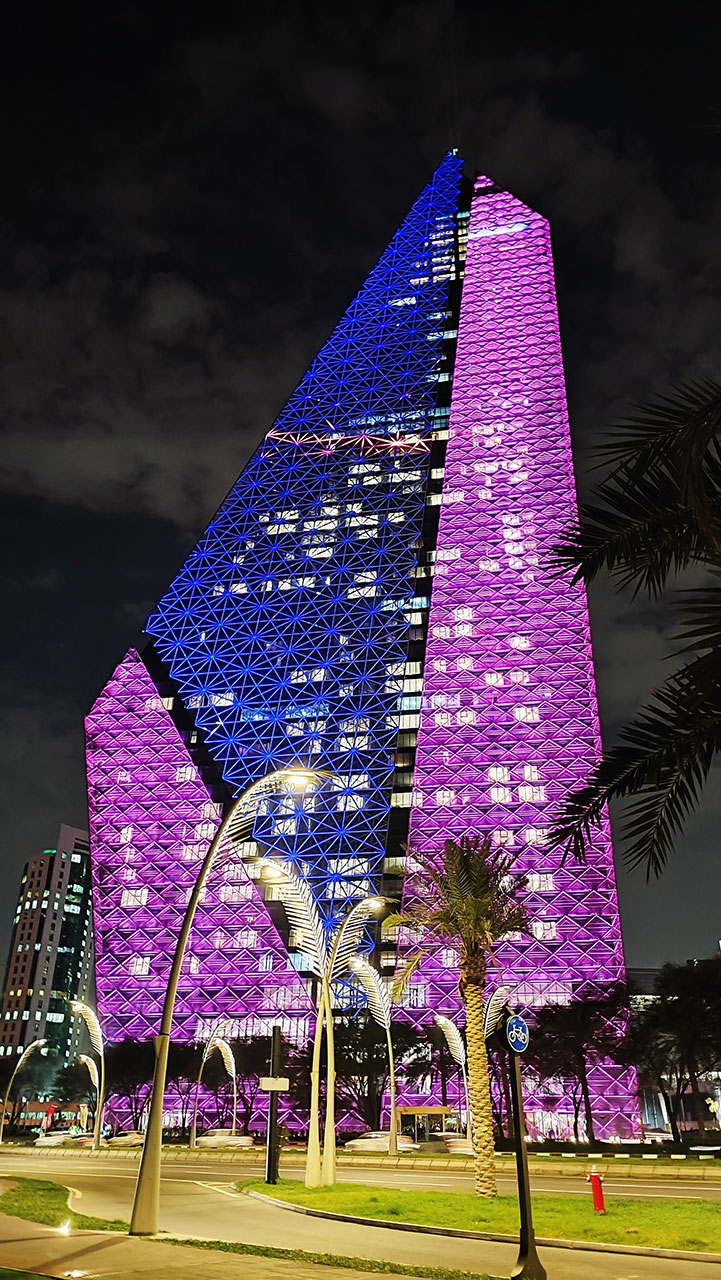
The old town with its bazaar felt artificially new, it had been built for locals rather than tourists. The skyscrapers looked impressive from a distance, but up close, the cheap materials, dirty windows, and misaligned tiles were evident. The city felt lifeless to me, and the people seemed out of place, as if they had just been dressed in city clothes but still carried their Bedouin habits.
Service at restaurants was slow, and tables were cleared at a snail’s pace. At one of the best restaurants in the old city—recommended to us—half the tables were occupied, but the other half were still covered in dirty dishes. Clearing a table meant bundling up the tablecloth with all the leftovers and replacing it with a new one. The food, however, was excellent, with a focus on meat (70%) rather than rice (about 30%), unlike in Southeast Asia, where the ratio is usually the other way around.
The modern high-speed metro and wide streets were impressive, but the metro seemed to be used mostly by migrant workers. Oddly, most of the cars on the road were old. Crossing the street as a pedestrian was a challenge, as waiting for a green light could take 5-7 minutes. Often, I had to dash across six lanes of traffic.
Well, and all these tired women, staring at you like you’re a whore from under their headscarves with eyes painted like the last whores themselves. I felt very sad in Doha, I really missed the warm, friendly Vietnam, the measured Cambodia.
My flight from Doha was at 8 a.m. Since it was my first time there, I wasn’t sure how long customs would take, so I aimed to arrive at least two hours early. The metro runs efficiently starting at 5:30 a.m., and the ride to the airport takes 20 minutes. Everything seemed perfect—until I realized that the first train to the airport didn’t depart until 6:15 a.m. I went back up to the street, where a pole at the taxi stop instructed me to scan a QR code to call a cab. Great—except I had no internet. Inside the metro station, there was an interactive board labeled “taxi,” but it wasn’t working. Back on the street, I found groups of migrant workers waiting for their rides to work. Desperate, I started approaching them, and thankfully, some kind-hearted Indians (the only ones who spoke English) helped me negotiate with a driver to drop us off at the airport first. The situation was complicated by the fact that I hadn’t withdrawn any cash in Qatar and had been relying on my credit card. Thankfully, I had $10 crumpled in my pocket, though the driver seemed willing to take me for free, seeing my panic.
We arrived at the airport even earlier than needed and spent an hour looking for something to do. The airport is massive and bustling, but 90% of the passengers are in transit. Border control and baggage checks took only 10 minutes. Very few people actually venture into the city—and honestly, I think they’re making the right choice, IMHO.
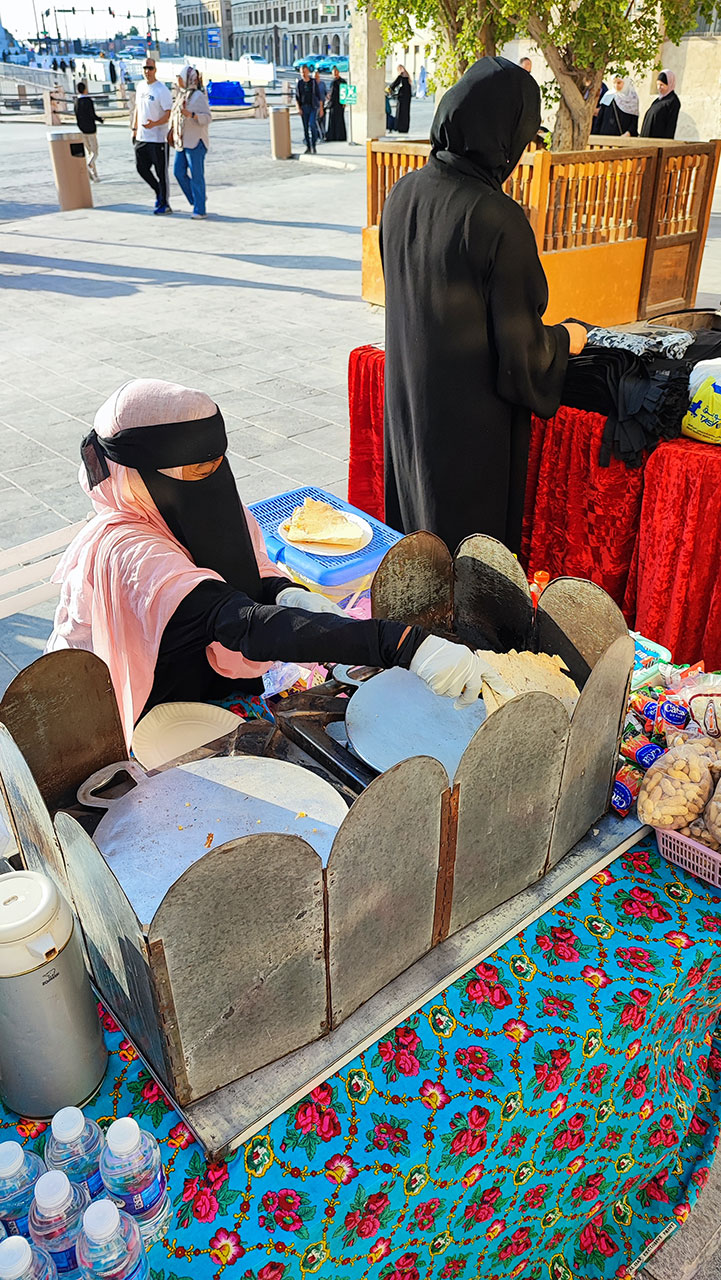
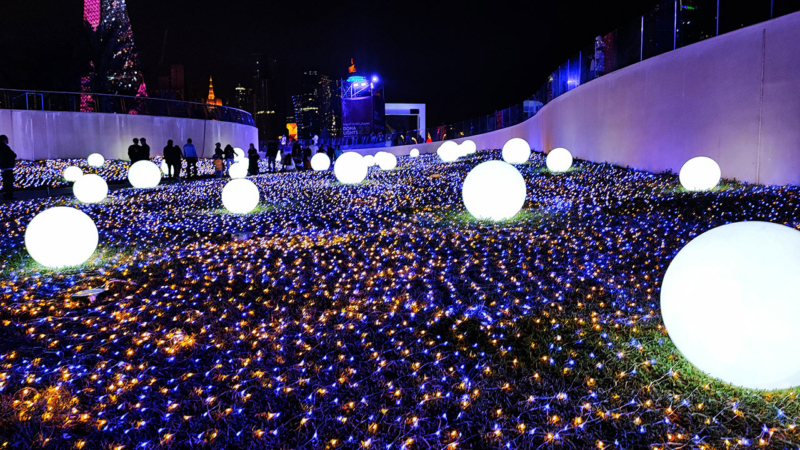
In the photo carousel, you’ll see the best café in Phu Quoc (yes, this unassuming place serves finger-licking good food that keeps you coming back) and a few snapshots of Doha as I saw it in one evening. As I wrap up this story, I can’t help but feel a pang of sadness and nostalgia for my beloved Southeast Asia.
You can leave your comments on this story in my blog
sign up for the newsletter
Fill this form if you want to be informed
about the new publications in my blog.