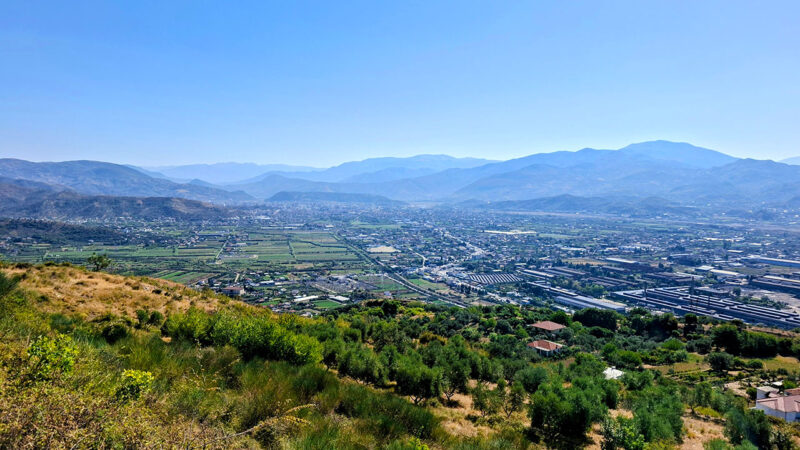
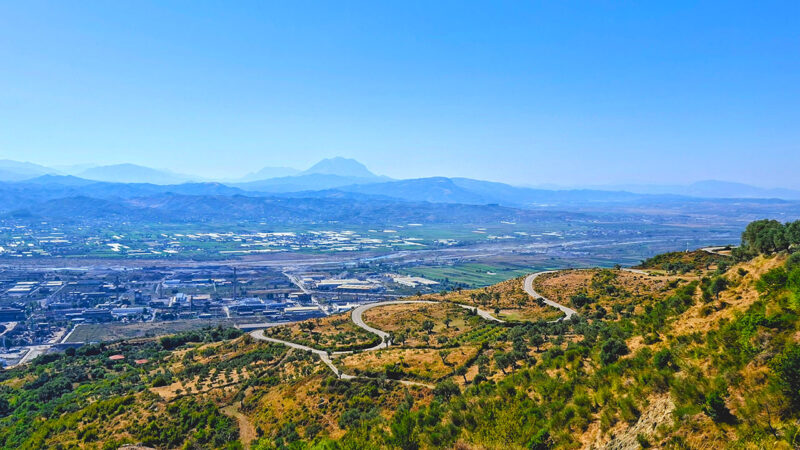
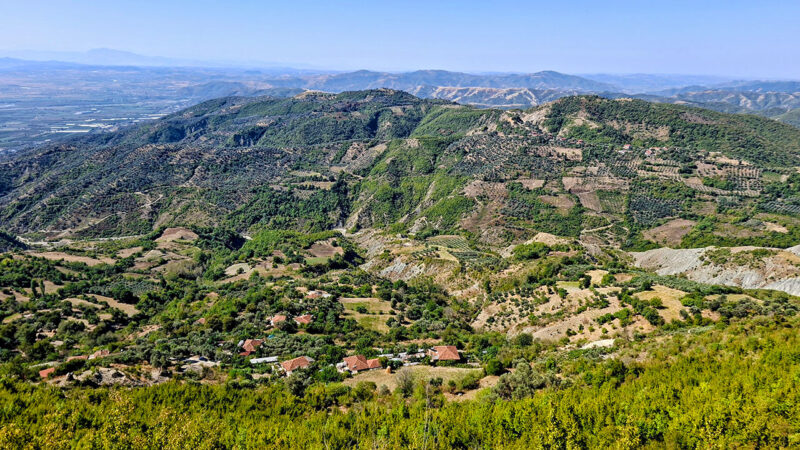
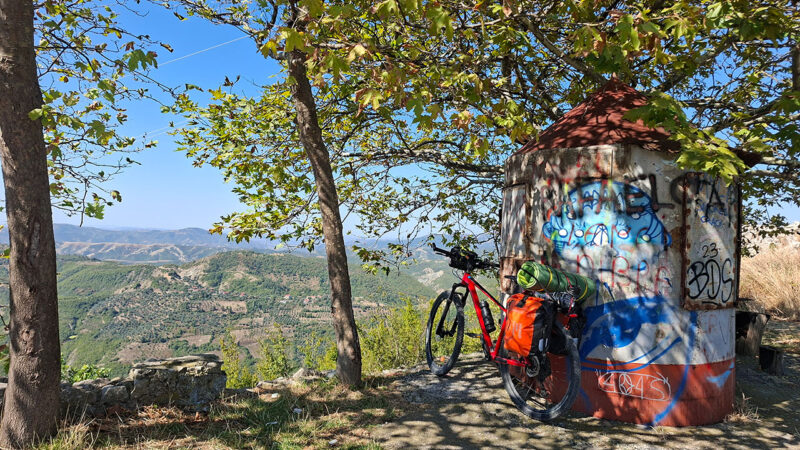
Northern macedonia & albania
august 2025

Two Weeks on a Bike Across Two New Countries
The fascinating culture of North Macedonia and the breathtaking nature of Albania

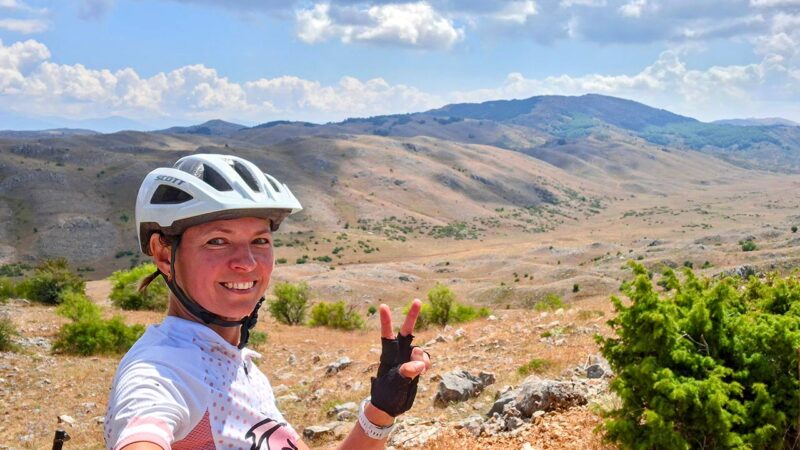
After a few bikepacking trips across the Balkans, I was already in love with this region. But this time I wanted something bigger—something real: a true solo journey. Before I left, people kept warning me: be careful, there are gypsies, the ex-Yugoslav mafia, and packs of vicious stray dogs… To be honest, I was a little nervous.


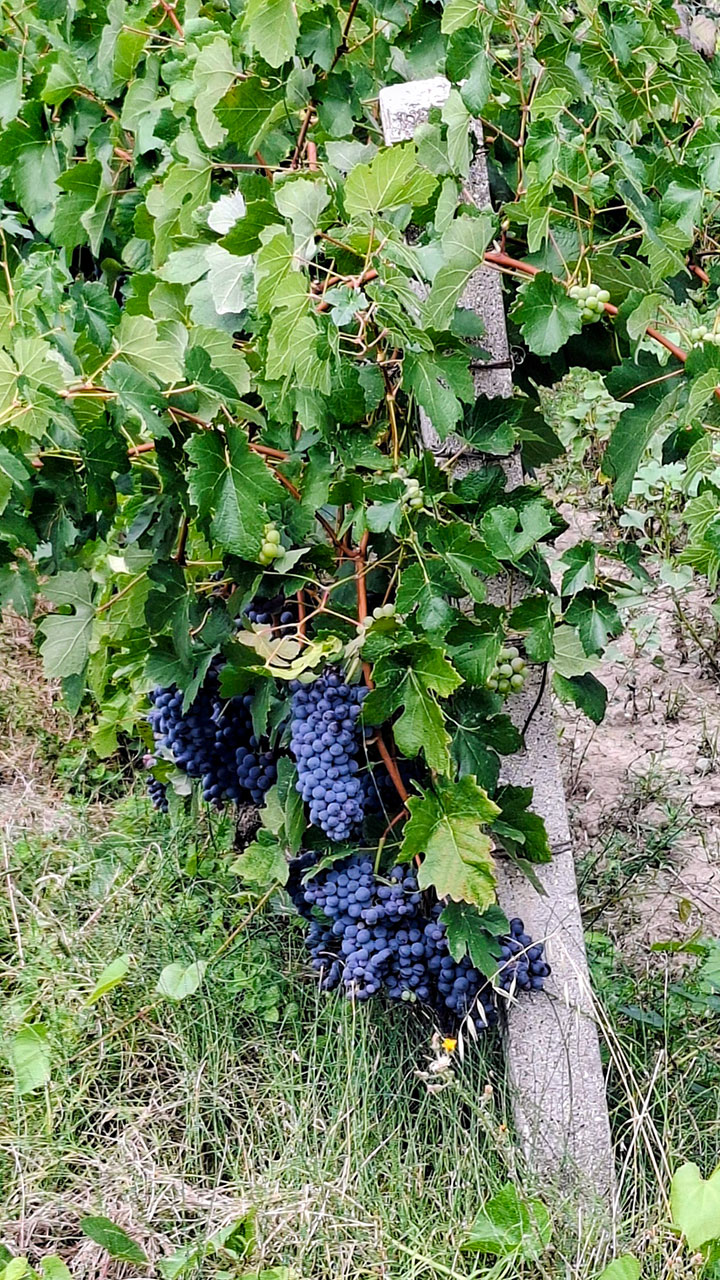
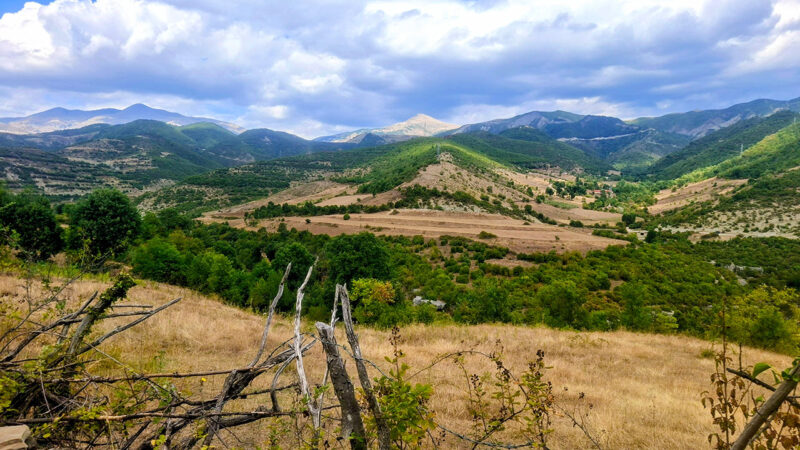
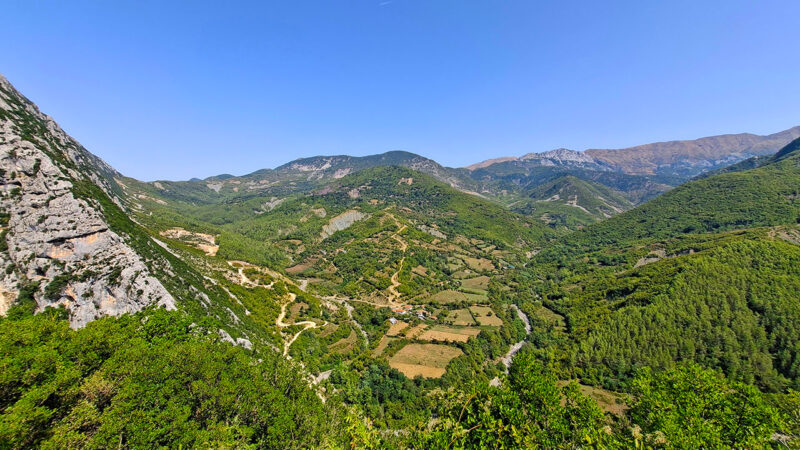
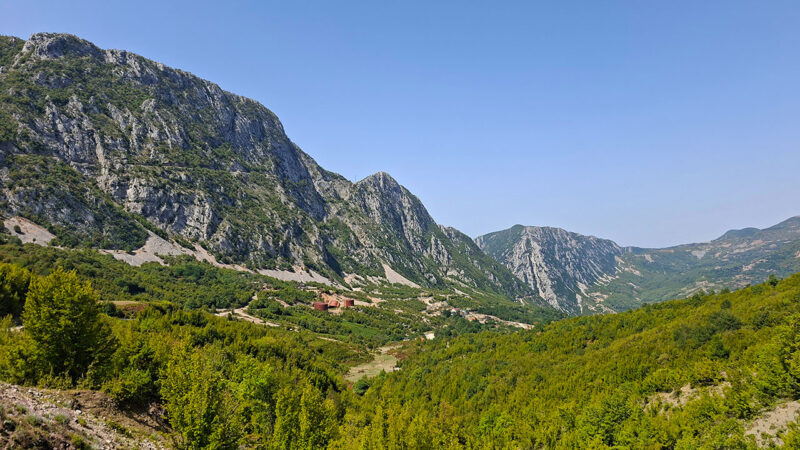
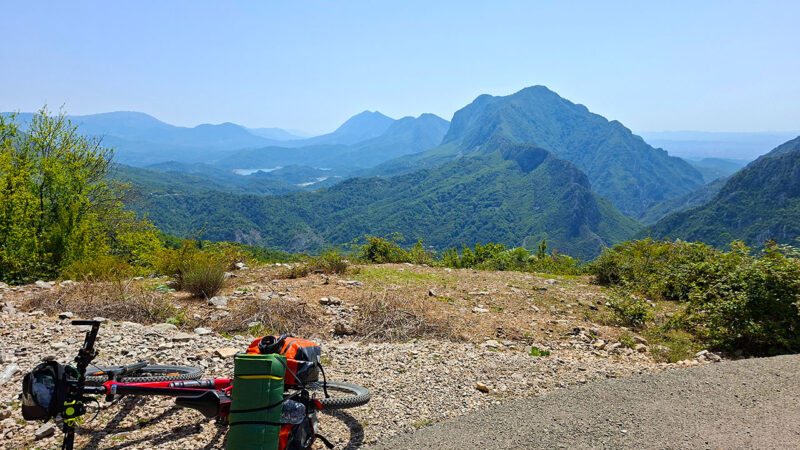
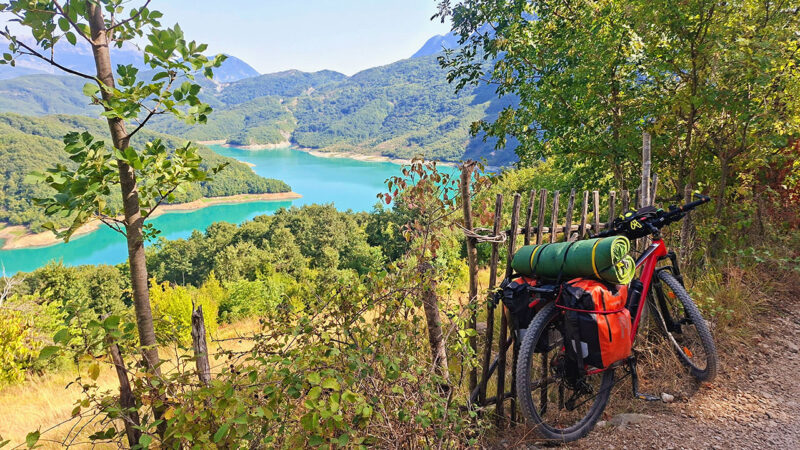
Reality, however, turned out to be very different. Nearly a thousand kilometers through North Macedonia and Albania gave me an incredible sense of freedom and an unexpected calm. People were warm and welcoming—they smiled, offered help even when I didn’t ask. In tiny villages kids would wave at me, and in the mountains strangers handed me fruit straight from their gardens. And let’s not even start counting how many times my bill was mysteriously taken care of in cafés and restaurants.


I had never felt so safe on the road—or so completely in my element. Every day brought small discoveries, new impressions, and that pure joy of the journey that makes you want to get back in the saddle again and again.


Below is the map of my actual route. Since I wasn’t sure of my strength—especially after spraining my ankle just a week before the flight—I had prepared an easier backup option for almost every day. In the end, though, I managed to stick with Plan A. The daily temperatures were between +30 and +40°C. At first my body tried to resist, but by around day five it surrendered, and from then on everything went smoothly. I never once felt like cutting corners or sacrificing the beautiful views for an easier track.


On the map, cultural landmarks are marked in yellow, natural ones in green, and the more challenging sections of the route in blue.

A Brief Guide to the Region

I have to admit, before this trip I knew very little about the area. And that’s exactly what made the journey so exciting: every day I was surprised, shedding old stereotypes, and discovering something new through conversations with locals. Bit by bit, I built my own mosaic of impressions—warm, alive, and nothing like the scary tales I had heard. I had no clear image of Macedonia, and I assumed Albania was deeply Muslim. Here’s what I learned along the way.


Macedonia


In the Middle Ages, the region we now call Macedonia was part of different states: Byzantium, Bulgaria, Serbia, and the Ottoman Empire. Its population was always mixed—Slavs, Albanians, Vlachs, Turks, Greeks. In the 6th–7th centuries, Slavic tribes settled in the Balkans and gradually became the main population of today’s inland North Macedonia. These Slavs became the ancestors of modern Macedonians—a South Slavic people closely related to Bulgarians and Serbs.

Albanians traditionally lived farther west (today’s Albania and Kosovo), but a sizeable Albanian minority has long existed in Macedonia as well—today around 25–30% of the population. Macedonians speak a South Slavic language (Macedonian, very close to Bulgarian). Albanians speak Albanian, which is completely different and not Slavic at all. These differences shaped separate identities.

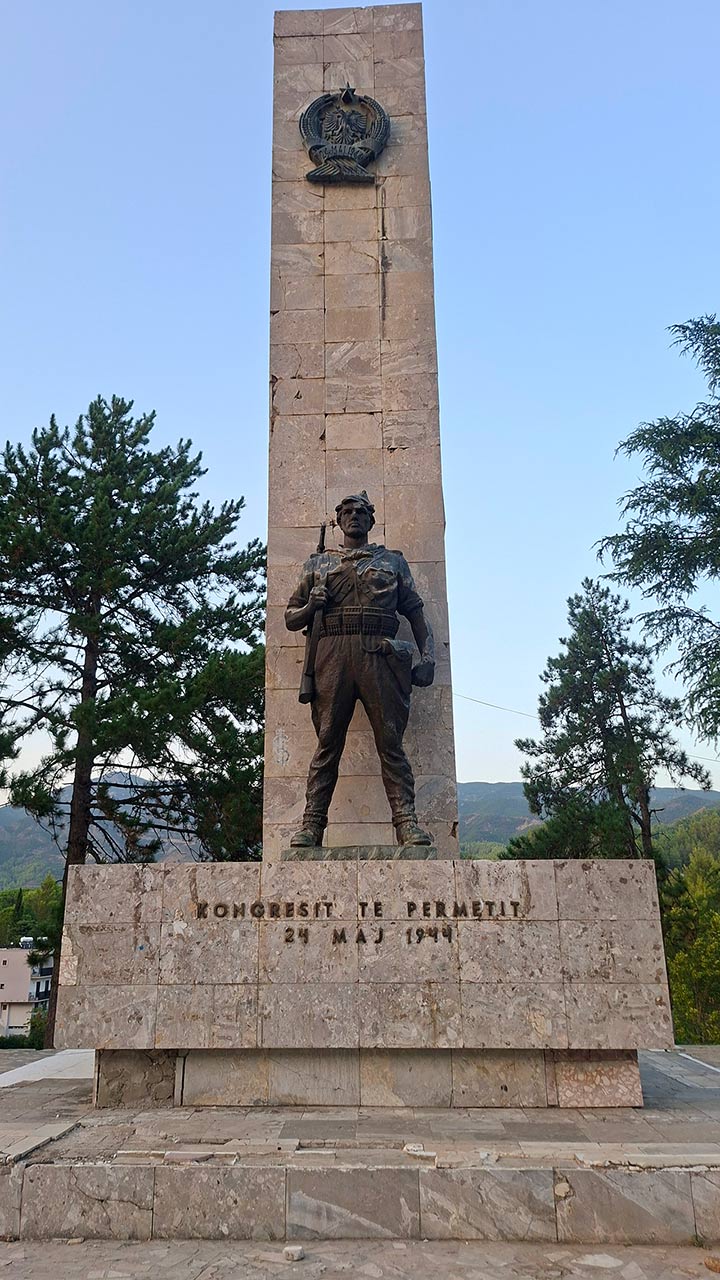
In the 19th and early 20th centuries, as the Ottoman Empire weakened, national movements emerged. Bulgaria, Serbia, and Greece all claimed Macedonians as “their own.” After the Balkan Wars (1912–1913), the region was divided: Aegean Macedonia went to Greece, Pirin Macedonia to Bulgaria, and Vardar Macedonia (today’s North Macedonia) to Serbia. After WWII, Vardar Macedonia became a republic within Yugoslavia. That was the first time Macedonian nationhood and language were officially recognized. In 1991, Macedonia peacefully left Yugoslavia and became independent.

The motto at the time was clear: We are not Albanians, not Bulgarians, and not Serbs either —we are Macedonians.


But why do Macedonian Muslims seem more religious, while in Albania Islam often feels almost invisible? The answer lies in history.

After WWII, Albania came under the rule of Enver Hoxha, who turned the country into the most atheist state in the world. In 1967 all mosques and churches were closed, religion was officially banned, and practicing faith could land you in prison. Even after the regime collapsed in the 1990s, Albanian society remained very secular. For most Albanians, faith is more of a cultural marker than a way of life.

Yugoslavia, however, never banned Islam. Albanian communities in Macedonia were free to build mosques and maintain traditions. For them, religion became not only a faith but also a symbol of ethnic identity—a way to distinguish themselves from Orthodox Macedonians and strengthen community bonds. The result: in Albania, where Albanians form the overwhelming majority, there’s no need to use religion as a marker of identity. But in North Macedonia, as a minority, Albanians lean on religion as a visible “we are different” sign.

Albania


Be honest—did you also assume Albania was once part of Yugoslavia? Many people do. But it never was! 

After WWII, neighboring countries took very different paths. Yugoslavia under Tito became a federation—Serbia, Croatia, Slovenia, Bosnia, Montenegro, and Macedonia. It was socialist but religion was never fully banned. Albania, on the other hand, under Enver Hoxha, chose the harshest communism in Europe—a kind of Balkan North Korea.


Who was Enver Hoxha (1908–1985)?

The communist leader of Albania, in power from 1944 to 1985—41 years! He proclaimed himself the defender of “pure Marxism-Leninism.” First he leaned on Yugoslavia (Tito), then on the USSR (Stalin), and later on China (Mao). By 1978 he had broken with all of them, leaving Albania in complete isolation.


His policies:


Totalitarian rule: repression, cult of personality, labor camps.


Atheism: in 1967 Albania declared itself “the first atheist state in the world.” Islam, Orthodoxy, and Catholicism were banned. Around 2,000 mosques and churches were destroyed or closed. Practicing religion could mean prison.


Isolation: the country shut itself off from the world. Hundreds of thousands of concrete bunkers were built, fearing invasion. The economy was poor and primitive.


Cultural disconnection: borders closed, ties with the diaspora cut, even roads left underdeveloped to slow any potential invader.


When Hoxha died in 1985, Albania remained frozen in time. Only in the 1990s did the country open up. Two generations had grown up under enforced atheism, so even today Albanians are secular in outlook: many identify as Muslim, but drink raki and don’t pray.


The story of Enver Hoxha’s conflicts with his allies is basically a textbook on how to fall out with all your neighbors and end up completely alone.


1.   Break with Yugoslavia (late 1940s): At first Albania was practically a Yugoslav satellite. Tito even wanted Albania as the 7th Yugoslav republic. But when Tito split with Stalin in 1948, Hoxha chose Stalin’s side and cut ties with Yugoslavia.

2.  Alliance and break with the USSR (1948–1961): Albania was Moscow’s loyal ally under Stalin. But when Khrushchev came to power, launched de-Stalinization, and reached out to the West, Hoxha saw it as betrayal. In 1961 Albania broke with the USSR, expelled Soviet experts, and sealed itself off.

3.  Alliance and break with China (1960s–1978): After splitting with the USSR, Hoxha turned to Mao’s China. In the 1960s–70s China provided factories, goods, and support. But when China opened to the West under Deng Xiaoping, Hoxha denounced it as another betrayal. In 1978 Albania cut ties with China too.

The result: isolation. By the late 1970s Albania had no allies left. The regime proclaimed “self-reliance,” building about 170,000 bunkers against imagined invasions. The population lived in poverty, on food rationing, and with almost no contact with the outside world.
Day 1 (15.08.2025) Skopje

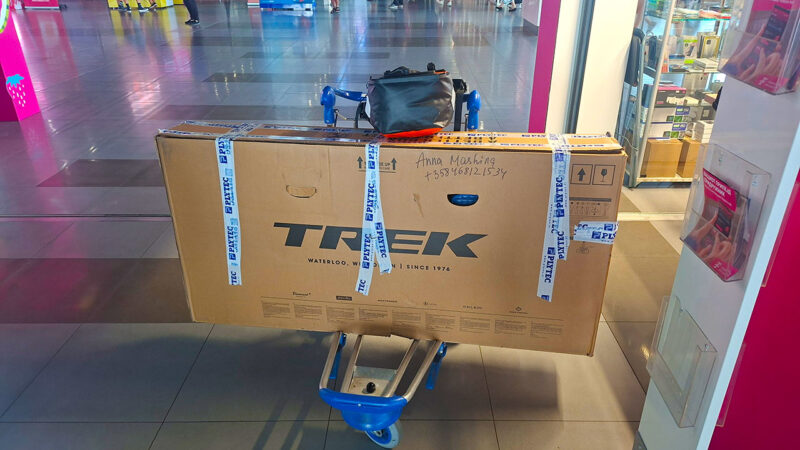
The flight went smoothly. The airport here is tiny—just two baggage carousels and two runways. My bike arrived safe and sound, but, as always, oversized luggage was unloaded last. So I spent quite a while just waiting around. Since all my gear had been taken out of the bags and packed into the bike box, it took me almost an hour to reassemble the bike and get everything in order.

Right there at the airport I picked up a SIM card: unlimited 5G across the entire Balkans for a month. Only €25—pure magic!


Getting to the city center meant pedaling about 20 km. Sidewalks do exist, but they’re crooked, cluttered with parked cars, and hardly inviting. The suburbs were no delight either—trash, livestock and chickens wandering around, industrial zones. But the moment I entered the city itself, I was speechless.


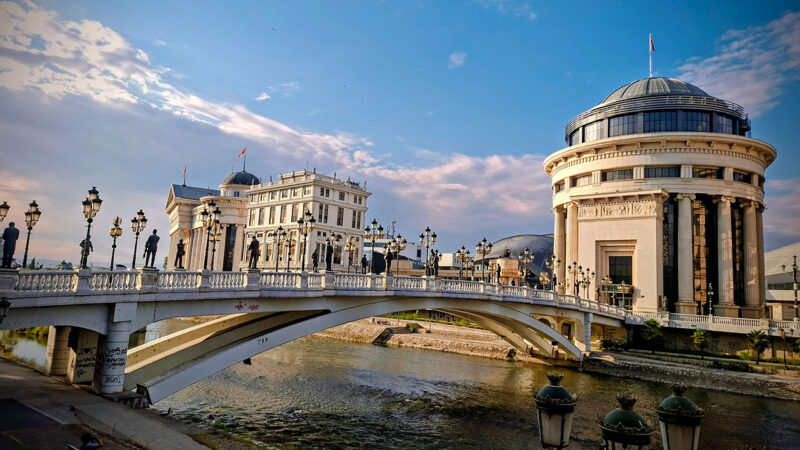
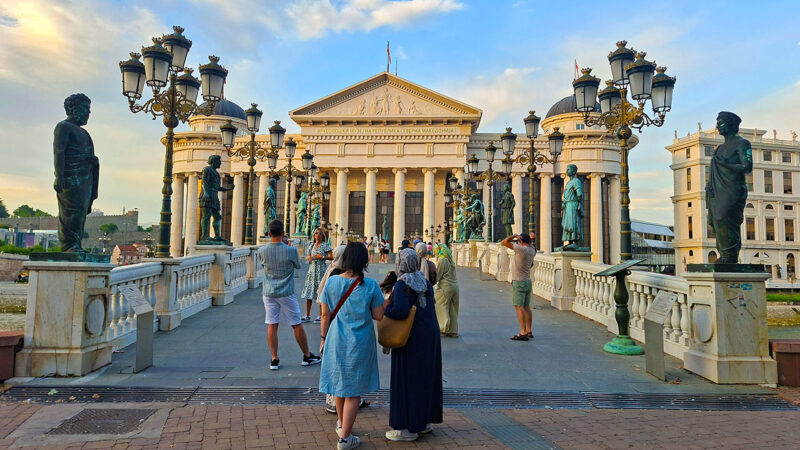
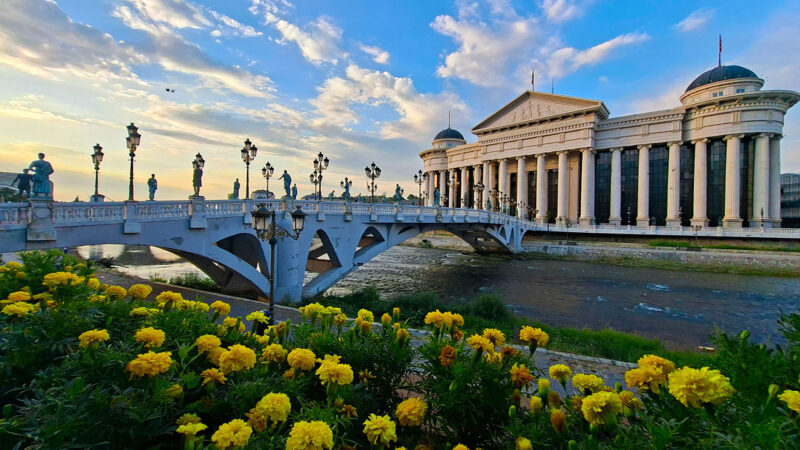
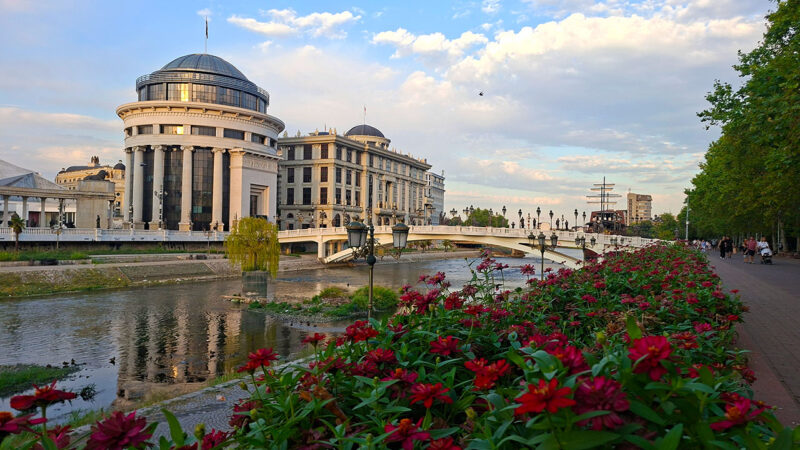
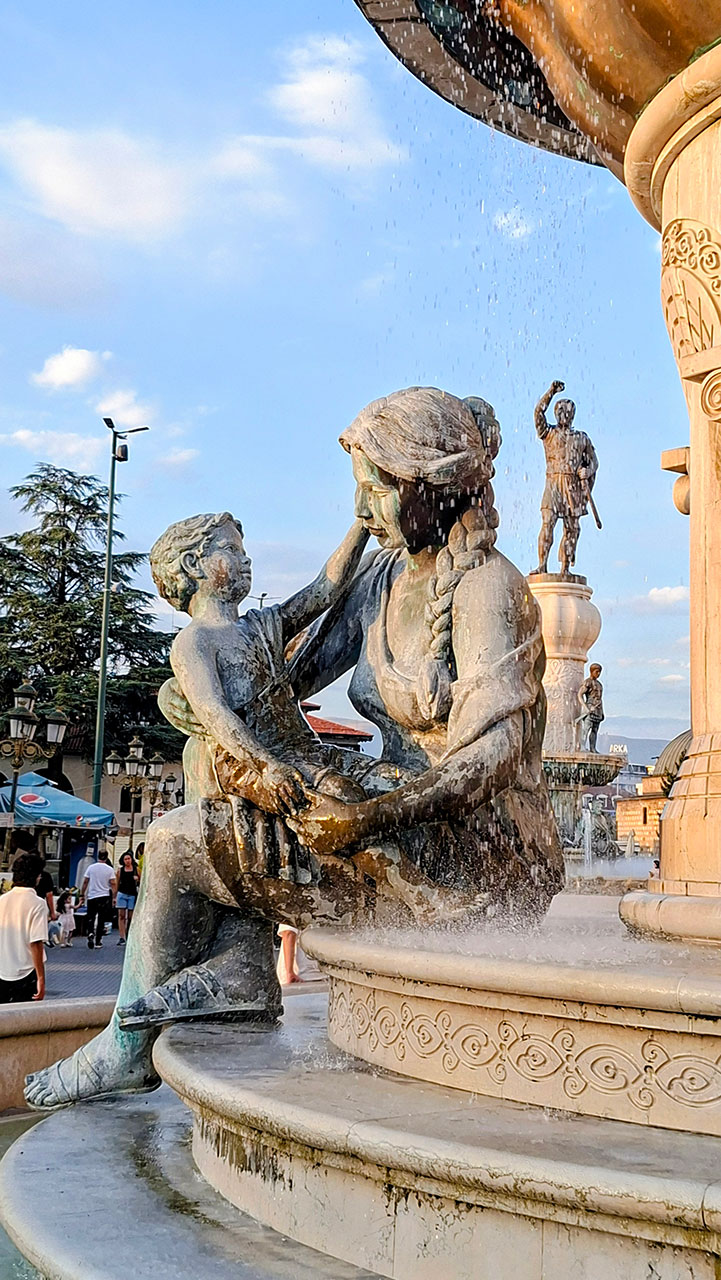
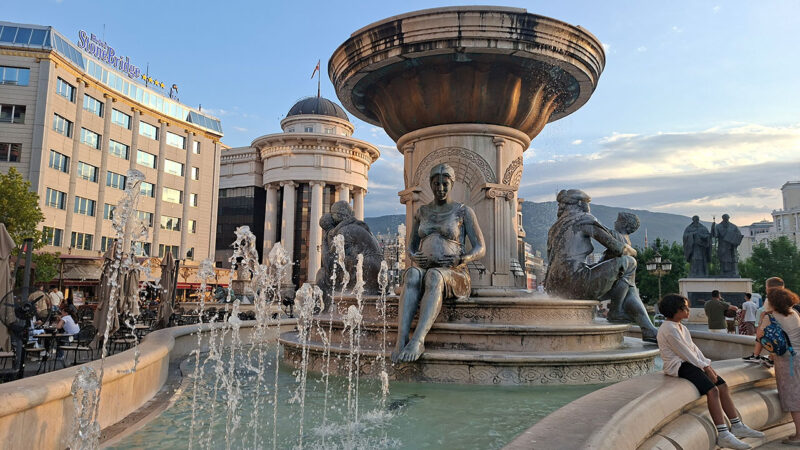
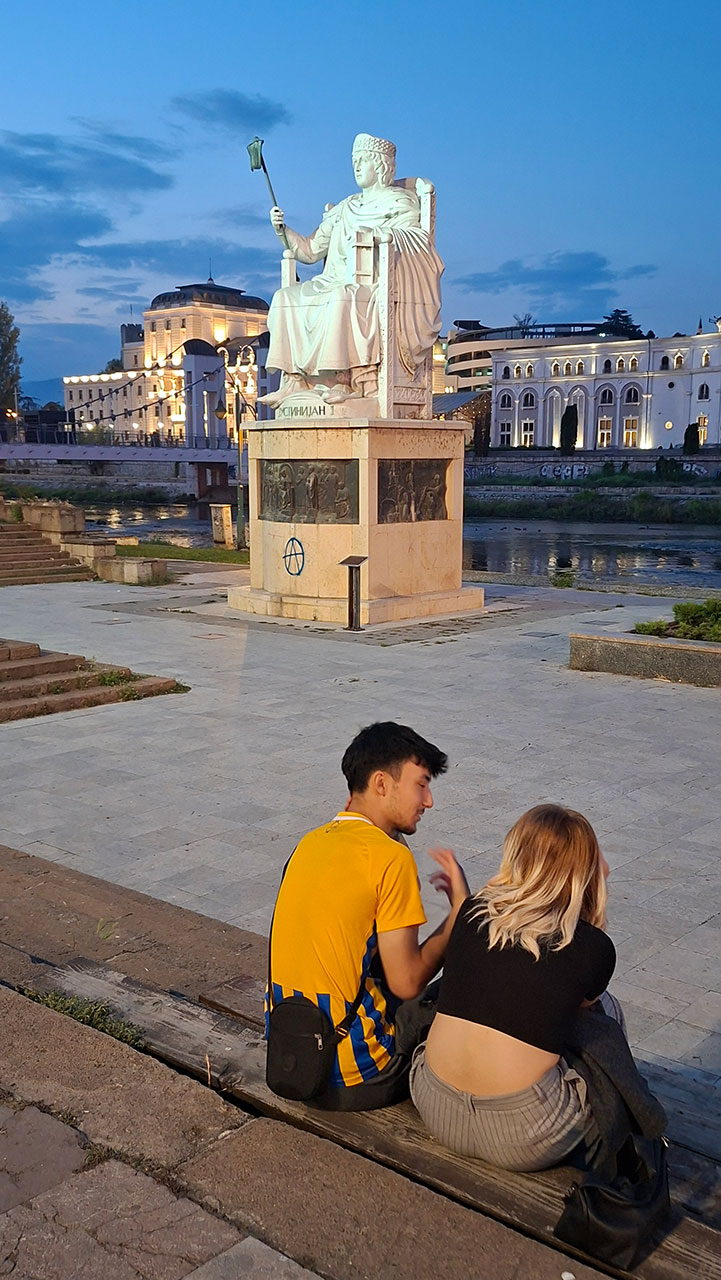
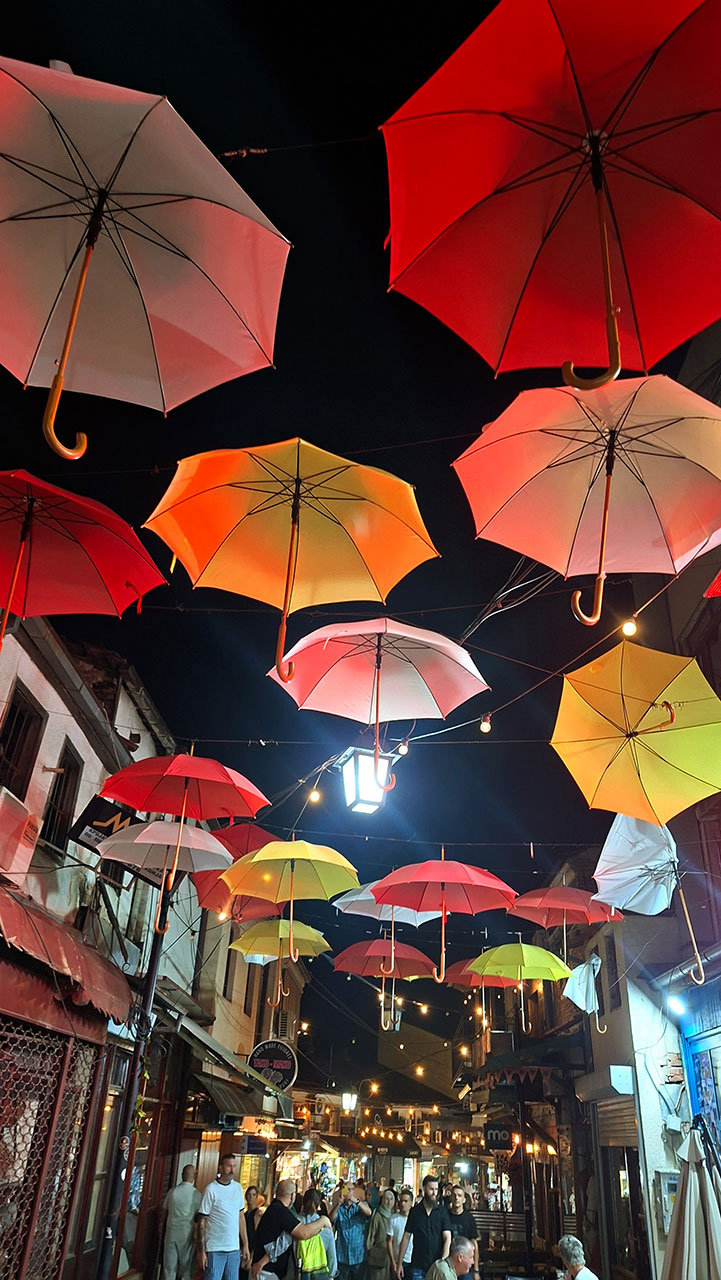
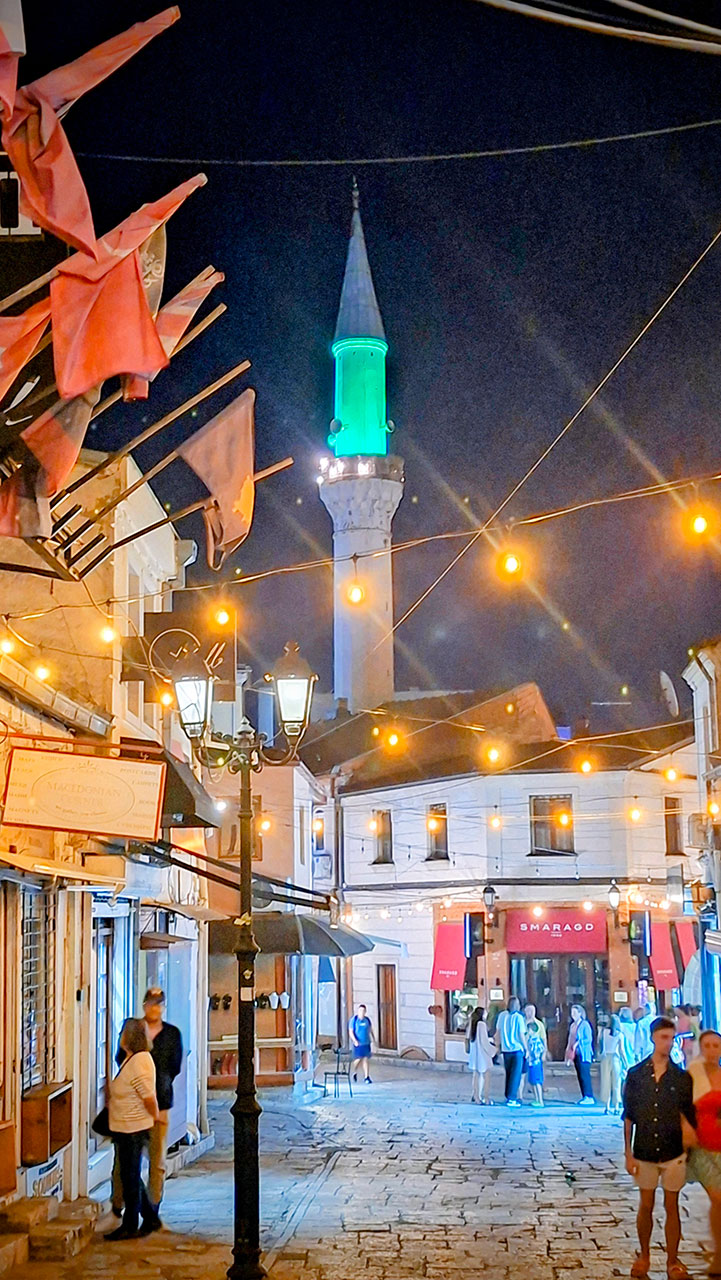
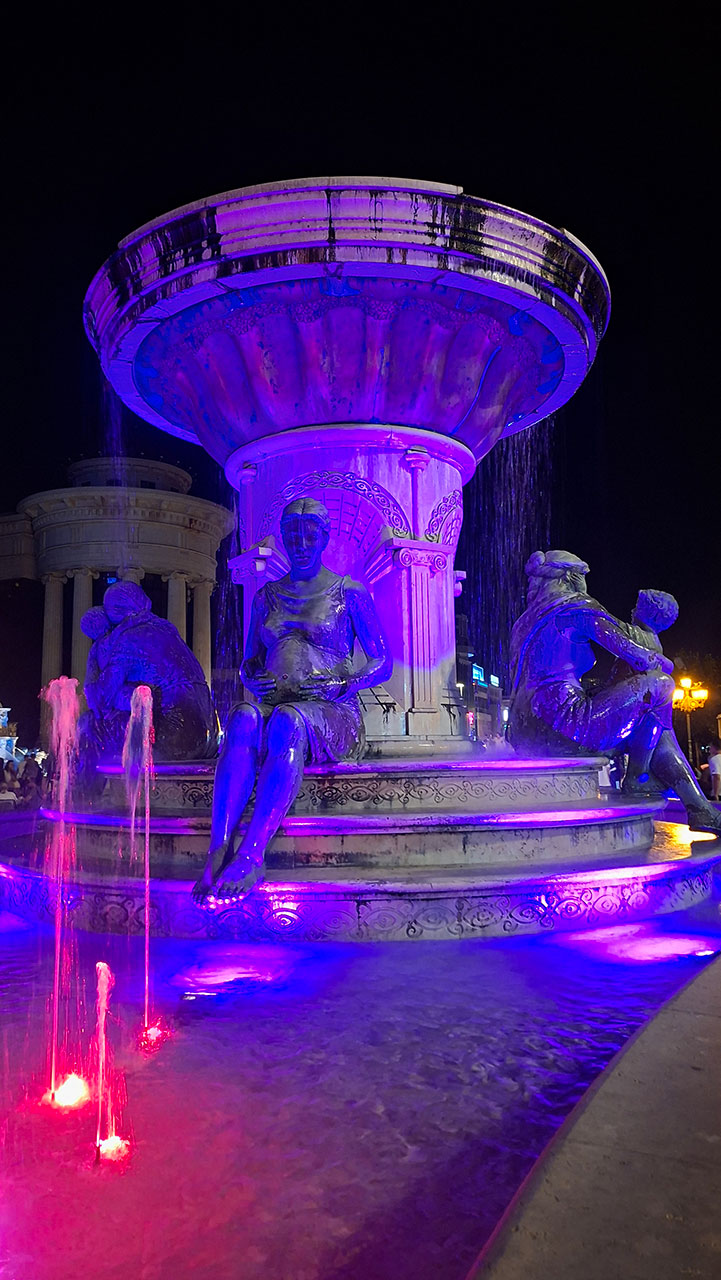
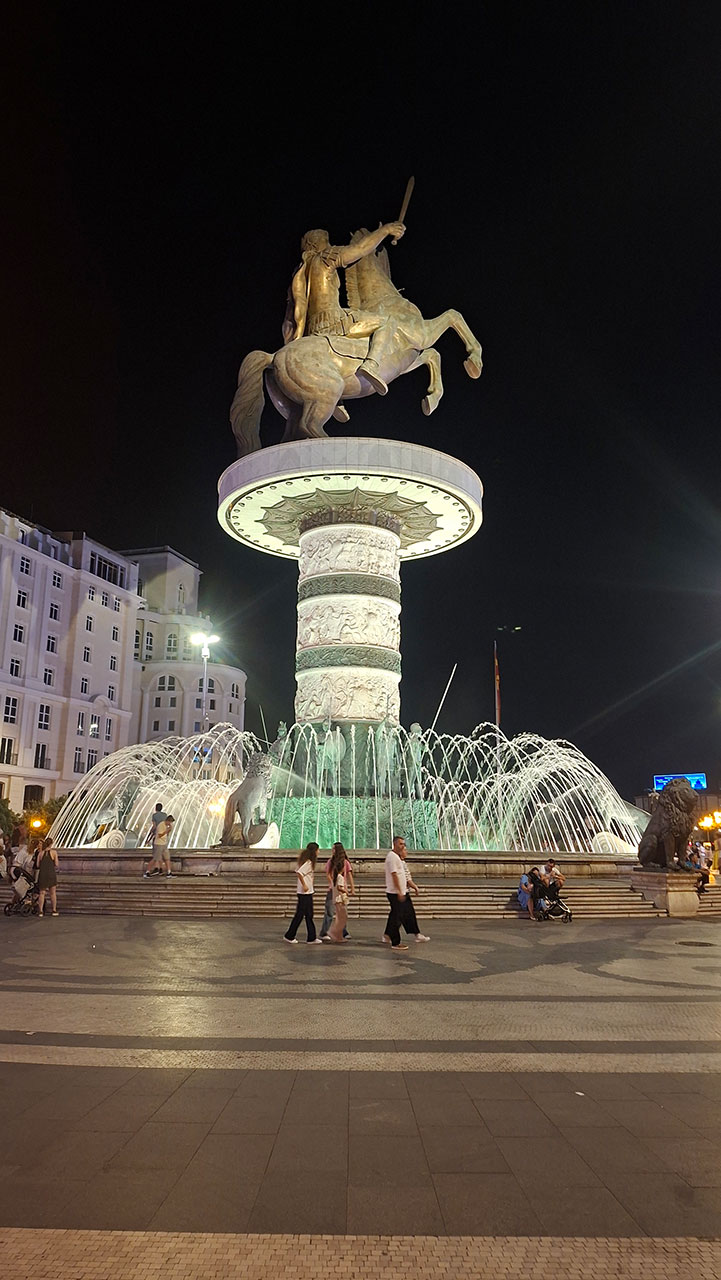
The historic center is simply stunning. It was a Friday evening, and the streets were full of locals strolling around: kids, noisy groups of friends, Muslim women with whole flocks of children, stylish young men, couples. Fountains, statues, lights—the atmosphere was pure celebration.

It’s true, much of Skopje is relatively new. In 1963 a devastating earthquake destroyed about 80% of the city, killing thousands. Skopje was rebuilt with international help, though the process was complicated by Yugoslavia’s place in the socialist bloc. Later, after Macedonia became independent, international foundations contributed again. It’s really the last 25 years that gave the city center its current shine.


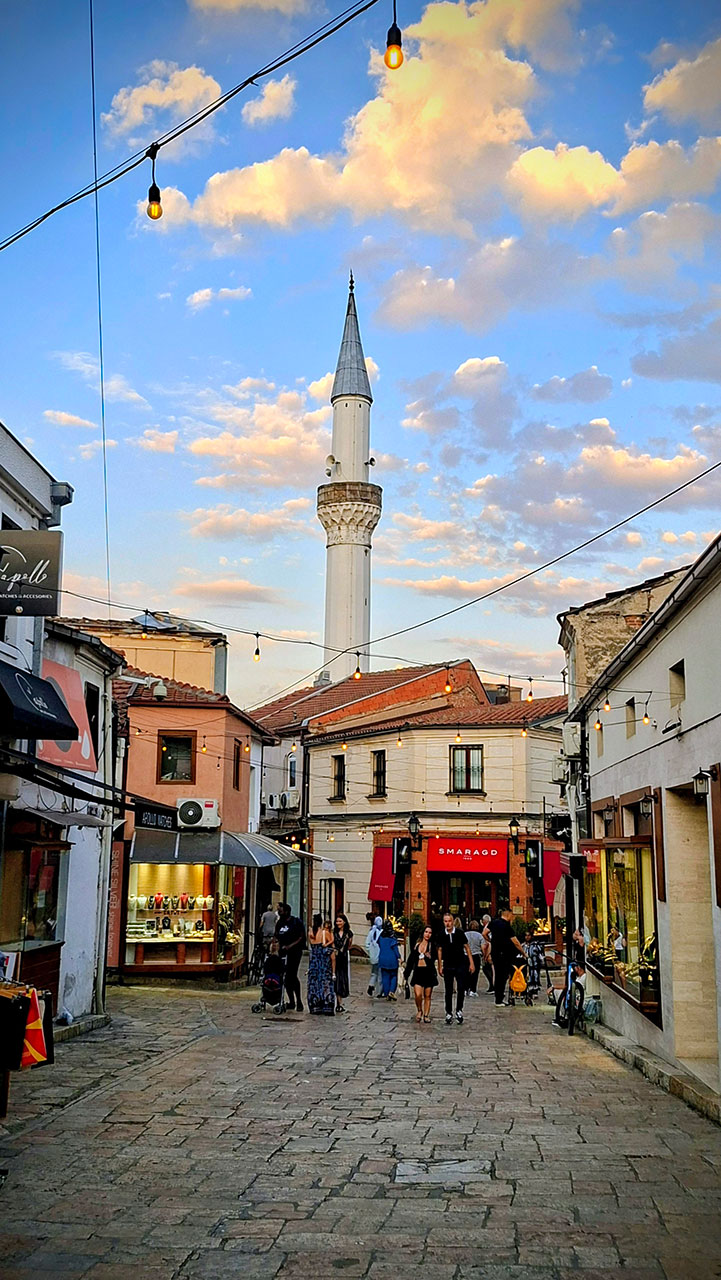
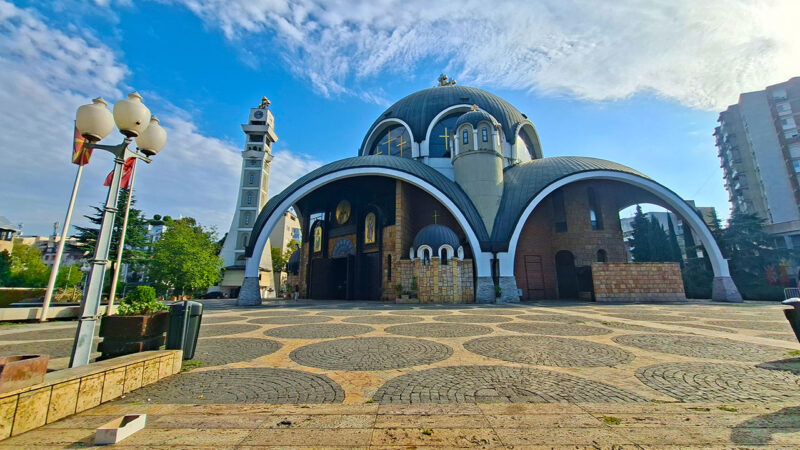
The Vardar River divides the city into Christian and Muslim quarters. There are 27 minarets and 15 Christian churches here. Yet the monument to Saints Cyril and Methodius stands on the Muslim side, right at the entrance to the Old Bazaar—which, by the way, is the second largest in Europe, after Istanbul’s.


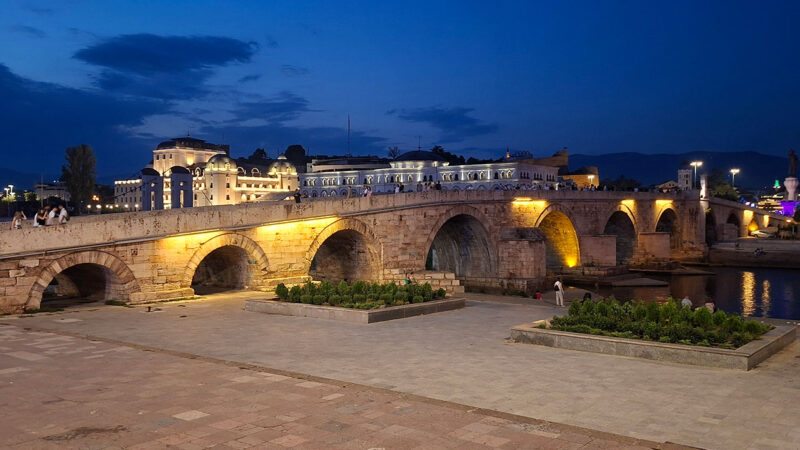
The riverbanks are linked by many bridges, but the true pride of Skopje is the Stone Bridge from the 15th century Ottoman era. It even withstood the earthquake and is considered the city’s main symbol.


One more note: on the Muslim side, restaurants don’t serve alcohol. But the food is dirt cheap, and there are hardly any foreign tourists around. A real hidden gem!


Day 2 (16.08.2025) Skopje – Matka Canyon – Tetovo – Gostivar

Today I cycled 84 km in +35 °C heat and guess what?.. Not a single cold beer. And not because I suddenly decided to go sober. It simply doesn’t exist here. At all! Not in restaurants, not in shops.


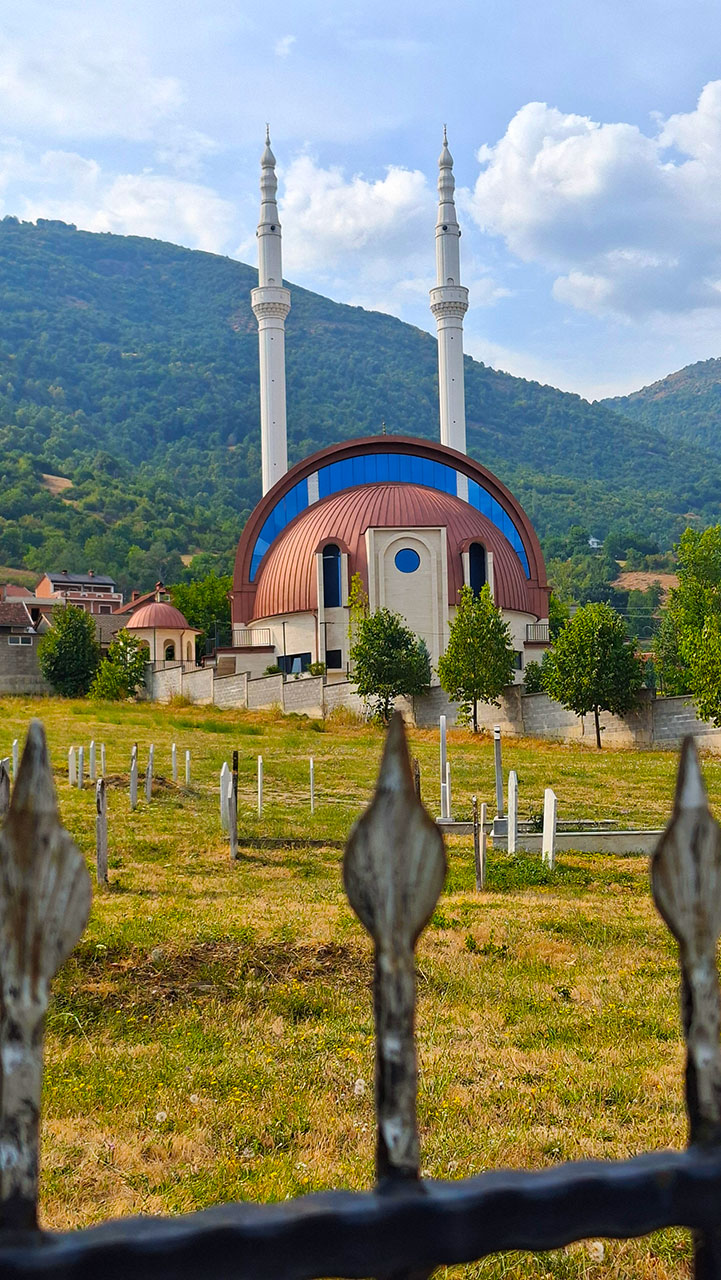
I even tried my luck in an upscale restaurant—but nope, nothing there either. That’s when it hit me: I had crossed into a completely Muslim region, home to Macedonian Albanians. The waiter apologized for having only an Albanian menu. And indeed—suddenly not just churches and unveiled women were gone, but even Cyrillic letters had vanished from shop signs and road markers.

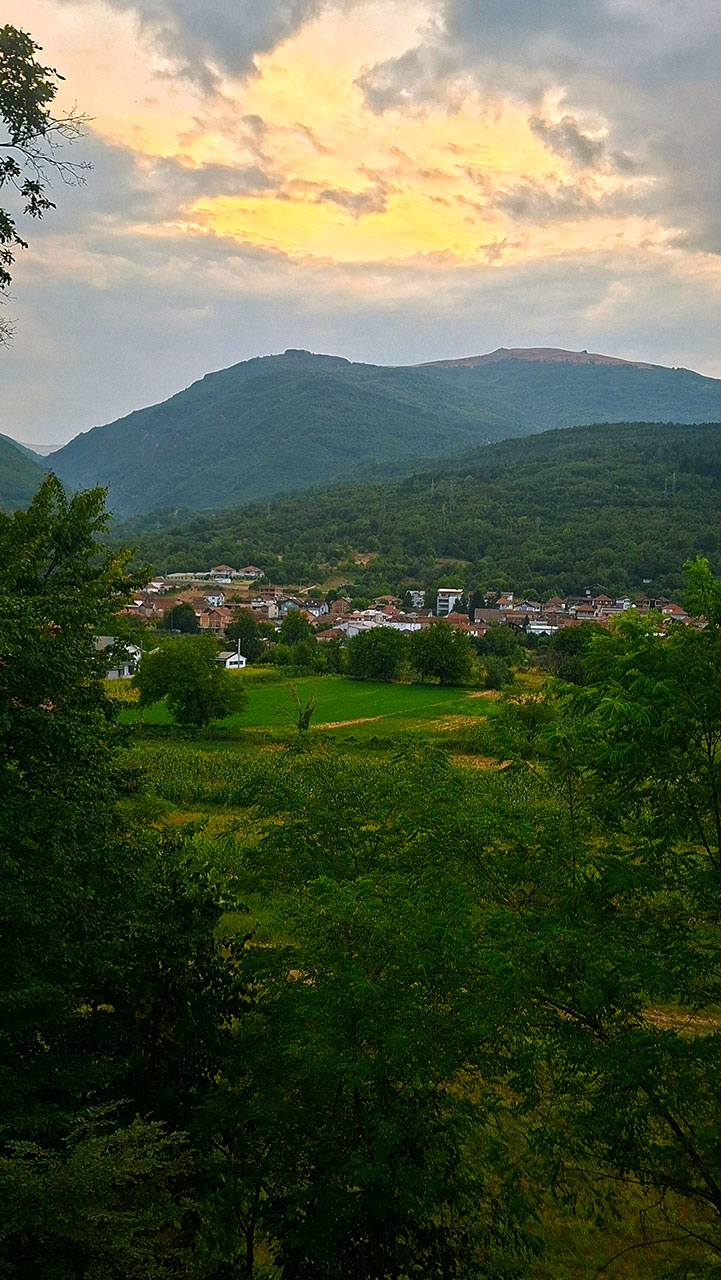
On the map you see names like Tetovo, Novo Selo, Zelino, Gradec, Gostivar – slavic. In reality—all you see are minarets.


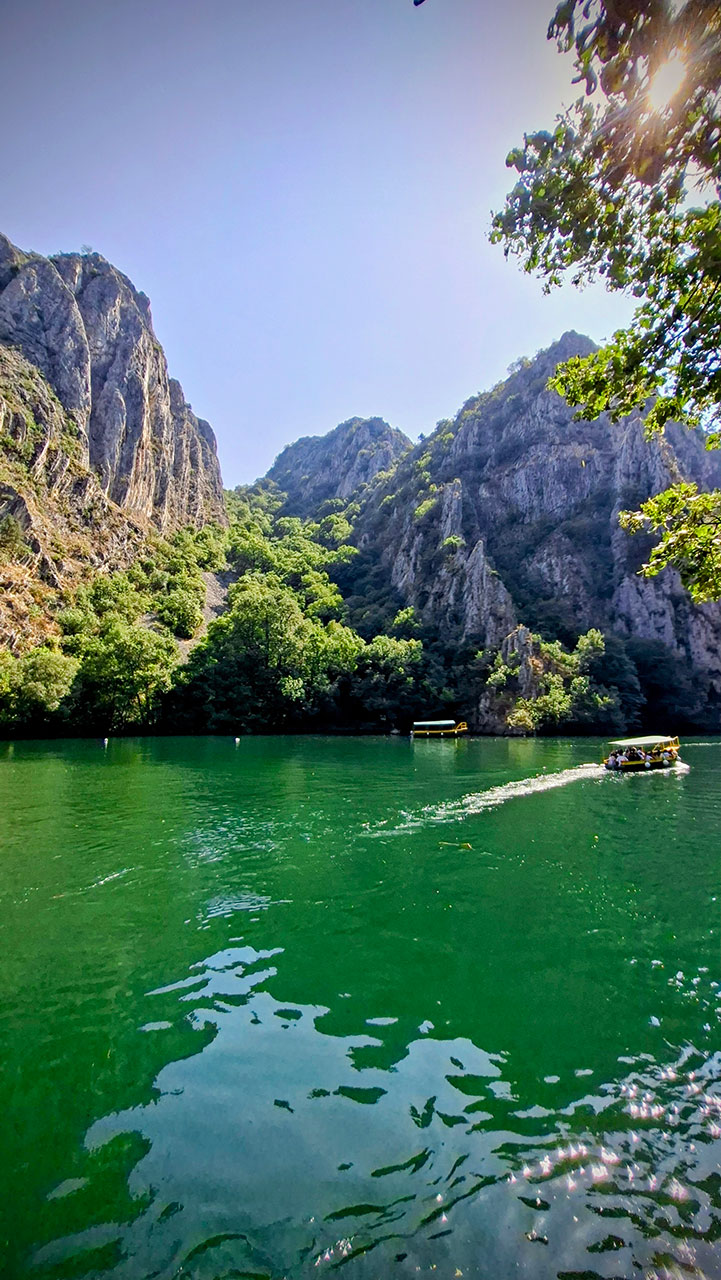
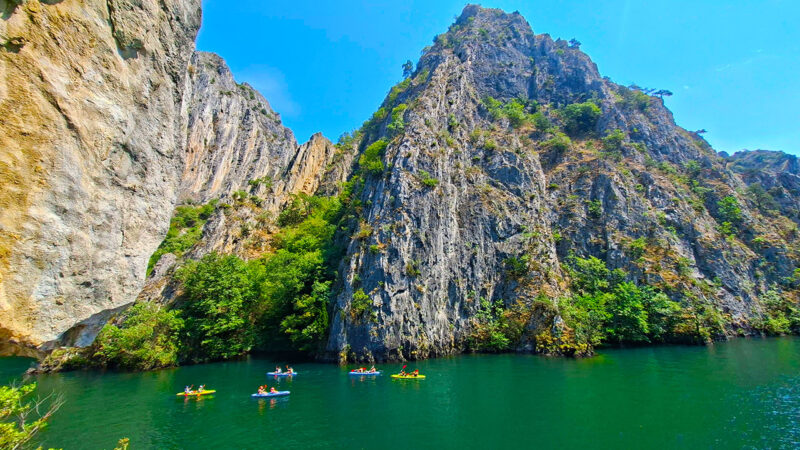
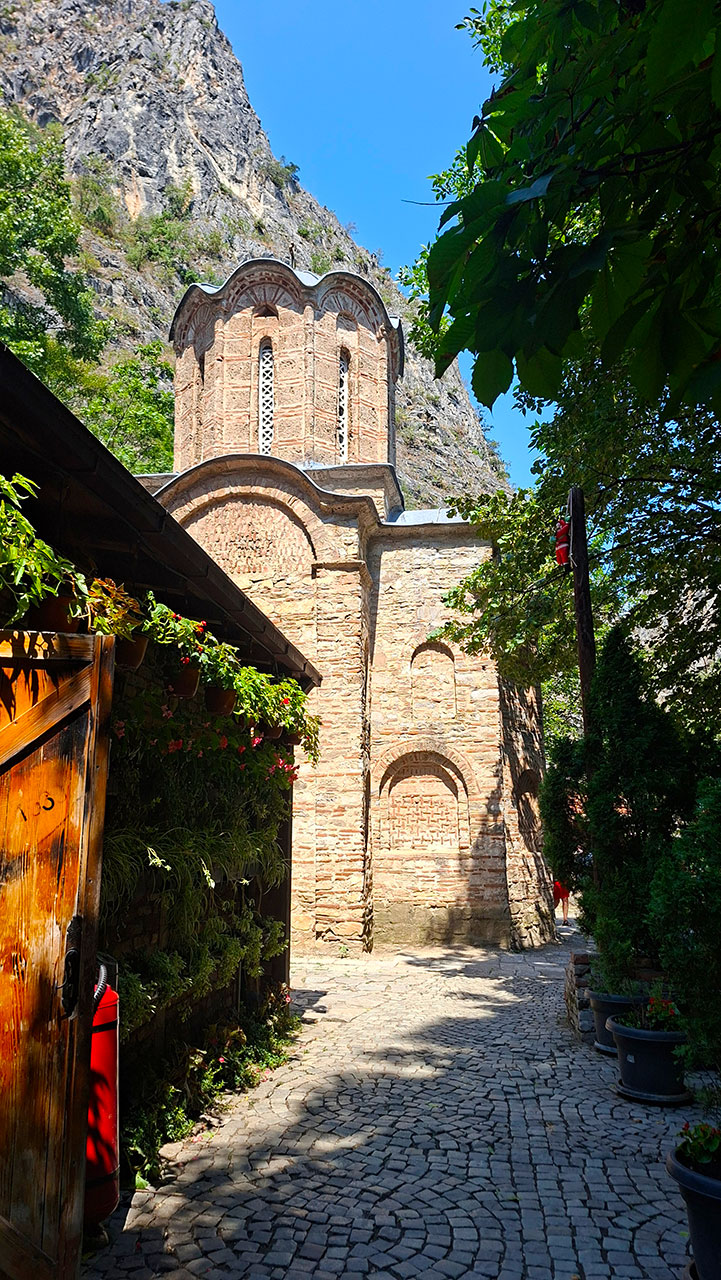
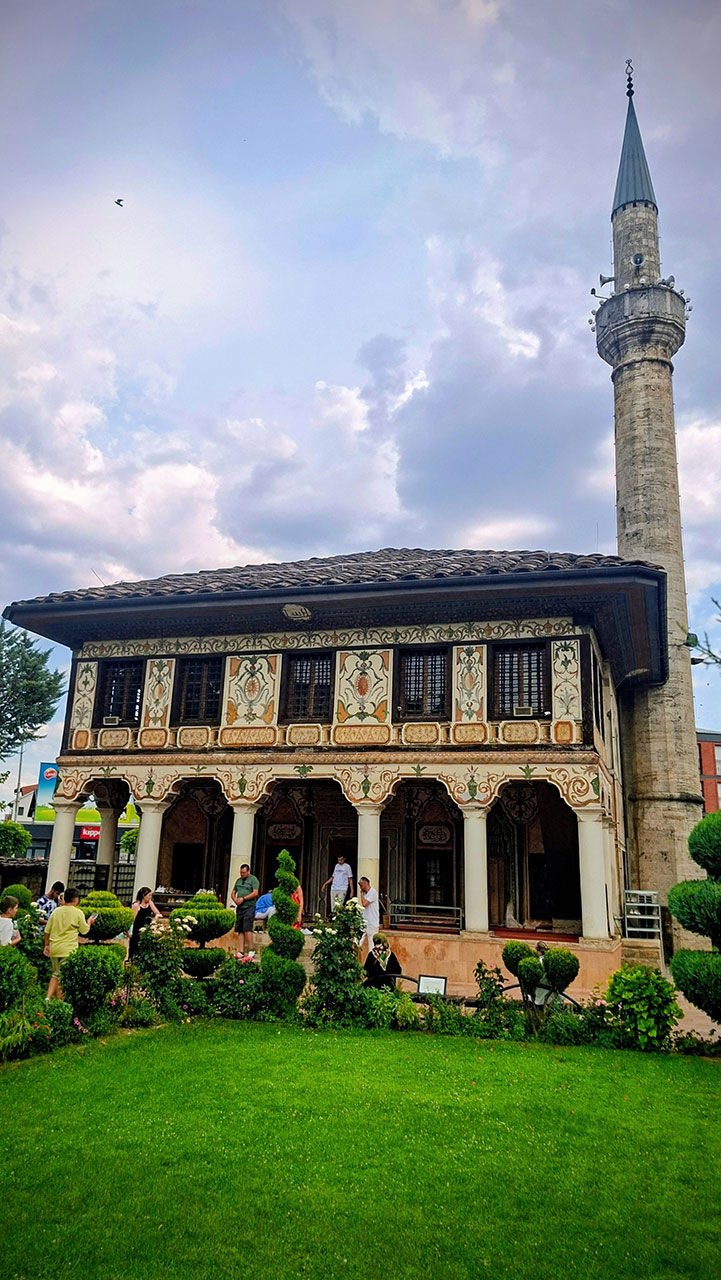
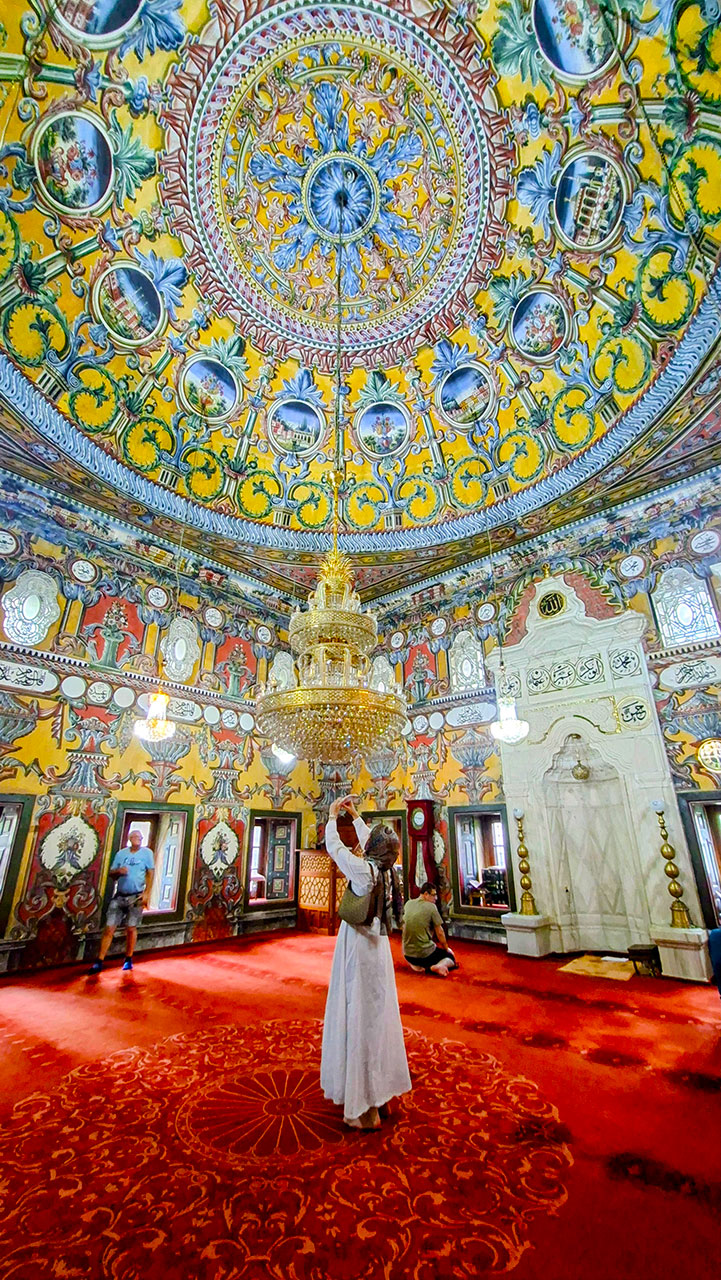
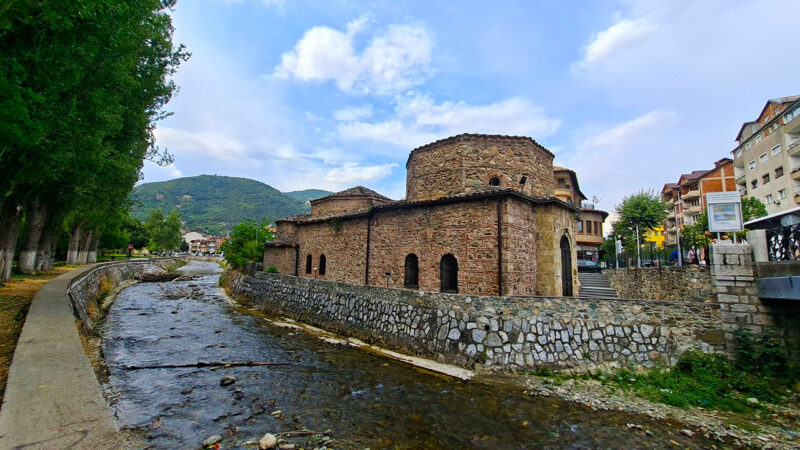
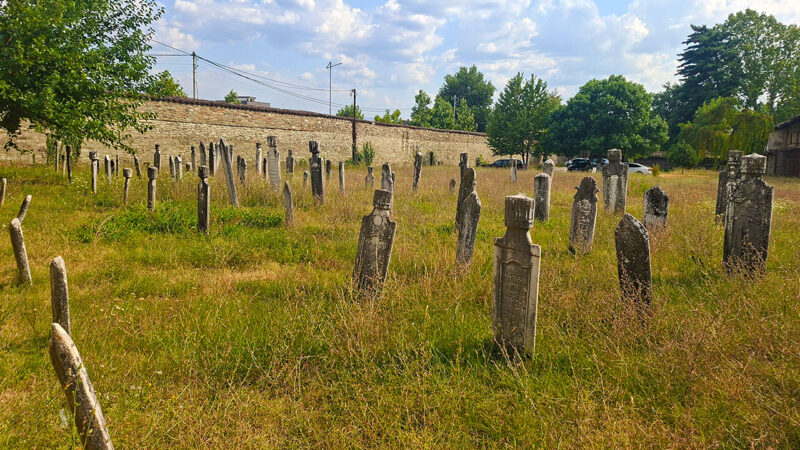
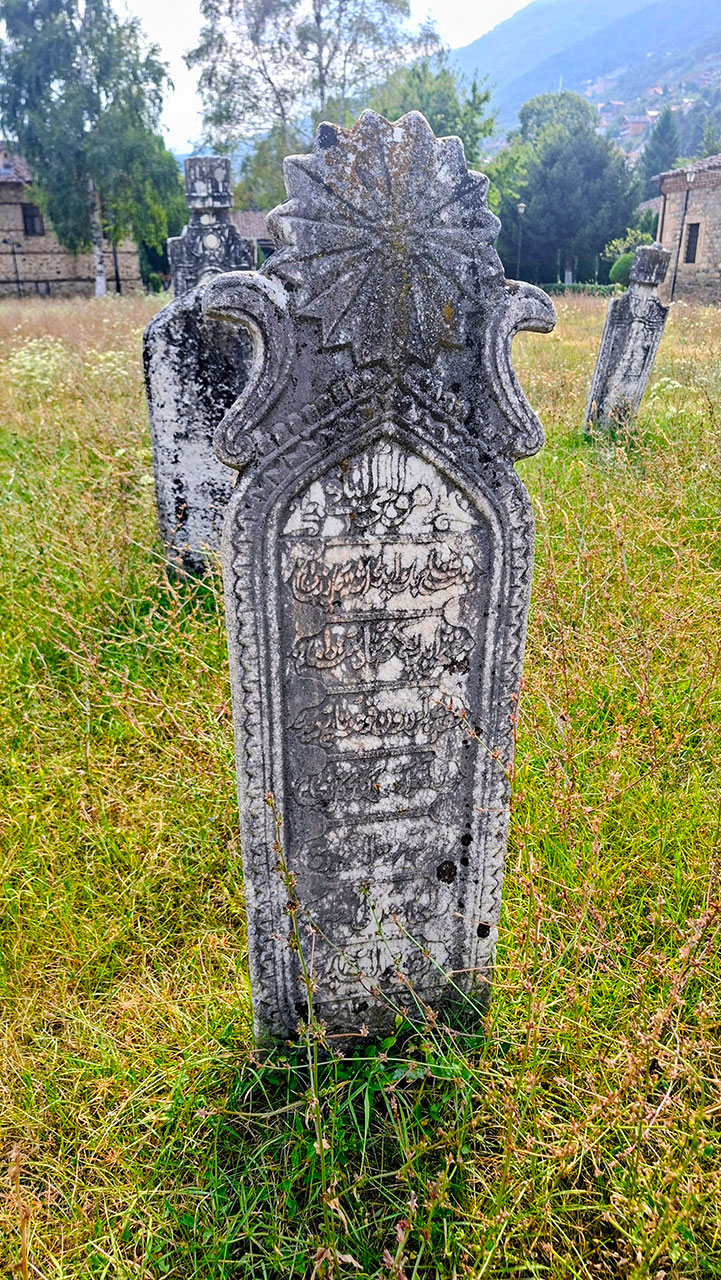
In the photos: the breathtakingly beautiful Painted Mosque in Tetovo, old Ottoman cemeteries with mezars—tombstones that reminded me of Armenian khachkars or medieval stećci. And of course, Matka Canyon, where I hiked an 8 km trail. Honestly, it was picturesque, but two hours under the burning sun weren’t really worth it.


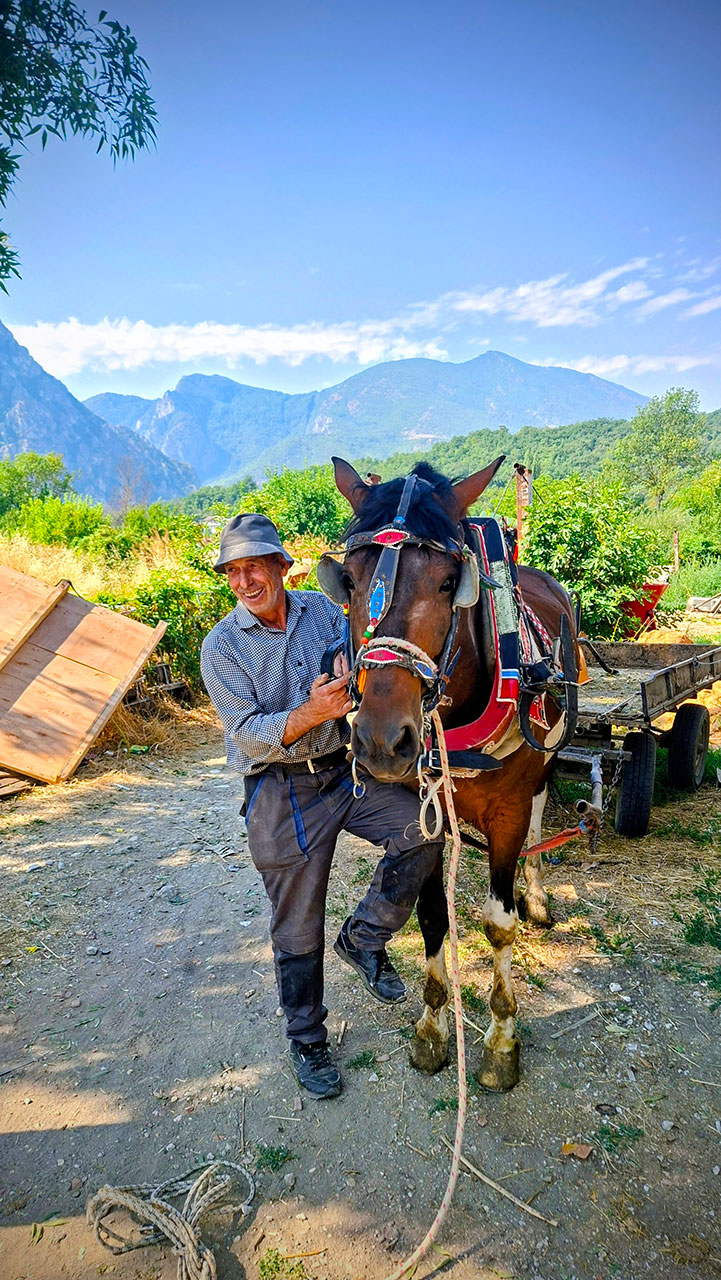
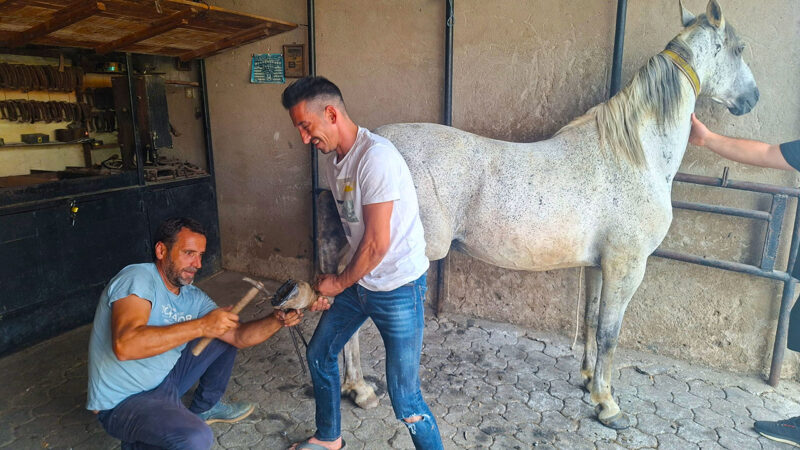
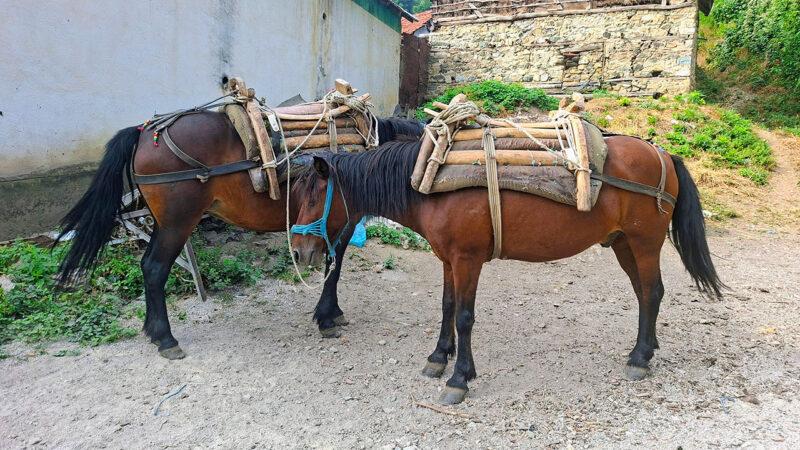
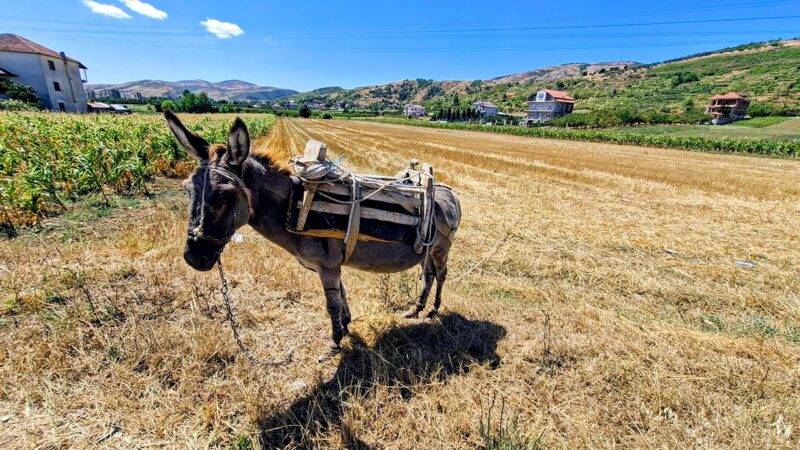
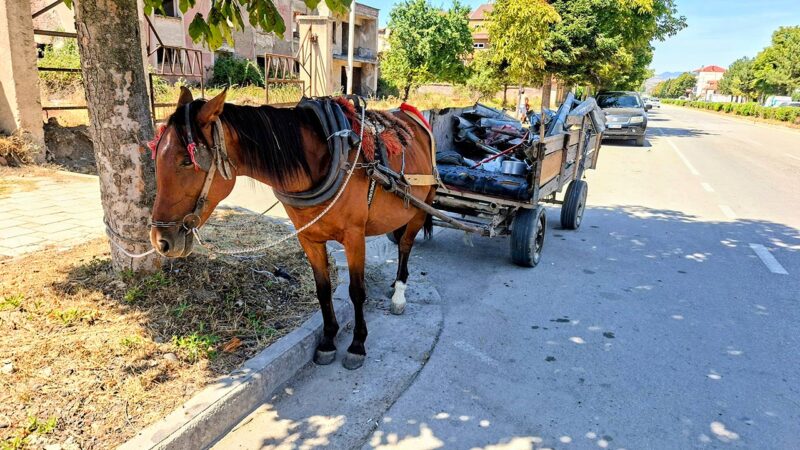
This morning I witnessed the sweetest scene: an old man harnessing his horse to a cart. The horse was dressed up so finely it was obvious they weren’t heading to the fields, but into town. The harness was festive, almost exhibition-like. The man himself looked scruffy, but the horse—like a princess. He proudly showed her off from every angle. And indeed, along the road I saw that horse-drawn carts aren’t unusual here. Not as common as in Romania, but clearly horses are used for real work, not for tourist rides.


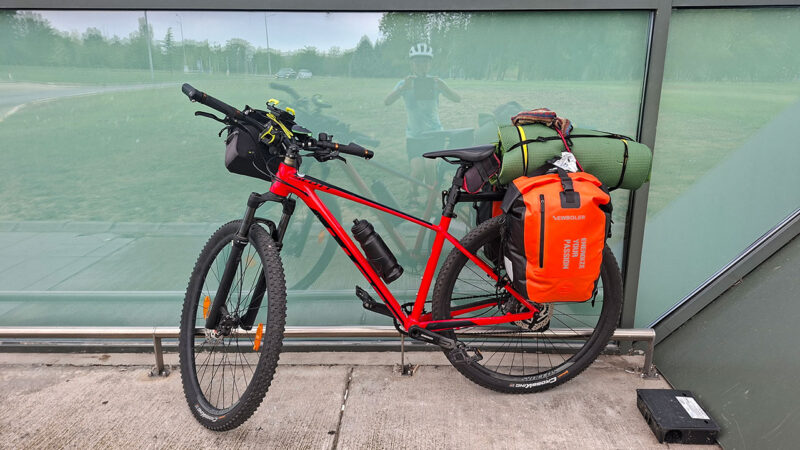
On daily life: I do carry a tent, but that’s more of an emergency backup. From the very beginning, I planned to spend nights in civilized places. Today, for example, I drank six (!!!) liters of water plus two Cokes. And still went to the bathroom only once—you can imagine how much I sweated out. A shower is absolutely non-negotiable every evening in this heat. Same with air-conditioning. Lying under the sweet chill of +16 °C, I couldn’t stop thinking: how on earth would I survive in a tent when it’s still +25 °C at night? I really can’t imagine.


Tomorrow, though, the road goes up into the mountains. Maybe, just maybe, it will finally get cooler. And there are lakes waiting ahead!

Day 3 (17.08.2025) Gostivar – Mavrovo National Park – Bigorski Monastery – Debar

That morning, I made an important discovery! If only I had cycled just 2 km more yesterday, I could’ve had dinner at a fish restaurant… with beer.

Now I’ve got a new travel hack for Macedonia: look up an Orthodox church on Google Maps, and there’s guaranteed to be a place serving alcohol nearby! Yes, they’re rare, but a few extra kilometers are totally worth it.

Of course, I stuck to my usual order: Shopska salad and Skopsko beer. After noon, it’s fair game.


The morning started energetically: I left at 7:45, but immediately had to tackle a mountain pass on a trail so rough that I had to walk parts of it. Rocks—okay, manageable, can ride. But the sand… steep incline, heavy bike, wheels sink. I lost count of how many times I fell. Jumping back on the saddle was nearly impossible—the bike kept tipping over. Eventually, I climbed 700 meters—20 km in 3 hours!


Then came asphalt and relatively smooth road. I’m in Mavrovo National Park! Here there’s a beautiful turquoise mountain lake, scenic valleys, and long passes. In summer, trekkers come; in winter, it’s the country’s main ski resort. The place is gorgeous, but clearly “for the rich”: at least another 60 km to reach a town with affordable accommodation.


After Mavrovo Lake came a long descent along the Radika River valley. The canyon views are stunning! But stopping on the narrow, busy road is almost impossible. Then the sky darkened, lightning flashed—and a sudden rainstorm hit. It cooled things down from +35°C to +22°C, but I had to ride the last hour and a half soaked through. Every passing car added a bonus “shower” from above. By the end of the day, I was even freezing. Along the way, I visited two massive monasteries. So well-maintained and rich, I’ve rarely seen.


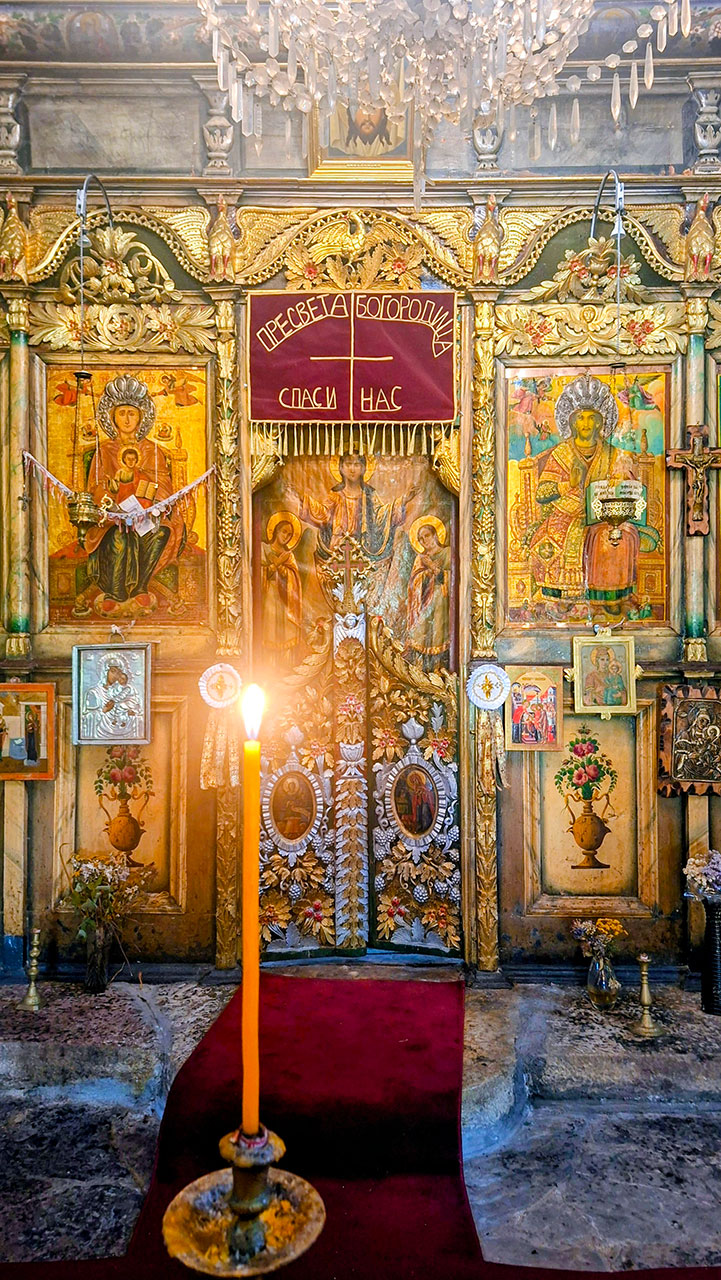
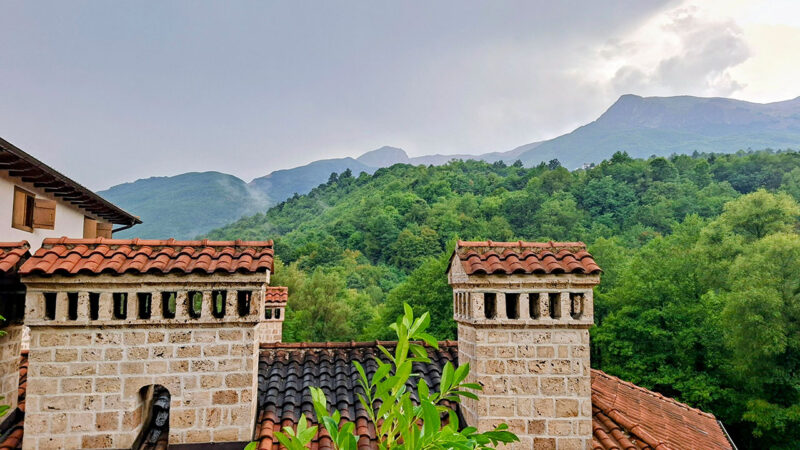
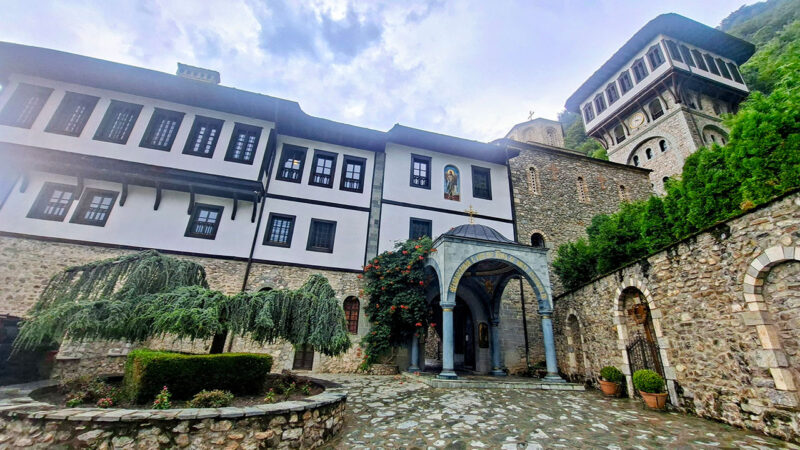
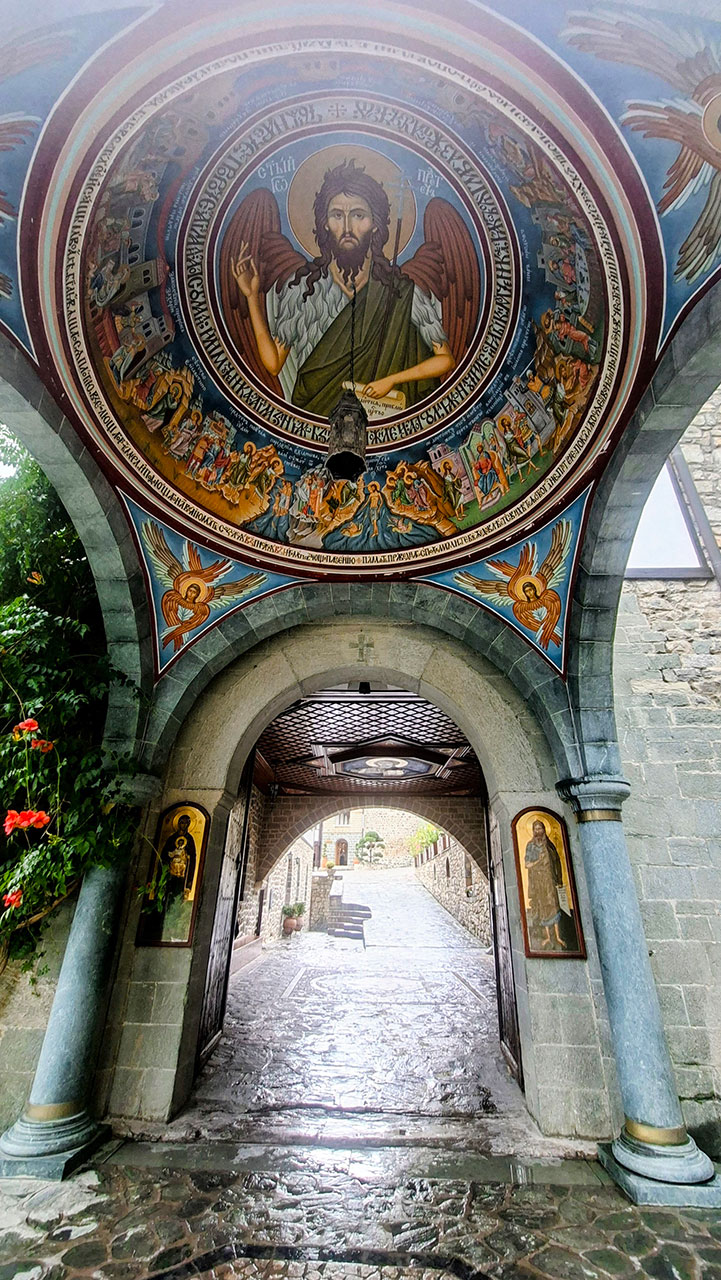
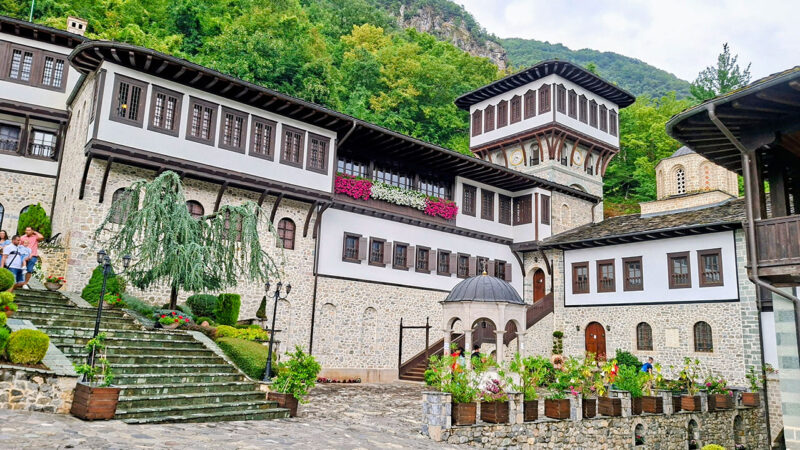
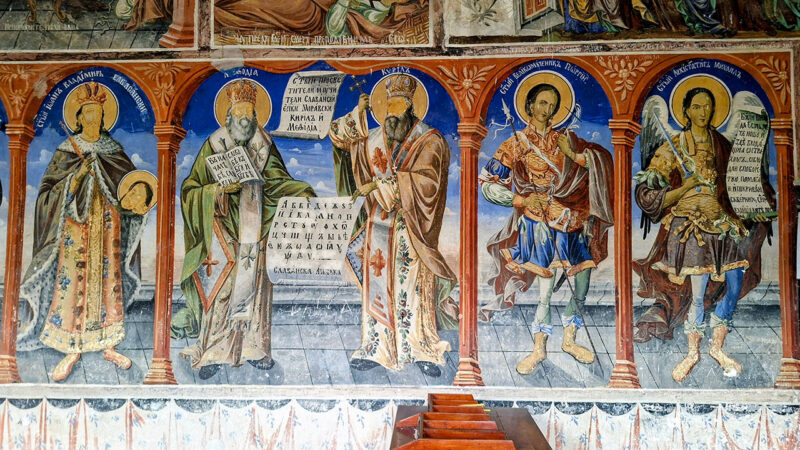
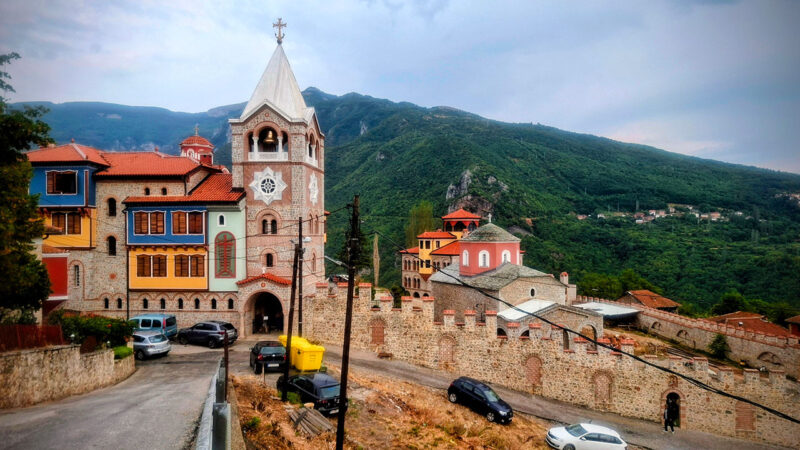
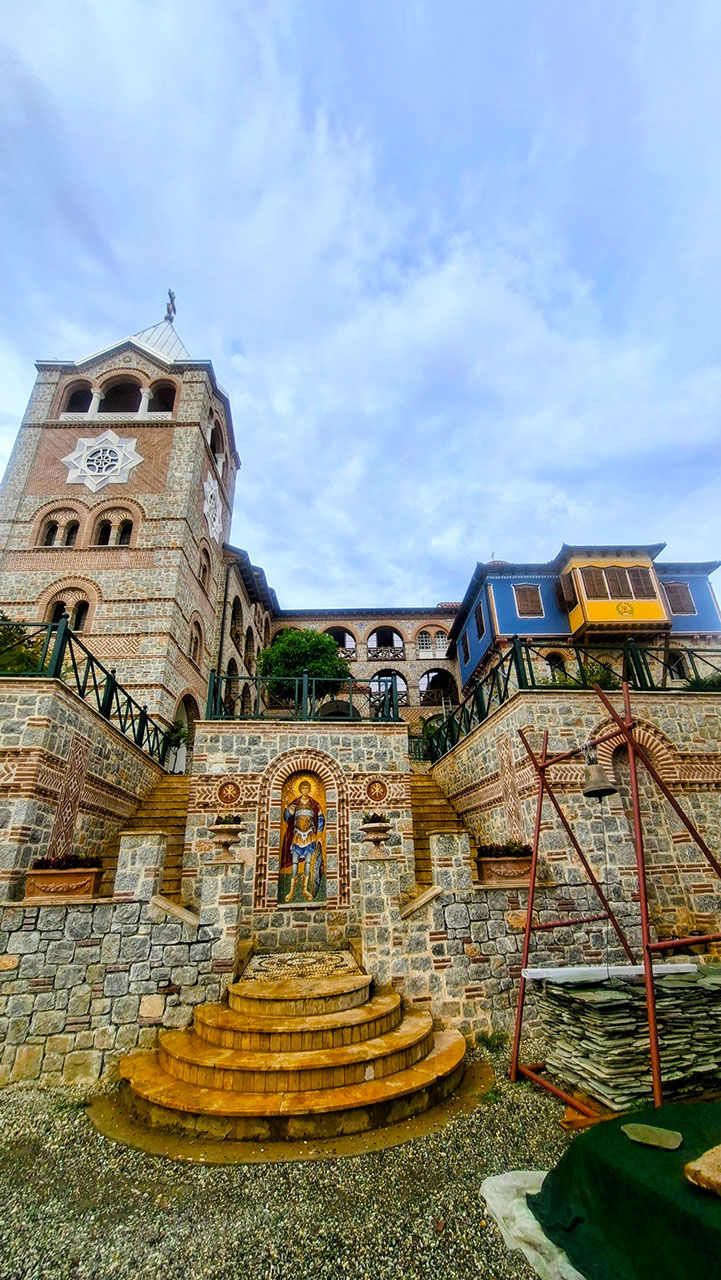
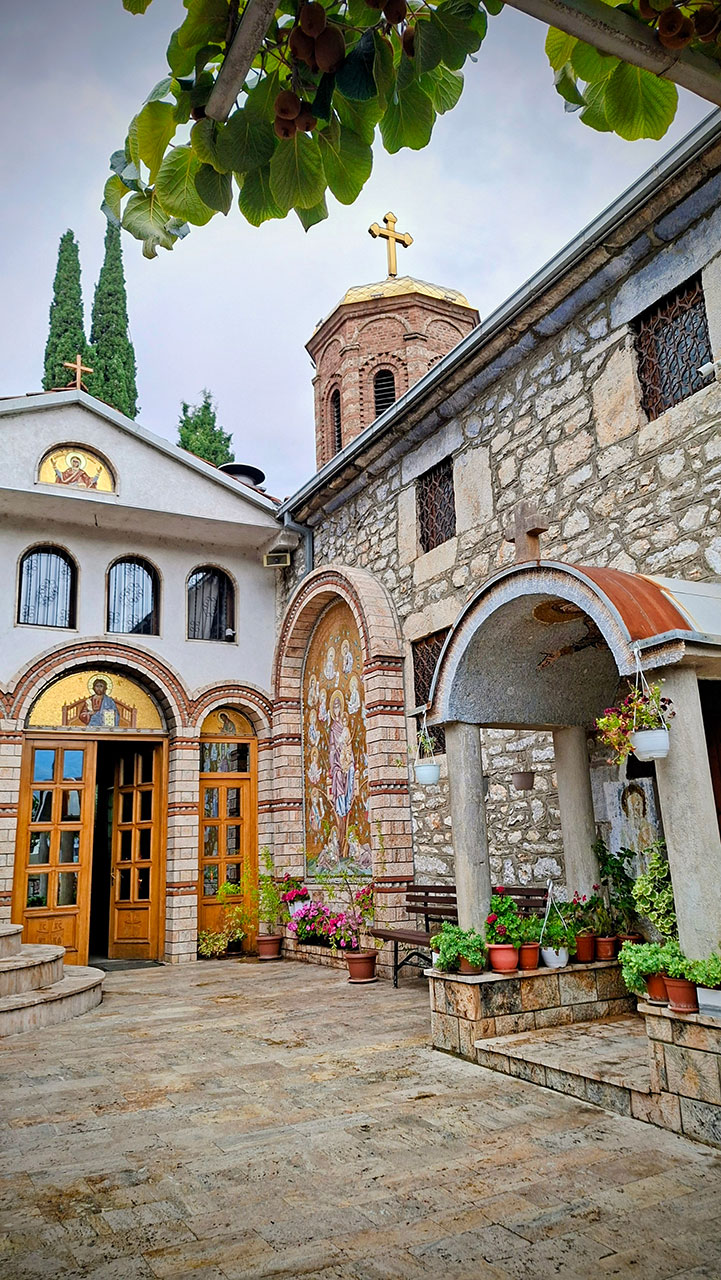
Bigorski Monastery of St. John the Baptist is one of the most famous and beautiful monasteries in North Macedonia. It stands in the picturesque Radika River valley, among the mountains of Mavrovo National Park. Founded in the 11th century, it was destroyed and rebuilt several times but remains active today. The main treasure is the carved wooden iconostasis—one of the masterpieces of Balkan architecture. The interior is truly luxurious, though photography isn’t allowed. The complex is large, immaculate, and impressive, especially against the backdrop of the mountains.


By evening, I reached Debar—90 km for the day. The town is modern, with plenty of restaurants, shops, and even traffic jams downtown. The day was tough. The morning pass left its mark, and at night new challenges arrived—terrible leg cramps. Apparently, one Shopska salad isn’t enough to handle this kind of effort; I’ll have to force myself to eat meat during the day.

Day 4 (18.08.2025) Debar – Struga – Ohrid

It was a relaxing day. No heroics, just perfect asphalt. The road from Debar to Struga is about 60 km with an elevation gain of roughly 500 meters.

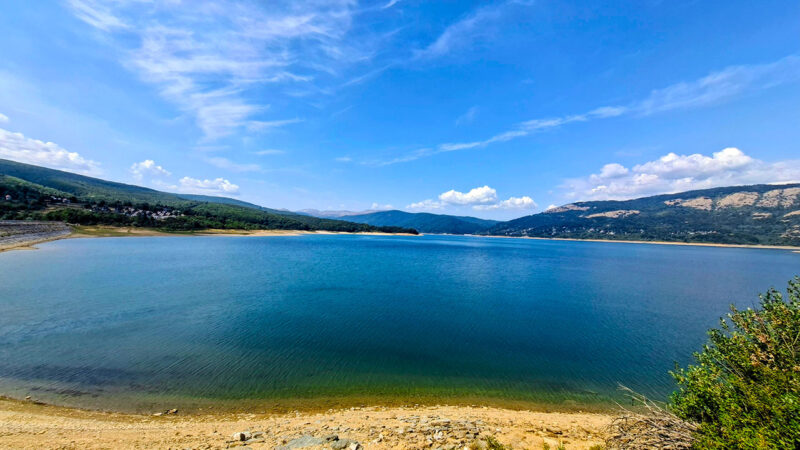
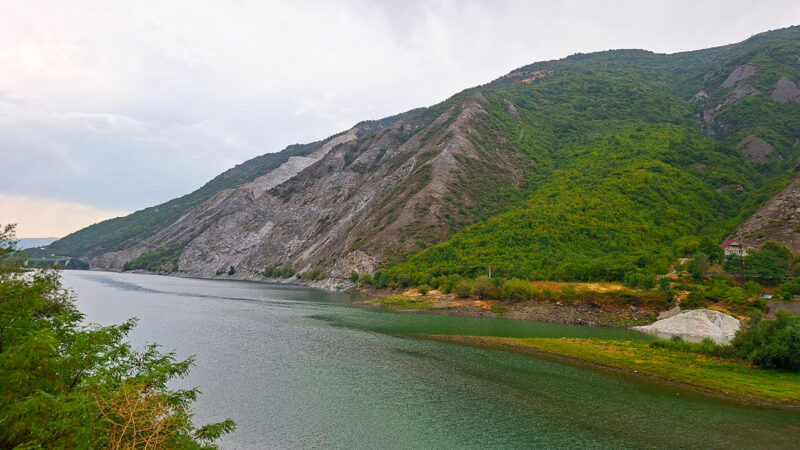
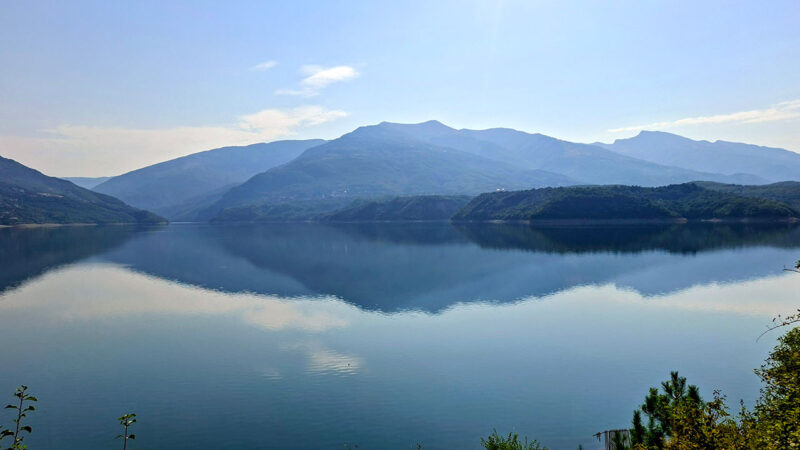
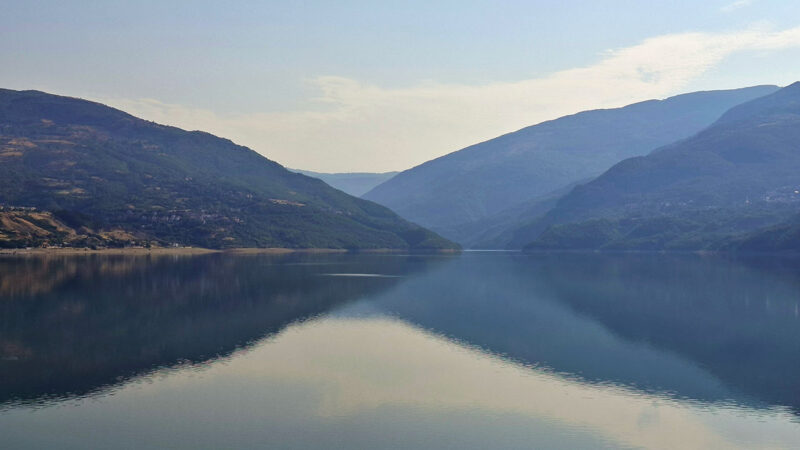
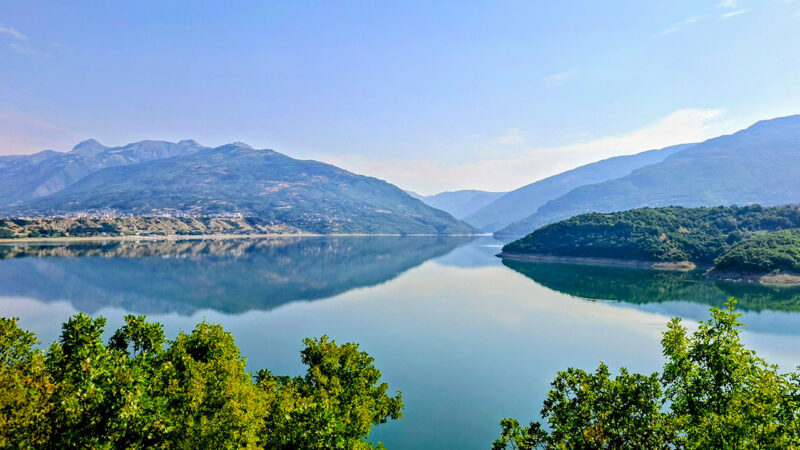
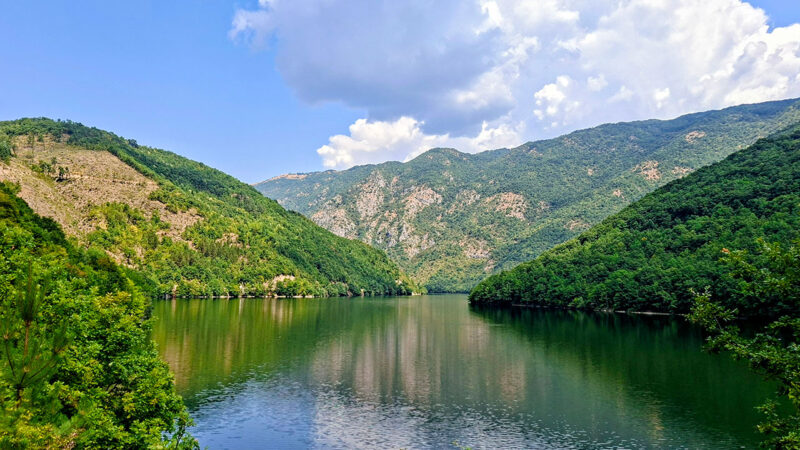
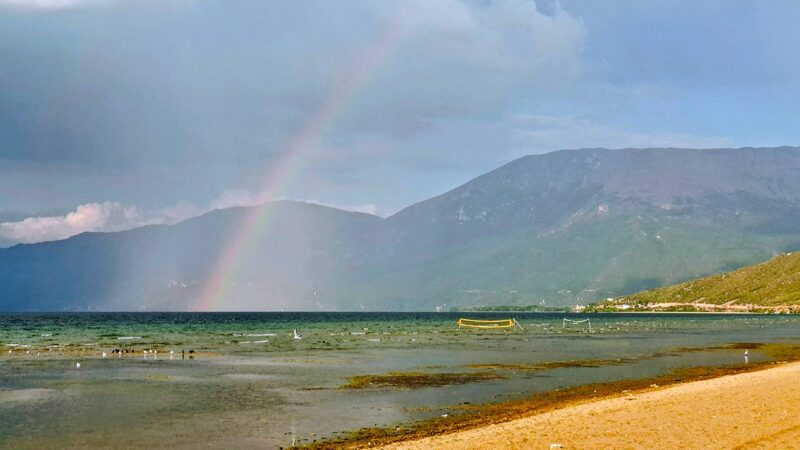
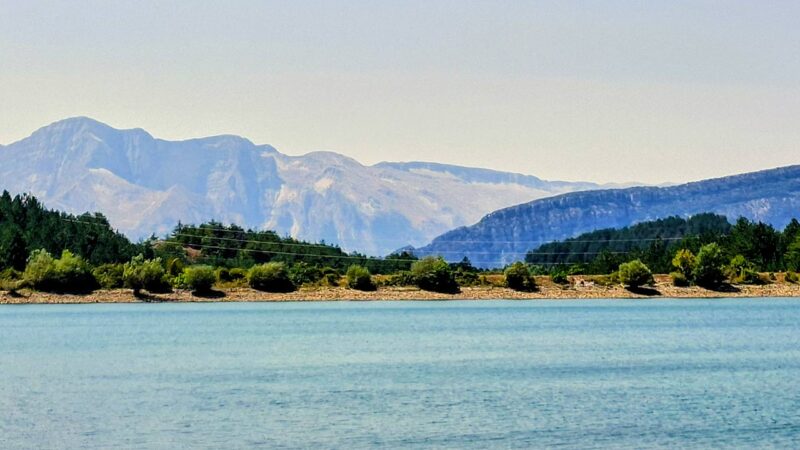
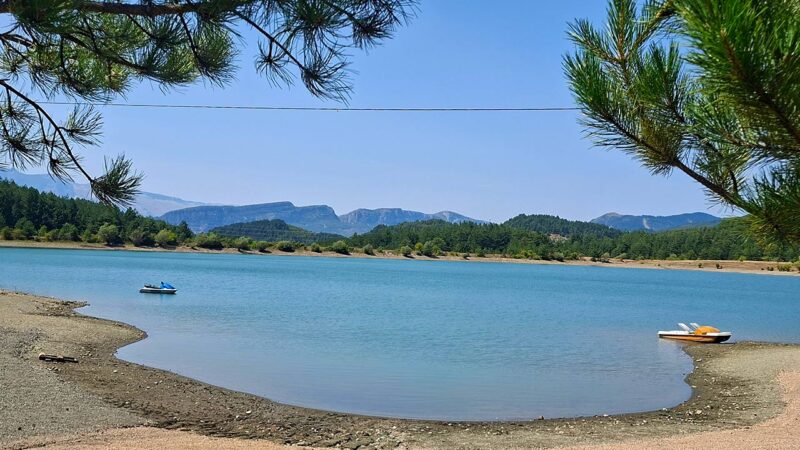
First on the route was Debar Lake—a large artificial lake on the Radika River. The water is turquoise and incredibly clear, and the surrounding mountains and green slopes looked magical in the morning mist. The first few kilometers run through the valley, then you gradually descend toward Ohrid Lake, through forests along the Radika River valley. The scenery changes from mountain views to long stretches of beaches.


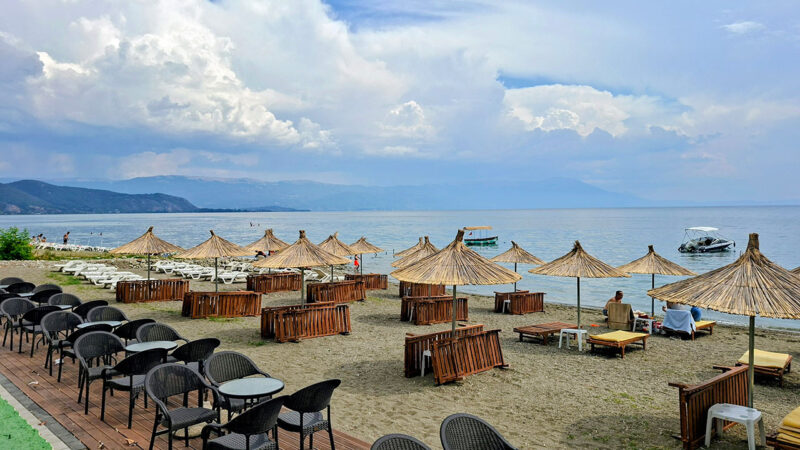
The first town on Ohrid Lake was Struga. Honestly, it felt a bit underwhelming: traffic jams, lots of shops. But along the shore stretches a long beach for kilometers. The water is warm, and the beach is made of fine pebbles. I didn’t linger here, cycling another 15 km to the town of Ohrid.


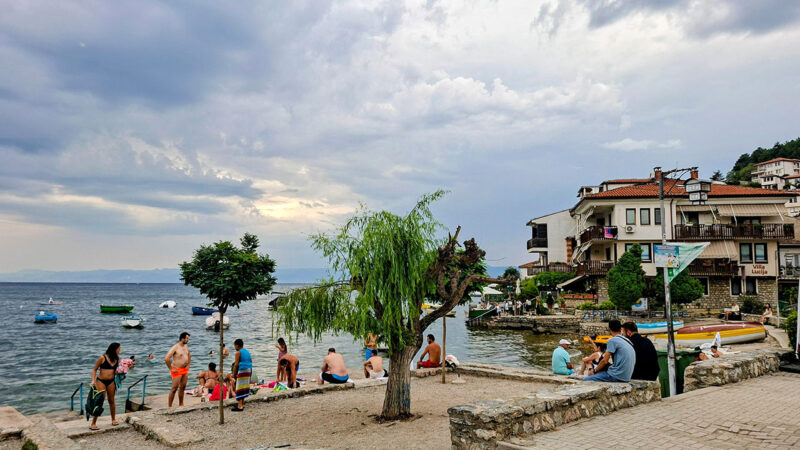
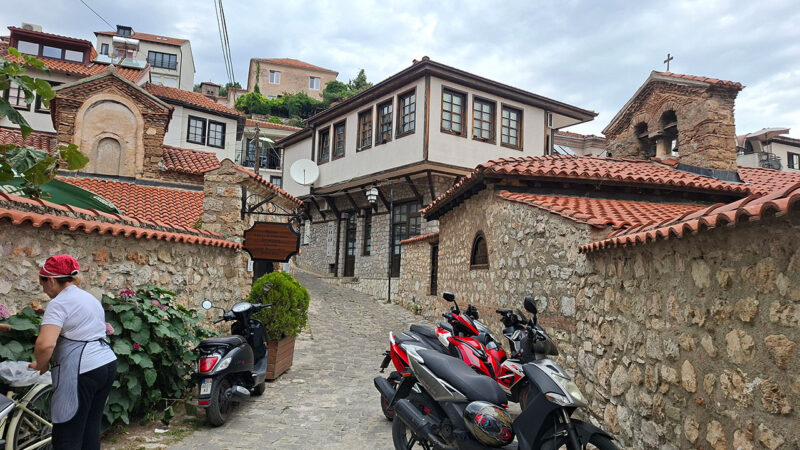
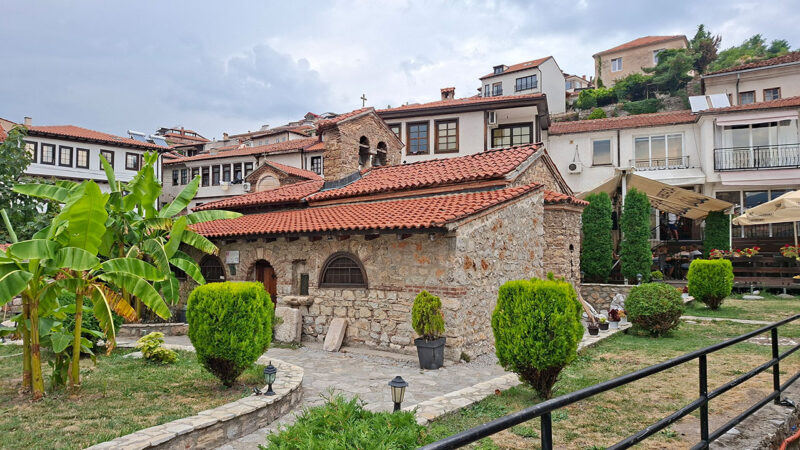
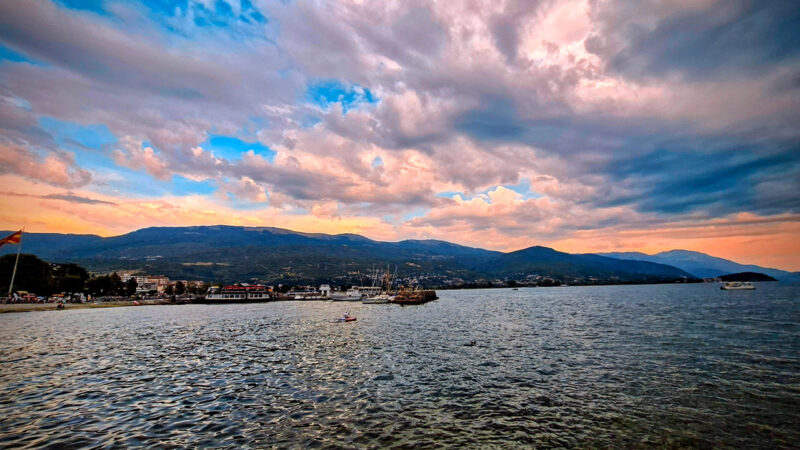
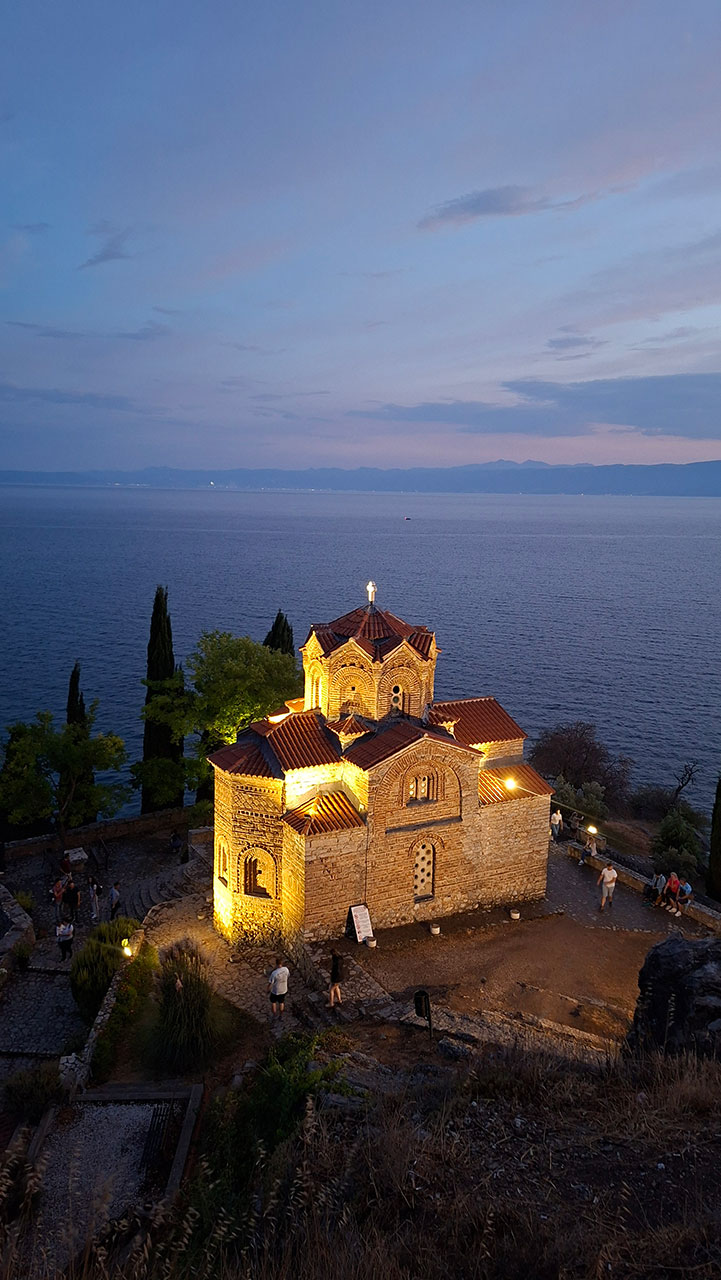
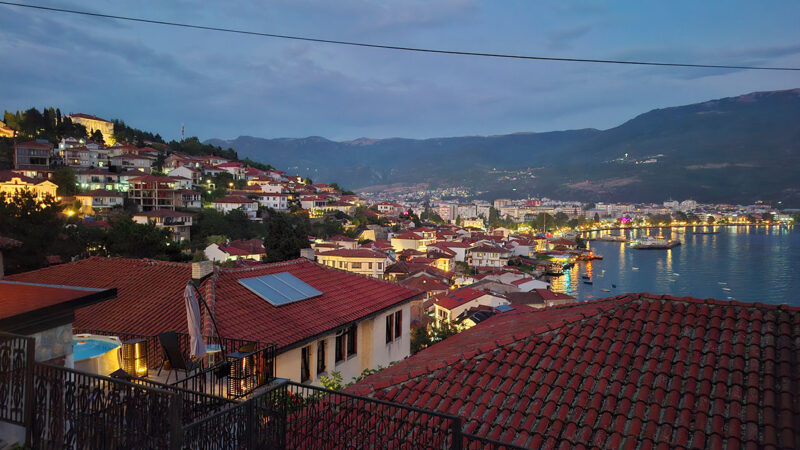
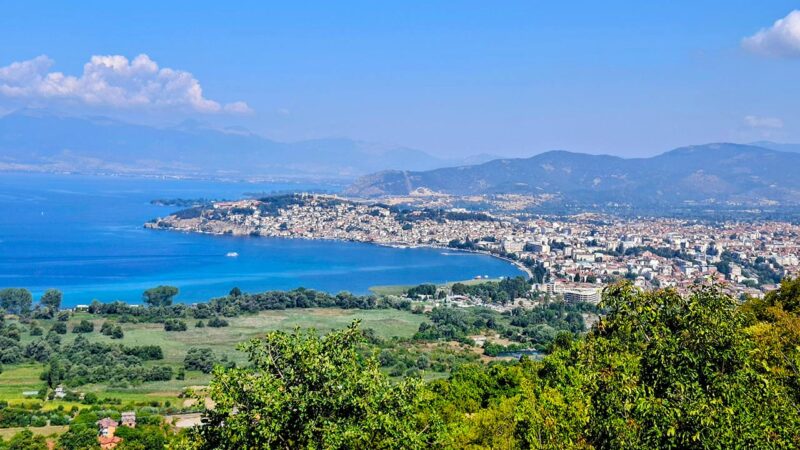
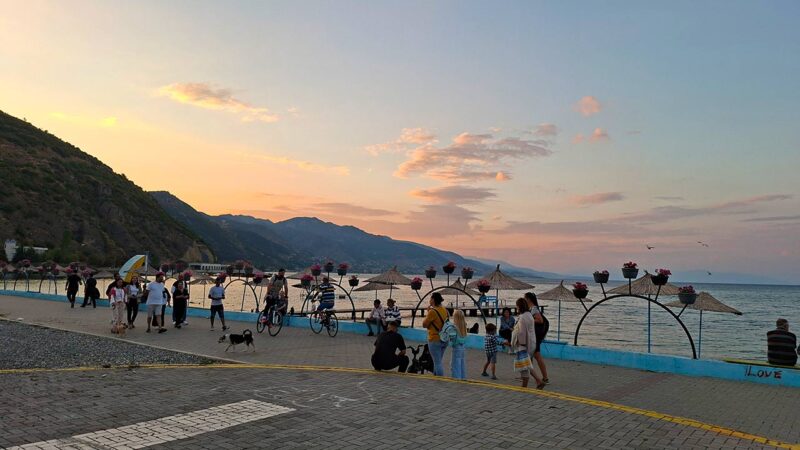
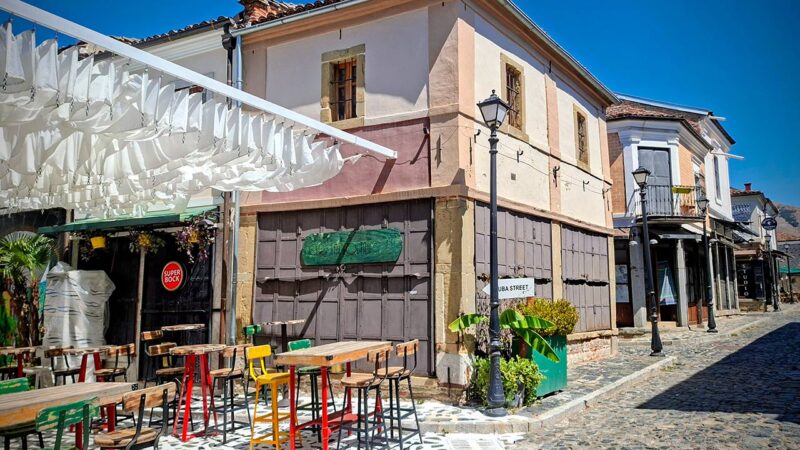
Unlike Struga, Ohrid is a real fairy tale. Houses climb the slopes, narrow cobbled streets wind down to the water. Hundreds of boats and pleasure crafts line the shore. Scattered among the buildings are dozens of medieval Orthodox churches, tightly nestled between newer constructions. The atmosphere is truly unique!


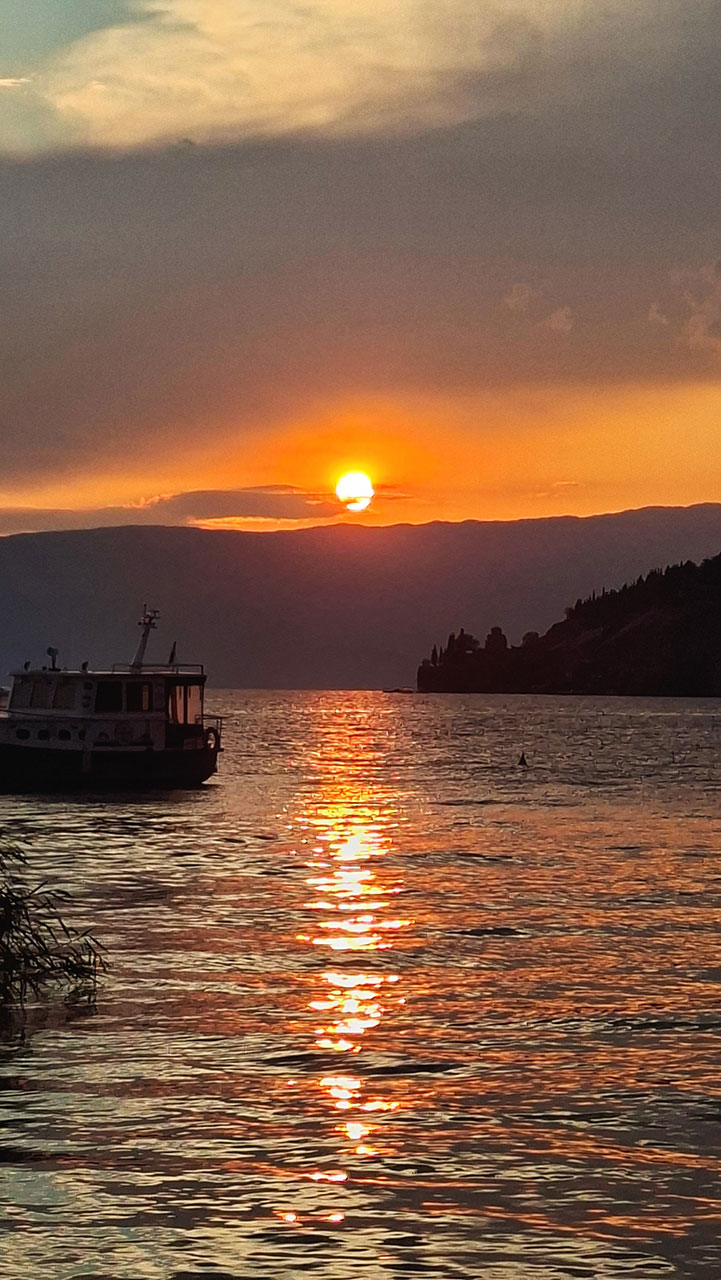
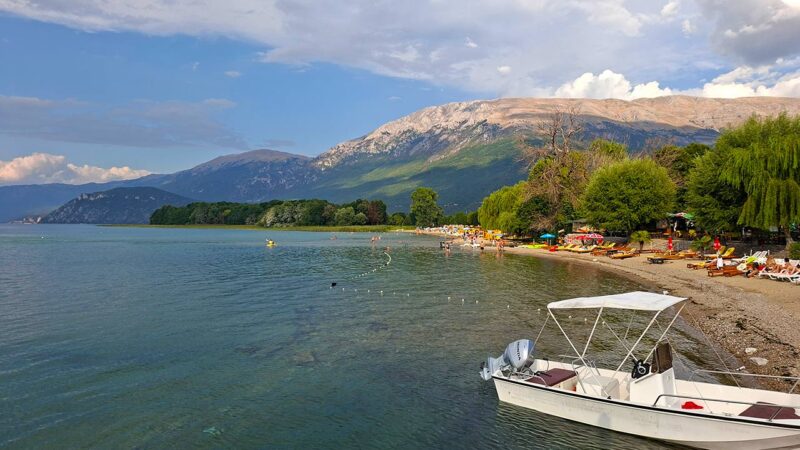
Ohrid Lake is one of the largest and oldest lakes in Europe, popular for swimming, fishing, and boating. The city and lake are UNESCO World Heritage sites. It feels like I’ve landed at a Mediterranean resort. And yes, Ohrid Lake really is Macedonia’s “sea.” Swimming, though, is a bit tricky: the water is mostly accessed by ladders, with almost no beach entry points.


In Ohrid, I stayed in a studio apartment on the first floor of a residential building, with its own terrace overlooking the lake and direct access to the promenade—and it cost just €25! Check-in and check-out were unusual. When I arrived at the scheduled time, no one was there. Over the phone, the owner told me the door wasn’t locked—just go in. In the morning, there was the question of payment: I called again, and she said to leave the money on the table and not lock the door.

It all seemed strange to me, but the locals were only surprised, for example, why I even lock my bike—they said it’s perfectly safe here! Judging by the fact that neither apartments nor cars are locked, they might be right.

Day 5 (19.08.2025) Ohrid – Galicica National Park – Albania Border – Pogradec

For this day, I had two route options—an easy one along the shore of Ohrid or a super tough one through Galicica National Park. After a bit of deliberation, I went with the second. After all, when else will I come back to Macedonia?


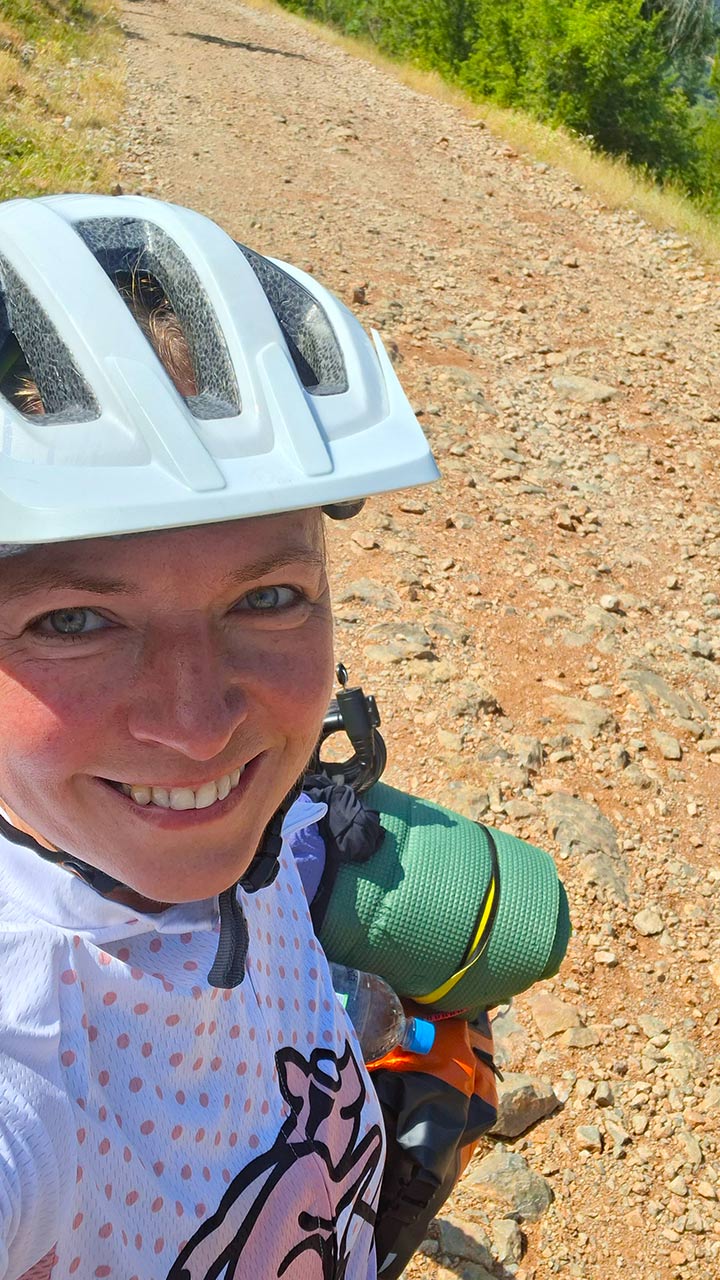
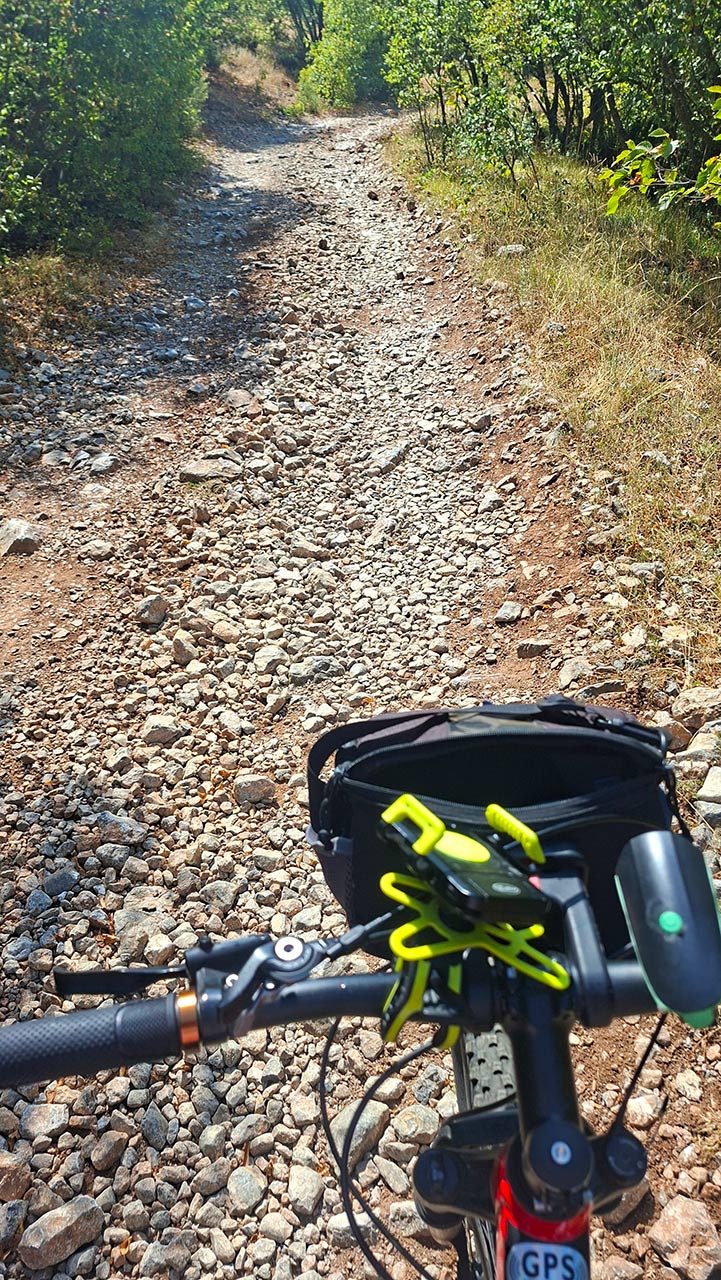
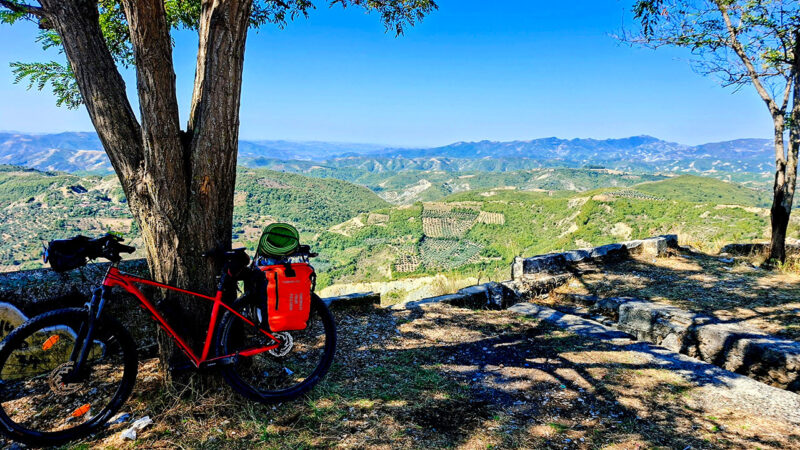
Right out of Ohrid, the climb begins. I was scaling the mountain on a proper MTB trail. Steep ascent, terrible road—not just gravel, but rocks, loose scree, and sometimes huge boulders. Combining all that with a heavy bike was nearly impossible, and even rare hikers overtook me.


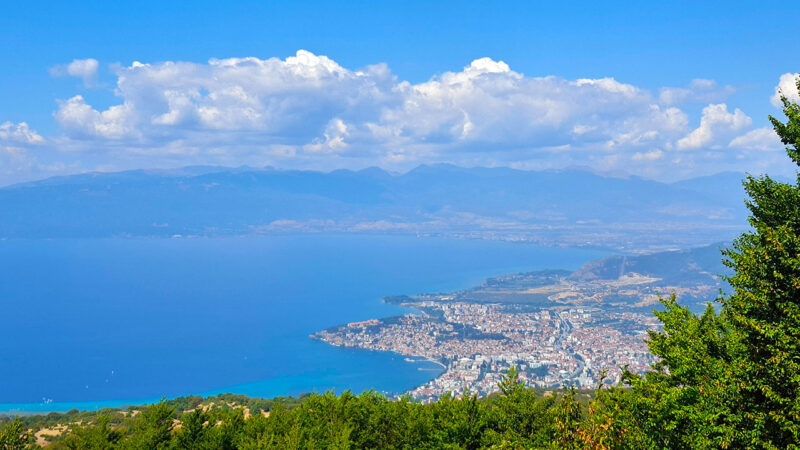
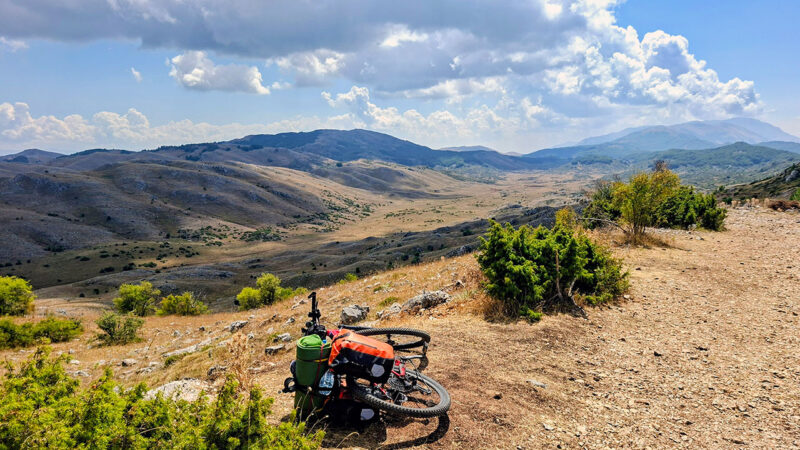
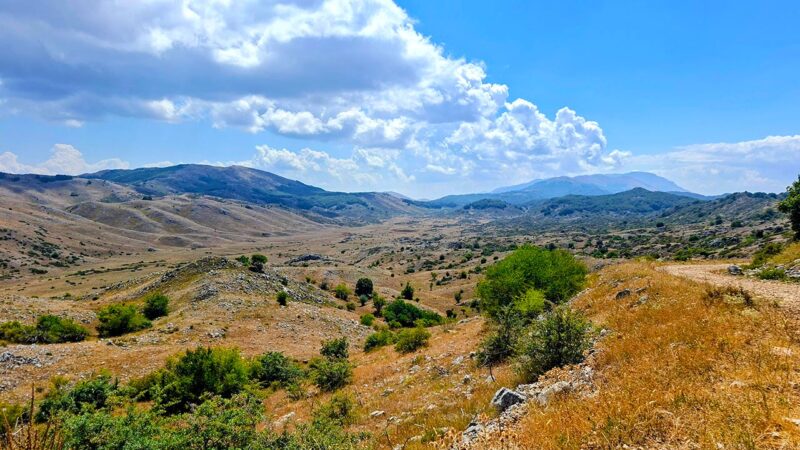
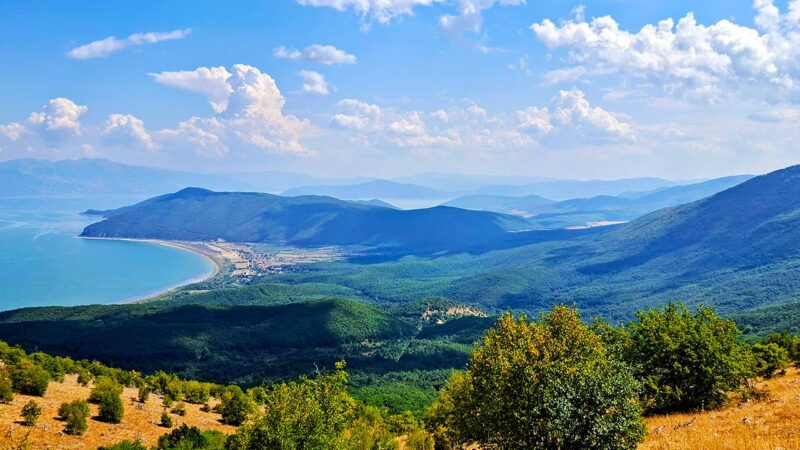
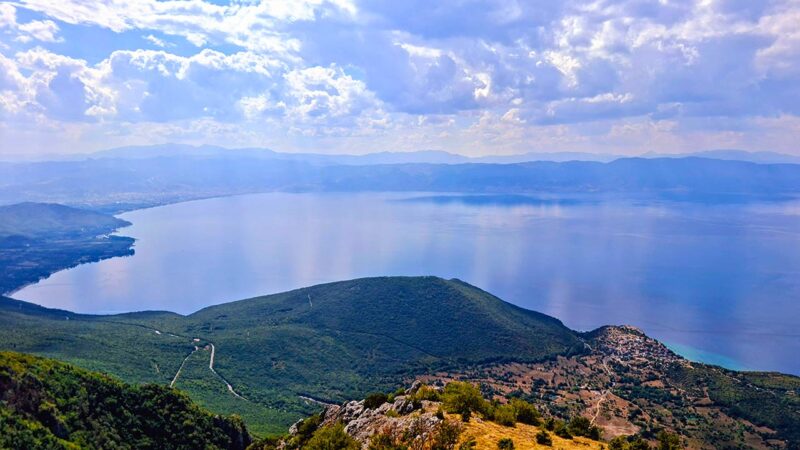
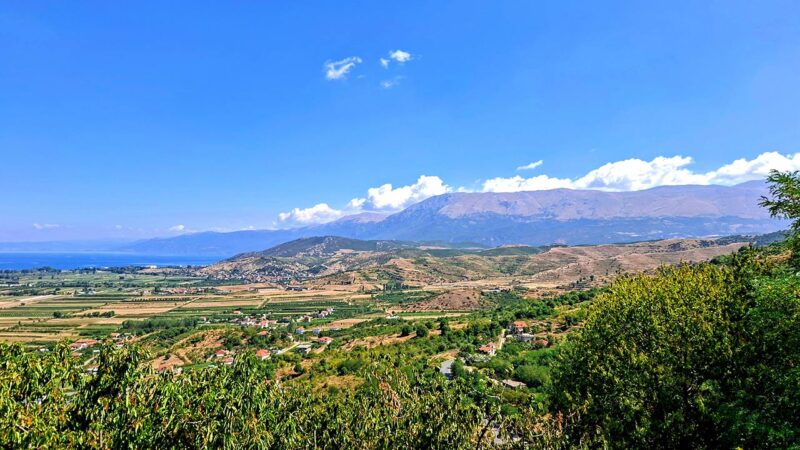
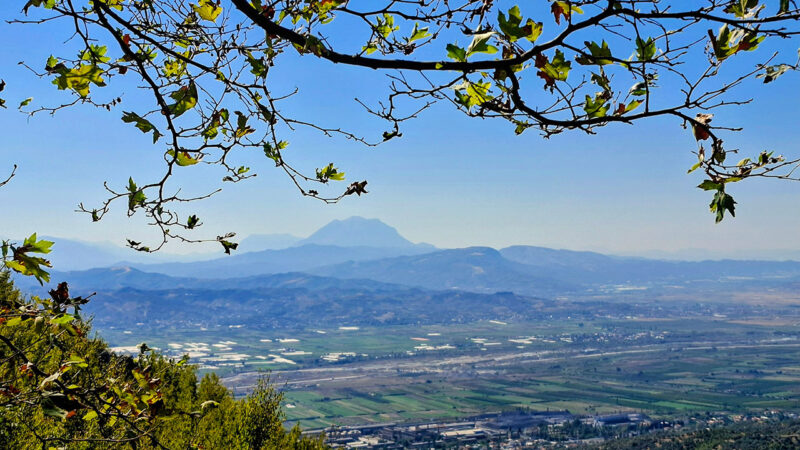
Honestly—I’ll admit—at that moment, it was the hardest experience of my life. Probably only childbirth is tougher. But that also means any woman could handle a climb like this if she wanted to. The question is, why would anyone? Well, for these views! From the summit of Galicica National Park, you get panoramas of two lakes: one you already know—Ohrid Lake, and on the other side of the ridge—Lake Prespa, where three countries meet: Macedonia, Albania, and Greece. 


The park covers the Galicica mountain ridge, reaching 2,265 meters above sea level. The slopes are covered in coniferous and deciduous forests, while alpine meadows dominate above 1,500 meters.

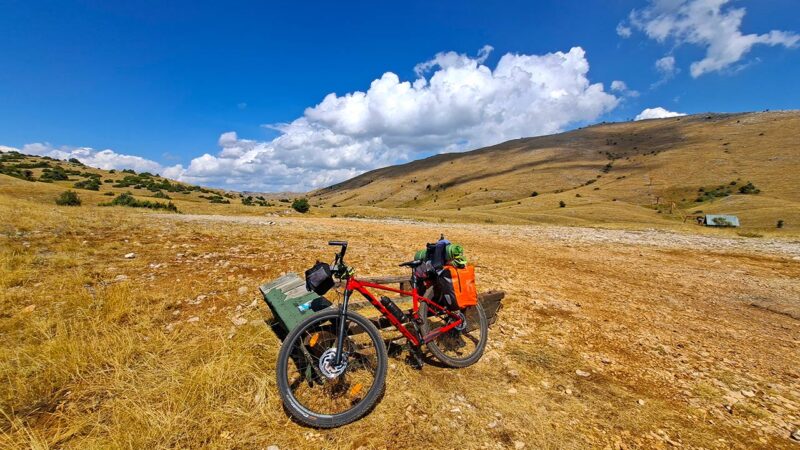
The meadows are picturesque, but there’s a catch—the valley up top is swarming with flies. Thousands of them: in your eyes, nose, ears. I even swallowed a few, not to mention the hundreds I managed to spit out.


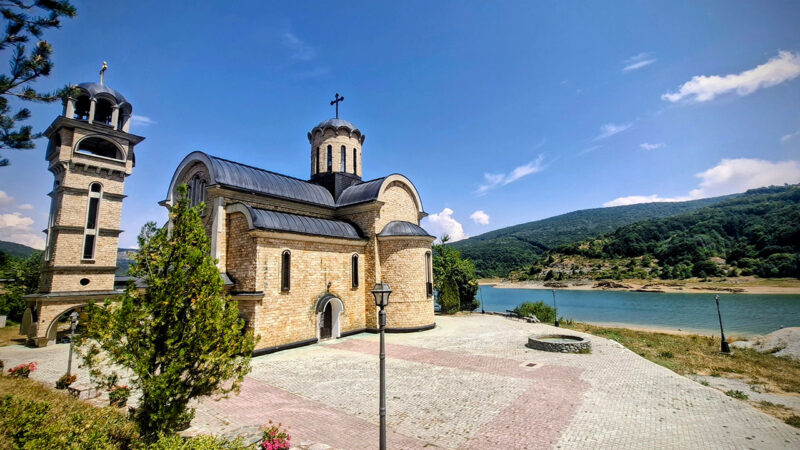
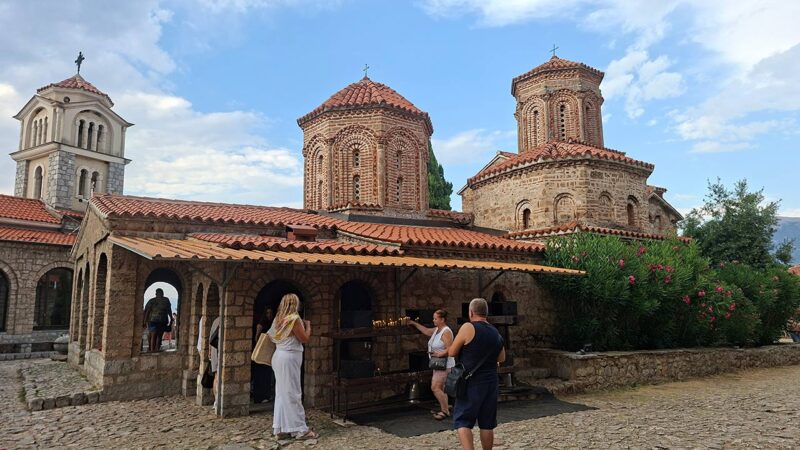
The descent, however, was a dream—serpentine curves, perfect asphalt! I dropped down to Ohrid Lake at St. Naum, just a few kilometers from the Albanian border. Here stands a huge monastery complex (as everything in Macedonia seems to be huge). Its centerpiece is a 10th-century church!

Of course, photography inside is forbidden, but I still went in—possibly for the last time on this trip—to soak in the atmosphere of Orthodoxy. Entrance was about €2.50. Around the monastery are beaches and restaurants—a place where the spiritual meets the holiday vibe.


Crossing both border controls took less than 10 minutes, and just like that—I’m in Albania!

Day 6 (20.08.2025) Pogradec – Korçë – Ersekë

After leaving Pogradec, the road heads away from the lake into the heart of Albania. The lake disappears behind me, and the route gradually climbs into the mountains. Hills, vineyards, and small villages—only about 40 km to Korçë, but it feels like a full day of work. The asphalt is good, but the terrain constantly rises and falls.

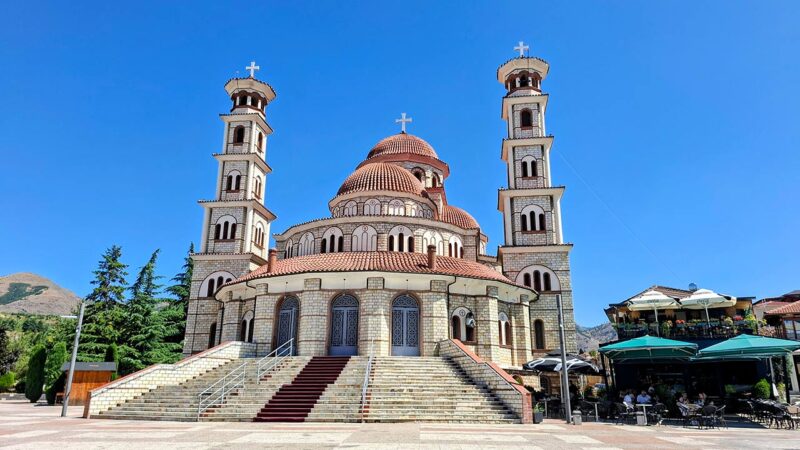
Korçë greets you with a bustling center, an old bazaar, and its famous Korça brewery—a completely different, urban atmosphere.


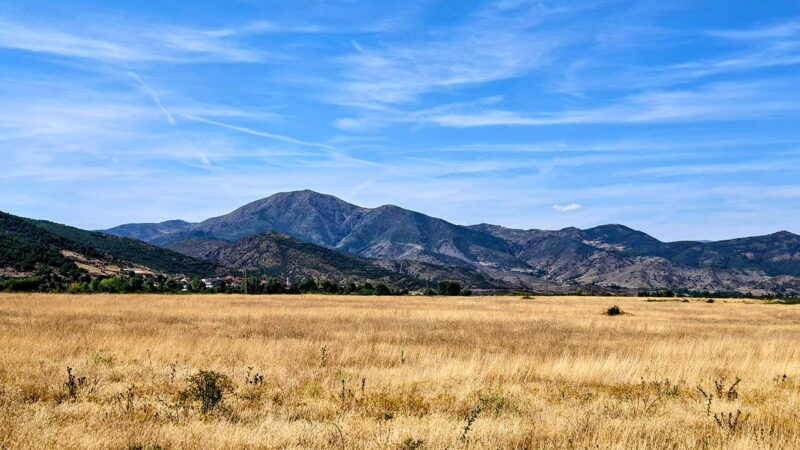
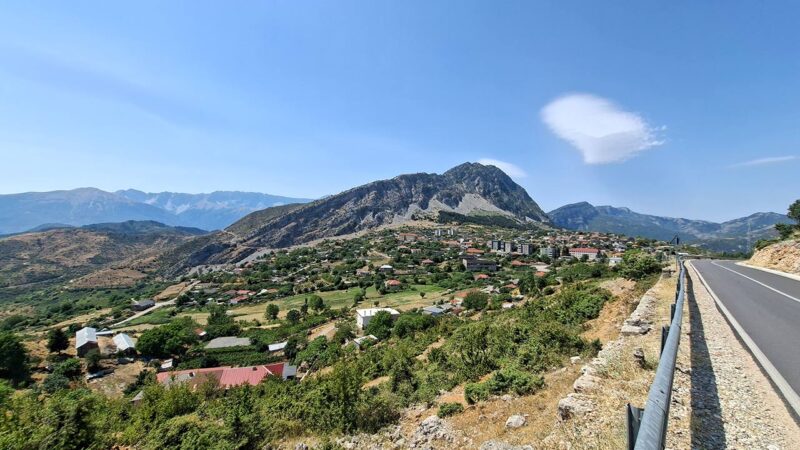
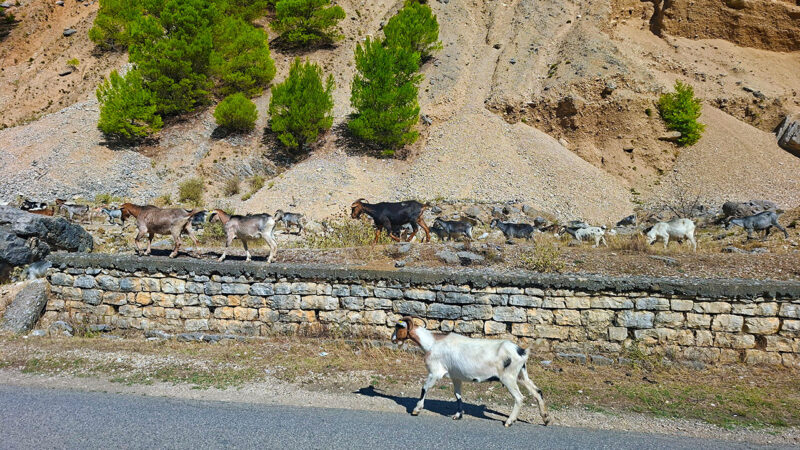
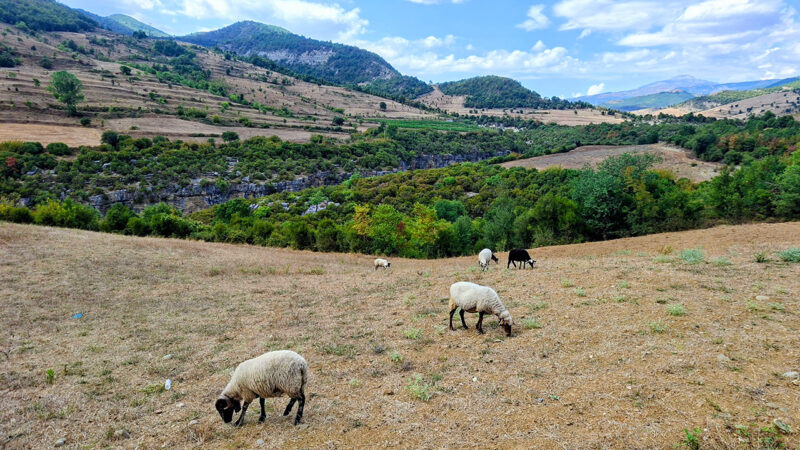
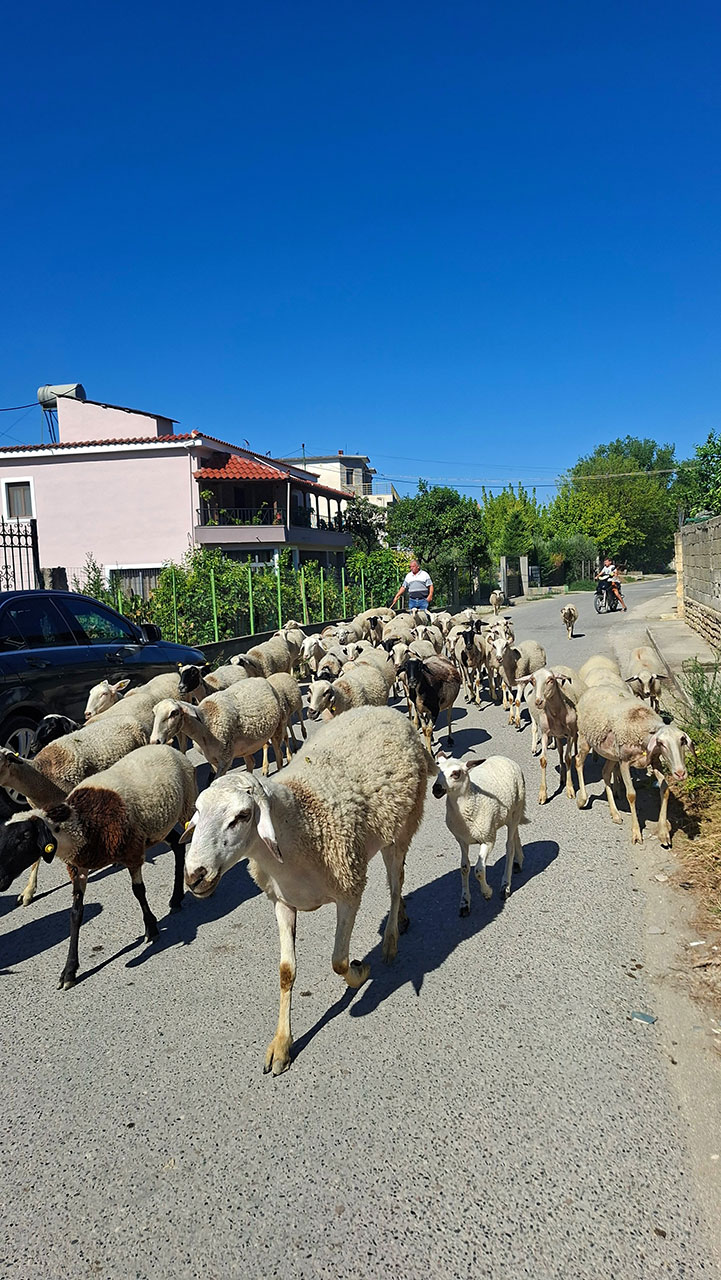
And then the real mountain adventure begins. The road to Ersekë is only about 45 km, but the elevation gain is serious. Hairpin bends, valley views, sheep and shepherds against the mountain backdrop. Few cars, quiet and beautiful road. Ersekë turned out to be a small, peaceful mountain town, sitting around 1,000 meters above sea level at the foot of the majestic Gramos mountain range, which separates Albania from Greece. After the heat at the lake and in Korçë, it was surprisingly cool here. The town has a population of around 3,000, with just a few streets, cafés, and stunning mountain views.


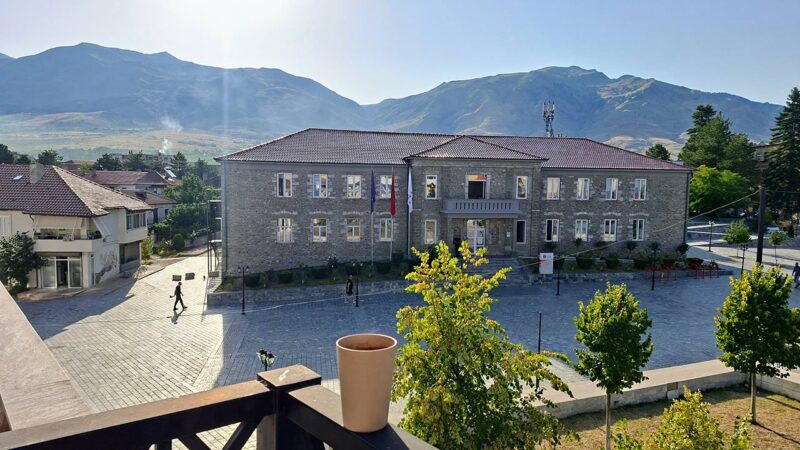
You might think this would be the moment to finally rest… but nope! For €20, I checked into the only hotel in town, in a room with a balcony overlooking the main square. And that very evening, a loud music festival happened right there! Not some amateur event—everything was professional: stage, lights, sound system, TV cameras. I didn’t manage to fall asleep until 1 a.m.


The next morning brought a real shock. I looked out the window—the square was completely empty. No stage, no equipment, not even a scrap of paper. If I hadn’t had photos and videos from the previous night, I would’ve thought it was all just a dream.

Day 7 (21.08.2025) Ersekë – Leskovik – Përmet

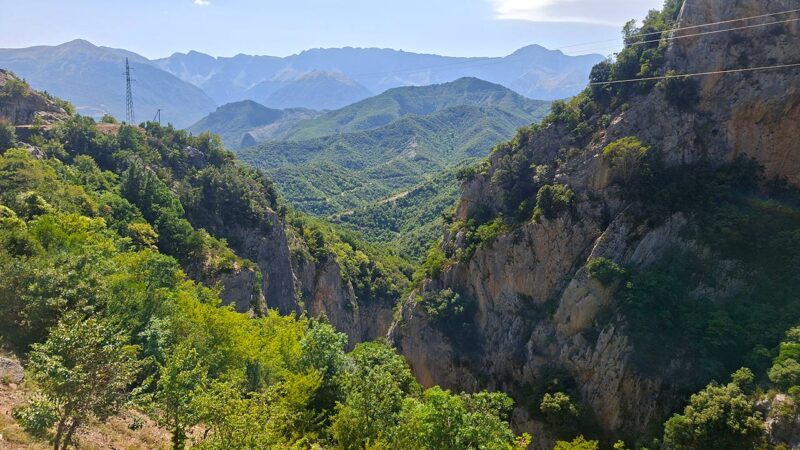
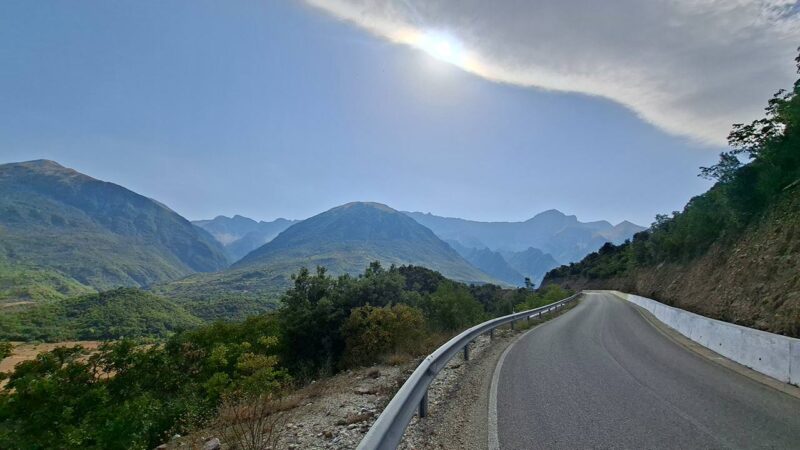
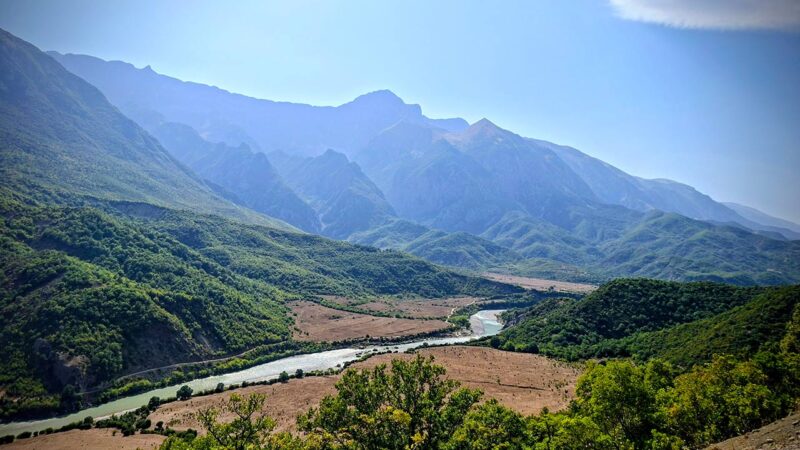
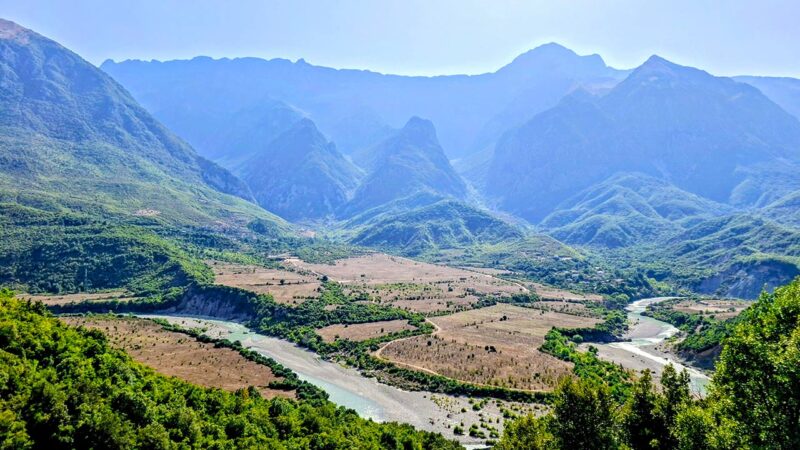
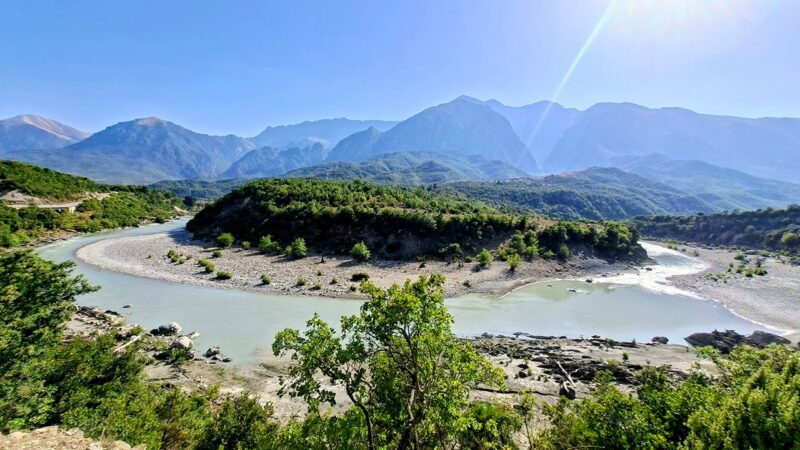
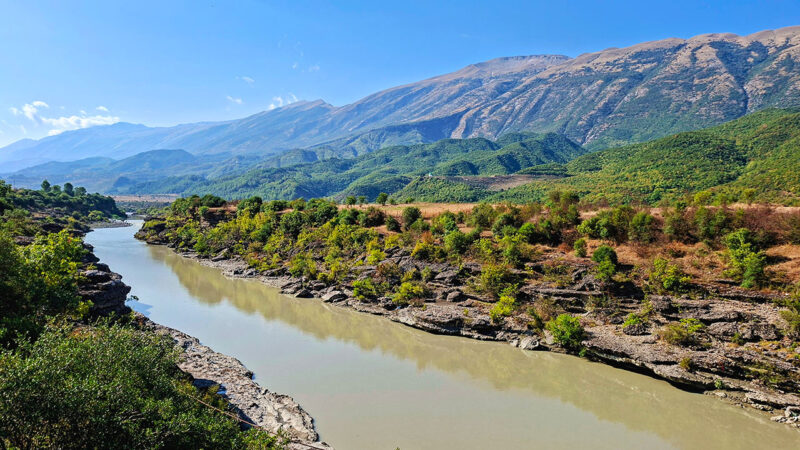
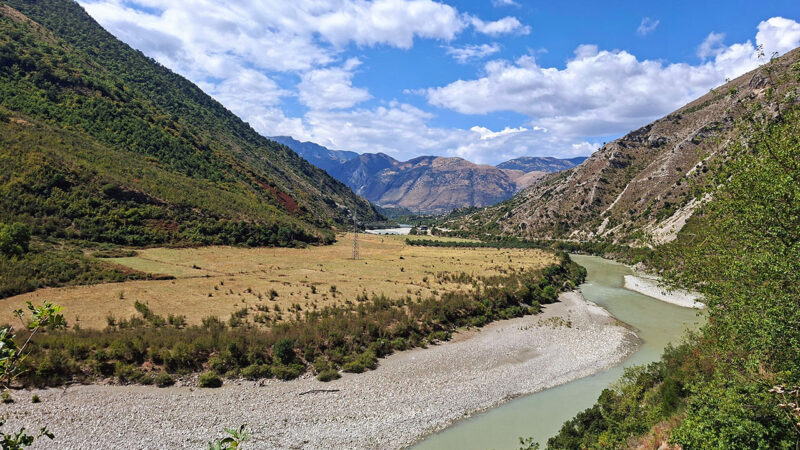
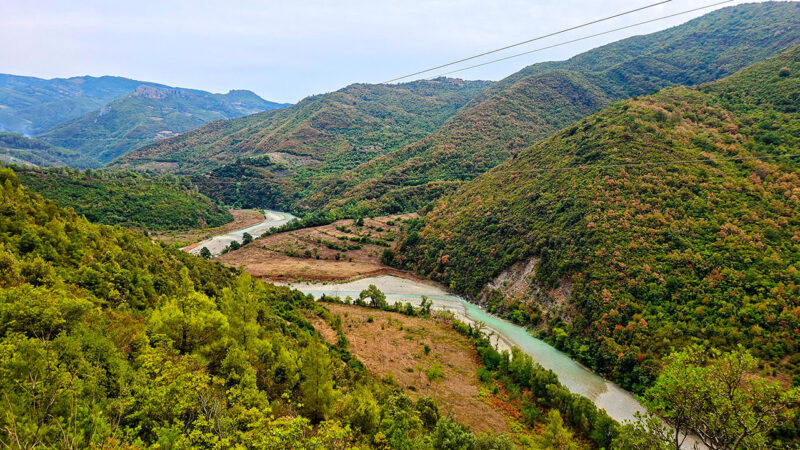
Today I got to ride on one of the most beautiful roads of my life—the Vjosa River valley.


In the morning, I marveled at how every trace of yesterday’s concert had disappeared from the square. I brewed myself some coffee (yes, a gas stove even comes in handy at a hotel sometimes), packed up, and went in search of breakfast. The town is full of cafés and bars! In the morning, every table is taken, but there’s no food. Not even a crust of bread! In the end, I had a couple of tiny cups of caffeine with the locals and set off hungry.


The first town, Leskovik, was only 40 km away. In Finland, that would be less than two hours—but here I faced three climbs, each about 3 km long with gradients up to 10%. I puffed and huffed for a long time, but with every kilometer, the scenery became more breathtaking. Pines appeared at the summits—oh, that scent! Along the way, the village of Shelegur offered stunning views: mountain peaks reflected in a crystal-clear lake, surrounded by fragrant pines.


In Leskovik, I devoured two burgers. The restaurants were surprised that I ordered two hot dishes just for myself—but with this heat and all those climbs, the calorie burn is enormous. One portion only lasts a couple of hours, and there’s no way to cover the distance between towns in just a couple of hours.


From Leskovik, I could have descended into the Vjosa valley on asphalt, but I chose a long-abandoned old road instead. The asphalt here seems to have been renewed only back in Hoxha’s days. But I wanted a little variety. With every meter, my awe and delight grew, until finally it reached full aesthetic ecstasy. I wished this road would never end!


And in Përmet, the main surprise awaited me! They were setting up a stage in the main square! Yes—the very same one I had watched all night yesterday. Are they going to follow me all the way? So once again, dancing until dawn! Because of this, I decided to stay in Përmet for a day. Just to have some night sleep.

Day 8 (22.08.2025) Përmet — Benja Thermal Baths & Hiking the Canyon

That morning it rained. Or rather, it poured!!! So I didn’t set off until around noon.

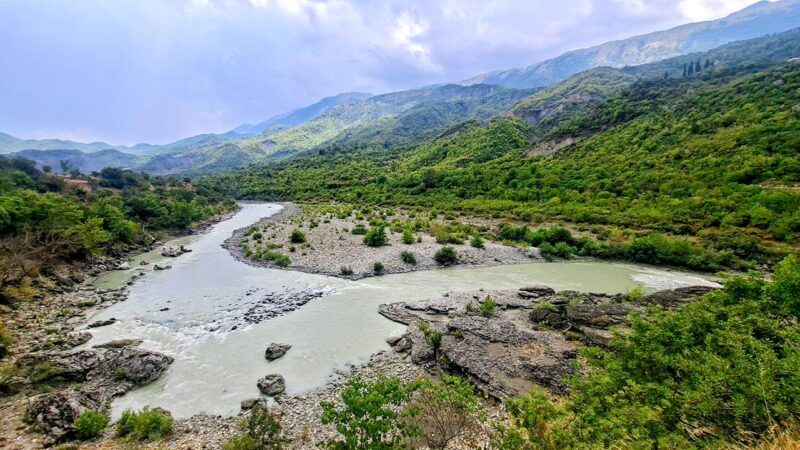
Before reaching the trail, I still had to pedal 13 km uphill, but the air was fresh, and the post-rain views were absolutely mesmerizing. The Vjosa River was roaring and sprawling, completely different from yesterday.


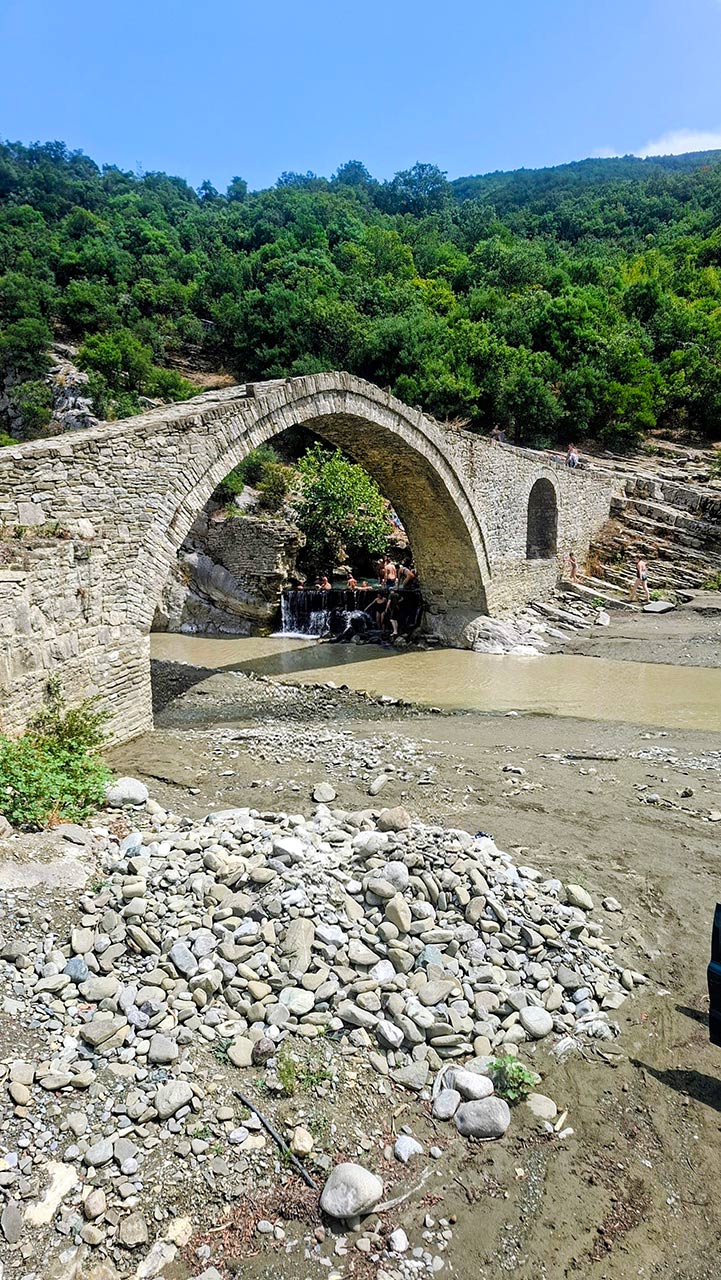
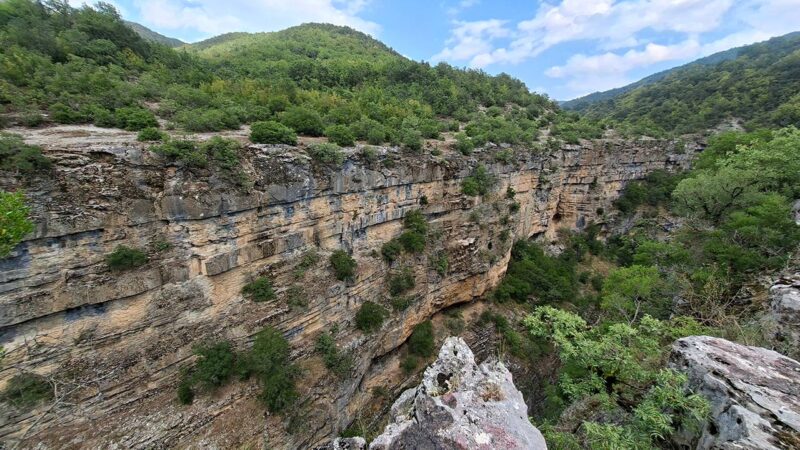
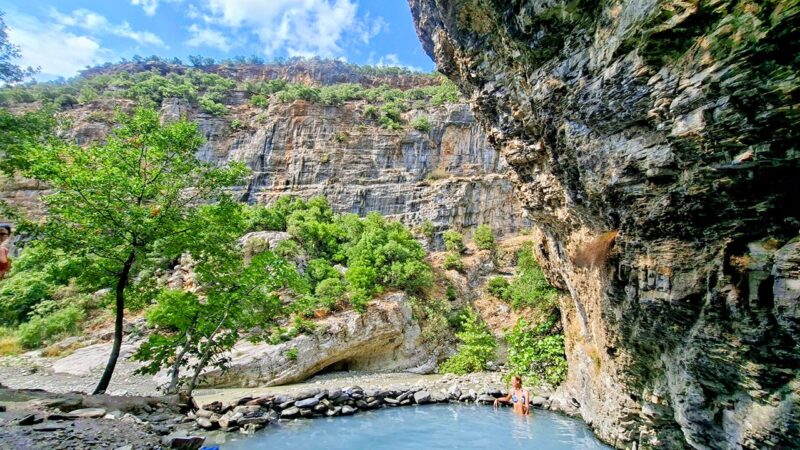
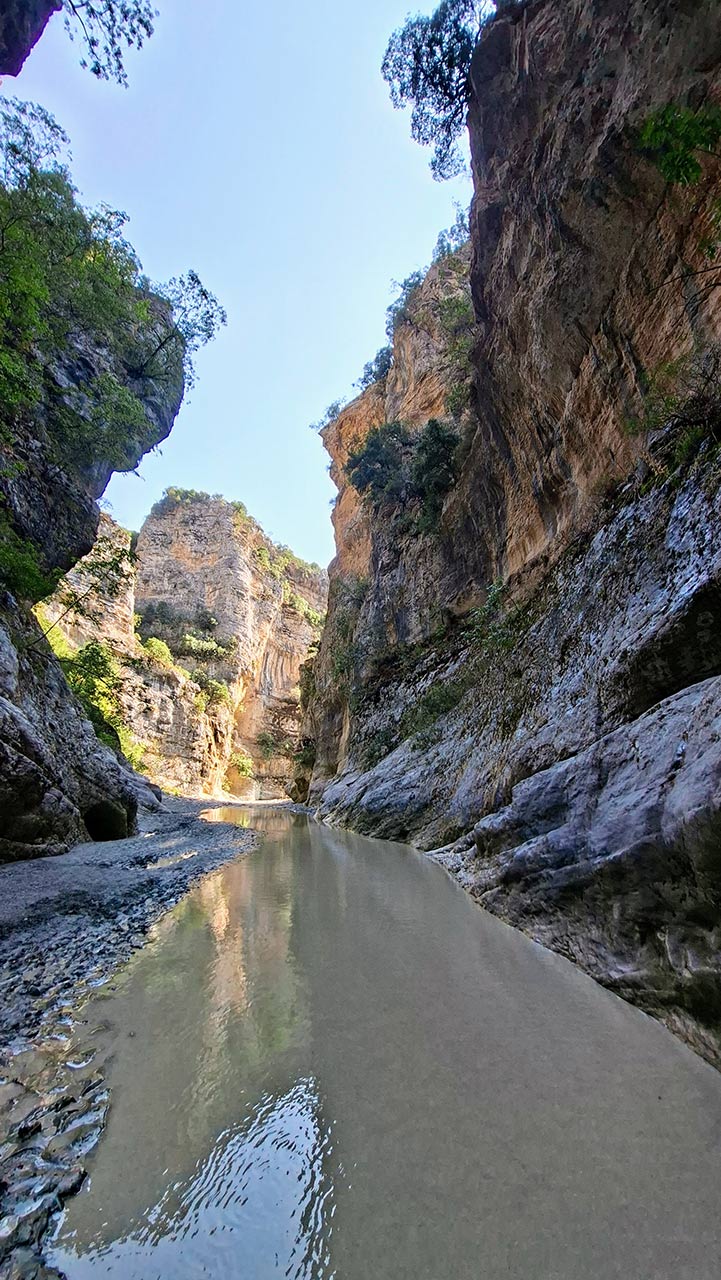
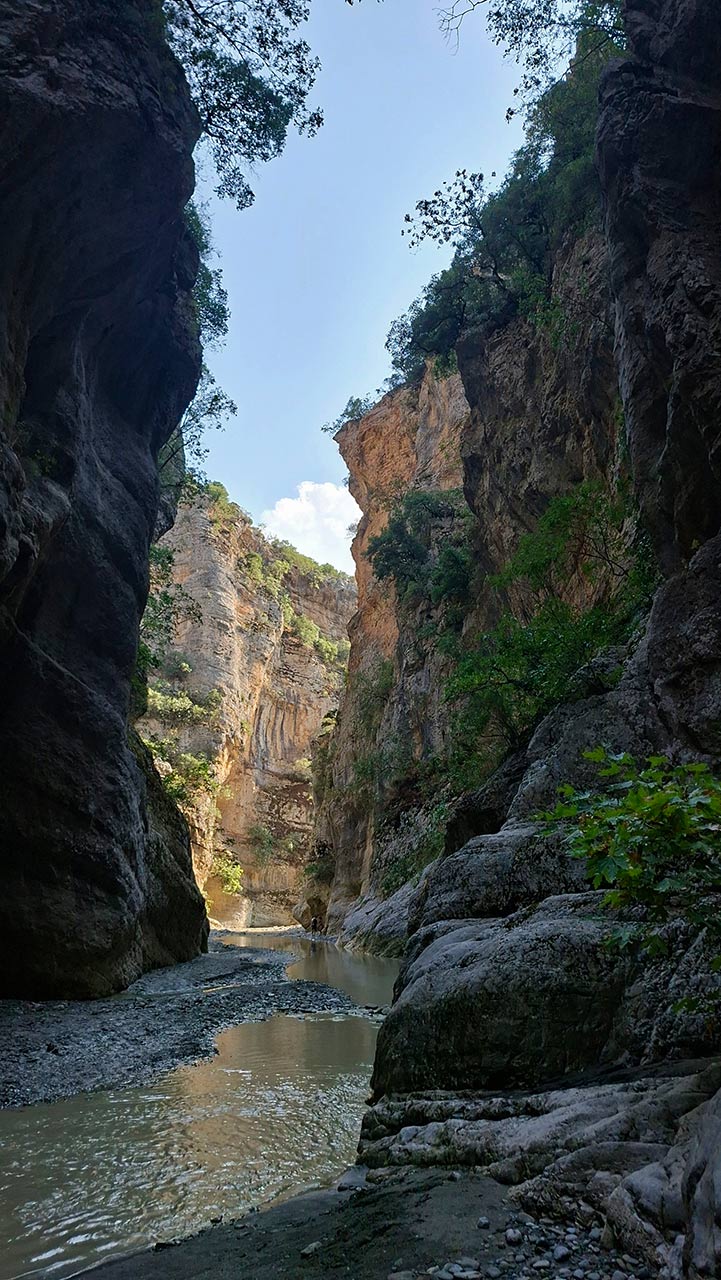
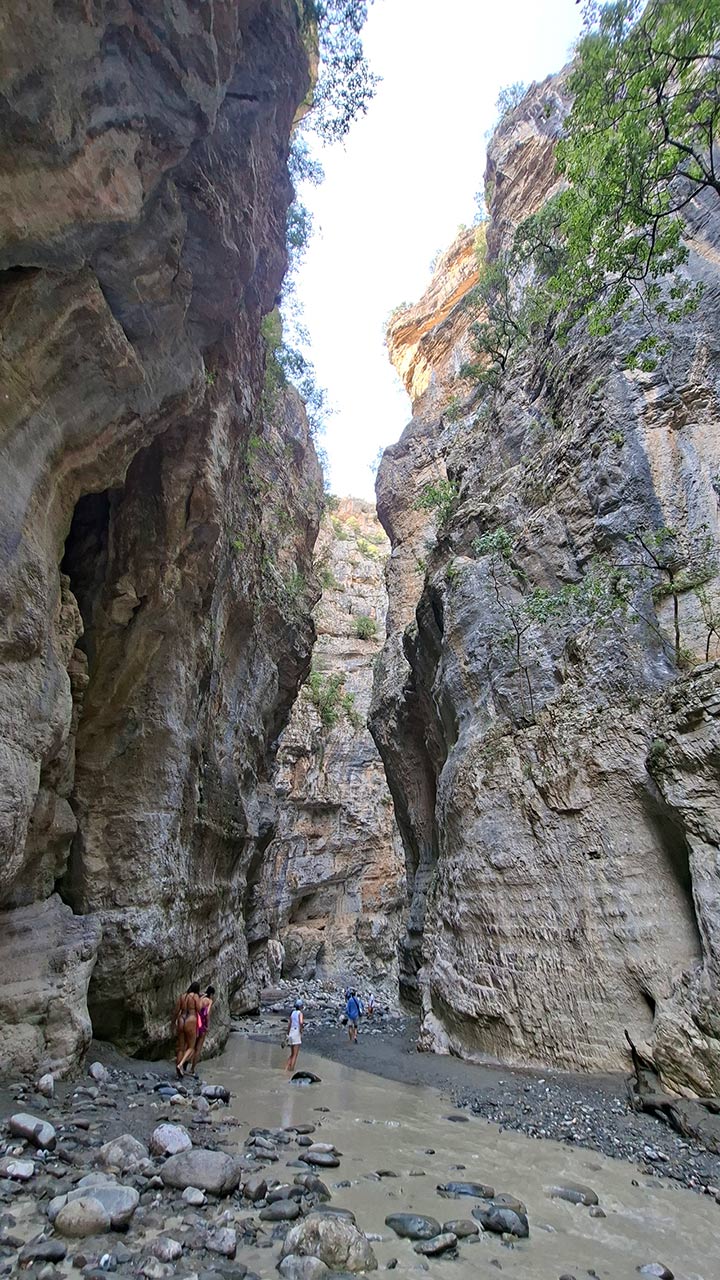
First I explored the canyon from above, hiking almost 10 km, then descended and walked nearly 3 km along the canyon floor. August is the perfect time— the deepest sections only reach knee height. I read that in spring, people even swim here! The problem was wrong footwear. I’d chosen trekking shoes, which are completely unsuitable for this route. You really need water shoes, or at least sandals that can get wet. So I had to go barefoot! My feet suffered—the canyon floor is clay mixed with stones – slippery. But the views… amazing! The canyon looks absolutely epic from below.


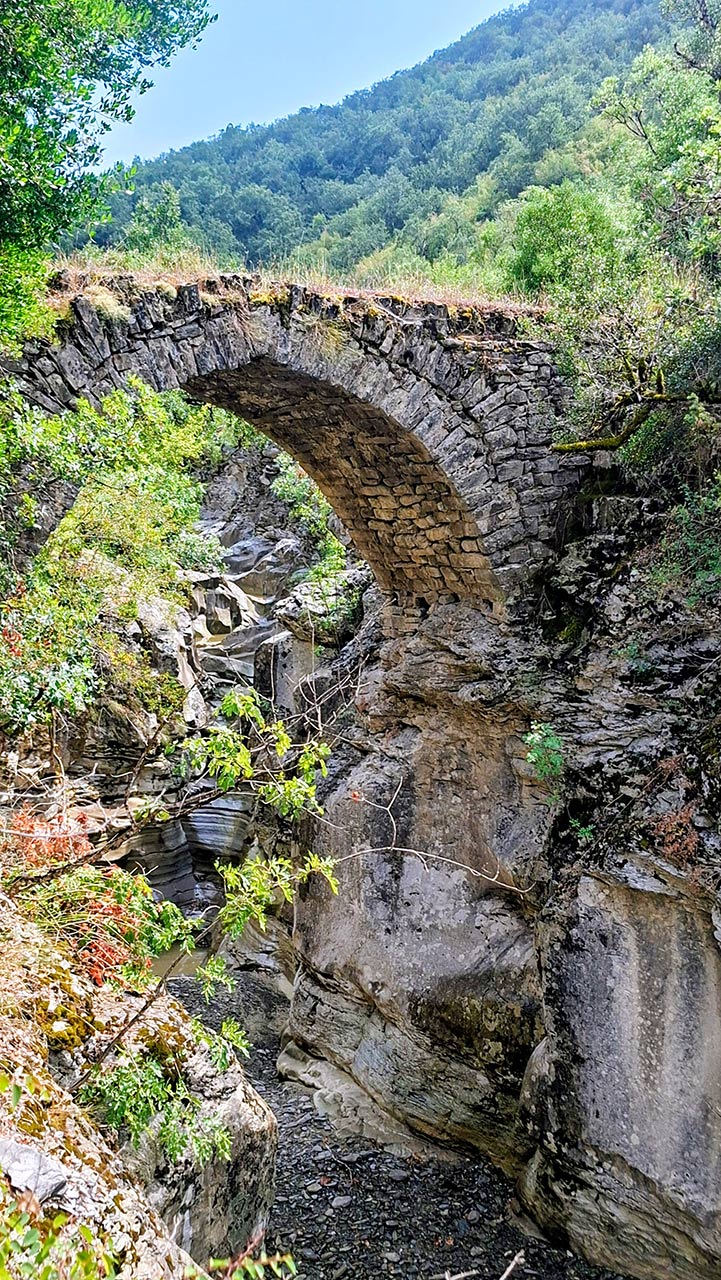
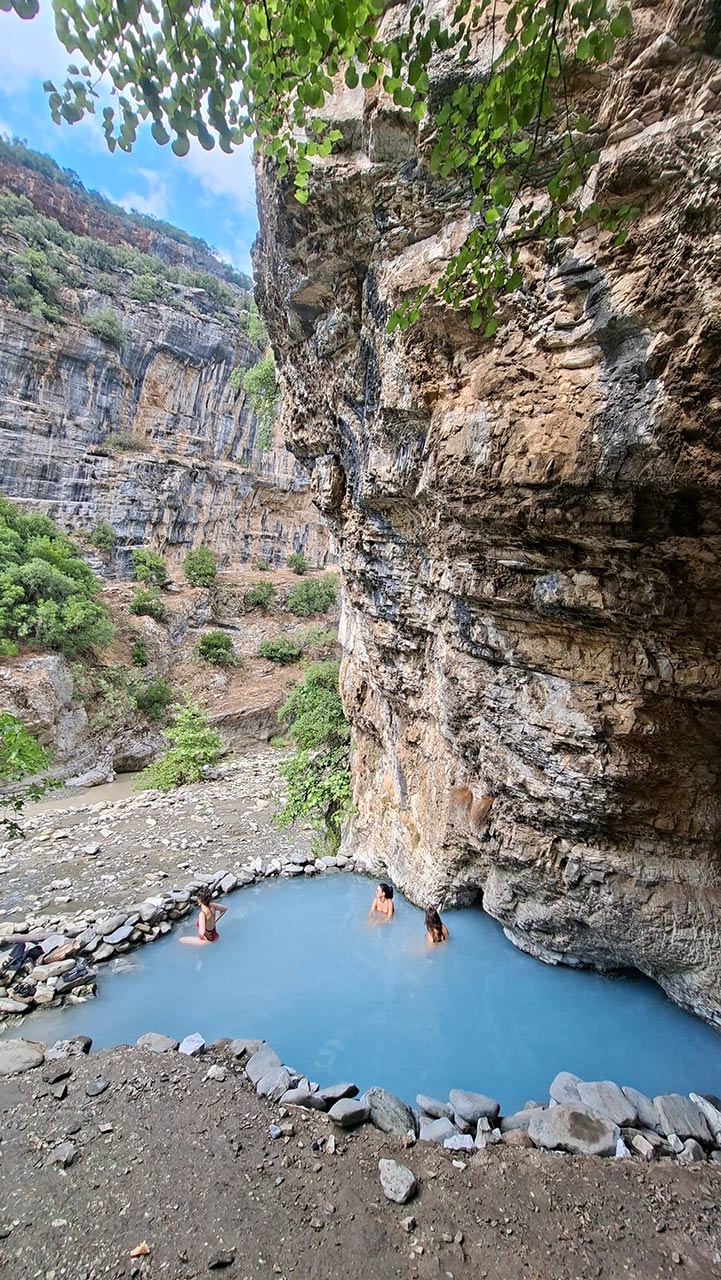
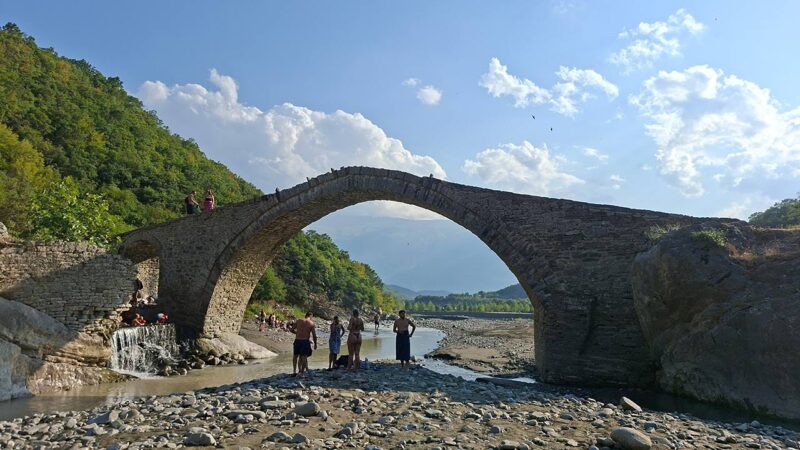
A couple of interesting details—there are two 17th-century Ottoman bridges. The Turks built them solidly: people still walk across them today, and they haven’t needed any restoration. And the main highlight of the trek—six thermal sulfur springs! The spot is called Benja. The water comes out at around 40 °C, and in the pools themselves it’s roughly 25–30 °C. They’ve set up proper baths around them, so you can relax after all the adventures.

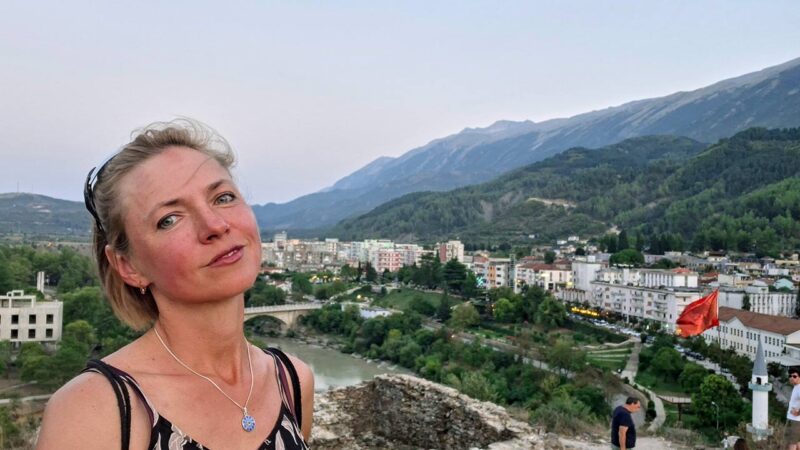
Day 9 (23.08.2025) Përmet – Gjirokastër

Well, friends — Gjirokastër!
I’ve always loved the sound of that word. It has a mysterious ring… almost like Bangkok or Mozambique. Those are my three fantasy hotspots. I already found my Bangkok in Phnom Penh, Mozambique is still far away, but Gjirokastër? I’m making a 120 km detour just to get there.


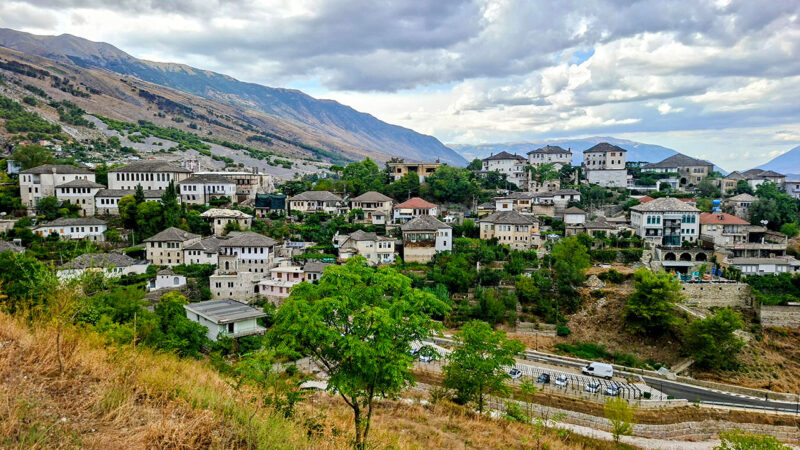
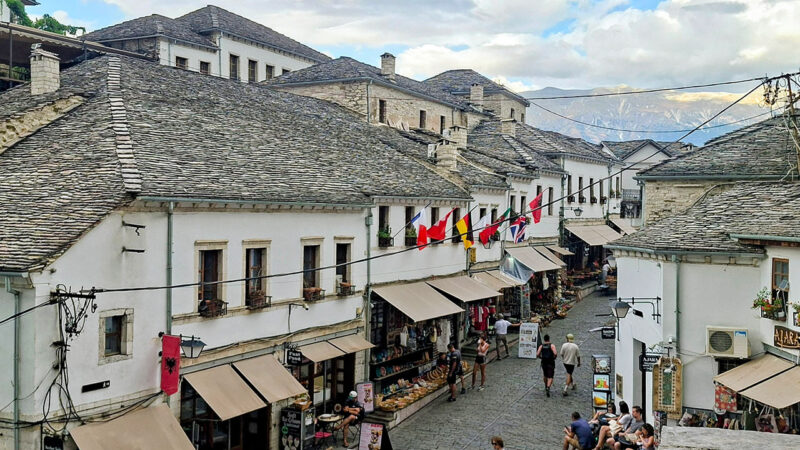
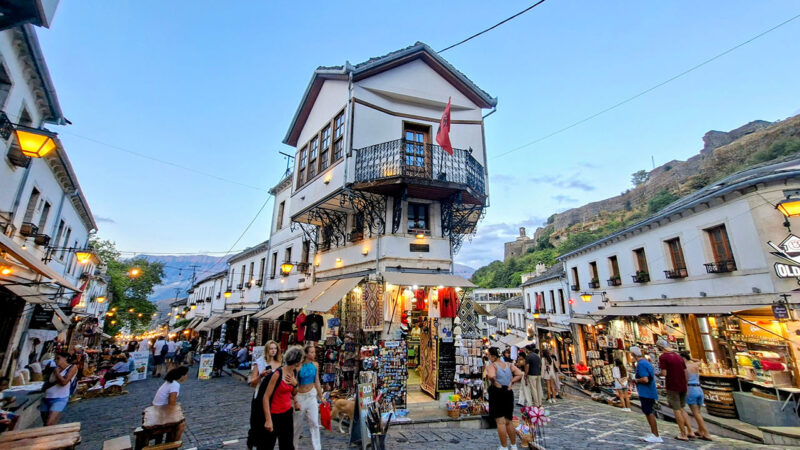
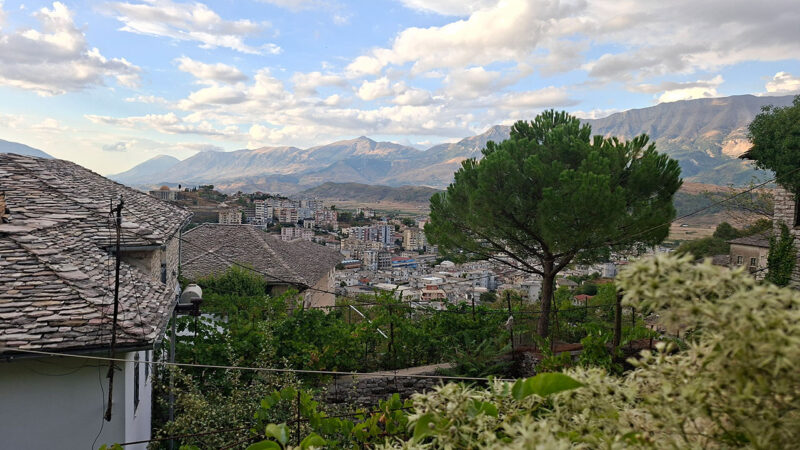
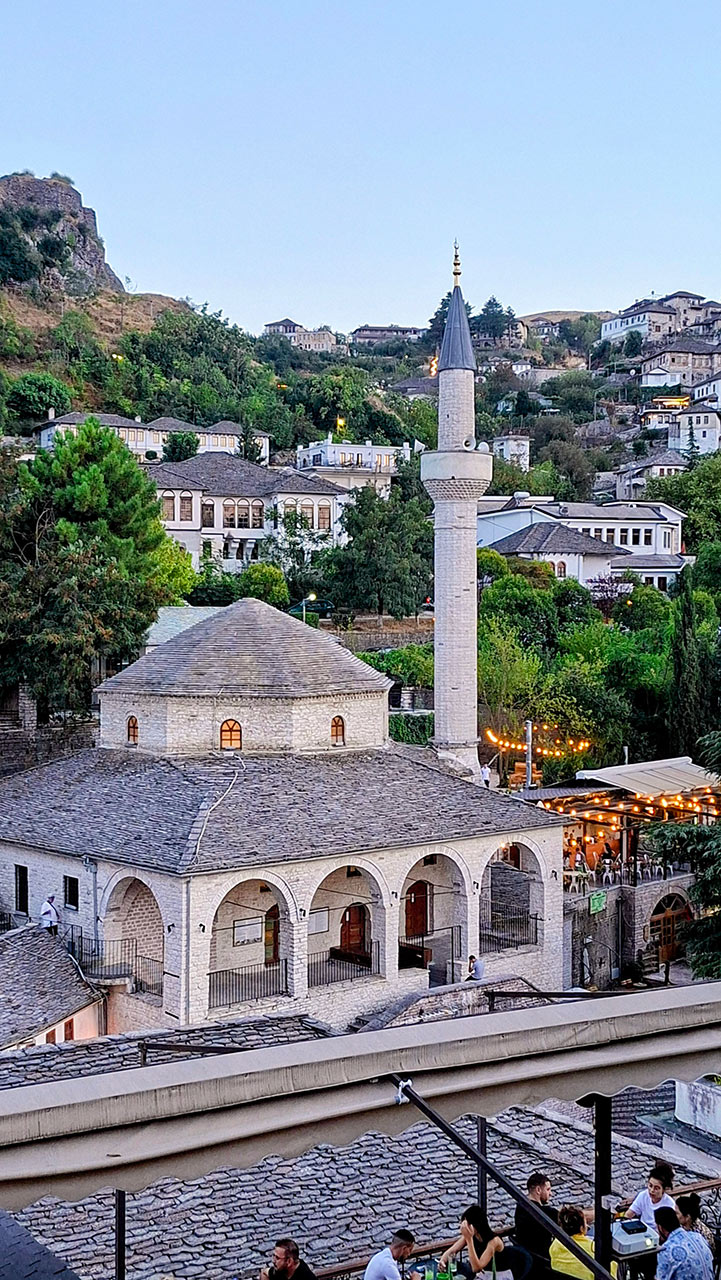
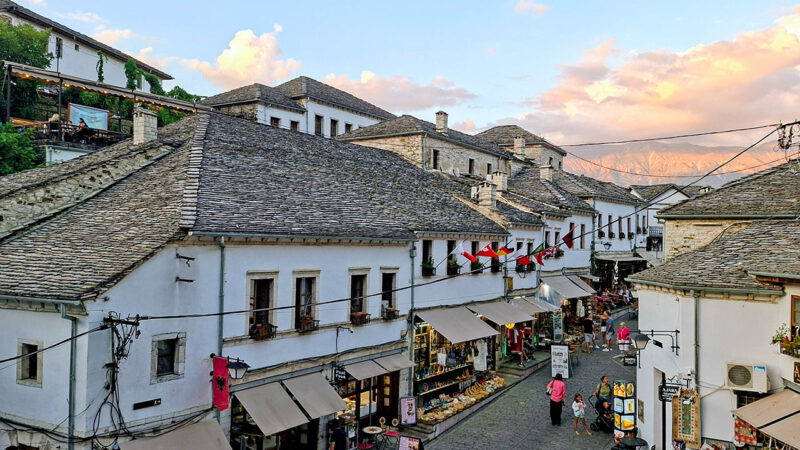
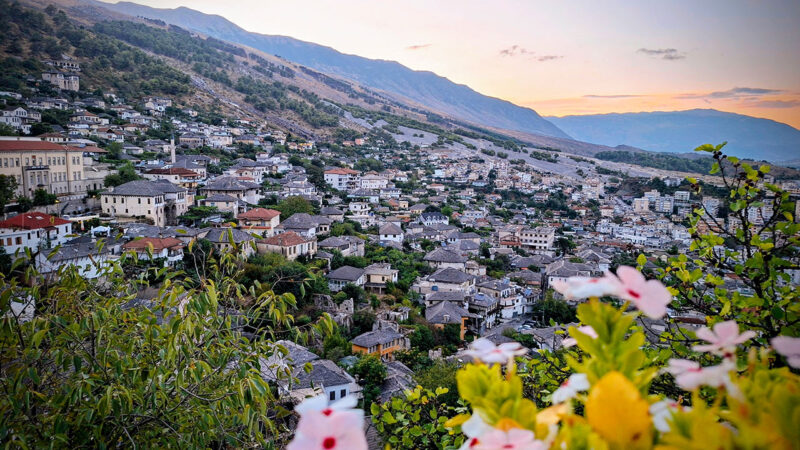
The city of stone roofs. One translation of Gjirokastër’s name is “Silver City.” Grey stone slabs form a continuous carpet over the hillside, glowing with a soft silver at sunset… as if someone scattered silver coins across the rooftops! It’s also called “the city of a thousand steps.” The historic center is a UNESCO World Heritage site.


No other place in the world has houses like these in such pristine preservation, though their style is typical of the Ottoman-era Balkans. The town’s medieval charm survived intact, thanks in part to Hoxha. One of the last dictators of the 20th century was born right here.


The streets wind like ribbons of history between stone houses, cobbled paths echoing every step, while mountains rise majestically behind. The air smells faintly of earth and old wood, a scent that makes your heart slow down and take notice.


And my lodging? Perfectly in tune with the city’s charm—a stone-roofed house. The owners live on the first floor; my little nest is upstairs. In the morning, breakfast will be waiting. All for €26, right in the heart of the old town—a fairytale without the price tag.


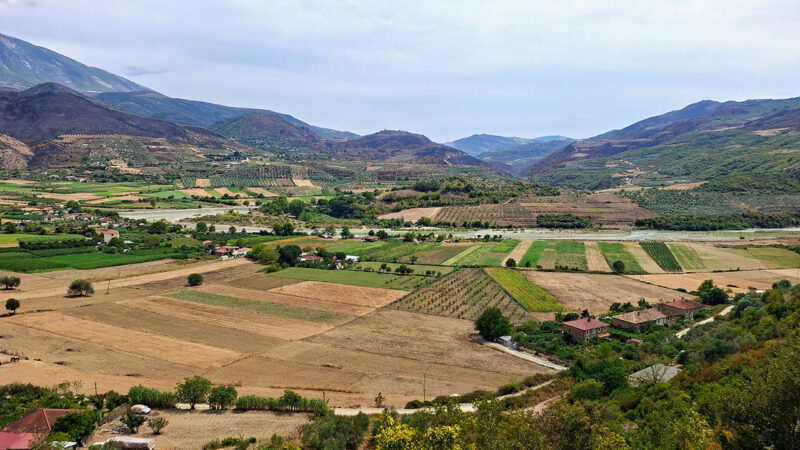
The journey here was equally spectacular. On the map, Përmet and Gjirokastër are only 15 km apart, but reality is different: they sit in separate river valleys, divided by a vast mountain range stretching toward Greece. Today I had to ride 60 km around it, tomorrow all the way back, yet I don’t mind—the views are worth every pedal stroke.  With landscapes like these, I could ride this road back and forth for a week and never tire of it.

Day 10 (24.08.2025) Gjirokastër — Osum Canyon — Çorovodë

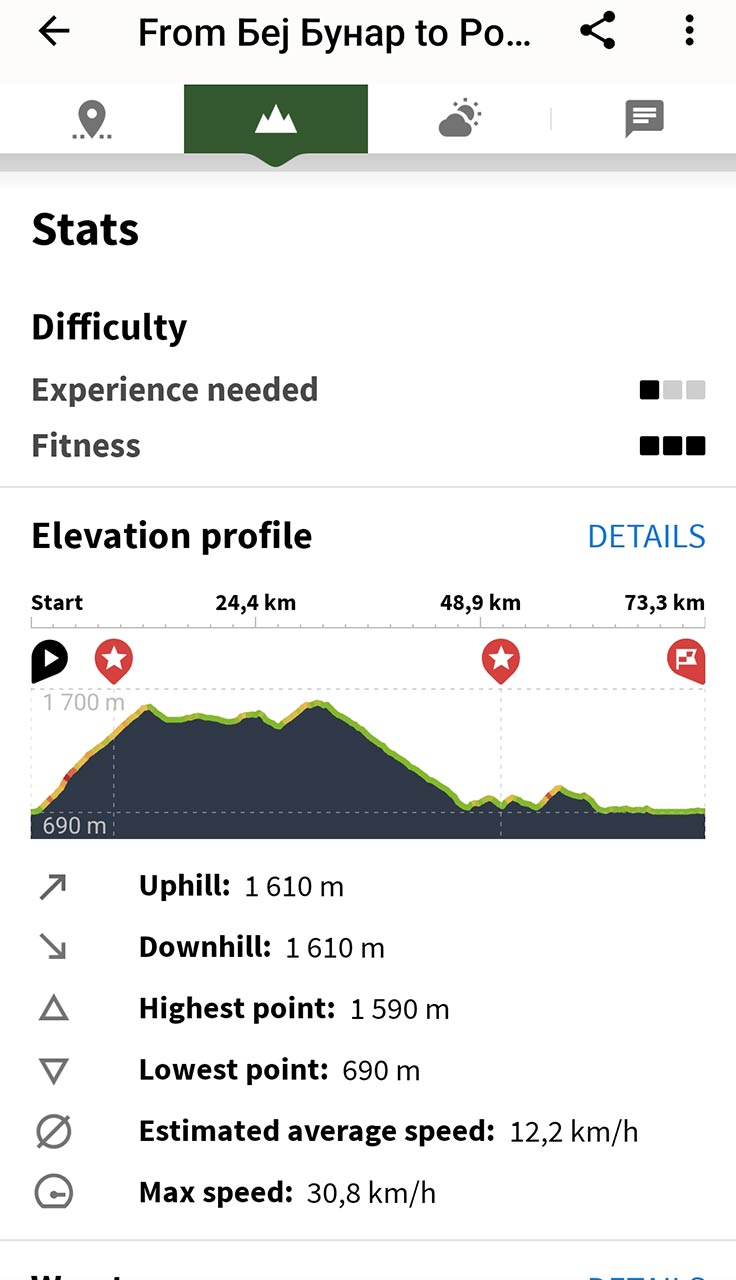
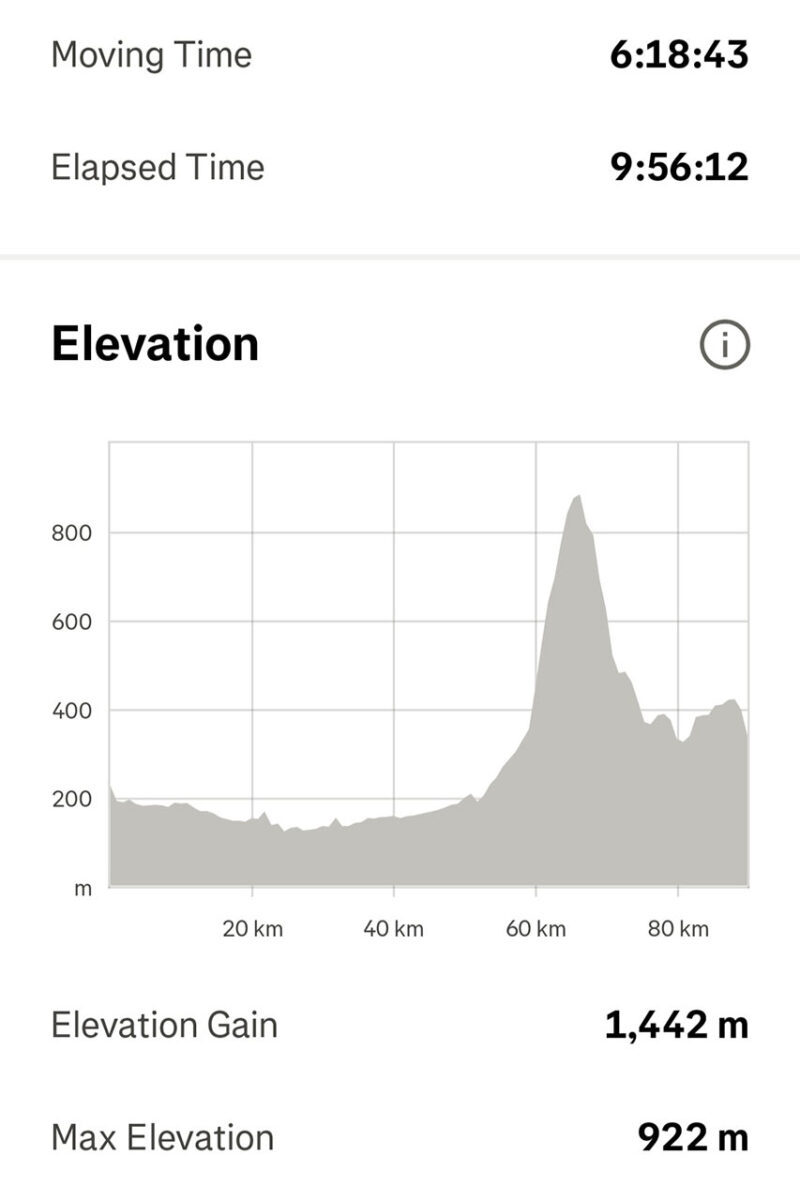
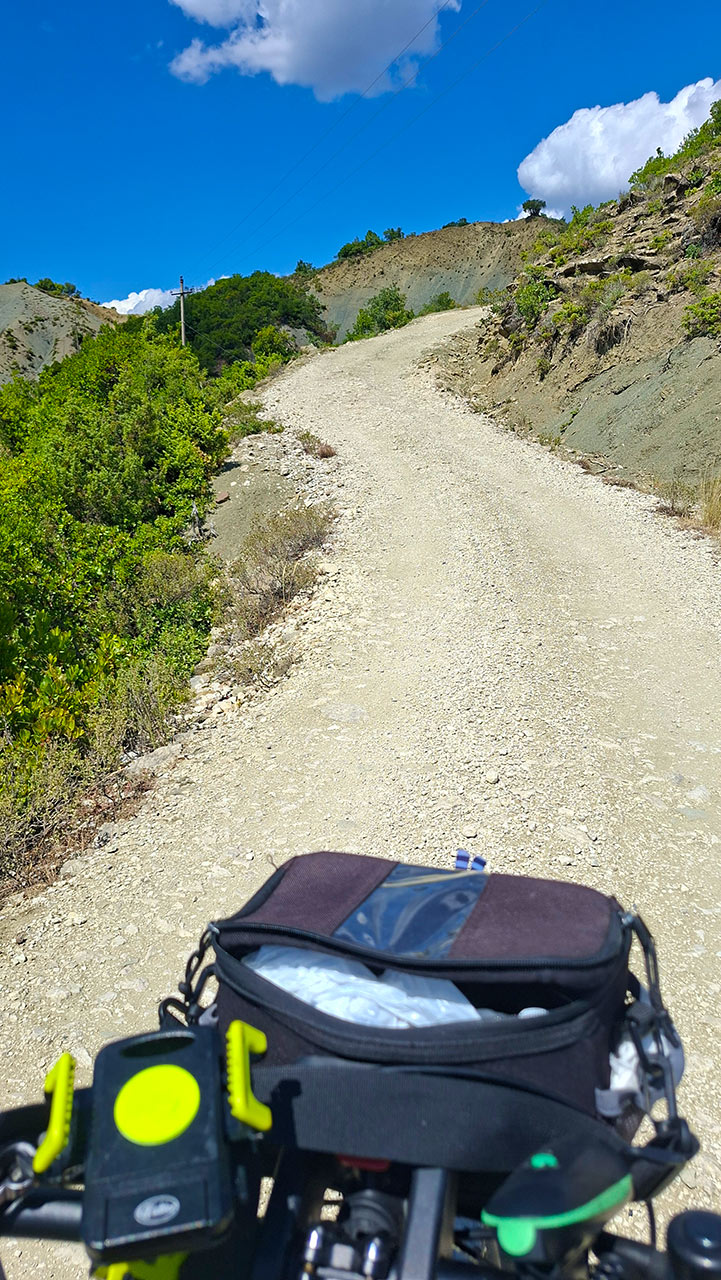
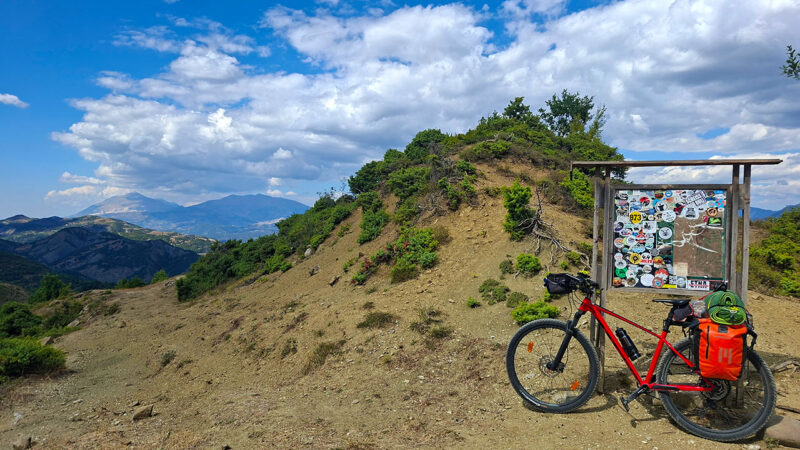
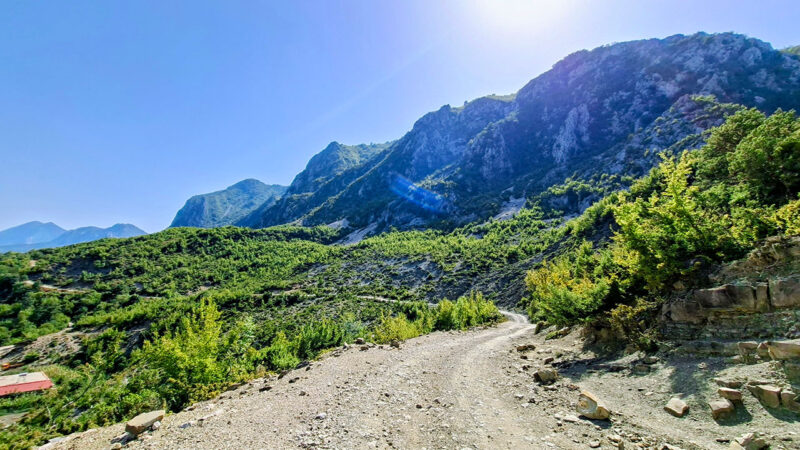
That morning, while sitting over breakfast, I realized today was going to be a heroic day. In the photo, you can see that little “bump” on the profile—it’s the toughest section of my entire Albanian route. According to the internet, I’ll have to push the bike a lot, and it’s not just on gravel—there are “medium-sized” stones. This pass is waiting for me in the second half of the day, when I’ll already be tired. And yet they say the views are breathtaking. Will I have the energy to enjoy them?


There are no shops, no water along this stretch. And the most picturesque part—the canyon—is right at the end. I didn’t want to miss it because of exhaustion, so I decided: ride past the canyon now, stay an extra day, and return on foot to soak it all in.

The day was scorching, sweat streaming like a river, stinging my eyes, and the salt made them tear up even more. My face burned red, tiny blood vessels popped. My lips? Cracked, inflamed, bleeding… I haven’t looked this glamorous in years! In hindsight, maybe I overestimated myself a little this time.


The climb was grueling. At the top, I recorded a cheery little video out of sheer joy—but then things got even harder. And, as always, the descent was even tougher. Shoulders tensed first, then my hands cramped so badly I couldn’t even squeeze the brakes. I had to stop every 500 meters just to stretch my fingers, coax them into working again.


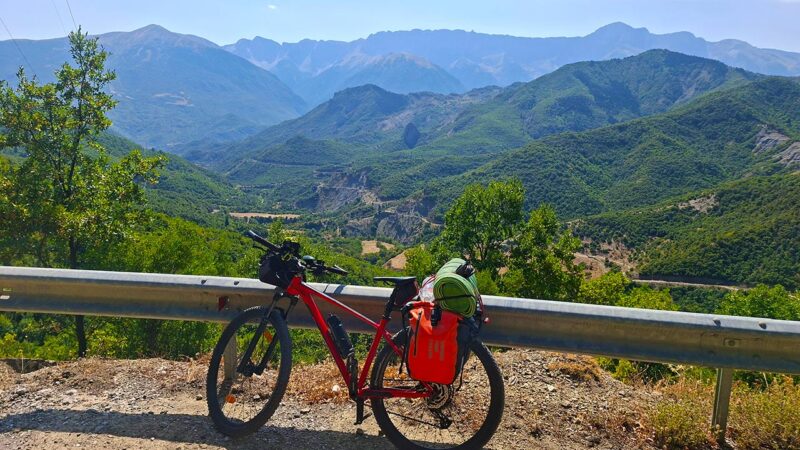
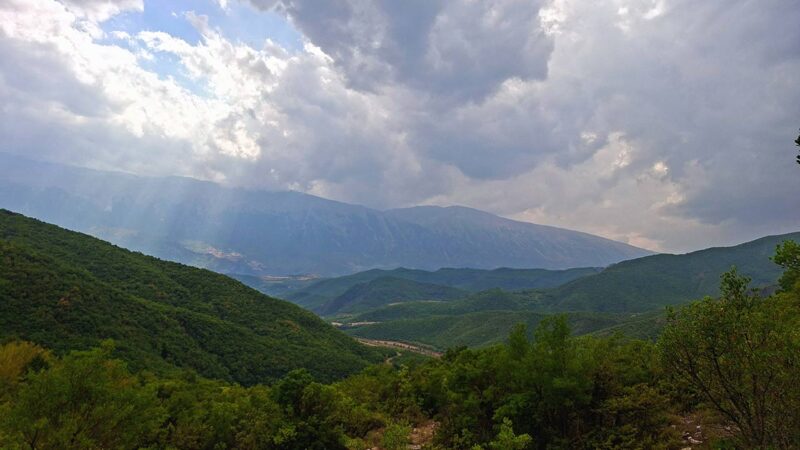
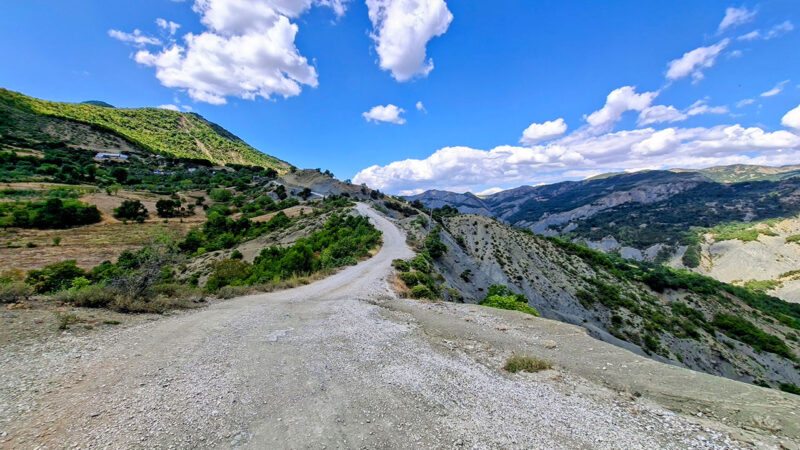
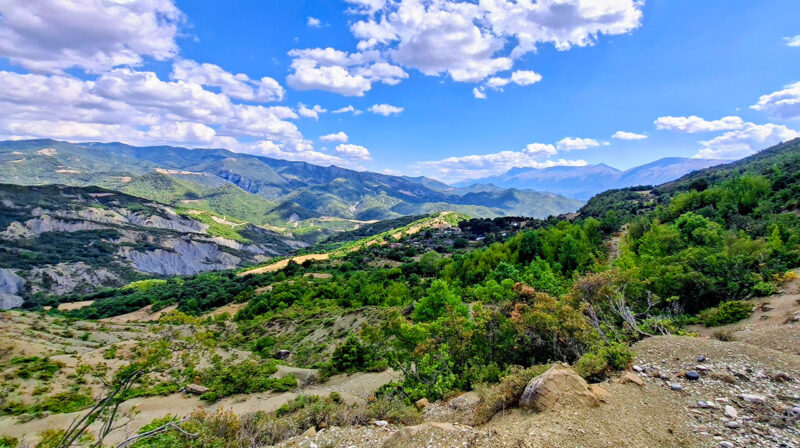
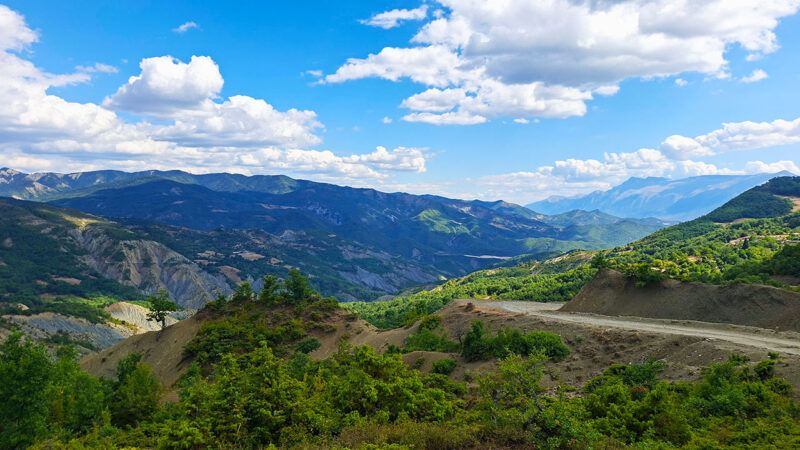
When you’re up at this altitude, photos can’t capture the depth or the distances. Peaks stretch for 30 kilometers in every direction. So, trust me, reality is more beautiful, than the pictures!


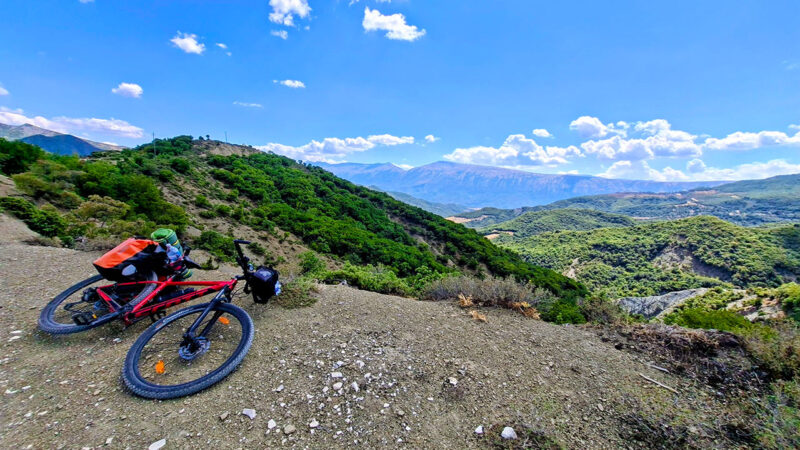
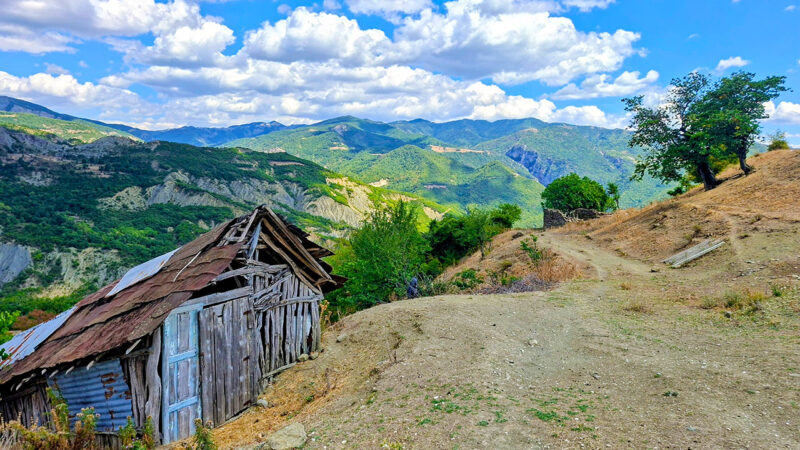
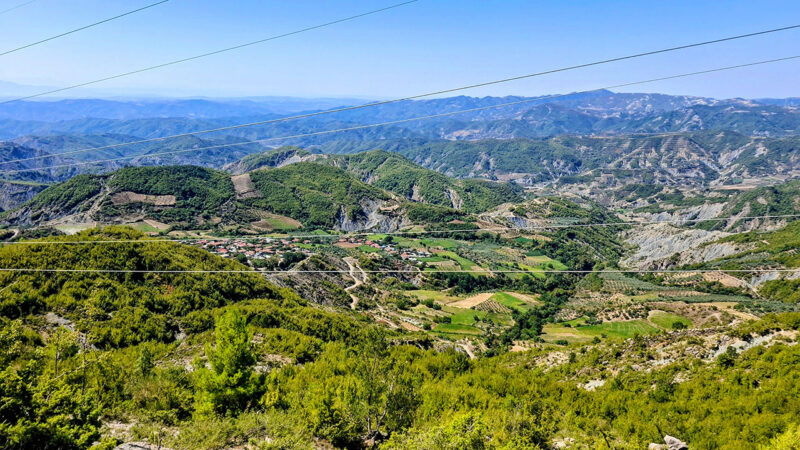
What amazed me—even here, along this, I won’t shy away from the word, “road”—there were still living villages! To get here, you’d need a jeep with enormous wheels. Over 4.5 hours of climbing up and down, I counted maybe ten of them. Back in Gjirokastër, I’d gone on a walking tour. The guide told us that since 1992, the country’s population has dropped by half a million—now only 2.7 million. And it’s not surprising: life here is tough. Summers scorch, winters in the mountains are snowy and long. Roads? Almost none. I’d probably run away too.


Back in Hoxha’s times, they didn’t build roads in the valleys at all. Why? So an enemy couldn’t easily invade. And the locals? Better stay home and keep their heads down! Still, the main roads connecting the big cities through river valleys are in amazing shape—new and smooth. But remote vilages are still forgotten.

Day 11 (25.08.2025) Çorovodë — Hiking the Osum Canyon

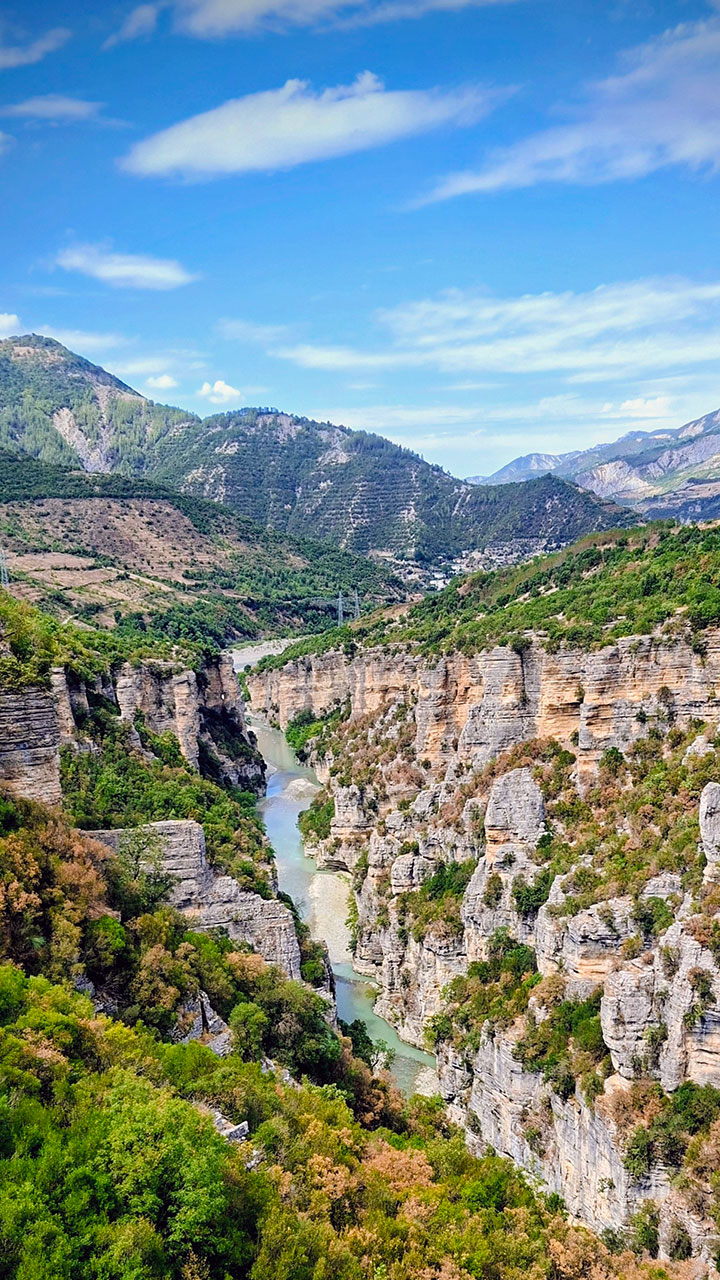
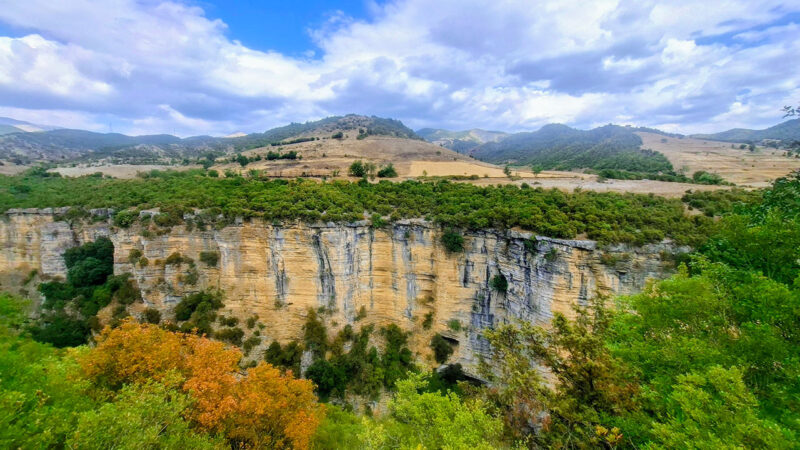
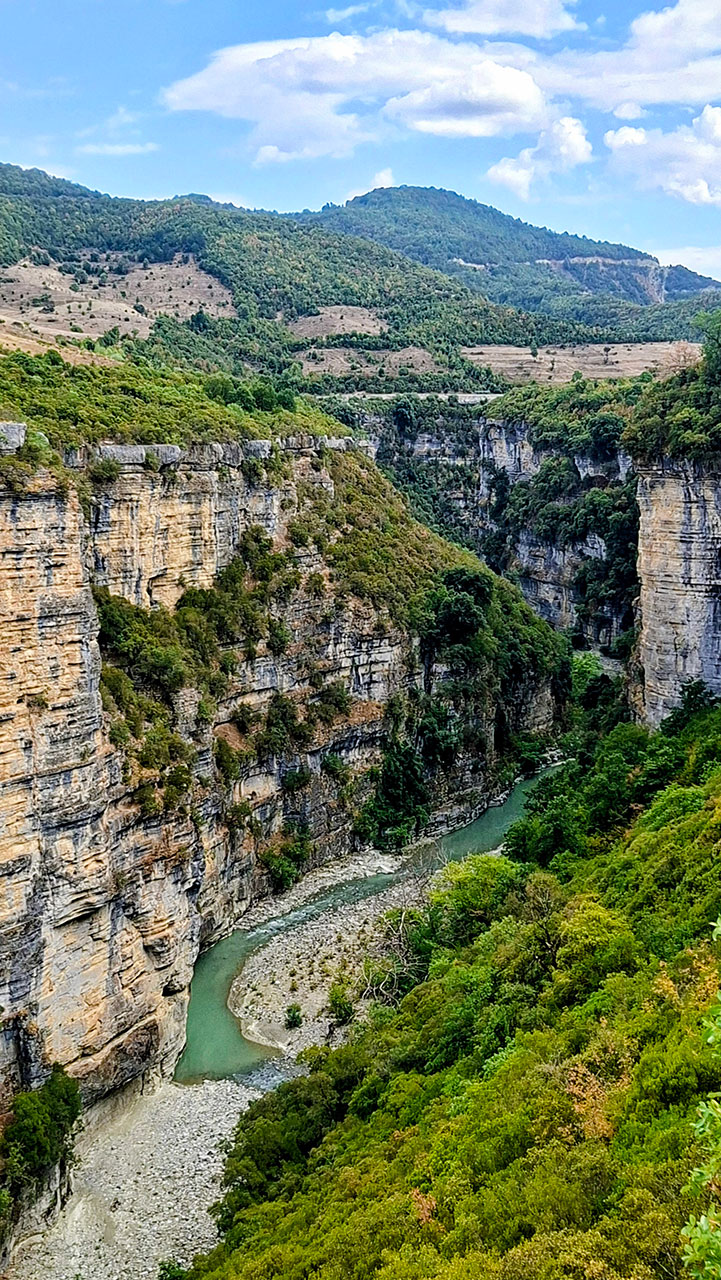
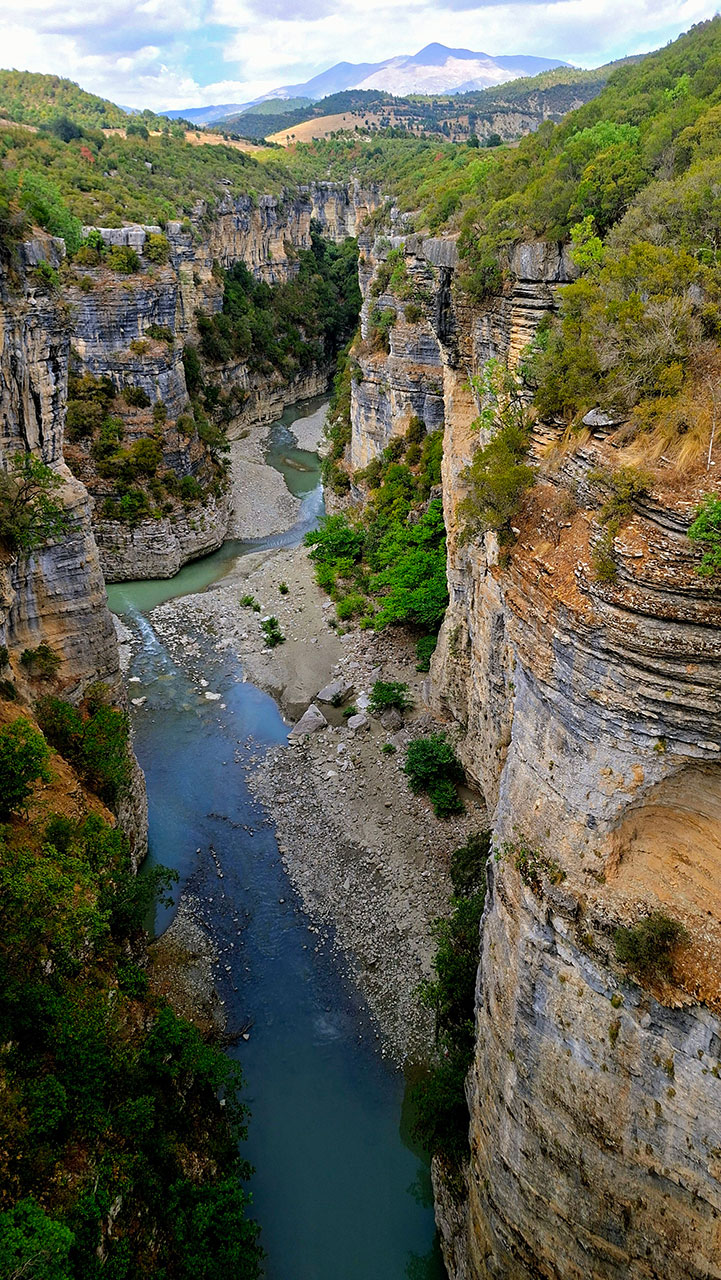
Osum Canyon — one of Southern Albania’s most stunning natural wonders. The canyon stretches about 26 km near the town of Çorovodë, with cliffs plunging 80–100 meters in places. The rocks are sheer, gray-and-white, and far below, the Osum River rushes, sometimes filling the canyon almost completely during the flood season.

In spring and early summer, the canyon is a hotspot for rafting. Later, when water levels drop, small beaches and secluded coves appear, perfect for swimming. Along the road by the canyon, several viewpoints offer breathtaking panoramas. Locals call it the “Albanian Grand Canyon,” and the name truly fits—the scale is simply awe-inspiring.


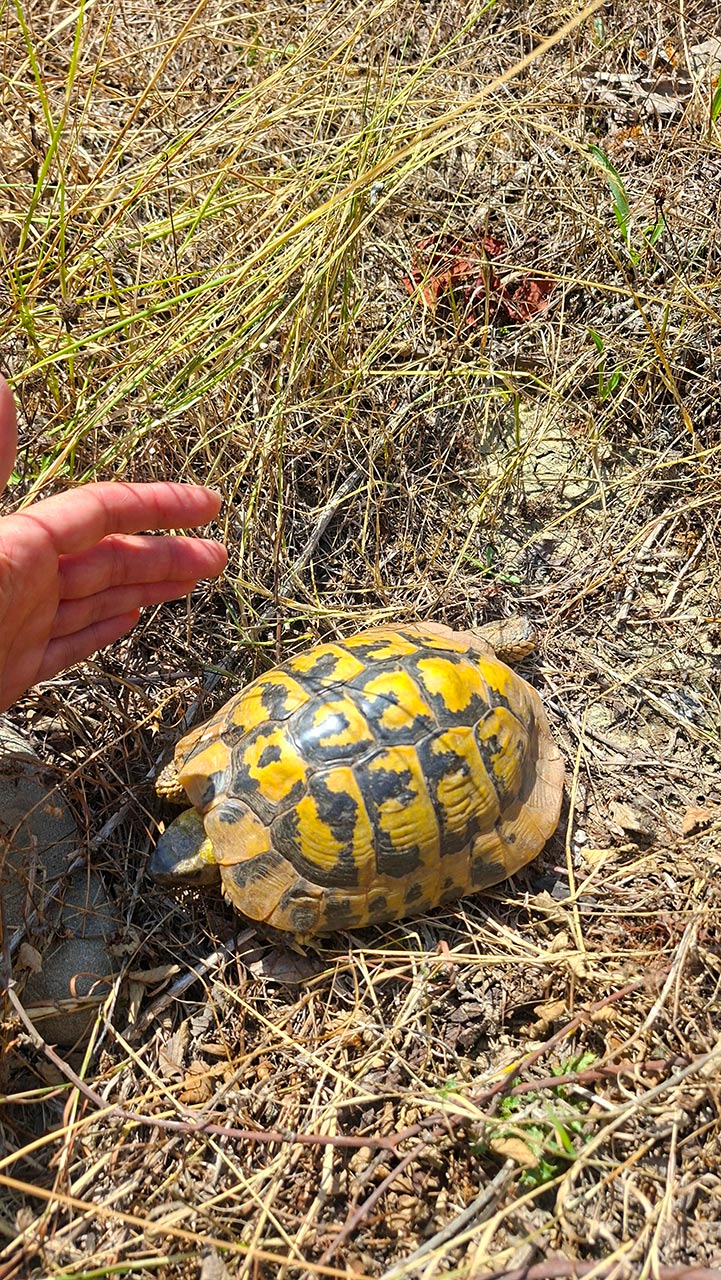
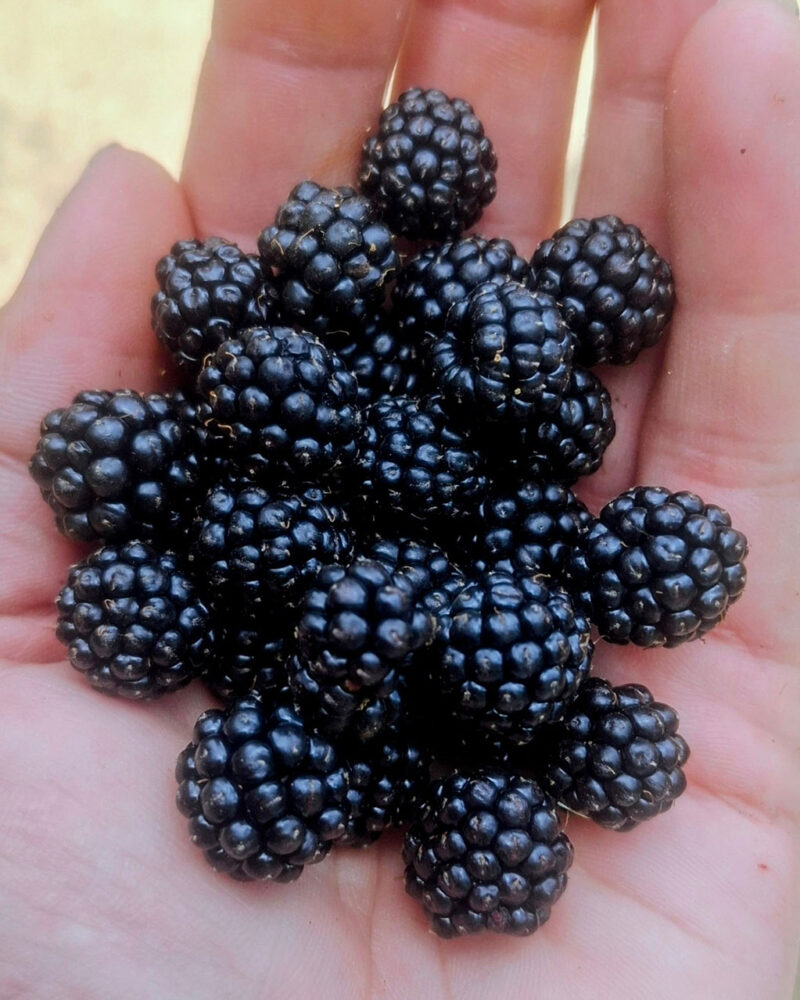
This canyon is on a whole different level compared to the one I hiked a few days ago. I walked about ten kilometers along the “village” side trail, where paths run right to the edge—heart-stopping views! Photos, as always, can’t convey the height or the vastness. Down below, the river churns; above, sheep graze, turtles crawl, and wild blackberries are ready to pick by the handful.

For the return, I decided to take the opposite side, the route I had cycled yesterday. Not my brightest idea: the road stays far from the cliff edge, and there’s almost nothing to see. Only in one spot is there a trail descending into the canyon itself.


So there I am, walking along the highway for about three minutes. A car stops. A local. “Need a lift?” “Sure!” He drives me to the trail. I hike back up to the highway—another five minutes on foot, and another car stops. This time, cheerful Belgian tourists. “Hop in?” “Why not?” We chat all the way. Curious, kind, and fun people.

Truly, a perfect place for hitchhikers! Honestly, I didn’t even have to flag anyone down.


Çorovodë itself is completely off the tourist radar. Most people visit for a day and move on. That means accommodation is extremely budget-friendly: I paid just €15 for the night, with a simple breakfast included.

Day 12 (26.8.2025) Çorovodë – Berat

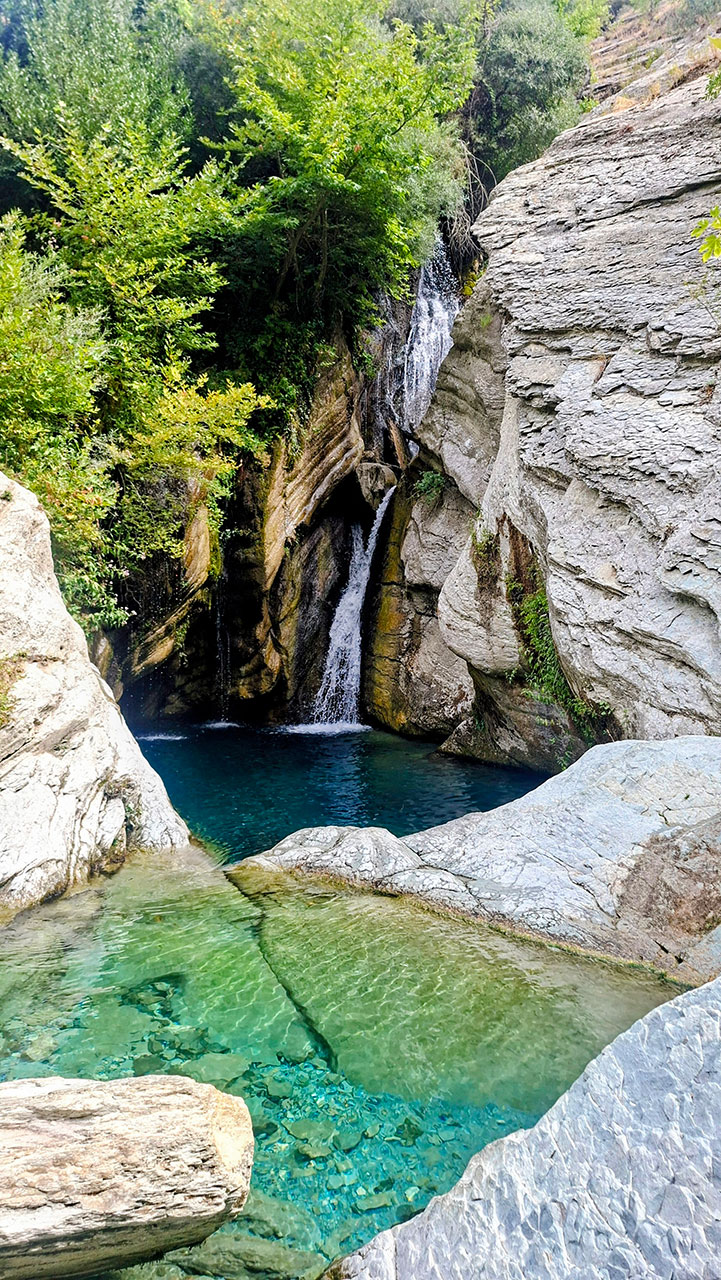
Today is a wonderful cloudy day. Only 50 km to Berat. In the morning, I checked Google for recommendations along the way and stumbled upon a real gem: Bogovë Waterfall in Tomorr National Park — one of the most beautiful waterfalls in Albania.


It’s not very tall, just about 20 meters, but what a sight! Turquoise-green water plunges down into a natural pool, surrounded by cliffs and forest. The path to the waterfall winds along the river — a 30–40 minute walk from the village — and soon you can hear the roar of the falling water.

In summer, people swim here, though the water is freezing cold. Brave souls dive straight under the cascade! They say the depth beneath the waterfall reaches up to 10 meters.
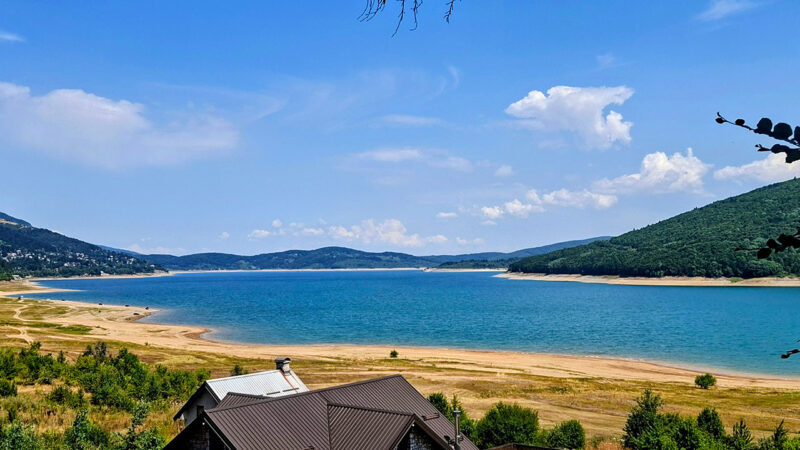
 

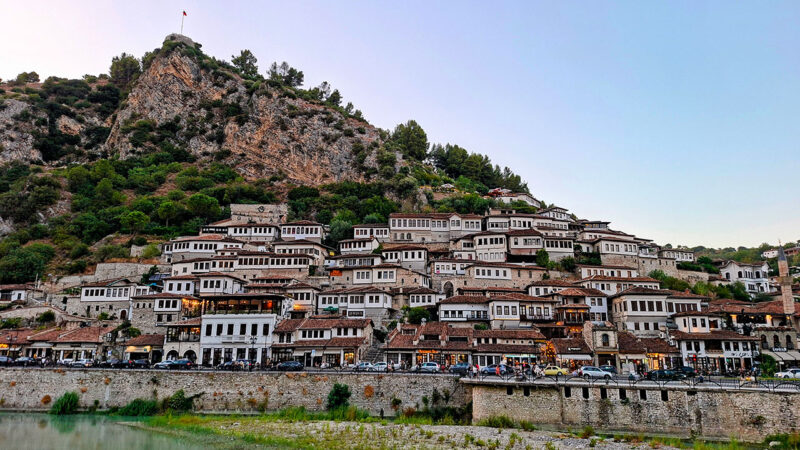
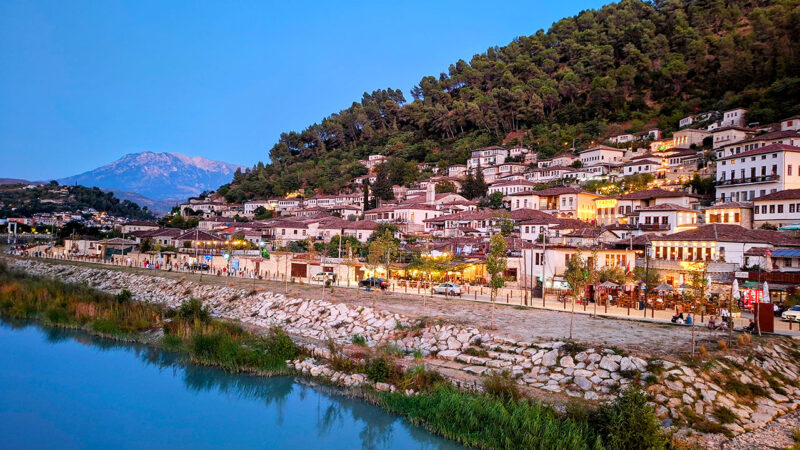
By noon, I rolled into Berat. The town is very popular with tourists: just a couple of hours from the capital, and suddenly you find yourself in one of Albania’s most beautiful and ancient cities.

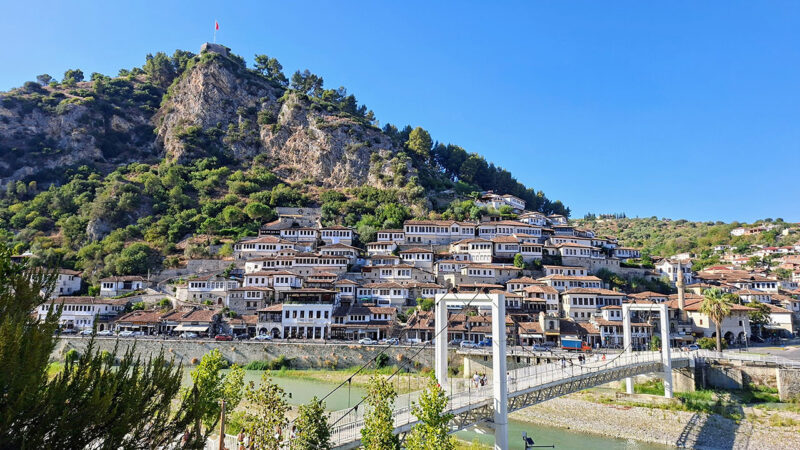
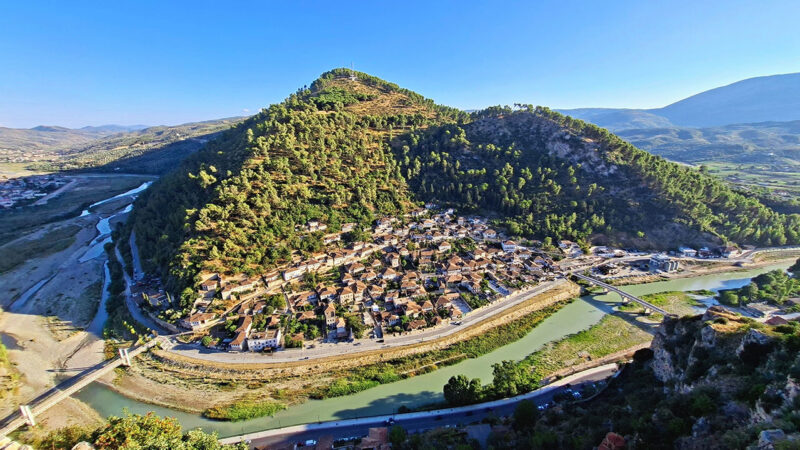
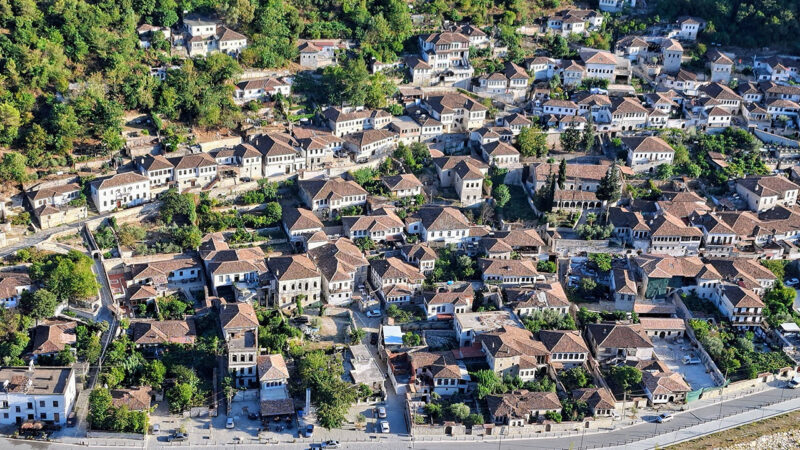
Berat is called the “City of a Thousand Windows” for its unique white terraced houses with countless large windows cascading down to the Osum River. The houses seem to gaze at each other from opposite hillsides. Towering above the town is the Castle (Kalaja e Beratit), built as early as the 4th century BC. Inside the fortress, people still live — an entire residential quarter among ancient walls.

Climbing up to the castle was no easy task: steep slopes and cobblestone streets. My poor ankle complained again.


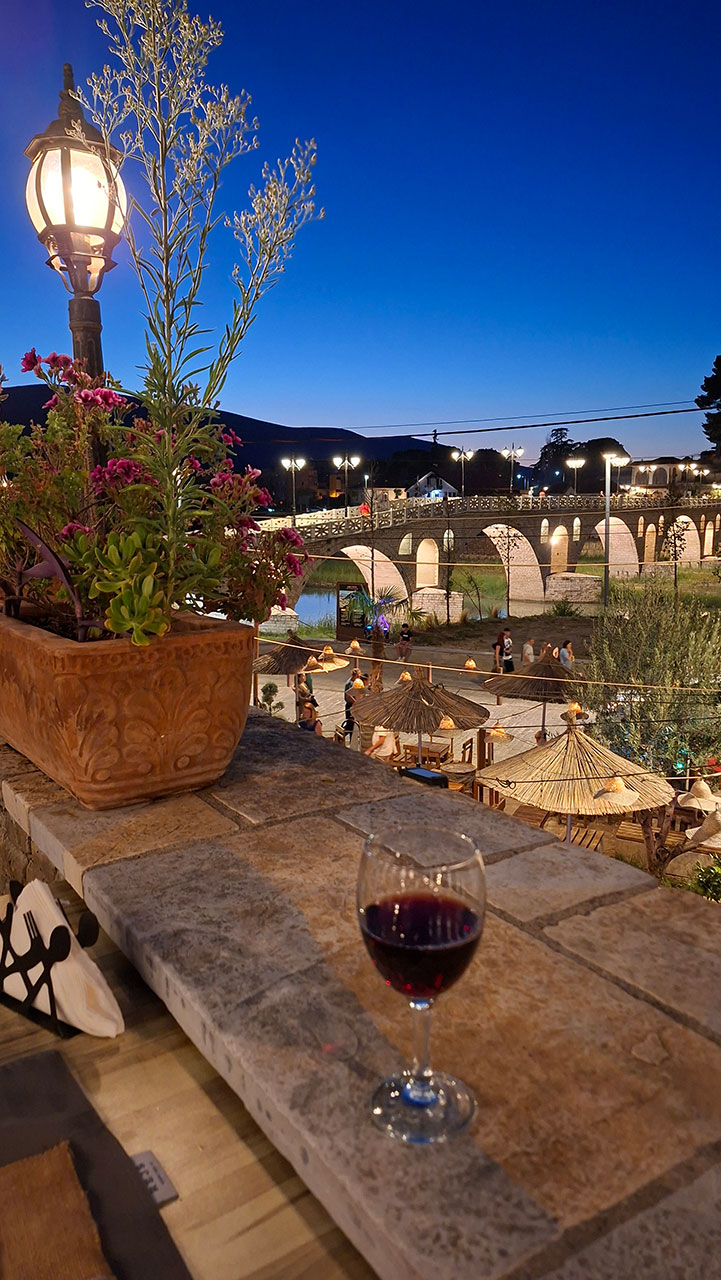
The evening felt truly romantic. I indulged in a little luxury — dinner in the old town with a view of the city and river. The lamb here is cooked to perfection, and the local wine is extraordinary, just 6 euros a bottle!


The evening passed in conversation with locals. So many stories of “the old life” and the present, of how challenging life can be now. The hostess of my guesthouse, a lively lady of about 65, speaks English fluently — a rare gift for her generation in Albania. She shared her story: about her father, an engineer who studied in the USSR and died during the construction of a hydroelectric plant; about her mother, imprisoned for secretly producing and selling olive oil — seven years in a labor camp. She lost her parents early, and only later in life did she begin to realize that her father’s death might not have been accidental. Along with him, a group of engineers perished, all trained in the USSR. And her mother, it seems, did not end up in the camp by coincidence either. She told me how they had to carry on, endure the chaos after the regime’s fall, and how hard life still is today.

Evenings like this are the most precious moments of traveling for me.

Day 13 (27.8.2025) Berat – Kuçovë - Elbasan

Guys, today I stumbled upon a real open-air museum completely by accident!

The plan was simple — visit the so-called “airplane graveyard.” But as I approached, I was greeted by armed men. Now it’s a NATO base, and not only is photography forbidden, even stopping is out of the question. Alright, moving on.


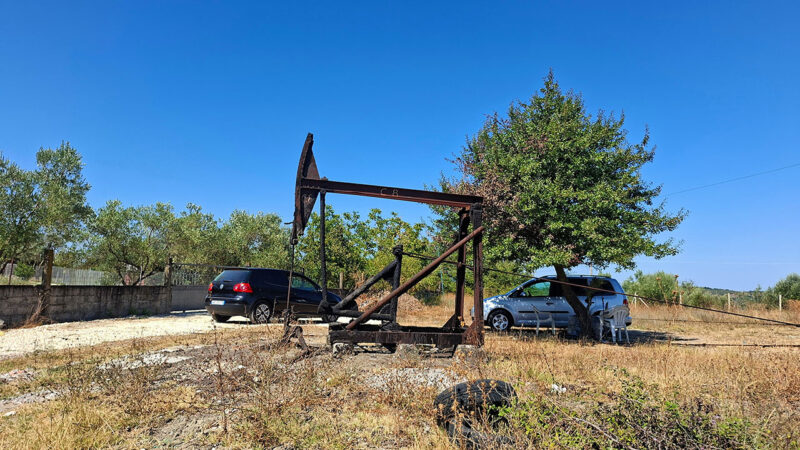
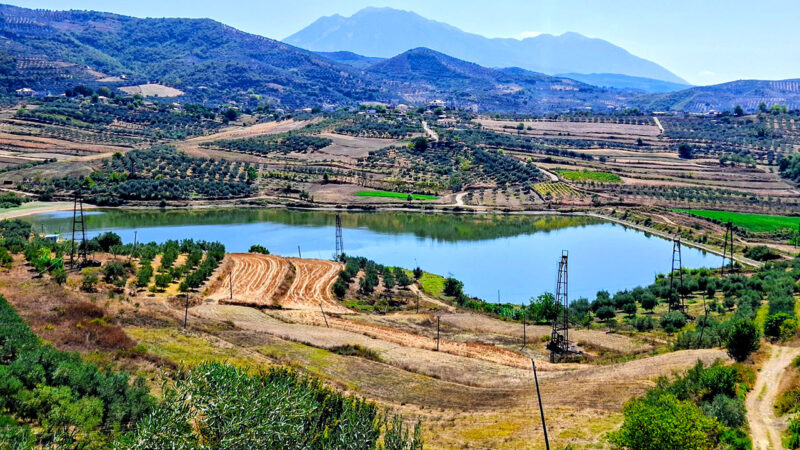
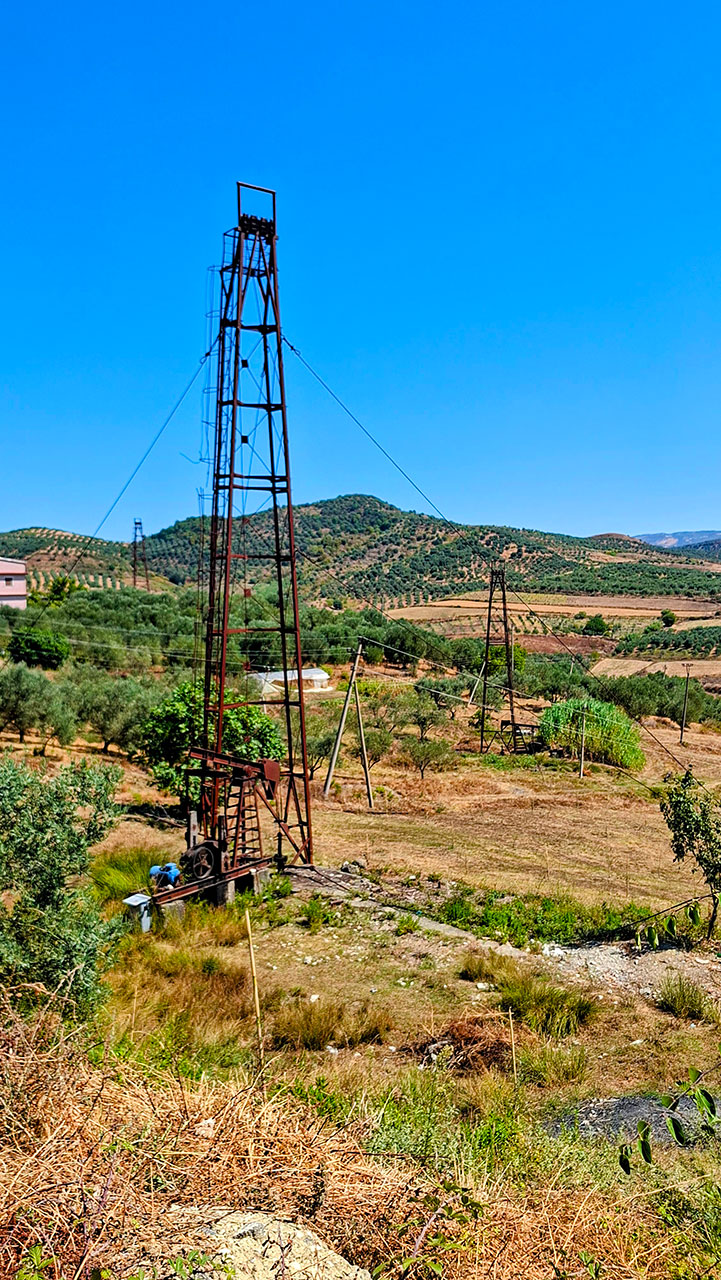
I started climbing a hill and suddenly caught a strange smell. Looking around… Very old oil pumps! Not museum exhibits, but real, working machines. They creak, they stink, but they pump oil! This is the Kuçovë region — one of the oldest oil centers in Albania. Extraction began here back in the 1920s under the Italians. Fields are dotted with old metal rigs, some rusting, some still working — many of them exactly the same as decades ago. And there are not just a few, but whole fields!


Here the oil lies close to the surface; the layers are almost depleted, so modernization doesn’t make sense. But the sight is still surreal. Nearby is the Patos-Marinza field — the largest onshore oil field in all of Europe. A man in a Porsche, who I met at a gas station while cooling off, told me all this. He turned out to be an olive-oil factory owner. We got talking and ended up chatting for about thirty minutes — a rare Albanian with good English! Eventually, he sent his son to fetch a bottle of their homemade oil, handed me his contacts, and enthusiastically suggested, “Let’s do business.”


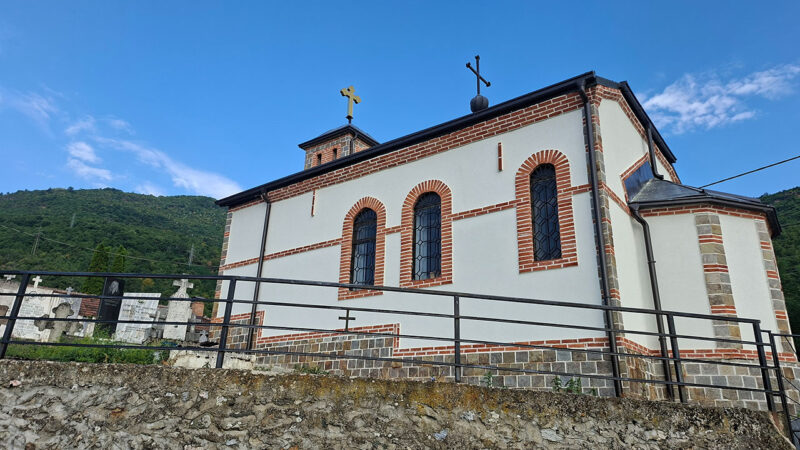
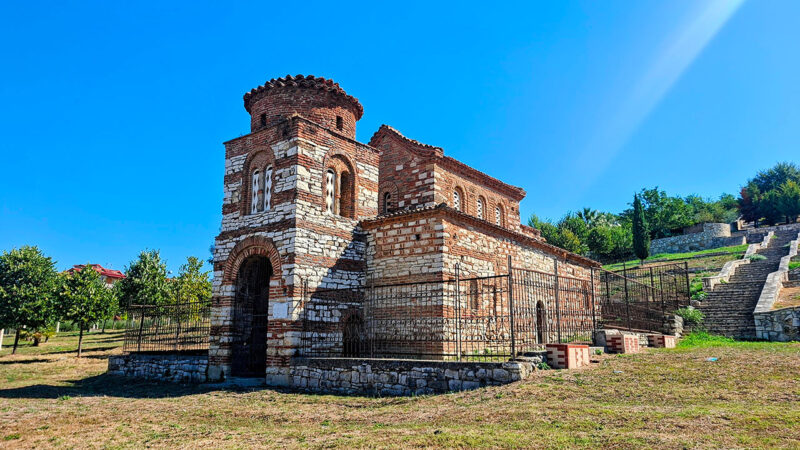
Then my new friend recommended visiting a nearby village where a 10th-century church has survived (it’s in the photo). We ended up talking about religion. He said: “Albania was originally Christian. Then the Ottomans came, imposed a tax on Christians, while Muslims were exempt. People are not fools — they converted to Islam. But they never really practiced it properly.”

He added: “Our attitude to religion is mostly ‘for show.’ That’s just how it historically worked out.”


The route today wasn’t particularly scenic, and the final destination didn’t impress me much.

Elbasan is the fourth-largest city in Albania, almost in the center of the country, just an hour from Tirana. Today it’s a typical mid-sized Albanian town, not very touristy, but convenient as a transit stop.


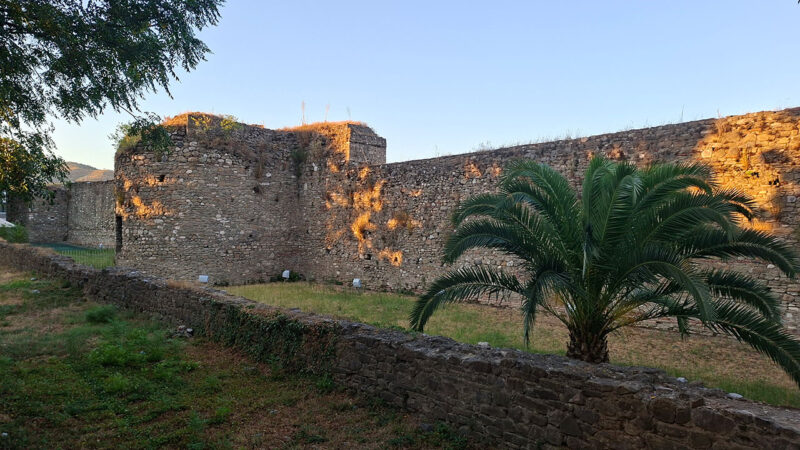
In antiquity, there stood the Roman city of Scampinium, through which the famous Via Egnatia ran — connecting Rome to Constantinople. Today the main attraction is the 15th-century Ottoman fortress. Thick walls still surround part of the city, and inside you can find old mosques and baths. But honestly, apart from the walls, there isn’t much to see. Elbasan also retains an industrial mark from the socialist era — the country’s largest metallurgical plant was here.


After looking at photos and reviews online, I decided not to ride the Roman road with its ancient bridges — the cobblestones looked too intimidating. Better to save my bike gear and my nerves. Even in the city center, sections of the Roman road remain, and that was enough for me. And truth be told, this is the first place on the trip where I felt slightly uneasy — I even dragged my bike up to the third floor, just to be safe.

Day 14 (28.8.2025) Elbasan – Tirana – Kruja

The main task of the day was simple: reach Tirana and sort out the bike box for my flight home.


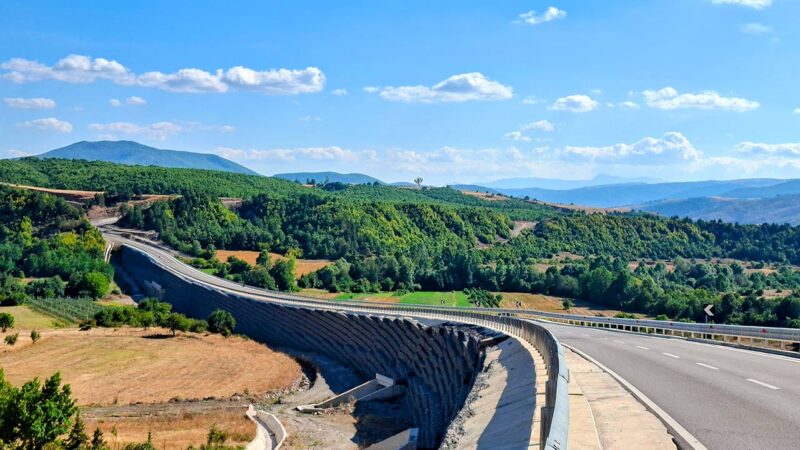
From Elbasan to Tirana there are two options: a huge modern highway or a winding mountain road along the ridge. Of course, there was no real choice — straight into the mountains! The views were absolutely mind-blowing. Photos, as always, capture maybe ten percent. On the first shots I had already climbed 600 meters, yet it still looked as if I were standing in the middle of a flat field. Ah, the deception of scale!
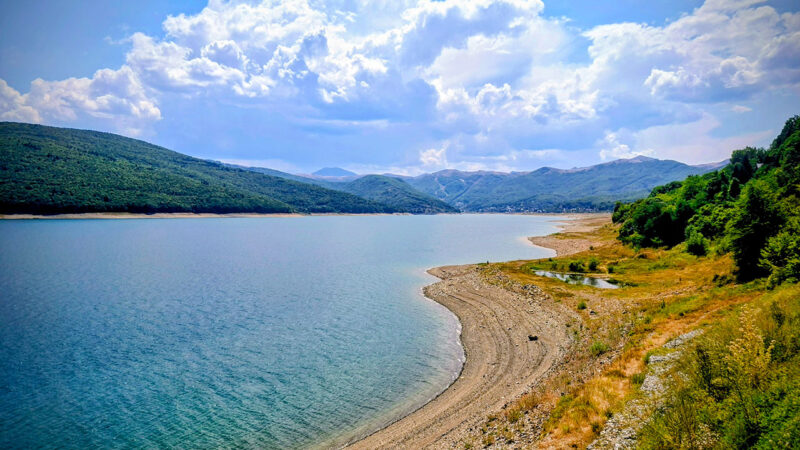
In Tirana I didn’t really see the city — just the inside of a bike shop. They promised me a cardboard box (asked €25 for what should be “free packaging” — I agreed to pay upon pickup). And then came the big question: what to do with my two spare days?
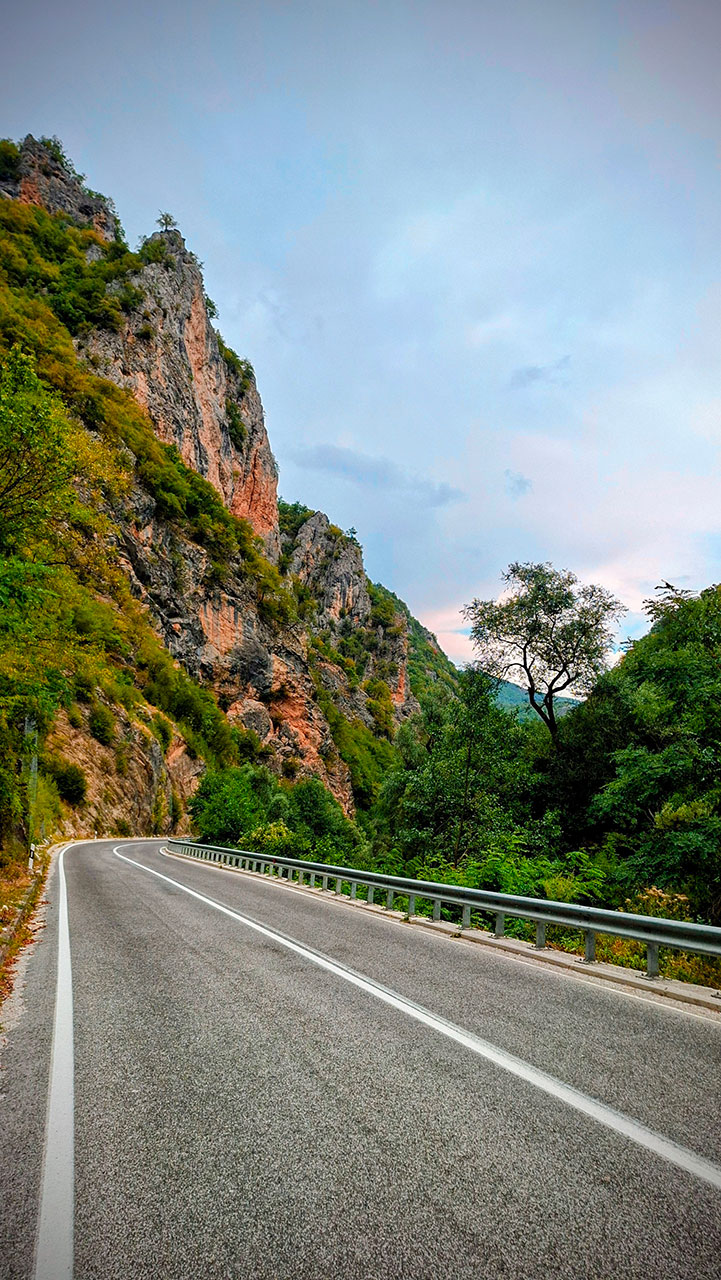
 

I always plan for extra time in case of breakdowns, exhaustion, or nature throwing a tantrum. This time everything had gone smoothly, so I had a two-to-three-day buffer. So, with the calendar showing the 28th and my flight not until the 31st, I had to decide: Do I go “light” — follow smooth asphalt to the seaside resort of Durrës, then spend a lazy day melting into the sand? Or do I push myself once more, climb into the mountains, and chase a hidden alpine lake?


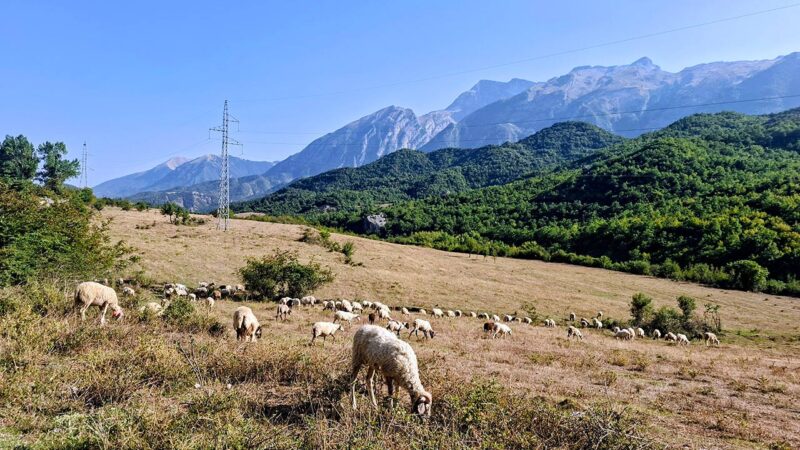
Honestly, even that morning I didn’t know which way I’d go. I was tempted by the thought of beaches, but the fear of wasting precious time on inflatable swan parades and tourist promenades nudged me upward again. By evening, I found myself in the magical little town of Kruja.


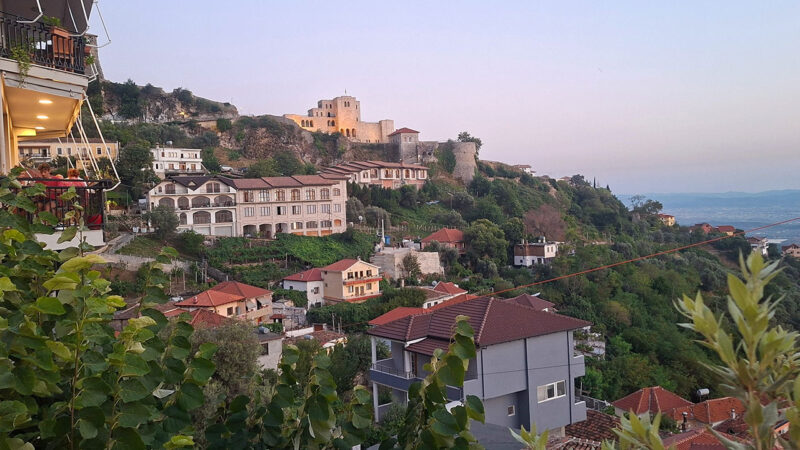
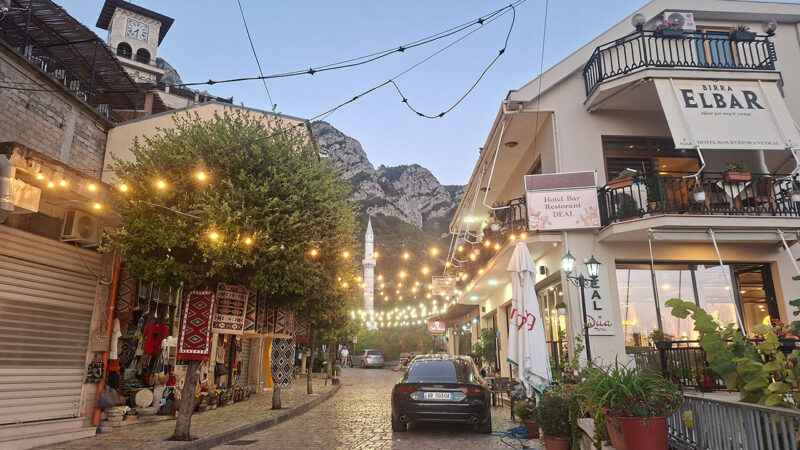
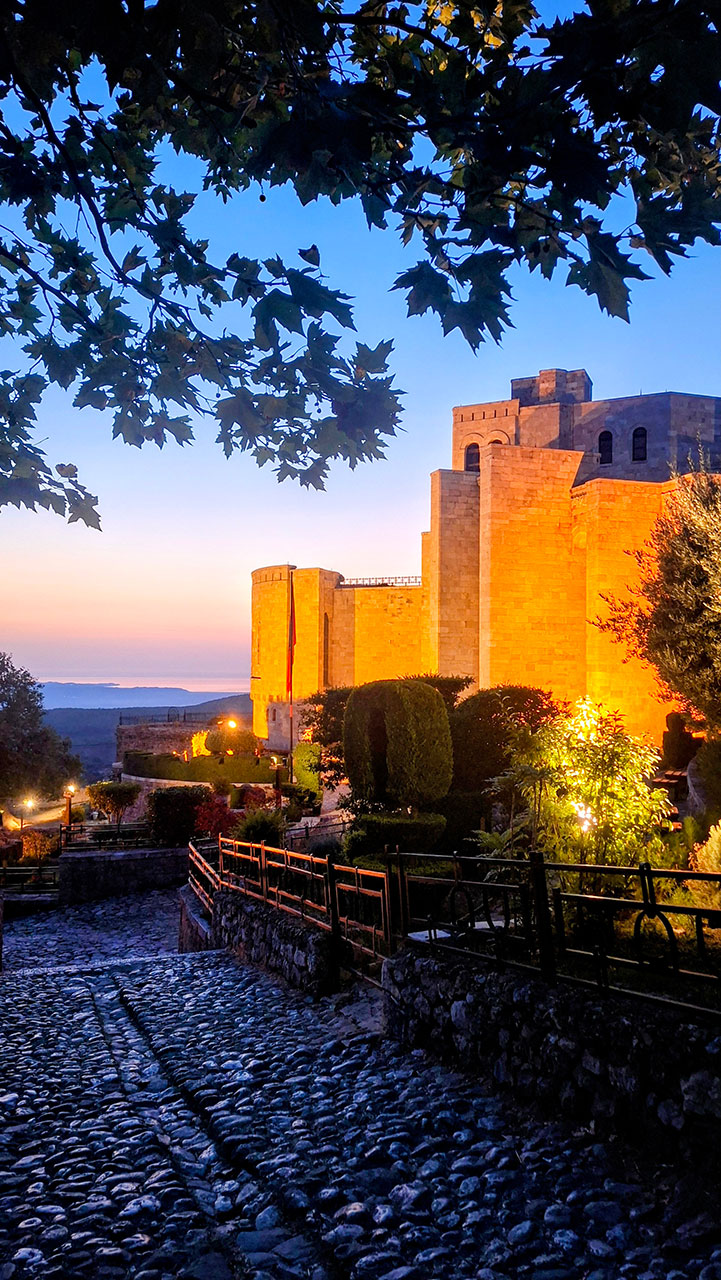
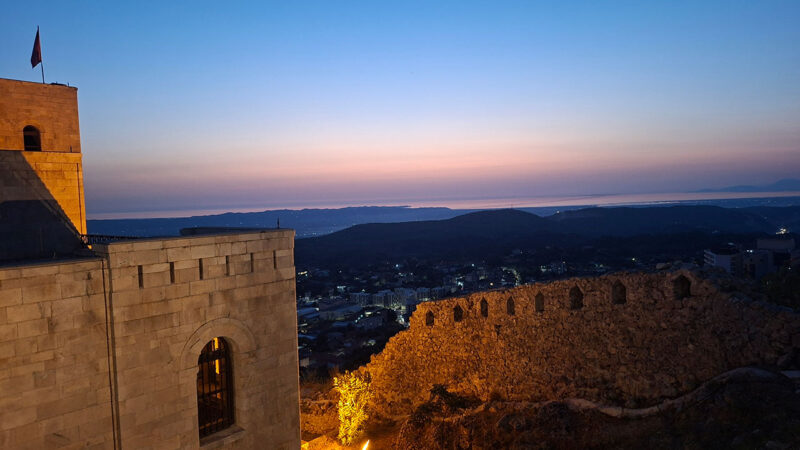
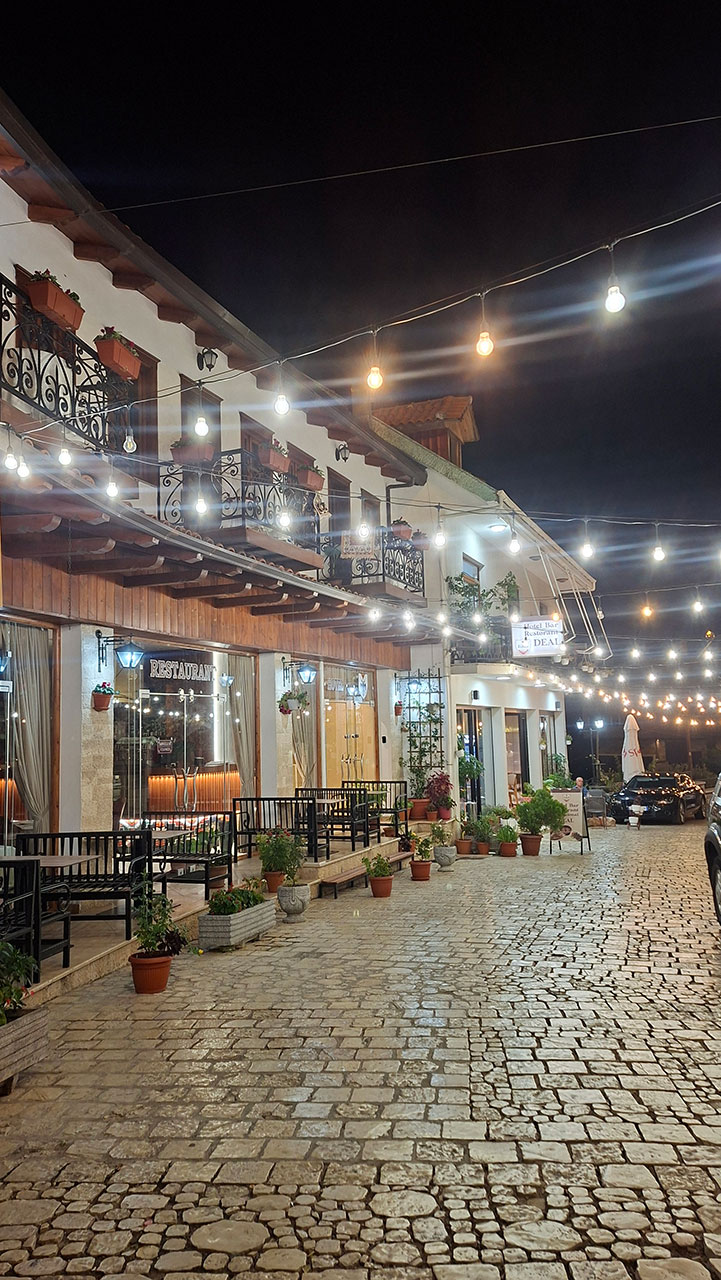
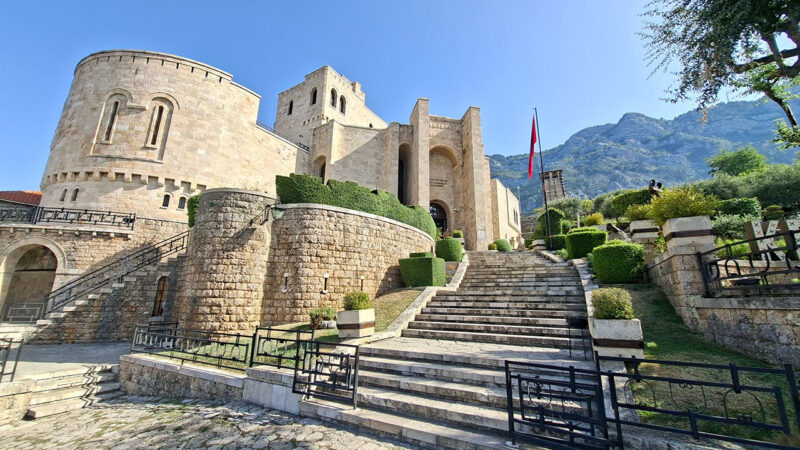
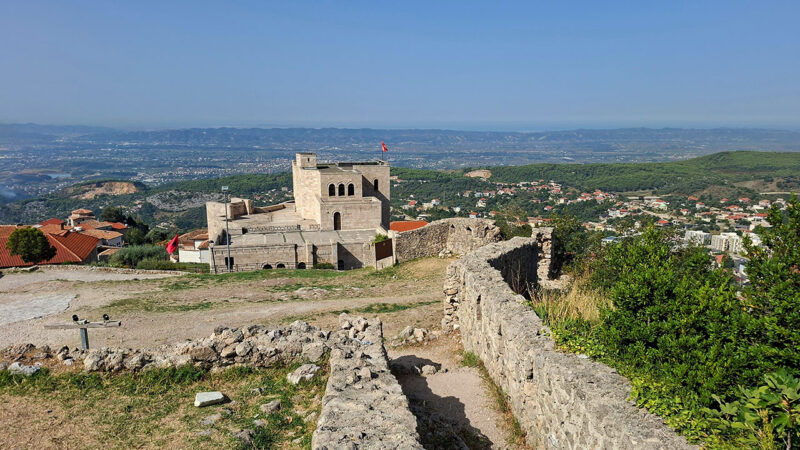
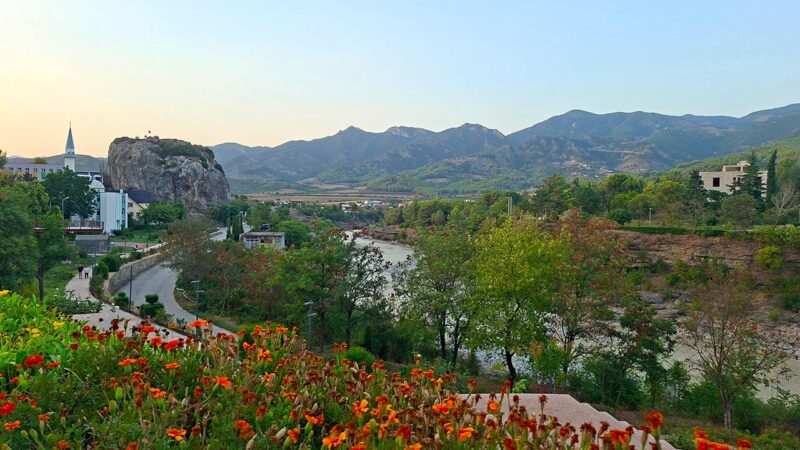
Kruja is one of the most atmospheric towns in Albania. This is the birthplace of Skanderbeg, the national hero of the 15th century who resisted the Ottomans. The fortress of Kruja rises proudly on a high hill, offering breathtaking views across valleys and mountain chains. The town itself stands at about 600 meters above sea level, right at the foot of Mount Dajti. From the fortress walls you can gaze all the way to the Adriatic coast — on a clear day you can spot Durrës and the shimmer of the sea on the horizon.


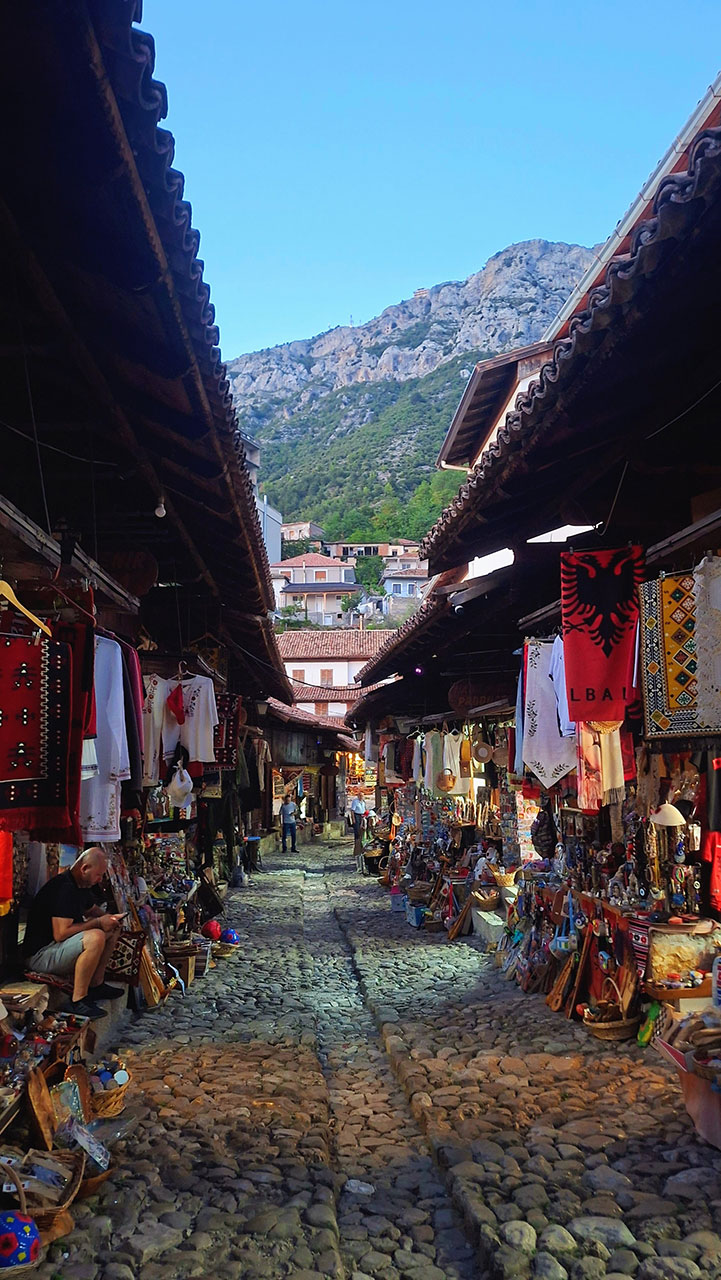
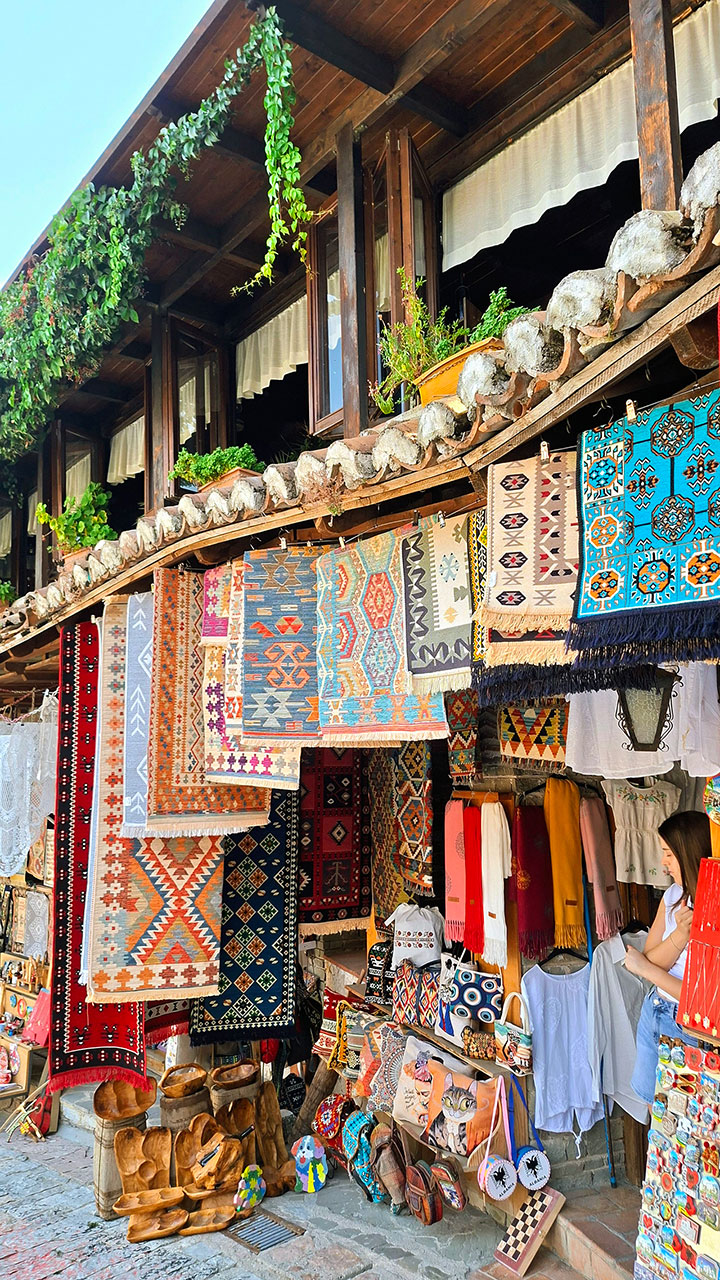
At the foot of the fortress spreads the old bazaar: narrow cobbled lanes, stalls overflowing with carpets, copperware, and hand-carved wood. Inside the fortress, you find museums, restaurants, even family homes. The whole atmosphere feels like stepping into a fairytale — medieval and timeless.
Day 15 (29.8.2025) Kruja – Qafështama National Park – Bovilla Lake – Tirana

I’m so glad I chose the mountains over the sea! The lake turned out to be absolutely stunning, and the views along the way were nothing short of breathtaking.


The day before, on my way to Kruja, I stopped at a gas station. A local guy with a bicycle struck up a conversation. As tradition goes, he paid for my drink and then warned me: “You won’t be able to ride down that descent, it’s all rocks.” I laughed: “But that’s exactly what a mountain bike is for — to haul my lazy ass through the mountains!” Ah, locals just don’t know how lucky they are. The internet is full of raving reviews from foreign bikepackers, while Albanians themselves hesitate to explore their own backyard.


There were two options for this track: climb up on asphalt and descend on rocks, or the other way around. Like a fool, I chose the first. Which meant I ended up sweating on both climbs and descents. If I had done it in reverse, at least I would’ve enjoyed a fast downhill. Instead, I was crawling down at snail’s pace, the bike rattling and shaking so much that one of my bag mounts broke. But hey — I’m an experienced bikepacker. I had duct tape, bungee cords, and zip ties — the holy trinity of roadside repairs.


From Kruja, the road climbs up toward Qafështama National Park. Perched at 1,000–1,300 meters, the park is a refreshing escape from the heat below. Pine forests stretch in every direction, filling the air with resin and fresh needles.

There are several viewpoints with sweeping panoramas of central Albania’s mountains. As always, you also stumble across bunkers and caves — a playground for urban explorers. I didn’t stop though; my goal was the lake.


Finally, it was time to turn off the asphalt onto that infamous rocky trail. And, well… I had to admit the man at the gas station wasn’t entirely wrong. It was brutal. I managed only by telling myself it was “just a little further,” and that soon I’d be able to get off the saddle — and not get back on until next year if I so wished.


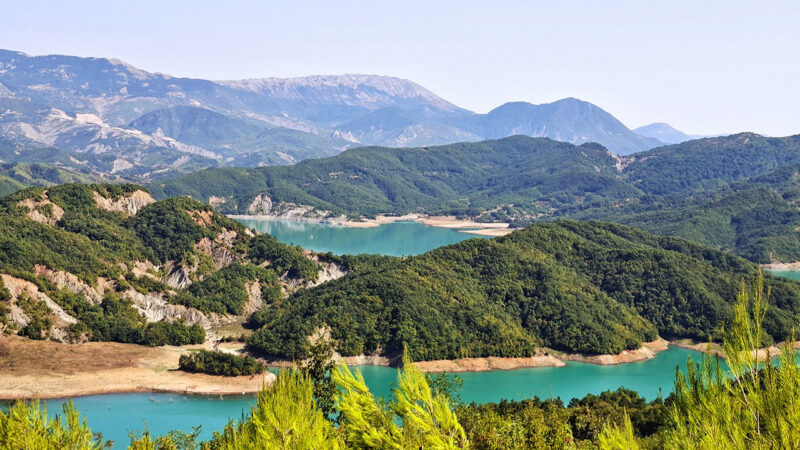
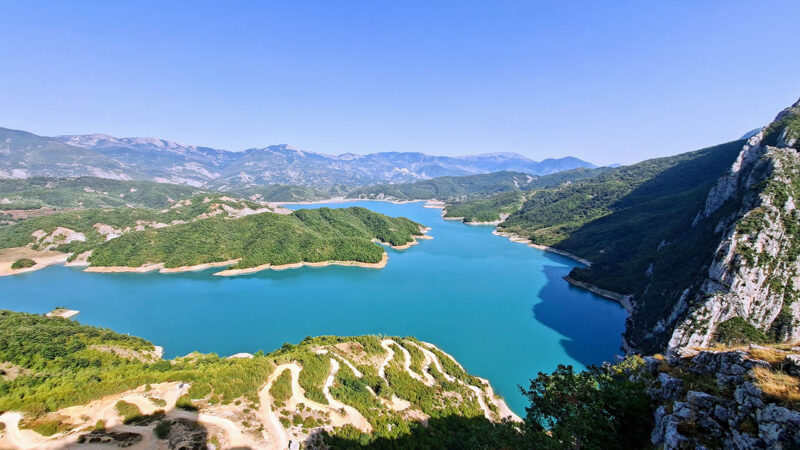
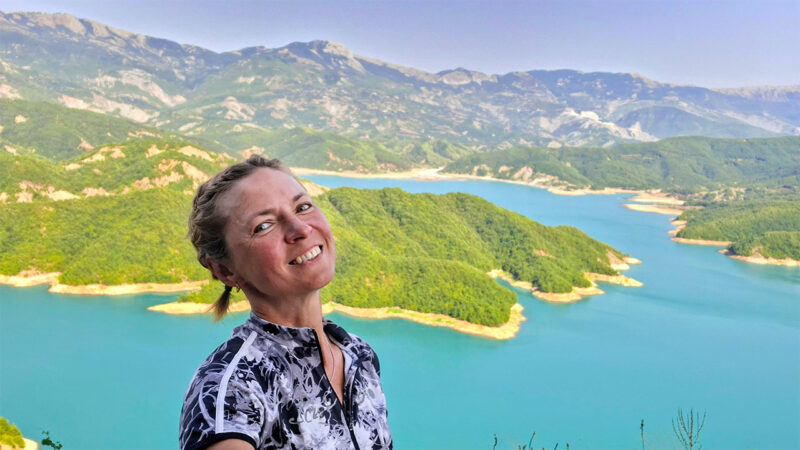
Bovilla Lake is an artificial reservoir built in the 1970s to supply Tirana with drinking water. Today, it’s jaw-droppingly beautiful: a turquoise mirror framed by cliffs, with panoramas that feel like a miniature version of Norway or Switzerland.


From the lake, a short but feisty trail (1.5 km) leads up to a viewpoint. “Trail” is a generous word — it’s more like a scramble over rocks and boulders. The finale is a metal staircase bolted to the rock, leading straight onto an outcrop of Mount Gamti. Perfectly safe if you’re not afraid of heights — but oh, how your heart skips a beat when you step out onto it!


After Bovilla, it was just a smooth 20 km ride back to the capital.

Days 16–17 (30–31.8.2025) Tirana & the way home

Every bike trip comes with one eternal struggle: finding a box for the return flight. If the route is a loop, you can usually arrange for someone to stash it for a couple of weeks. But this time, that wasn’t my case.


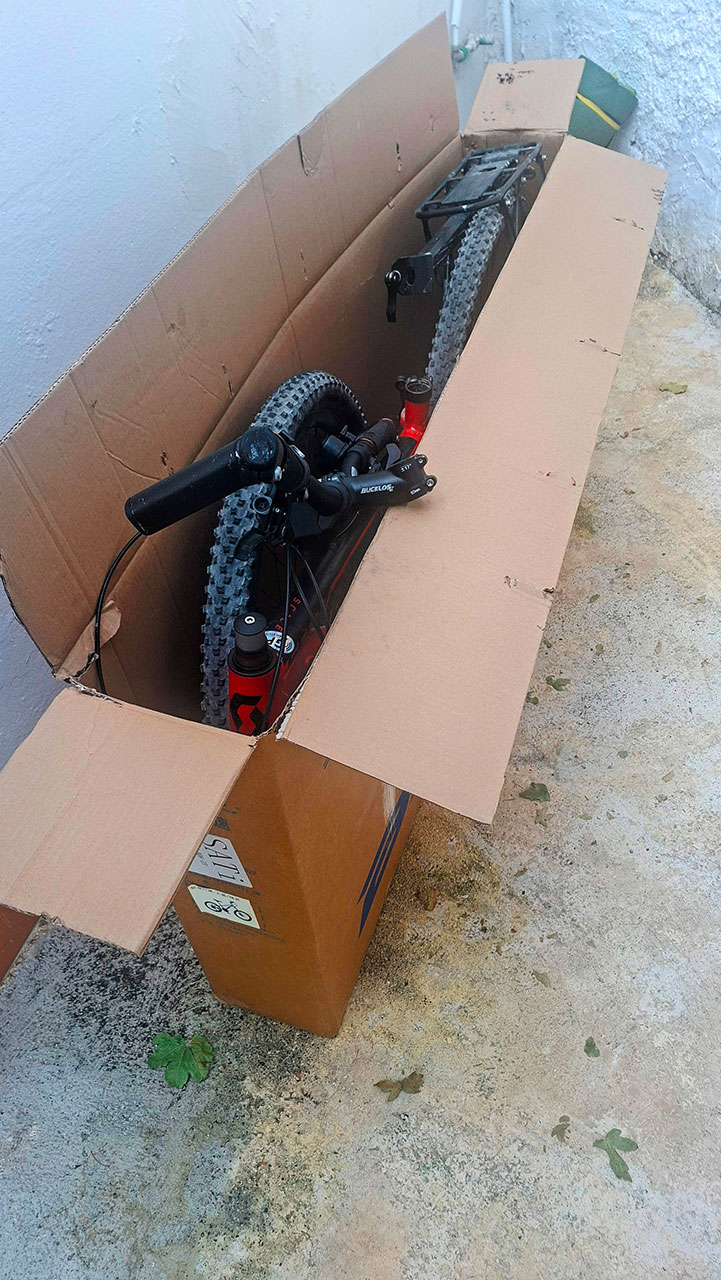
As I wrote earlier, one shop in Tirana had promised me a box — but for €25, which felt steep since I’d always gotten them for free elsewhere. In the morning I tried another place, and bingo: they charged only €5! The catch? It was a box for a 26″ bike, while mine was 29″. God only knows how I managed to squeeze it in. That puzzle alone ate up half a day.


Finally, I was ready to go sightseeing in Tirana. And that’s exactly when a thunderstorm hit — heavy rain, gale-force winds, advertising boards flying across the streets, torrents rushing down the roads. In the end, the only parts of Tirana I saw were two restaurants and three bars within stumbling distance of my guesthouse.


The next morning the rain had stopped, but dark clouds still loomed. I didn’t dare drag a soggy cardboard box through the streets to the bus stop — what if it disintegrated in my hands? So I ended up running around looking for a taxi driver willing to take both me and the oversized box. Found one: €25, and within half an hour I was at the airport.


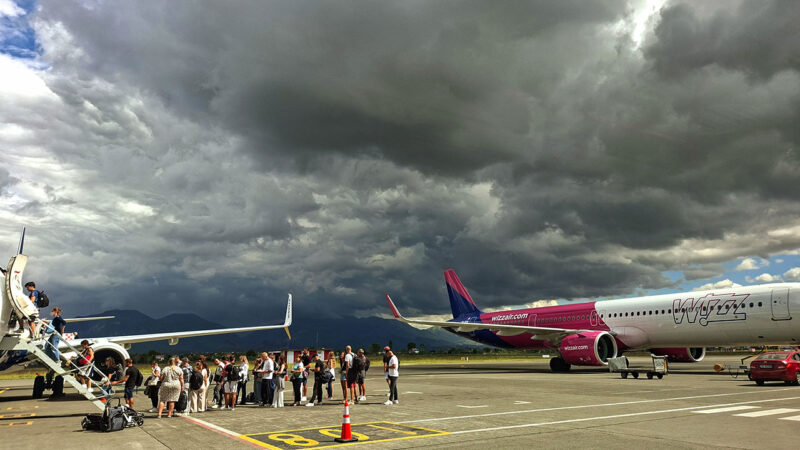
Boarding the plane, I glanced out at storm clouds swirling over the very mountains I had cycled through just two days earlier and thought: how lucky I’ve been! What would I have done if that storm had caught me on a remote mountain pass?


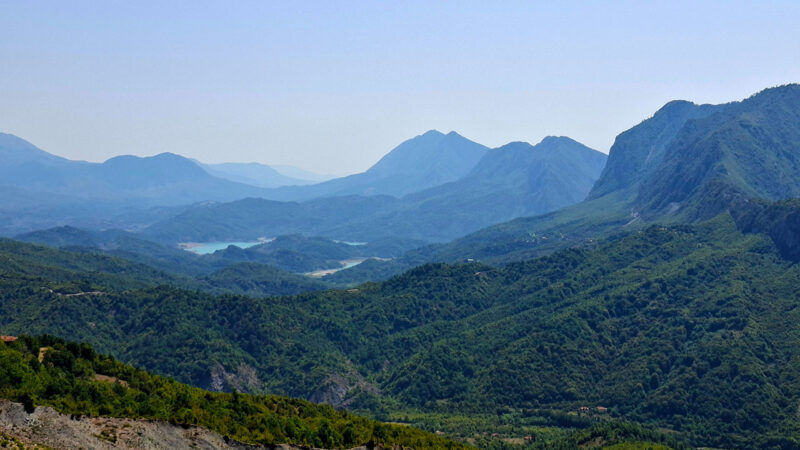
Looking back, Albania turned out to be a real treasure for a bike traveler: mountains, canyons, lakes, medieval towns, and breathtaking views almost every kilometer. There are still few tourists here, which means freedom to explore, unspoiled nature, and warm hospitality from locals. Every day brought fresh emotions, discoveries, and little adventures — enough to fill several trips elsewhere. And the best part? It’s all wonderfully budget-friendly. From food to accommodation, the prices are low, while the experiences are priceless.


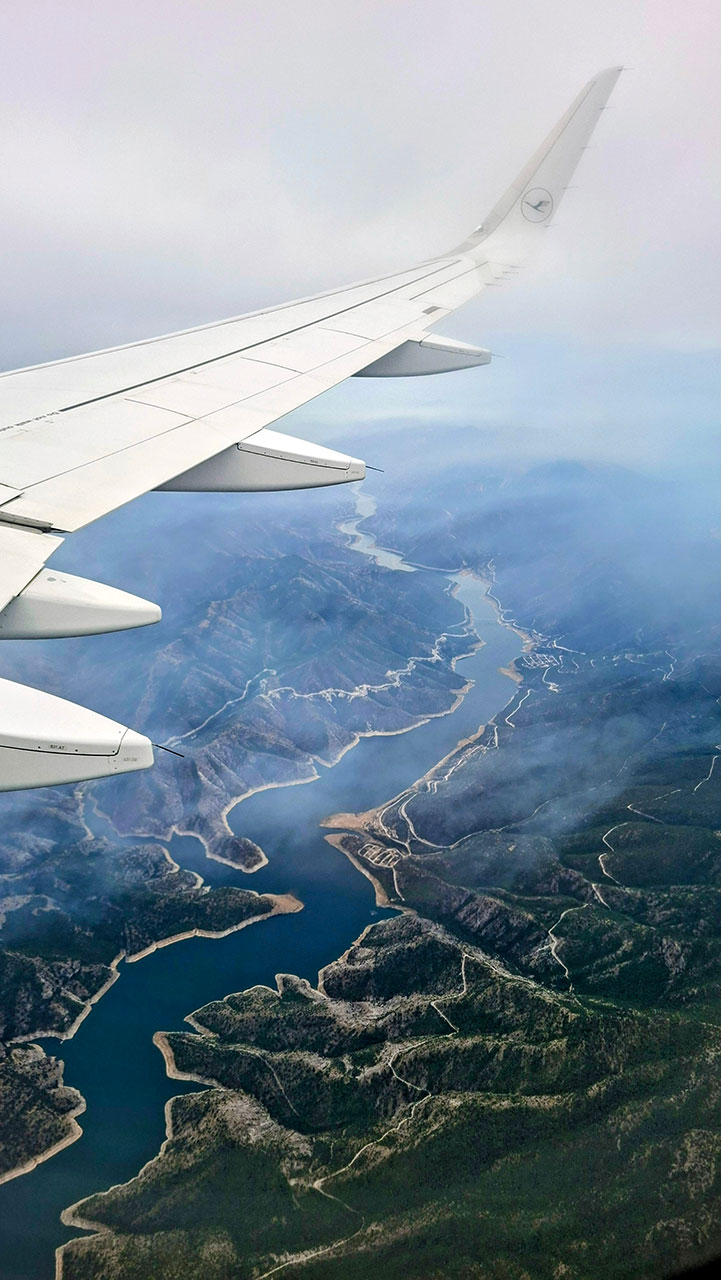
Speaking of money: my Lufthansa flights, round-trip via Frankfurt, cost €385. Naturally, the times were inconvenient (departures at 6 a.m., arrivals at 1 a.m.), plus a long layover. But the upside was big: you can check sports equipment — even bulky items — instead of luggage at no extra charge, as long as it’s under 23 kg. That’s a rare perk. Other airlines would have charged regardless. On my way out of Helsinki, I had 6 kg overweight and had to pay €80, but on the way back I was only 2 kg over and they let it slide.


For 16 days, I took €1000 with me and even had some cash left to splurge during my Frankfurt layover. That came to about €60 a day. I never camped once, ate and drank as much as I wanted, often in the best restaurants available. And, of course, generous locals picked up the bill for a few of my snacks — so if you’re a pale solo female cyclist, consider it a bonus to your karma!

You can leave your comments on this story in my blog 

sign up for the newsletter

Fill this form if you want to be informed 

about the new publications in my blog.

Spread the love